Watch Crossfader’s tutorial above (358K views on YouTube).
This is for DJs who already mix but want a clearer handle on house trance. If your blends feel flat, rushed, or too obvious, this will help you hear the style properly and mix it with more control.
By the end, you will be able to identify what makes house trance work, structure longer transitions, and use three practical mixing approaches without relying on any specific controller. If you also play adjacent styles, this pairs well with progressive house transitions and phrasing for DJ sets.
House Trance Music: Definition and Context
House trance sits in the overlap between house and trance. In practice, that usually means a steady house groove, longer phrasing, melodic layering, and the emotional lift associated with trance.
That overlap is not imaginary. Armada describes trance as a style sometimes framed as a mix between techno and house, with stronger emphasis on melody, harmony, and atmosphere, while its house overview notes that progressive house often sits between house and trance. Beatport also keeps progressive house and progressive trance as distinct but neighboring DJ categories. Armada's trance overview, Armada's house guide, and Beatport's genre documentation all point to the same broad picture.
This matters because many DJs use house trance as a practical label, not a rigid museum category. They are usually talking about tracks that carry house pulse and trance emotion without going fully into peak-time uplifting trance.
So the useful question is not genre purity. The useful question is what the tracks ask you to do in the mix.
Most house trance tracks reward patience. They tend to open space gradually, build tension in layers, and make the transition feel like part of the arrangement rather than a hard handoff.
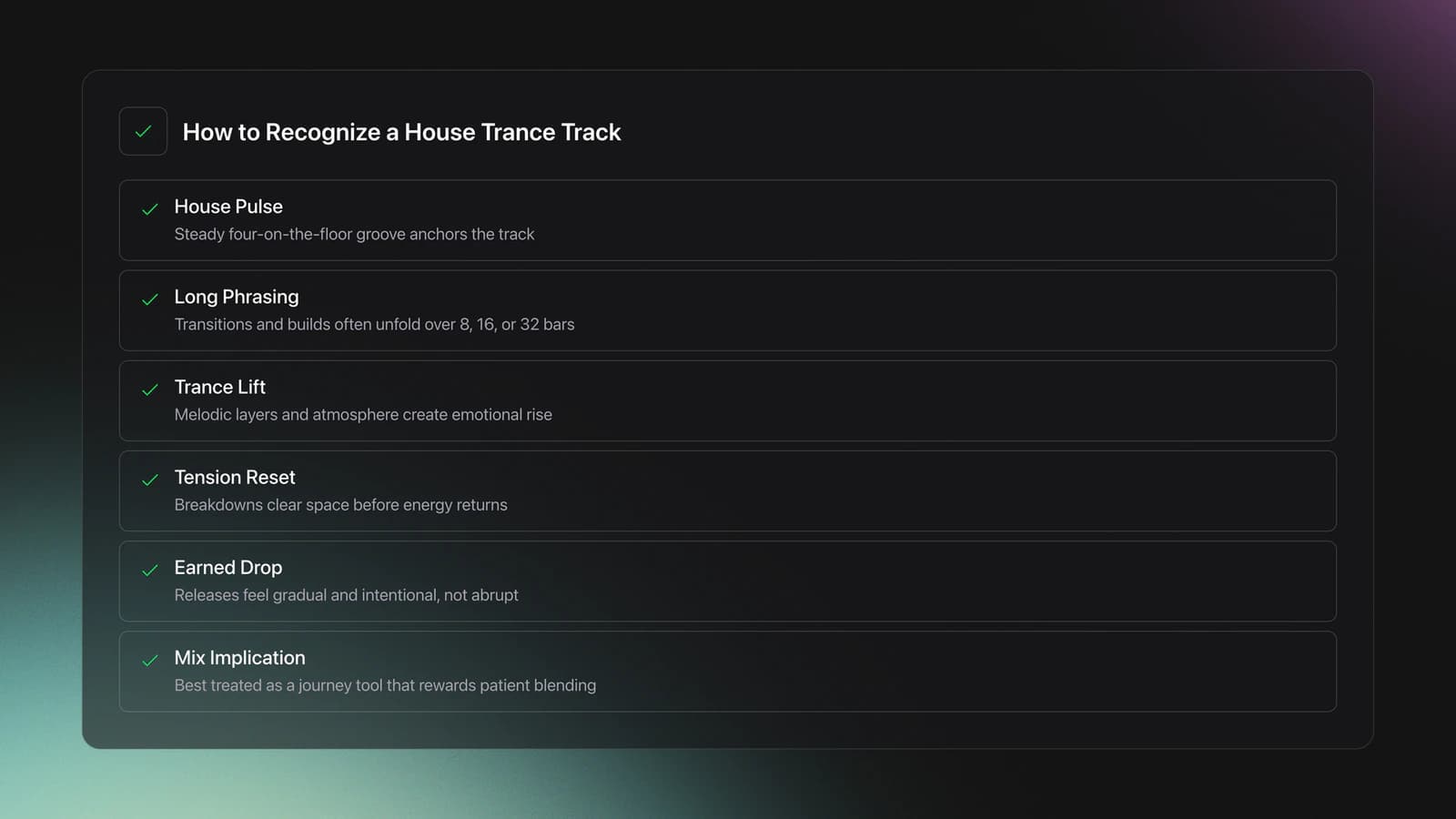
- Steady four-on-the-floor foundation
- Longer 8, 16, or 32-bar phrasing
- Melodic or atmospheric top layers
- Breakdowns that reset tension
- Drops that feel earned, not abrupt
If you hear those traits, treat the track like a journey tool, not just a beat source. That changes how long you blend, when you swap low end, and how much harmonic content you allow to overlap.
A related distinction helps here. Progressive house usually leans harder on rhythmic layering and controlled development, while trance typically pushes bigger breakdown-release cycles and more overt melodic lift. Wikipedia's genre summary describes progressive house as a layered style built through gradual addition and subtraction of parts, which is exactly why the line with trance can blur in DJ practice. Progressive house reference
It helps to know what the trance side actually sounds like, because that is the half most house DJs read less fluently. Straight trance usually runs faster, roughly 135 to 150 BPM, while the progressive end most people now just call "trance" sits closer to 128 to 132. The structural signature is the breakdown-build-anthem formula: the groove drops out for a breakdown, tension stacks through a long build, then the main melodic hook returns in full at the anthem or drop. The other tell is the trance gate, a rhythmic open-and-close effect run across pads, synths, or vocals that gives the genre its pulsing shimmer. House trance borrows that emotional lift and gating shimmer but keeps a steadier house groove underneath, which is why it rarely climbs to peak-time uplifting-trance speed. When you are reading a house trance track for the mix, those are the trance-side traits to listen for: where the breakdown sits, how long the build runs, and whether a gated layer is doing the emotional work.
House reference tracks
A starting crate of house, pulled from our DJ track index with live BPM and Camelot keys (these run roughly 120-136 BPM). Beatmatch to each track's tempo, use the long intros and outros to blend, and swap on the phrase. Click any row to open its full sonic profile.








House Trance Structure: What You Need to Hear
Before you change technique, change listening. Most house trance mixing problems come from hearing tracks as full songs instead of modular parts.
I use a simple model here: groove, lift, release. Groove is the kick, bass, and core drum engine. Lift is the melodic and high-frequency material that raises anticipation. Release is the point where tension resolves, often through a drop, a bass return, or a widened arrangement.
That model gives you a cleaner job inside the mix. You are not blending Track A into Track B. You are deciding which groove stays, which lift enters, and when the release changes hands.
The transcript example framed this clearly in techno terms, but the logic carries over well to house trance. Slow EQ blends, drop swaps, and layering all depend on separating frequency roles instead of thinking in full-track blocks.
Here is the first worked example.
Example 1. Track A is rolling at 126 BPM with a firm kick, bassline, and restrained pad. Track B is also 126 BPM, but its top end has a brighter arpeggio and a longer breakdown tail. If both drops land in 32 bars, you can keep Track A's groove active, bleed in Track B's mids and highs over 16 bars, and only hand over the lows when Track A thins out.
Input. One track owns groove. The other owns lift. Process. Overlap mids first, then highs, then swap lows near the phrase boundary. Output. The room hears continuity rather than replacement.
Example 2. Track A has a vocal pad and soft ride pattern. Track B has a sharper synth hook and tighter percussion. Both are harmonically compatible, but their kicks clash if combined too early. In that case, you can filter or EQ Track B's lows out entirely, let the upper hook establish itself, then move the bass handoff after the next mini-break.
That small delay matters. If the new hook is already familiar to the listener when the kick changes, the transition feels intentional.
A common failure mode is top-end crowding. Symptom. The blend sounds exciting in headphones but messy on speakers. Usually both tracks are carrying rides, bright synths, or vocal air at the same time.
The fix is simple. Pick one track to own brightness. Let the other one provide body or movement, not another full top layer.
You will know your read is correct when the entering track becomes audible before it becomes dominant. That is the validation signal. The audience should sense a direction change without hearing a fight for space.
Slow EQ Blending for House Trance
Slow EQ blending is the cleanest place to start. It suits house trance because the style often rewards long blends and gradual tension changes.
The core rule is simple. Bring in information before you bring in impact. In other words, let the audience hear the new track's identity before you give it the low end.
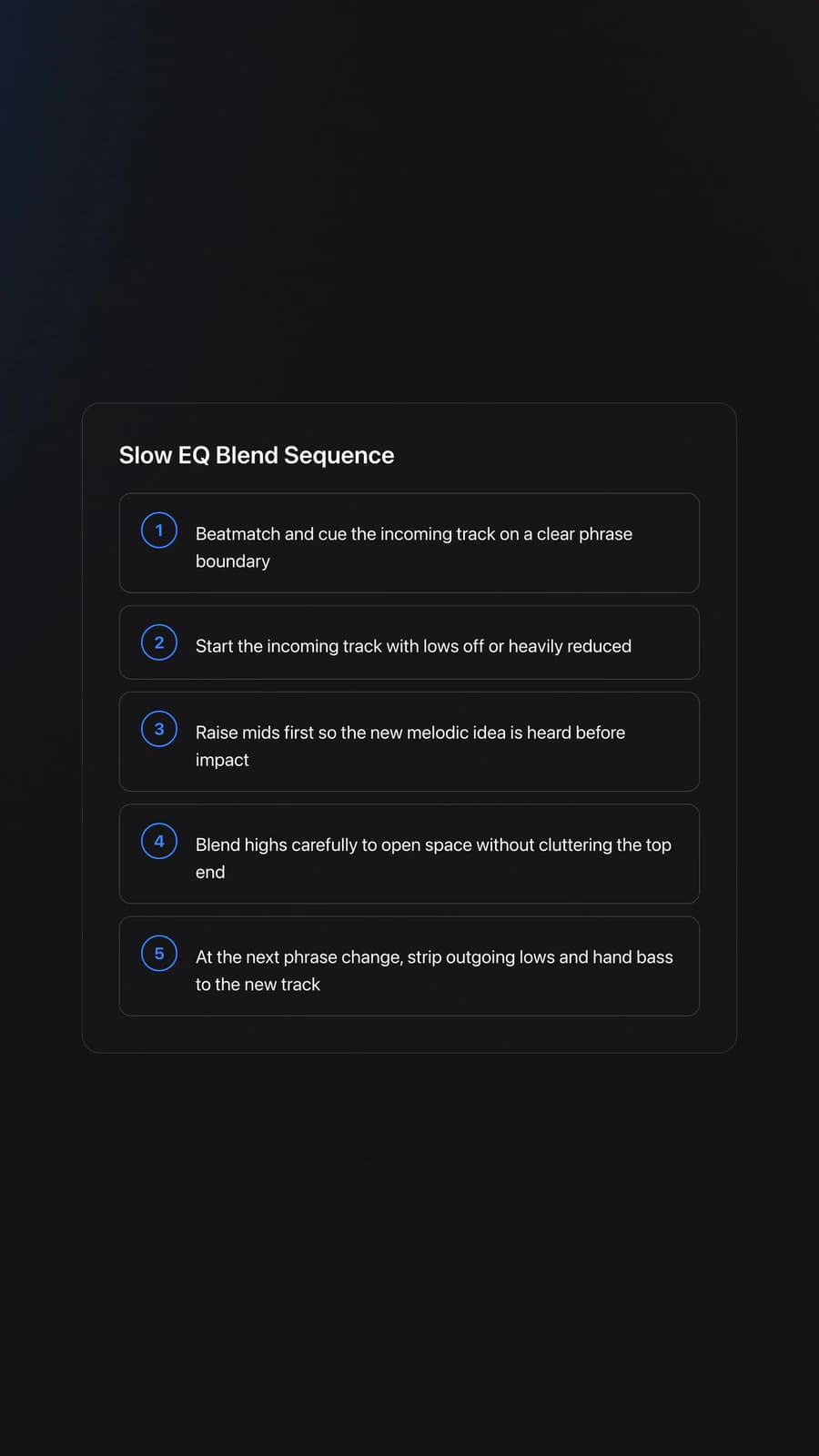
Set both tracks beatmatched and phrase-aligned. Start the incoming track with lows removed, or at minimum strongly reduced. Then introduce mids first if they contain the harmonic signal you want people to notice.
- Cue the incoming track on a clear phrase boundary.
- Kill or heavily reduce incoming lows.
- Bring in mids until the new musical idea is audible.
- Blend highs carefully to add air without clutter.
- Strip lows from the outgoing track near the phrase change.
- Complete the handoff once the old track has thinned.
Worked example 1. Track A runs a warm bass groove and muted chord stab at 124 BPM. Track B enters with a brighter synth line and lighter percussion at 124 BPM. Start Track B with lows off. Over 16 bars, raise mids to reveal the synth. Over the next 8 bars, lift a little high end. On the next phrase change, remove Track A lows and give Track B the bass.
The result is smooth because the ear accepts the melodic switch before the body feels the low-end switch.
Worked example 2. Track A has vocal haze in the mids. Track B has a plucked sequence that lives in the same range. If you bring both mids in fully, the blend clouds over. Instead, reduce Track A mids by 20 to 30 percent as Track B enters, then restore a touch of Track A high end if you still need shimmer.
The mistake here is treating EQ like a volume copy. It is not. Each band changes function, not just loudness.
A second failure mode is bass handoff too early. Symptom. The floor loses momentum because the outgoing track still carries the stronger groove. If that happens, wait one more phrase. House trance usually forgives patience more than haste.
Validation is easy to hear. Your slow EQ blend is working when the room feels a shift in color first, then a shift in weight. If both happen at once, the transition often feels blunt.
The best long blends usually come from doing less, earlier. You reveal the new record in stages and let the dance floor catch up.
If you want a parallel skill, study EQ mixing techniques alongside how to organize DJ playlists. Good blends and good prep usually improve together.
Swap Drops Without Breaking Energy
Drop swapping keeps both tracks alive long enough to make the handoff feel dramatic. This works best when one track adds surprise and the other preserves drive.
The setup depends on phrasing. You need the incoming drop to arrive at the same structural moment as the outgoing track's release or low-end cut. If the phrases do not line up, the trick sounds accidental.
House trance benefits from this because melodic identity often matters as much as drum continuity. A well-timed drop swap can lift the room without jumping to a completely new energy profile.
Worked example 1. Track A is in a 32-bar build with risers and a held pad. Track B has a sharper lead and stronger drop impact. Start Track B at the matching phrase point, keep its lows out during the build, and let its drop replace Track A's drop right as Track A clears a little space.
Input. Compatible BPM and phrase length. Process. Align build-to-drop moments, hold the incoming low end back, then switch impact at the release. Output. The crowd gets a fresh peak without losing the established momentum.
Worked example 2. Track A has a huge breakdown but weak return. Track B has a less emotional break but a much stronger groove after the drop. Use Track A for the tension. Use Track B for the payoff. That is often a better musical decision than committing fully to one track's whole arrangement.
This is where it gets weird for newer DJs. They often think fidelity to the original track matters more than floor response. In a set, your job is sequencing energy, not preserving songs untouched.
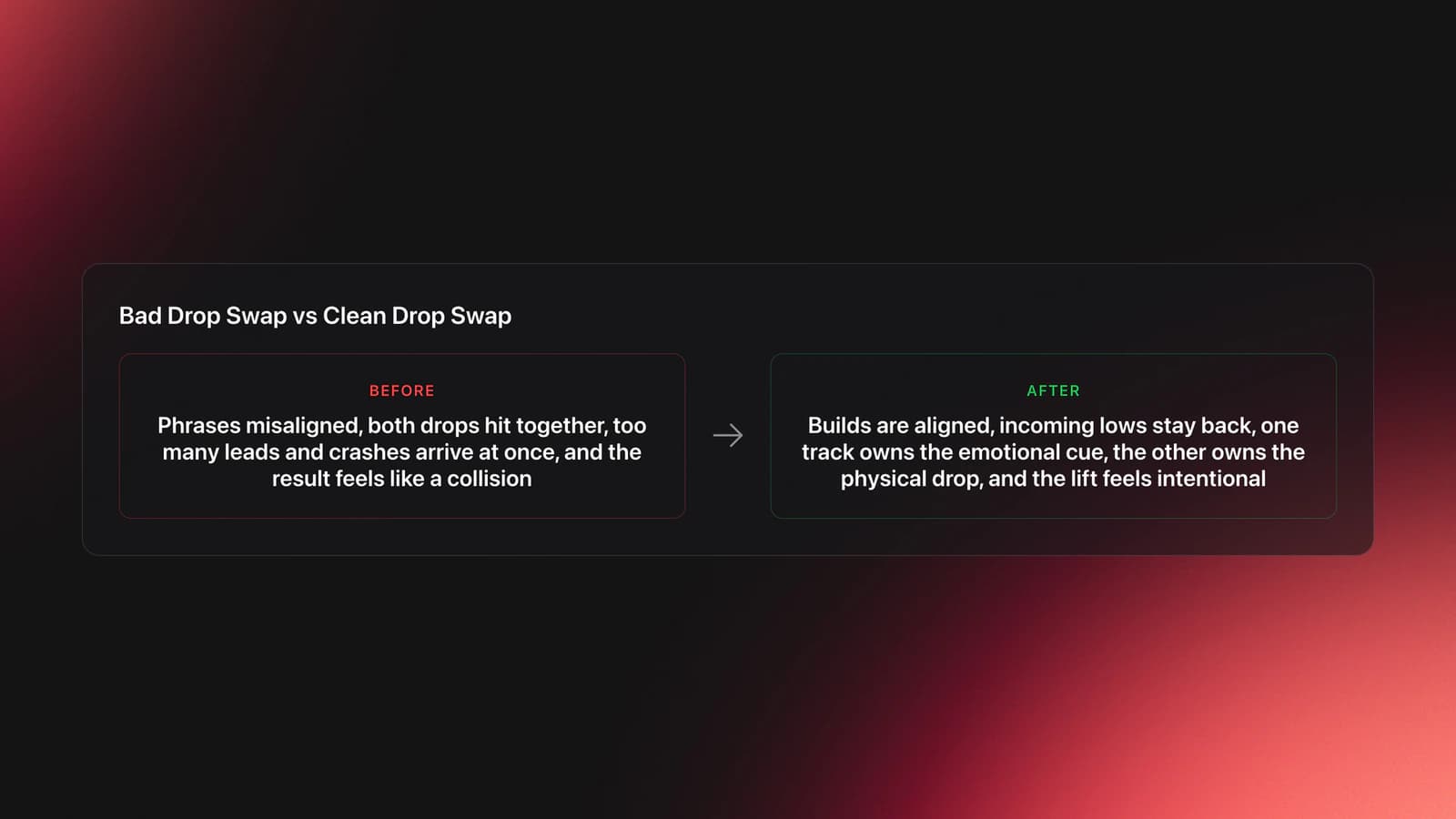
A frequent failure mode is double-release overload. Symptom. Both tracks explode at once and the mix feels larger but less clear. Usually too many leads, crashes, and open hats are arriving together.
To avoid that, choose which track owns each job. One owns the emotional cue. One owns the physical drop. Sometimes they are the same track. Often they are not.
You will know the swap works when the audience perceives a lift, not a collision. The new drop should sound like a reveal, not like two files competing for attention.
Why does this matter for workflow? Because this technique depends on finding compatible phrase architecture fast. If your collection is scattered, you miss the moment. Build categorized collections and named set structures so tracks with similar role, energy, and transition use-case are easy to pull during prep. This is the kind of prep Vibes is designed for, since tagging tracks by role and transition use-case is what turns a drop swap from a lucky accident into a pairing you spotted before the gig. The point is arriving at the set with swap-ready pairs already identified.
Layering House Trance With Two or More Roles
Layering is the most advanced of the three methods because it asks you to think in roles, not tracks. One deck may provide hats. Another may provide synth motion. Another may hold the kick and bass foundation.
You can still practice the idea on two decks. The key is assigning each track a temporary job.
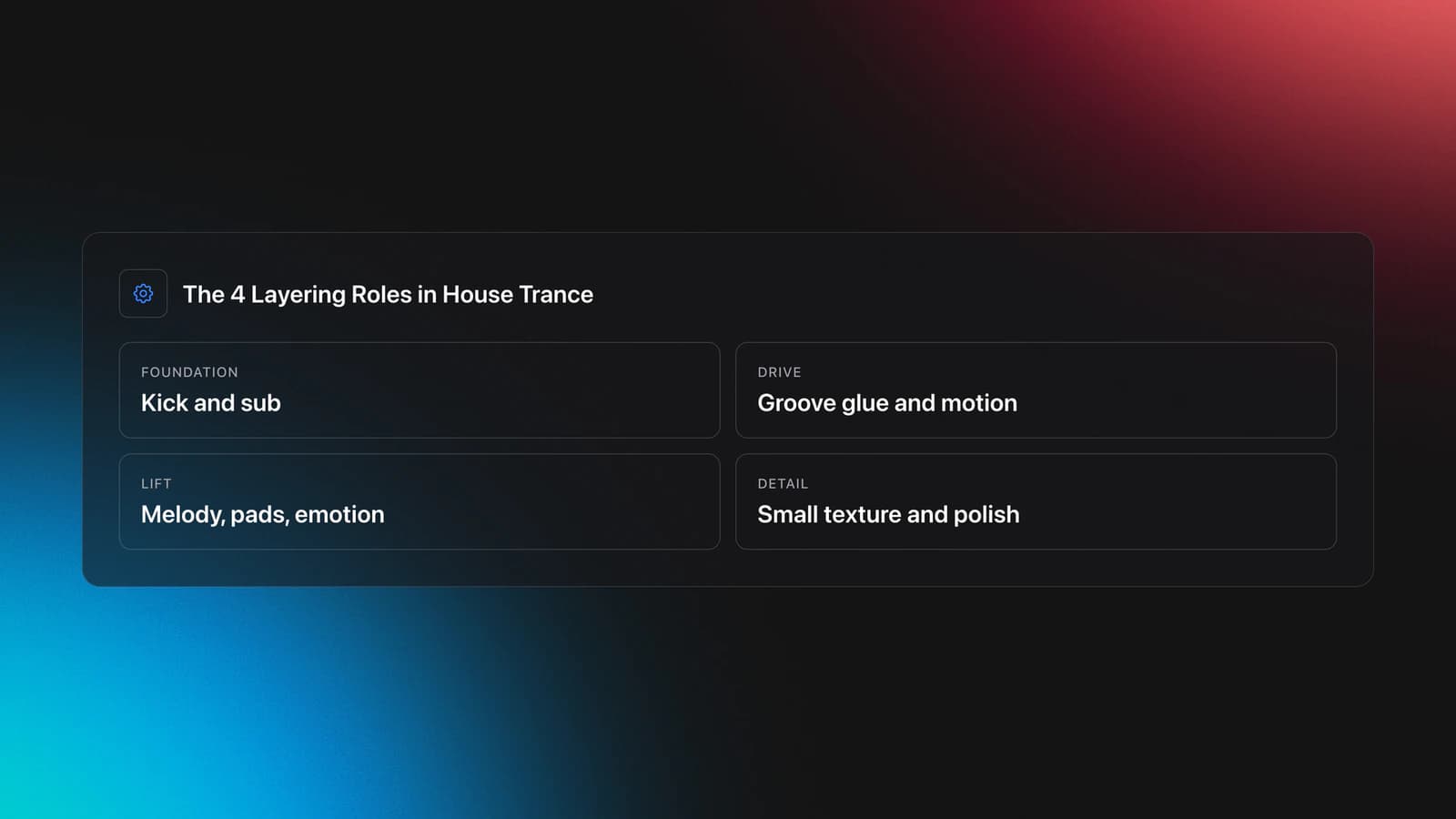
I break layering into four possible roles: foundation, drive, lift, and detail. Foundation is kick and sub. Drive is the groove glue, often percussion or bass movement. Lift is melody, pads, or emotional rise. Detail is the small texture that makes the blend feel custom.
Once you hear those roles, layering stops feeling random. You are building a temporary arrangement from selected parts.
Worked example 1. Track A provides foundation and drive with kick, bass, and a rolling clap groove at 125 BPM. Track B provides lift with a bright sequence and distant vocal texture at 125 BPM. Start Track B with lows fully out. Add just enough mids and highs for its sequence to read. When Track A reaches a thinner section, remove some of its highs so Track B owns the upper story.
That gives you a composite record. Track A keeps the floor stable. Track B adds emotional motion.
Worked example 2. Track A has excellent drums but a plain break. Track B has a cinematic breakdown but weak percussion. During the rise, allow Track B's pad and lead to sit over Track A's drums. After release, decide quickly whether Track B's drop groove is strong enough to take over. If not, keep Track A low-end dominant for another 8 or 16 bars.
This is also where production awareness helps. Producing dance music teaches you why some parts stack cleanly and others smear. If two layers both rely on a busy midrange hook, they often cancel each other emotionally even when they are technically in time.
A failure mode here is role drift. Symptom. The blend starts clean, then gets messy after 16 bars because neither track has a single defined job anymore.
When that happens, reset the question. Which track should the crowd physically follow right now? Which track should they emotionally notice? One answer per role.
Validation is stronger than simple loudness. You know the layer works when removing either track makes the groove feel smaller or the emotion feel flatter. If muting one deck changes nothing useful, that layer was not earning its place.
Native Instruments' trance production overview notes how breakdowns and long builds are central to the style. That is exactly why layering can be powerful here. Long transitions create room for selective overlaps if you are disciplined about role separation. Native Instruments' trance guide
How Do You Hear the Difference Between Progressive House and Trance?
Listen to what carries the track forward. Progressive house usually advances through groove layers, texture changes, and steady development. Trance more often leans on emotional arcs, breakdown-release contrast, and larger melodic cues.
House trance often lives between those poles. You get the rolling body of house with enough trance-style lift to create a bigger sense of arrival.
That means your mixing choices should reflect the dominant trait. If the track's identity is in the groove, preserve drums and bass continuity. If the identity is in the emotional rise, protect the breakdown and release timing.
| Trait | Progressive House Lean | Trance Lean | House Trance In Practice |
|---|---|---|---|
| Main driver | Rhythmic layering | Melodic tension and release | Both, with house pulse |
| Breakdown use | Controlled and moderate | Often bigger and more exposed | Present, but usually less extreme |
| Best transition style | Long EQ blend | Phrase-led handoff or drop swap | Slow blend plus selective swap |
| Risk in the mix | Too static | Too dramatic | Too crowded in mids and highs |
Use the dominant trait to decide how patient or dramatic your transition should be.
Common House Trance Mixing Mistakes
| Mistake | Why It Happens | How to Avoid |
|---|---|---|
| Swapping bass too early | The incoming track is audible, so the DJ assumes it is ready to lead | Wait for a phrase boundary and confirm the old groove has thinned |
| Letting both tracks own the top end | Bright synths, rides, and vocals all feel exciting in isolation | Choose one track to own highs and trim the other |
| Ignoring role separation | The DJ hears songs, not functions | Assign foundation, drive, lift, and detail before blending |
| Forcing a drop swap on poor phrasing | Beatmatching is right but structure is wrong | Align 8, 16, or 32-bar release points, not just tempo |
| Using too much EQ movement | Overcorrection replaces listening | Make fewer, slower changes and let the room tell you if they worked |
These are observable errors. You can hear each one on speakers within a few bars.
Practice Routine for House Trance Mixing
Keep the routine tight. You are training perception, not collecting hours.
- Days 1 to 3. Pick three house trance pairs at matching BPM. Practice only slow EQ blends for 20 minutes.
- Days 4 to 6. Use the same pairs. Mark phrase boundaries and rehearse one drop swap per pair for 20 minutes.
- Days 7 to 10. Build one 15-minute mini-set using one layered transition, one long blend, and one drop swap.
Short, repeated reps on the same pairs train your ear faster than scattered hours on new tracks. Structured repetition beats waiting for inspiration. My own ear for building energy this way came from a melodic techno background, where I drilled the same transitions across repeated sessions until the lift felt controlled instead of lucky.
Measure Progress in House Trance Sets
Progress is not about whether the transition was technically possible. It is about whether the energy curve stayed coherent.
- Record a 20-minute practice set and note every moment the groove weakens.
- Check whether each incoming track was audible before its low end arrived.
- Listen for top-end clutter during overlaps longer than 8 bars.
- Mark any swap where the new drop felt smaller than the outgoing one.
You are improving when transitions feel easier to predict from phrase structure, and harder to notice as mechanical events. In other words, the set sounds more intentional and less assembled.
House Trance Mixing: Closing Checklist
House trance works best when you hear roles instead of whole songs. That gives you cleaner EQ choices, stronger drop swaps, and more useful layering.
Keep these three takeaways in mind.
- Reveal identity before impact. Bring in musical information before new low end.
- Swap roles, not just tracks. Decide what owns groove, lift, and release.
- Prepare transition logic early. The best blends start in library prep, not under pressure.
Next time you practice, take one pair of tracks and run the same transition three ways. Slow blend it. Swap the drop. Then layer it. That comparison will teach you more than loading ten new records.
The visual way to organize your DJ library
Tag tracks by vibe. See everything at once. Export to rekordbox, Serato, Traktor or Engine DJ.
14-day free trial. Full access, no strings attached.
or see how it works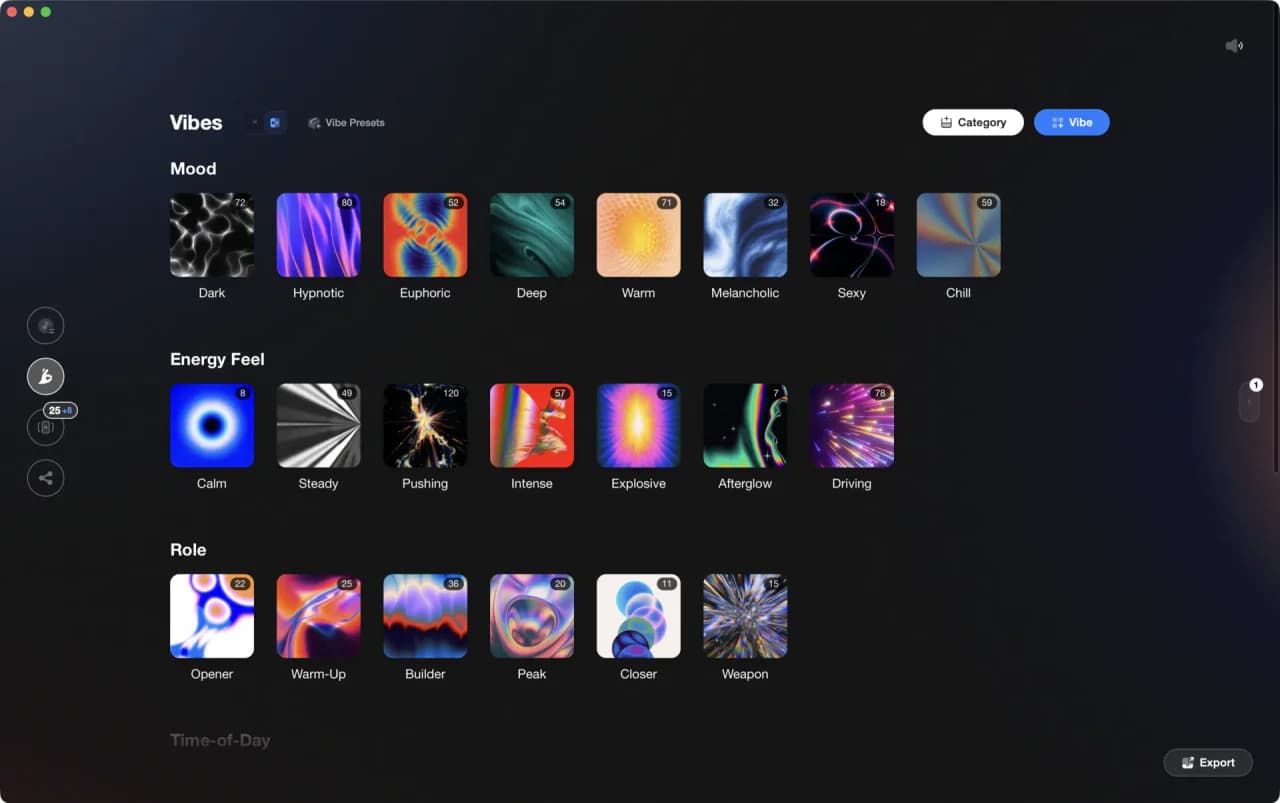
Techniques Covered

Layering
Types of DJ Transitions

Track Analysis
EQ Adjustments

Phrase Mixing
Low Pass Filtering
Track Selection
Bass Shift Transition

DJ Rig Setup
Drop Swap

Master Tempo Adjustment
Crossfader Use
Equipment & Software
Documentation
Continue Your Learning Journey
Start Here First
Related Content
Harmonic Mixing Guide for DJs: Energy & Workflow
intermediateHow To Mix In Key Live: Worked Transitions And Failure Fixes
intermediate
House Music Explained
intermediateTransition DJ Online: Browser Mixer Workflow
intermediate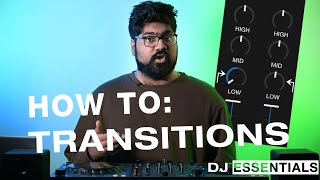
DJ Transitions: The Three-Layer Handoff for Beginners
intermediate
DJ Library Organization System: Tags, Crates, Keys
intermediate
DJ Record Pool Guide for Working DJs
intermediate
DJ Playlist Spotify: Mixing With Streaming Inside Rekordbox
intermediateFrequently Asked Questions

Hey, it's Ben Modigell 👋
I DJ and produce as so I so: downtempo, minimal, dub house, tech house, and techno (releases on Spotify and SoundCloud, links above). Everything I write here comes from my own gigs, studio sessions, and library cleanups: the rules I follow, the failure modes I have actually hit, and the workflow I use when nobody is watching. If a technique did not earn its place in my own sets, it does not make it into a tutorial.