Bass Shift Transition
A staged handoff that moves low-frequency ownership from one track to the next at a phrase boundary so basslines never compete.
Bass Shift Transition Tutorials
The Bass Shift Transition is a DJ mixing method that moves low-end weight from one track to the next without letting both basslines fight. If your blends sound muddy, weak, or crowded, the Bass Shift Transition usually fixes the problem. It gives you cleaner transitions, stronger drops, and more control over energy.
For most DJs, this is the point where mixing starts to feel intentional instead of accidental. You are not just fading tracks. You are deciding exactly when the room stops hearing one kick and starts feeling the next. To get there, first build reliable beat matching control and then practice the timing of the swap.
The term itself is less standardized than names like bass swap or bassline swap, but in practice it describes the same core idea taught in sources such as the Native Instruments transition guide, the Digital DJ Tips bassline swap breakdown, and the Club Ready DJ School bass swapping lesson.
What Is Bass Shift Transition?
A Bass Shift Transition is an EQ-based mix where you reduce the outgoing track’s lows while bringing in the incoming track’s lows at the right phrase point. The goal is simple: one dominant low end at a time, with the energy handoff happening smoothly and on structure.
This matters because low frequencies carry most of the physical weight in club music. When two kicks and two basslines overlap for too long, the mix loses clarity. Instead of sounding bigger, it often sounds blurred.
That is why so many transition guides treat bass swapping as a core skill. Native Instruments describes the move as swapping the bassline of one track for the incoming track, while Digital DJ Tips frames it as a way to avoid extended low-frequency overlap and keep the mix tight.
In other words, the Bass Shift Transition is not a trick. It is a control technique. Once you understand it, you can use it in subtle blends, long techno mixes, faster house transitions, and even genre changes where clean low-end management matters most.
Why Learn Bass Shift Transition
The Bass Shift Transition improves mix clarity because it prevents the low end from stacking up. It also makes your timing more musical because the swap usually works best at a phrase boundary, not at a random moment.
- Keeps kicks and basslines from clashing.
- Makes long blends sound cleaner and more deliberate.
- Lets you transfer energy without a hard cut.
- Builds stronger phrase awareness and EQ discipline.
- Works across house, techno, tech house, and minimal.
If you already know how to match tempo but your transitions still feel messy, this is usually the next skill to learn. It sits right between basic mixing and truly polished set control.
Gear and Track Setup
You need two playable decks, a mixer or controller with channel EQ, and headphones for cueing. More important than brand is having responsive low EQ control and enough headphone detail to hear whether the incoming kick is sitting correctly.
The best practice tracks have clear intros, outros, and predictable 16 or 32 bar phrases. Groove-led genres are ideal because their structure gives you obvious points to start the blend and obvious points to shift the bass.
Avoid learning this with two tracks that are both full of vocals, dense melodies, and irregular arrangements. Start with tracks where the drums and bass are easy to isolate. That gives your ears less to decode.
How to Do Bass Shift Transition
To do a Bass Shift Transition, beatmatch the incoming track, start it with its low EQ reduced, blend it during a compatible phrase, and then hand over the low end at the next strong structural point. The exact speed can vary, but the handoff should sound intentional and balanced.
| Step | Action | Key Point |
|---|---|---|
| 1 | Cue and beatmatch the incoming track | Lock timing before touching EQ |
| 2 | Lower the incoming track’s low EQ | Avoid double bass from the start |
| 3 | Bring the incoming track in during a phrase | Use 16 or 32 bar structure |
| 4 | Listen for the bass entry or phrase change | Choose the handoff moment musically |
| 5 | Raise incoming lows as outgoing lows drop | Keep one dominant low end |
| 6 | Remove the outgoing track cleanly | Finish with stable groove and level |
Start by cueing the second track and getting the beats tightly aligned in your headphones. If this part drifts, nothing after it will feel solid. That is why it helps to learn phrase matching for cleaner mix points before pushing this transition too hard.
With the first track live, bring in the second track at a phrase boundary with its low EQ turned down or heavily reduced. You want the audience to hear some of the incoming groove, but not its full weight yet.
Now listen for the right handoff point. On many house and techno tracks, that point is the next 16-bar or 32-bar phrase change, or the moment the incoming bassline fully arrives. Digital DJ Tips and Native Instruments both describe this phrase-based timing as central to a clean bass swap.
At that moment, raise the incoming low EQ toward neutral while dropping the outgoing low EQ. You can do this as a quick swap or a softer trade depending on the tracks. Club Ready DJ School highlights that many DJs swap too aggressively and create an empty hole instead of a smooth transfer.
Once the low end has moved, the room should clearly feel the new track driving the groove. From there, fade or EQ the old track out. If mids or vocals start fighting, trim those separately instead of blaming the low swap alone.
Timing the Shift
The best Bass Shift Transition timing happens at a structural change, usually every 16 or 32 bars. That is when the audience already expects movement, so the low-end handoff feels natural instead of disruptive.
Beginners often hear the bass arrive and react late. The fix is to count ahead. Know where the next phrase starts before it happens, then execute the swap on the downbeat instead of chasing it.
This is where it clicks. A clean bass shift is less about knob speed and more about musical placement. Even a perfect EQ move sounds wrong if it lands halfway through a phrase.
If you mix music with long intros and outros, mark likely swap points in advance. For practice, set cue points at the incoming bass entry and at the outgoing phrase boundary. That removes guesswork and trains your ear to connect structure with action.
Practice Drills for Bass Shift Transition
The fastest way to improve is short, repeatable practice. In practice, one focused transition goal per session builds cleaner results faster than marathon mixing. Bass Shift Transition responds especially well to that approach because the skill is narrow, measurable, and easy to repeat.
Start with two tracks that share similar energy and simple arrangements. Run the same transition five to ten times in a row. Change only one variable at a time, such as when you start the blend or how quickly you move the low EQ.
Organizing a small practice crate helps more than most DJs expect. In Vibes, you can group tracks by intro length, energy level, or phrase simplicity so your Bass Shift Transition drills stay consistent instead of random.
Give each drill a simple pass or fail result. Did the new groove take over cleanly. Did the old low end disappear at the right time. Could you hear a hole, a bump, or a muddy overlap. Those answers matter more than whether the move felt exciting.
Common Mistakes
Most Bass Shift Transition problems come from timing, not from the EQ knobs themselves. If the swap sounds bad, first check phrase alignment, then check gain, then check whether both tracks were too busy to overlap comfortably.
| Mistake | Why It Happens | Solution |
|---|---|---|
| Bass sounds muddy | Both tracks keep strong lows too long | Reduce incoming lows before blend and commit to one low end |
| Transition feels empty | Outgoing bass is cut too early or too hard | Swap closer to the incoming bass entry and use a softer trade |
| Mix sounds late | Swap happens after the phrase change | Count bars and execute on the downbeat |
| Blend feels crowded | Mids, vocals, or synths clash | Trim mids or choose simpler overlapping sections |
Why do most beginners struggle with this technique? They hear bass as one big block. In practice, the low end is tied to arrangement, groove, and expectation. When you move it at the wrong moment, the audience feels the mistake before they can describe it.
Another common issue is overcorrecting with the crossfader or line faders. The Bass Shift Transition is mainly about frequency control. Volume helps shape the finish, but it does not replace good low-end timing.
Troubleshooting the Blend
If the incoming track never feels powerful after the shift, check its gain and arrangement. Some tracks need more than a bass swap because their main energy sits in the mids, percussion, or vocal hook.
If the old track still dominates after the swap, you probably left too much of its low-mid body in the mix. This is where develop stronger EQ mixing instincts pays off. Sometimes the fix is a small mid reduction, not more bass movement.
If every swap feels abrupt, your track selection may be the real issue. Choose records with compatible groove density and similar kick weight. A great Bass Shift Transition starts before the mixer, at the moment you choose the next track.
For deeper sets, the progression is clear. First master clean low-end handoffs. Then add harmonic mixing to longer blends so the transition feels both rhythmically and tonally coherent.
Where Bass Shift Transition Works Best
Bass Shift Transition works best when the tracks share rhythmic logic and give you room to overlap. That is why it is especially strong in house, tech house, techno, and minimal, where intros and outros often leave enough space for controlled layering.
It also works well in long-form sets where you want energy continuity instead of obvious cuts. A smooth low-end handoff lets you move the dance floor forward without drawing attention to the mechanics of the mix.
In faster or more vocal-heavy genres, the technique still works, but you need shorter overlap windows and better midrange decisions. The result is less about textbook swapping and more about clean priority control.
Safety and Monitoring
Safe monitoring matters because long mixing sessions can push your ears harder than you realize. The CDC NIOSH noise exposure guidance states that repeated exposure at 85 dBA or higher is hazardous, and the WHO safe listening guidance notes that safe listening time drops sharply as level rises.
Keep headphones only as loud as needed to cue accurately. If you practice for long sessions, take short breaks, lower booth level when possible, and use hearing protection in loud rooms. Cleaner monitoring also improves Bass Shift Transition judgment because you can hear the handoff instead of just feeling volume.
Next Steps
Bass Shift Transition gives you a practical way to move from basic blending to intentional low-end control. Once you can place the swap on phrase and keep one clear bass driver at a time, your sets immediately sound tighter.
Focus on three things first.
- Count phrases before you touch the low EQ.
- Practice with simple track pairs until the handoff feels predictable.
- Record your drills and judge fullness, not just smoothness.
Start with two compatible house or techno tracks, run the same swap ten times, and aim for consistency before creativity. After that, expand into denser blends, faster transitions, and more advanced phrasing decisions.
The visual way to organize your DJ library
Tag tracks by vibe. See everything at once. Export to rekordbox, Serato, Traktor or Engine DJ.
14-day free trial. Full access, no strings attached.
or see how it works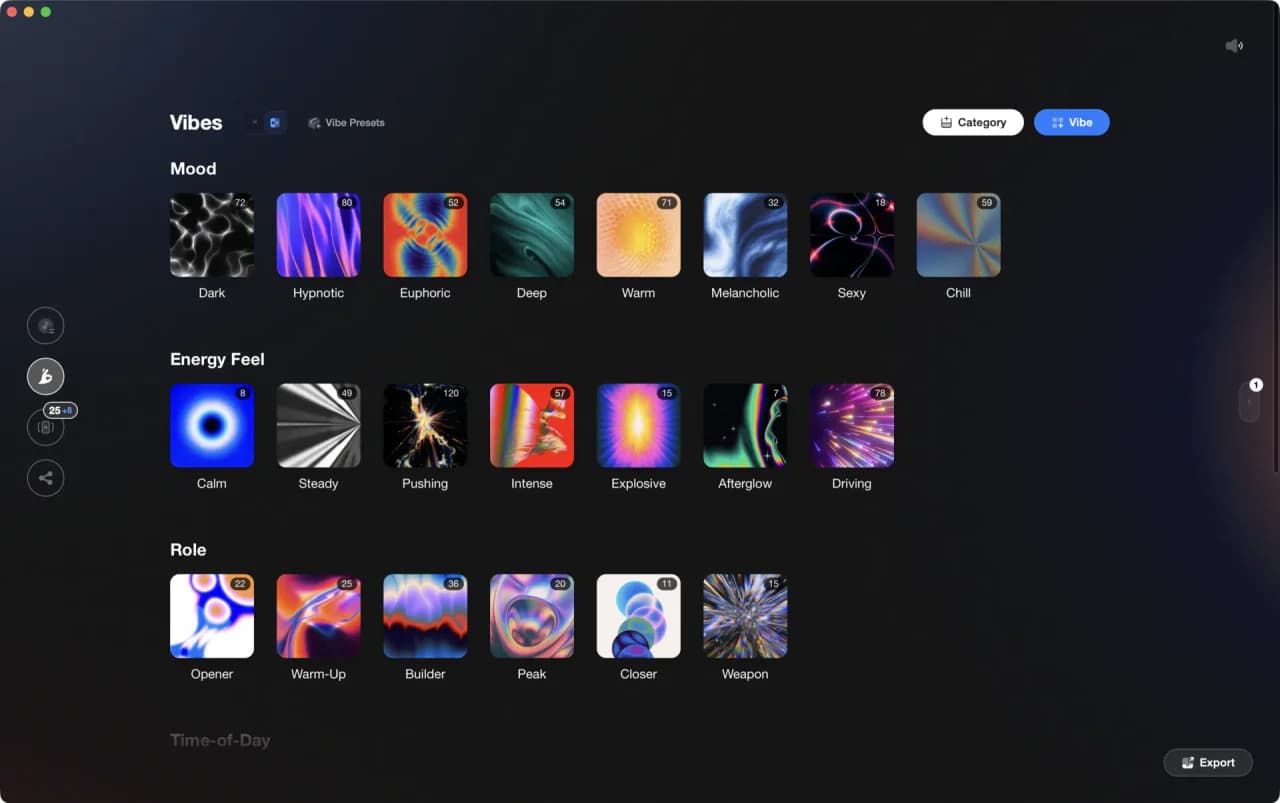
More Tutorials
Equipment You'll Need
DJControl Inpulse 200 MK2
optionalCompact 2‑deck USB DJ controller with built‑in audio, Beatmatch Guide LEDs, and Serato DJ Lite/DJUCED integration.
VirtualDJ
optionalDJ software for Windows and macOS that handles audio mixing, video mixing, karaoke, stems, and broad hardware support.
Serato DJ Pro
optionalProfessional DJ software for mixing, performance, library management, recording, and hardware-integrated club workflows.
Mixed In Key 11
optionalStandalone harmonic-mixing and library-prep software that detects keys, energy levels, cue points, and tags for DJ sets.
Frequently Asked Questions

Hey, it's Ben Modigell 👋
I DJ and produce as so I so: downtempo, minimal, dub house, tech house, and techno (releases on Spotify and SoundCloud, links above). Everything I write here comes from my own gigs, studio sessions, and library cleanups: the rules I follow, the failure modes I have actually hit, and the workflow I use when nobody is watching. If a technique did not earn its place in my own sets, it does not make it into a tutorial.