EQ Mixing
EQ mixing is the foundational DJ skill of shaping low, mid, and high frequencies during transitions so blends stay clear and musical.
EQ Mixing Tutorials
EQ Mixing is the skill of shaping low, mid, and high frequencies so two records can share space during a transition without turning muddy. If your mixes sound crowded, thin, or harsh, EQ Mixing is often the missing link. Learn it well and you can move between tracks with more control, more confidence, and a much more musical result.
For most DJs, EQ mixing matters because volume alone is not enough. Two kick drums fighting in the low end will blur the groove, and clashing mids can make vocals or synths feel messy. EQ mixing gives you a cleaner way to introduce, support, and remove parts of each track while the rhythm stays intact.
This technique works best after you can master beat matching fundamentals and learn phrase mixing structure. Once tempo and phrasing are stable, EQ becomes the tool that decides which track leads, which track supports, and when the handoff feels natural.
The visual way to organize your DJ library. Tag by vibe, export to any DJ app.
What Is EQ Mixing?
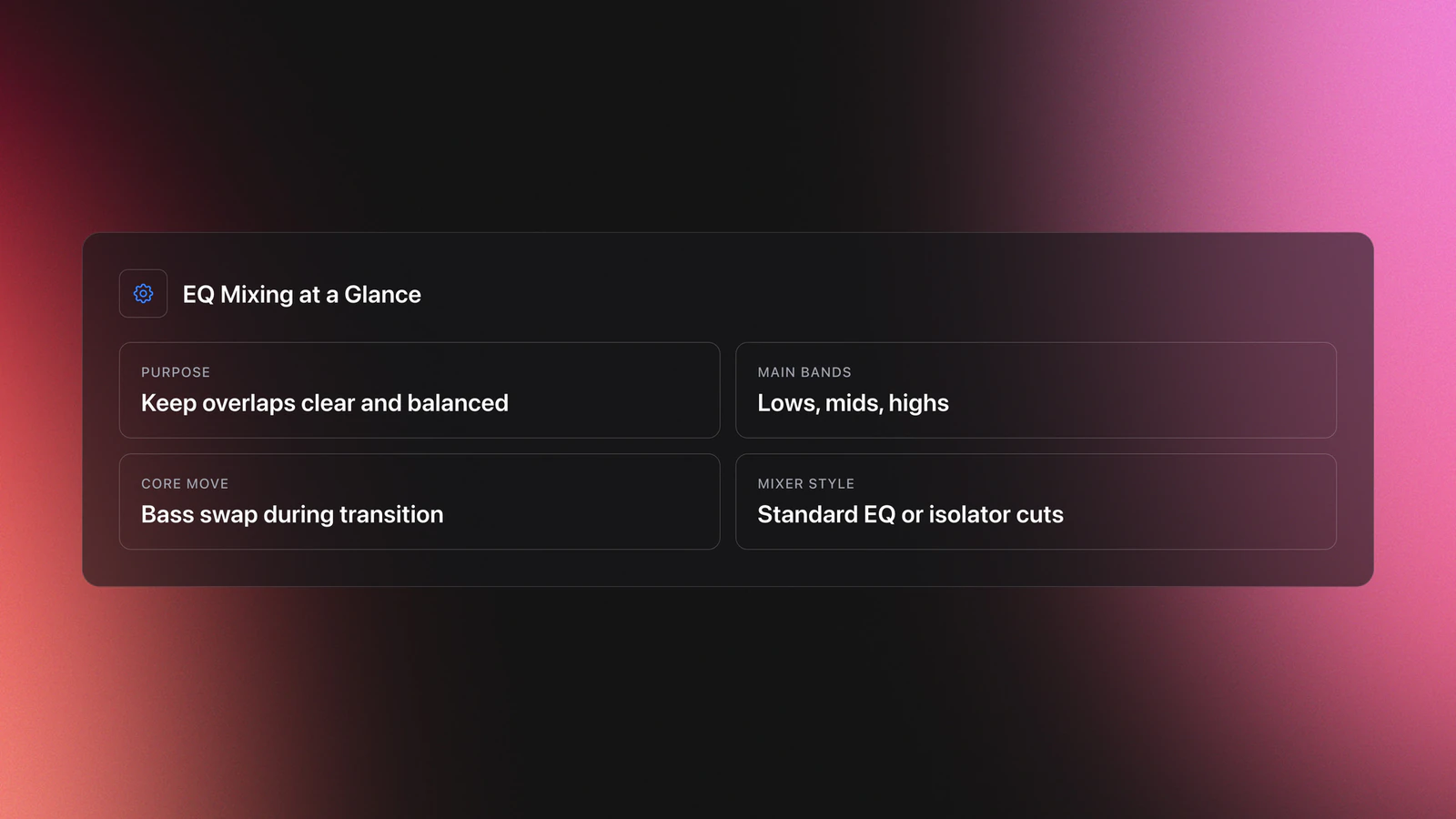
EQ mixing is the practice of adjusting frequency bands during a DJ transition so overlapping tracks stay clear and balanced. In most DJ mixers, that means controlling lows, mids, and highs on each channel, often with either standard EQ behavior or isolator-style cuts that can fully remove a band.
In practical terms, the most common EQ mixing move is the bass swap. Educational guides from DJ TechTools EQ mixing guide and the Native Instruments transition tutorial both describe lowering the incoming track's bass, bringing it into the mix, then exchanging low-end energy at the right phrase point.
That idea sounds simple. The skill comes from timing, restraint, and knowing what each band actually carries. Lows usually hold kick and bass power. Mids often carry vocals, synths, snares, and body. Highs shape brightness, hats, and edge.
EQ Mixing Fundamentals
The core rule of EQ Mixing is simple: do not let both tracks dominate the same frequency space for longer than necessary. That is why low-end control is usually the first thing DJs learn. Too much overlapping bass makes a transition lose punch and definition.
Most club mixers use three-band EQ. Pioneer DJ documents channel EQ and isolator behavior on mixers such as the DJM line, and the DJM-900NXS2 specs list switchable 3-band equaliser and 3-band isolator ranges, while the Pioneer DJ EQ isolator feature page describes independent control of high, mid, and low frequencies on each channel.
This matters because EQ mode and isolator mode do not feel the same. A regular EQ reduces a band but may not remove it completely. An isolator can cut a band to silence. If your mixer offers both, you need to know which mode you are practicing on before you build muscle memory.
Good EQ mixing also depends on gain staging. If one track is much louder than the other, your EQ choices become harder to judge. Set channel trims carefully, watch the meters, and avoid using EQ knobs like volume knobs.
Finally, EQ is not a rescue tool for every mismatch. If the phrasing is off, the arrangement is too busy, or the melodies fight, you may need a shorter transition, a filter-based exit, or to use harmonic mixing for cleaner blends. EQ solves frequency conflict. It does not solve every musical conflict.
How to EQ Mix Step by Step
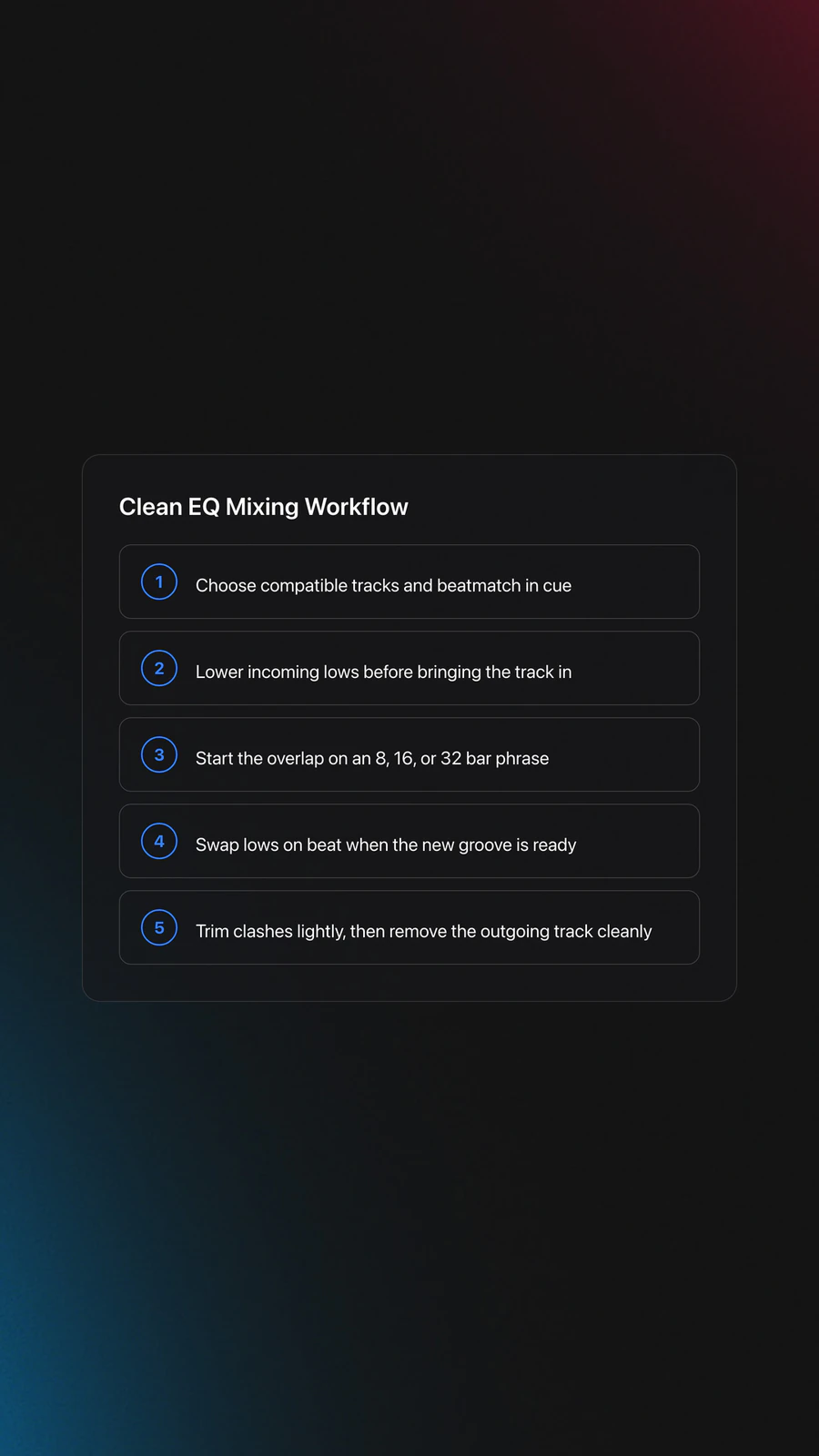
To EQ mix cleanly, start with two tracks that already fit in tempo and phrase, reduce conflict before the overlap starts, then exchange frequency ownership in time with the arrangement. The goal is not dramatic knob movement. The goal is controlled handoff.
- Choose two tracks with compatible tempo and phrase structure.
- Cue the incoming track and beatmatch it in headphones.
- Lower the incoming low EQ before bringing it in.
- Introduce the new track at a clear 8, 16, or 32 bar point.
- Swap lows when the incoming groove is ready to lead.
- Trim mids or highs only if elements clash.
- Remove the outgoing track cleanly after the handoff.
Start with the easiest version. Pick two tracks in similar BPM ranges, with stripped intros and outros. House and techno are ideal because the arrangement often leaves room for longer blends.
Bring the incoming track in with its low EQ reduced. This follows the bass swap method described in the Native Instruments transition tutorial and echoed in the DJ TechTools EQ mixing guide. You are creating overlap without stacking two full basslines.
As the phrase approaches the point where the new track should take over, restore the incoming lows while reducing the outgoing lows. Make this move on the beat and in phrase. That timing is what makes the swap feel intentional rather than accidental.
Use mids and highs more carefully. If both tracks have vocals, chords, or bright percussion, small cuts are often enough. New DJs often overwork these bands and end up thinning the mix too much.
Then finish the transition decisively. Once the audience is hearing the new groove and the old track has lost its main role, lower the outgoing fader or remove the remaining conflicting bands. Clean exits sound more professional than hesitant ones.
| Stage | Action | Key Point |
|---|---|---|
| Setup | Beatmatch and phrase-align the incoming track | EQ cannot fix timing errors |
| Entry | Lower incoming lows before raising the channel | Avoid muddy low-end overlap |
| Blend | Let the tracks run together for a controlled phrase | Listen for vocal and synth clashes |
| Handoff | Swap basslines at a clear phrase point | Move on beat, not randomly |
| Exit | Remove the outgoing track cleanly | Do not drag the overlap too long |
Equipment for EQ Mixing
You do not need expensive gear to learn EQ mixing, but you do need reliable control over each channel's frequency bands. A basic controller with a 3-band EQ is enough to build the skill. Better mixers simply make the feedback clearer and the cuts more precise.
Current AlphaTheta support pages still list the DJM-A9 as the flagship four-channel mixer in its range, and its manual materials emphasize refined 3-band EQ control on each channel through the AlphaTheta DJM-A9 instruction manual page. Older club standards like the DJM-900NXS2 remain common in booths, and the DJM-900NXS2 specifications confirm both equalizer and isolator options.
Headphones matter just as much as the mixer. You need to hear phrasing, kick placement, and tonal balance before the audience hears the blend. Closed-back DJ headphones with good isolation help you judge low-end timing without raising cue volume too far.
If your software shows waveforms or frequency information, treat that as support, not a substitute for listening. Visual tools can help you predict dense sections, but your ears should decide whether the overlap is actually clean.
Practice Drills for EQ Mixing
The fastest way to improve EQ mixing is to isolate one variable at a time. Through daily 15-minute practice sessions over several years, I found that short bass-swap drills built cleaner instincts faster than long, unfocused practice sets. Consistent repetition beats marathon sessions here.
Start with one transition type for a full week. Use intro-to-outro blends only. Practice with tracks that have obvious 16 or 32 bar phrasing so the timing stays predictable while your hands learn the motion.
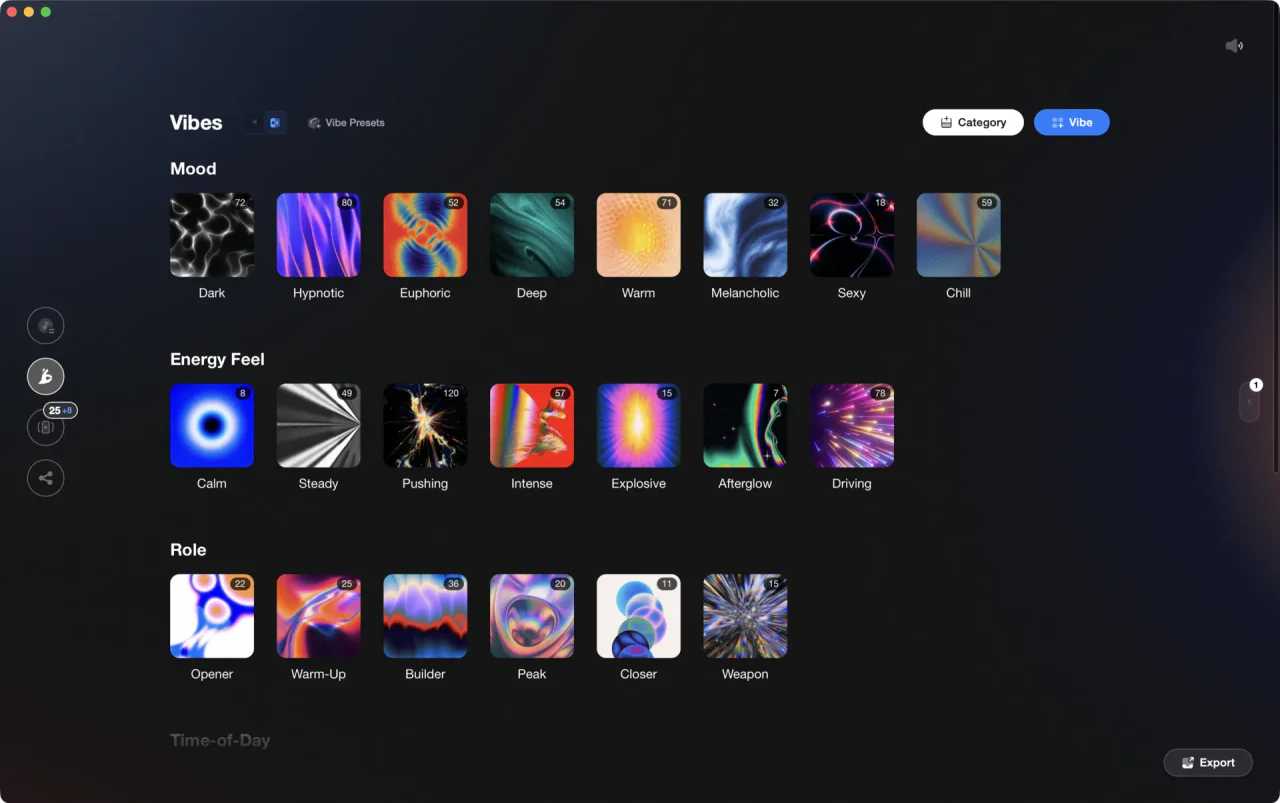
A structured library helps here. In Vibes, you can group practice tracks by bass density, vocal presence, or transition difficulty so you repeat the same type of EQ problem on purpose instead of guessing from a huge collection.
Track your progress in 2–4 week cycles. Most DJs improve faster when they can hear the same pairs repeatedly, compare recordings, and reduce one mistake at a time. The measurable goal is simple: make the overlap sound deliberate, not crowded.
Common EQ Mixing Mistakes
Most EQ mixing problems come from poor timing, overcorrection, or listening too visually. The fix is usually smaller moves, better phrasing, and stronger awareness of what each band is carrying.
| Mistake | Why It Happens | Solution |
|---|---|---|
| Both basslines play together too long | Incoming lows were not reduced before entry | Cut incoming lows first and swap at a phrase boundary |
| Mix sounds thin after the transition | Too much mid and high EQ was removed | Use smaller cuts and restore bands gradually |
| Transition feels random | EQ moves were made off phrase or off beat | Count bars and make the main swap on a strong downbeat |
| Knobs are used like volume controls | Gain staging was not set correctly | Set trims first and use faders for level, EQ for space |
Why do most beginners struggle with EQ mixing? Because they hear a muddy blend and react with large knob movements. That often creates a second problem. It is better to decide in advance which track owns the lows, then make one clear move at the right time.
Another common issue is trying to save bad track combinations with EQ alone. If both songs are melodically busy, a shorter blend may work better. In other cases, changing the transition point solves more than any knob adjustment.
Troubleshooting Muddy or Thin Mixes
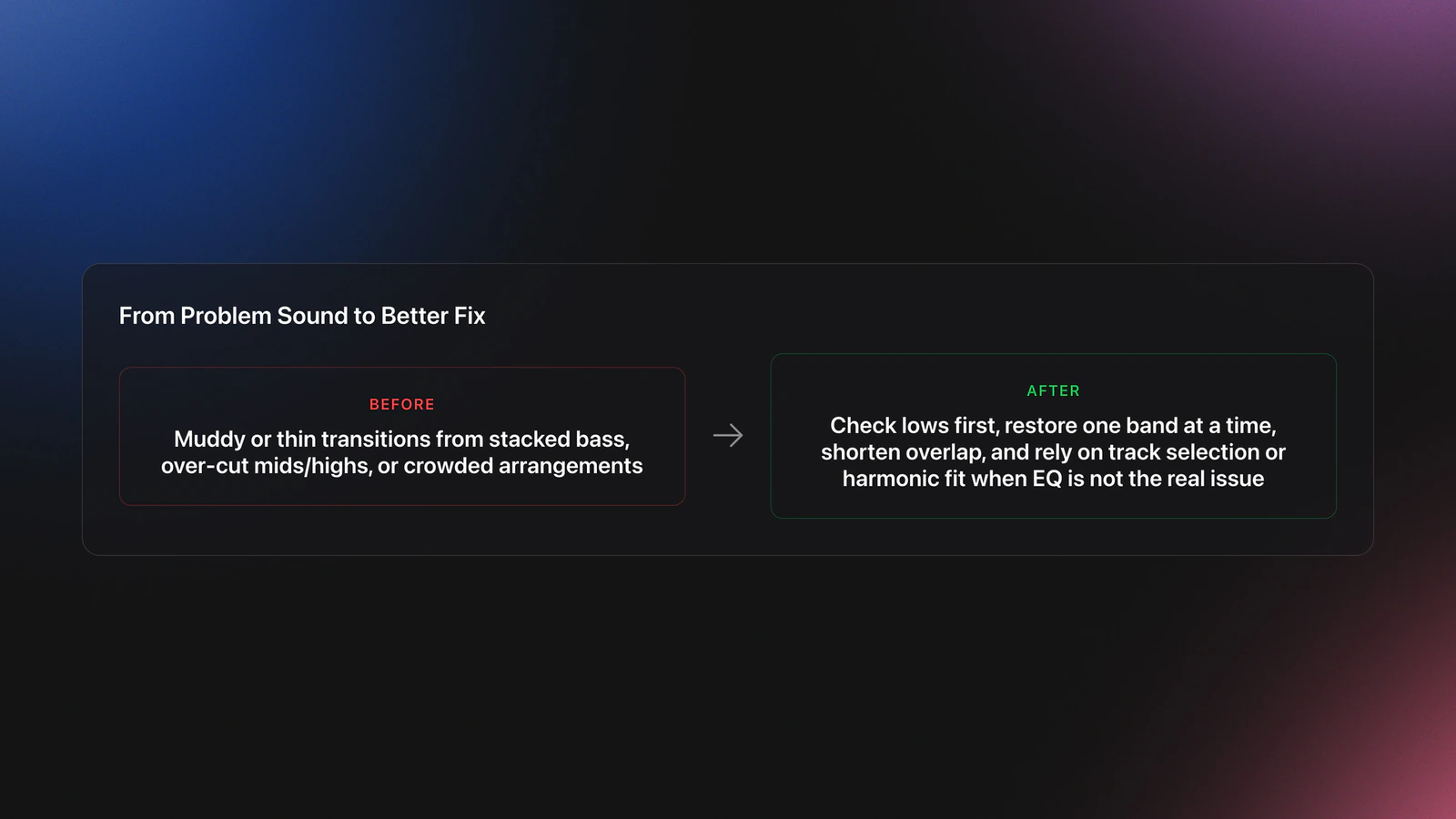
If your EQ Mixing sounds muddy, check the low end first. Two kicks and two basslines are the fastest route to a blurred transition. Shorten the overlap and exchange lows earlier.
If the mix sounds thin, you probably removed too much mid content or cut highs too aggressively. Restore one band at a time and listen for body before brightness. Thin mixes often come from fear of clash rather than actual clash.
If everything looks aligned but still sounds wrong, the problem may be arrangement or harmony. Busy vocal phrases, layered synth hooks, or incompatible keys can sound crowded even when the EQ is technically correct. That is where use harmonic mixing for cleaner blends and better track selection become more important than more knob movement.
Safety and Monitoring
Safe monitoring is part of good EQ mixing because tired ears make poor tonal decisions. The CDC NIOSH noise exposure guidance states that 85 dBA averaged over 8 hours is the recommended exposure limit for workplace noise, and it notes that bars and nightclubs can reach levels around 95 dBA or higher.
That means long practice sessions at loud booth levels can damage hearing and reduce mix judgment. Keep headphone cue volume as low as possible, take breaks, and use hearing protection in loud rooms. Clear ears make better EQ choices.
Why EQ Mixing Matters in Real Sets
EQ mixing matters because it lets you keep energy moving without abrupt drops in quality. In house and techno, it helps long blends stay powerful. In open format and hip-hop, it helps you control overlap so transitions feel intentional rather than cluttered.
The real benefit is confidence. Once you trust your EQ decisions, you stop guessing during transitions. You can focus more on track selection, crowd reading, and set flow because the technical handoff is under control.
Key Takeaways
EQ Mixing is not about constant knob movement. It is about deciding which track owns each frequency space during a transition, then making that handoff in time with the music.
Focus on three priorities first. Keep tempos aligned. Swap lows with clear phrasing. Make smaller cuts than you think you need. Once those habits are stable, the rest of the technique becomes much easier to hear and repeat.
- Start with bass swaps before trying complex full-band sculpting.
- Use EQ to create space, not to compensate for bad phrasing.
- Practice short, repeatable drills before testing the skill in full sets.
Your next step is simple: choose two tracks with clean intros and outros, then practice 10 low-end swaps in a row. After that, add small mid corrections and compare recordings. From there, the progression becomes clear.
The visual way to organize your DJ library
Tag tracks by vibe. See everything at once. Export to any DJ software.
A visual system for organizing your DJ library.
More Tutorials


Frequently Asked Questions

Hey, it's Ben Modigell 👋
I DJ and produce as so I so — downtempo, minimal, dub house, tech house, and techno (releases on Spotify and SoundCloud, links above). Everything I write here comes from my own gigs, studio sessions, and library cleanups: the rules I follow, the failure modes I've actually hit, and the workflow I use when nobody's watching. If a technique didn't earn its place in my own sets, it doesn't make it into a tutorial.