Low Pass Filtering
Low pass filtering shapes transitions by removing higher frequencies so blends sound cleaner, softer, and more controlled.
Low Pass Filtering Tutorials
Low Pass Filtering is one of the fastest ways to make a rough blend sound intentional. In DJ use, it gradually removes the upper part of the spectrum so a track feels softer, farther back, or less busy while another track comes forward. If you already know how to lock your timing with beat matching fundamentals, low pass filtering helps you shape the handoff instead of just swapping songs.
This matters because crowded mids and highs are where many transitions sound messy. A well-timed low pass move creates space, controls tension, and keeps the blend musical. Low Pass Filtering also teaches a bigger skill: hearing frequency balance as part of performance, not just as a technical setting.
What Is Low Pass Filtering?
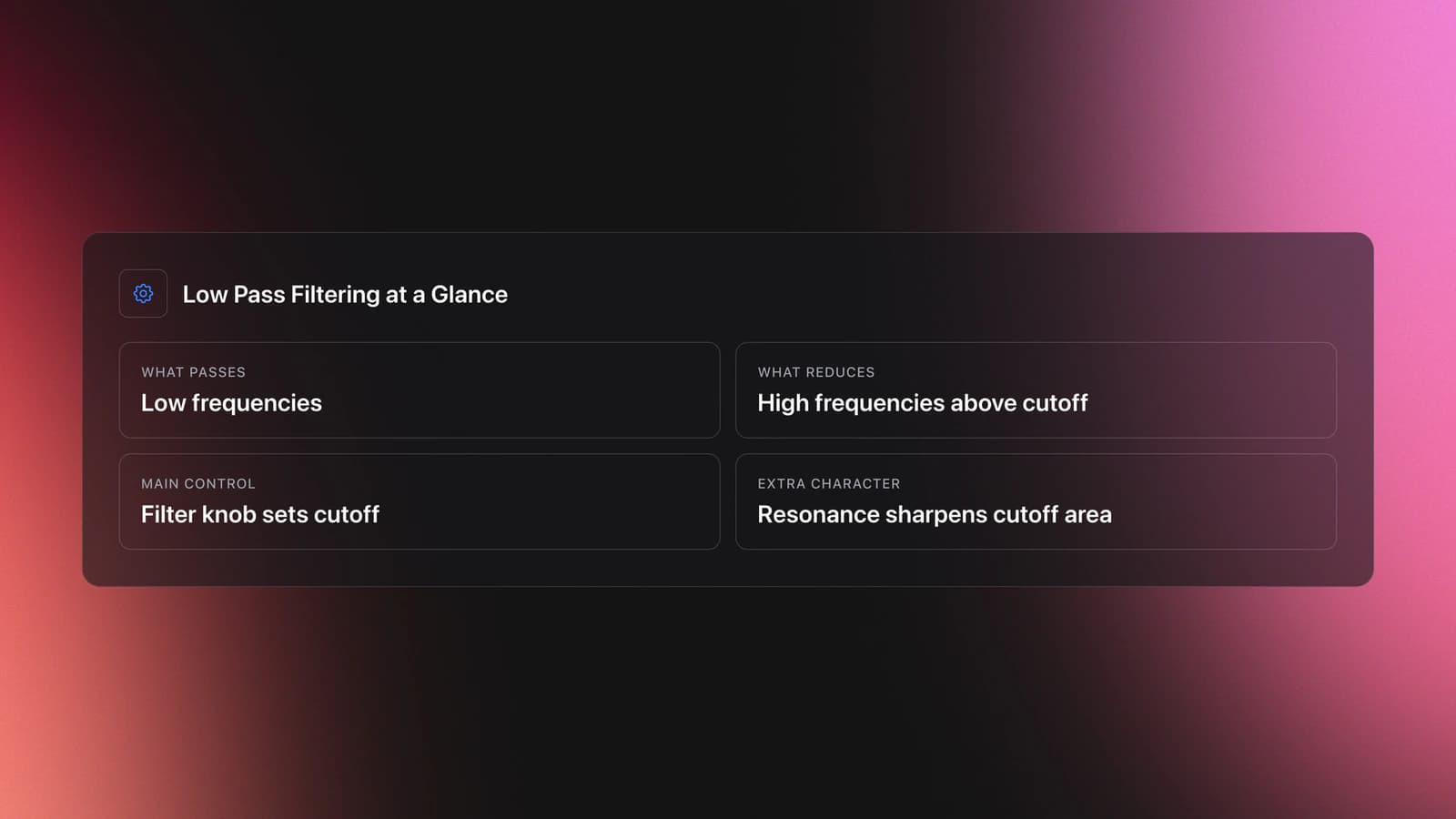
Low Pass Filtering is the process of letting lower frequencies pass while reducing frequencies above a chosen cutoff point. In practice, DJs use it to soften a track, hide bright percussion, and make room for another record during a transition. It is often called a high-cut or treble-cut filter in audio contexts.
On most DJ mixers and controllers, the filter knob changes the cutoff frequency. Turn it further, and more highs disappear. Some mixers also add resonance, which boosts the area near the cutoff point and makes the effect feel sharper or more dramatic.
That is why low pass filtering can sound smooth on one mixer and aggressive on another. The core idea stays the same, but the curve, slope, and resonance behavior change by device and software.
Why DJs Use Low Pass Filtering
DJs use low pass filtering because it solves a real mixing problem in seconds. When two tracks both have hats, claps, vocals, or bright synths, the top end becomes crowded. Filtering one track reduces that clash and makes the transition easier to control.
It also changes perceived distance. A filtered track feels more muted and less present, so the incoming track can take focus without an abrupt volume jump.
- Clears high-frequency clutter during transitions
- Builds tension before a drop or phrase change
- Helps older, duller, or simpler tracks sit behind busier records
- Makes loop-based blends sound more polished
- Gives beginners a safer way to shape energy without overusing FX
Educational DJ tutorials often show this in house and techno because long transitions leave more room for tonal shaping. That said, the technique works in many styles as long as the move matches the phrase and does not feel like an effect for its own sake.
Equipment for Low Pass Filtering
You only need a mixer or controller with a filter control, plus tracks that are beatmatched and phrased well. Many Pioneer DJ and AlphaTheta mixers, controllers, and software layouts place filter on each channel, while some units separate low-pass and high-pass controls for finer handling.
The essential point is control, not brand. You need a knob or effect that lets you lower the cutoff smoothly. If your hardware also gives you resonance control, use it carefully at first because extra resonance makes the sweep more obvious.
| Need | Essential | Why It Matters |
|---|---|---|
| Filter control | Yes | Lets you remove highs smoothly during the blend |
| Headphones | Yes | Helps preview how much top end you are removing |
| Resonance control | No | Adds character, but can also sound harsh if overused |
| Prepared practice tracks | No | Makes repeat drills faster and more measurable |
How to Use Low Pass Filtering
To use Low Pass Filtering well, start with solid timing, then remove only enough high-end to create space. The goal is not to hide bad mixing. The goal is to guide attention from one track to the next.
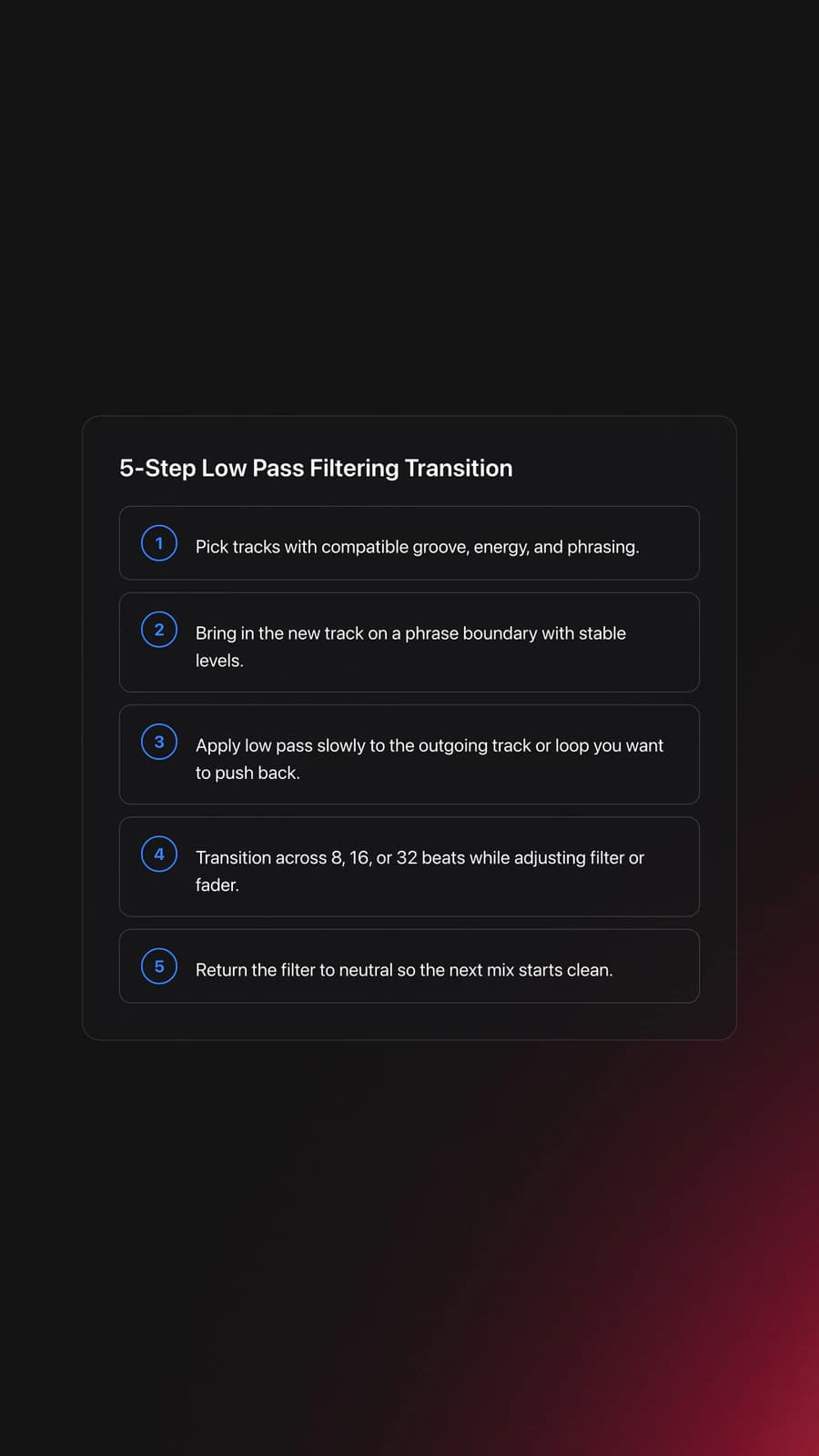
First, choose two tracks with similar groove and compatible energy. If the phrasing is wrong, the filter move will still feel wrong. This is where learn phrase mixing for cleaner entry points makes the technique much easier.
Second, start the incoming track on a clear phrase boundary. Keep levels stable. Do not grab the filter immediately unless the outgoing track is already too bright or busy.
Third, apply the low pass filter to the track you want to push back. In most blends, that is the outgoing track or a loop from it. Turn slowly. Listen for the point where hats and upper synth detail soften but the groove still holds.
Fourth, continue the transition over 8, 16, or 32 beats. If the new track is gaining focus, ease the old one further into the filter or lower its channel fader. If the mix starts sounding hollow, you have filtered too much, too soon.
Finally, reset the filter cleanly. This part matters. If you leave the knob engaged and forget it, the next transition will start from a bad position.
Low Pass Filtering vs EQ Mixing
Low Pass Filtering is faster and broader than EQ mixing. A filter changes the spectrum with one move, while EQ gives separate control over lows, mids, and highs. In other words, the filter is great for shape and feel, while EQ is better for precision.
Most working DJs use both. A common pattern is to use low pass filtering for movement and blend frequencies with EQ mixing control for balance.
Low Pass Filtering
- Best for broad tonal shaping, tension, and quick transitions.
- Easier to learn, but easier to overdo.
EQ Mixing
- -Best for detailed balancing of lows, mids, and highs.
- -More precise, but slower under pressure.
Practice Drills for Low Pass Filtering
Practice should be short and repeatable. In practice, filter drills improve fastest when you repeat the same 16-bar blend with only one variable changing each round. That builds ear training and hand control much faster than random free mixing.
Start with two drum-forward house tracks at the same BPM. Mix them for 16 bars and use the low pass filter only on the outgoing track. Your target is simple: reduce brightness without losing the pulse.
Next, repeat the drill three times. On pass one, use only a small move. On pass two, push further. On pass three, add a short reset just before the phrase change so you learn how the release feels.
Then try a loop drill. Loop the outgoing track for 8 beats and low-pass it progressively while the new track enters. This teaches tension control and helps you hear when filtering supports the groove versus when it empties the mix.
For organized practice, it helps to keep a small library of tracks tagged by role, such as warm-up, groove tools, bright percussion, and vocal pressure points. In Vibes, that kind of practice crate can be grouped by energy or transition purpose so you can repeat the same exercise without hunting for tracks.
A strong progression is 2 to 4 weeks of short daily sessions. Record one take at the start of the cycle and one at the end. You should hear smoother timing, gentler filter arcs, and better judgment about when not to use the effect.
Common Mistakes in Low Pass Filtering
Most mistakes come from treating the filter like a trick instead of a transition tool. The first sign is over-filtering. If the outgoing track loses too much midrange and punch, the blend stops sounding intentional and starts sounding broken.
| Mistake | Why It Happens | Fix |
|---|---|---|
| Turning too far | You chase a dramatic sweep instead of a useful one | Stop when highs soften but groove remains clear |
| Starting too early | The filter move is not tied to phrase structure | Begin on an 8, 16, or 32 beat boundary |
| Leaving resonance too high | A resonant peak sounds exciting in headphones | Lower resonance and compare in speakers |
| Forgetting to reset | The knob stays engaged after the blend | Make reset part of every transition routine |
Another mistake is using low pass filtering to hide poor track choice. If the records fight harmonically or rhythmically, filtering may reduce the damage but it will not fix the root issue. That is where use harmonic mixing to avoid tonal clashes and better phrase selection matter more than effects.
Troubleshooting Low Pass Filtering
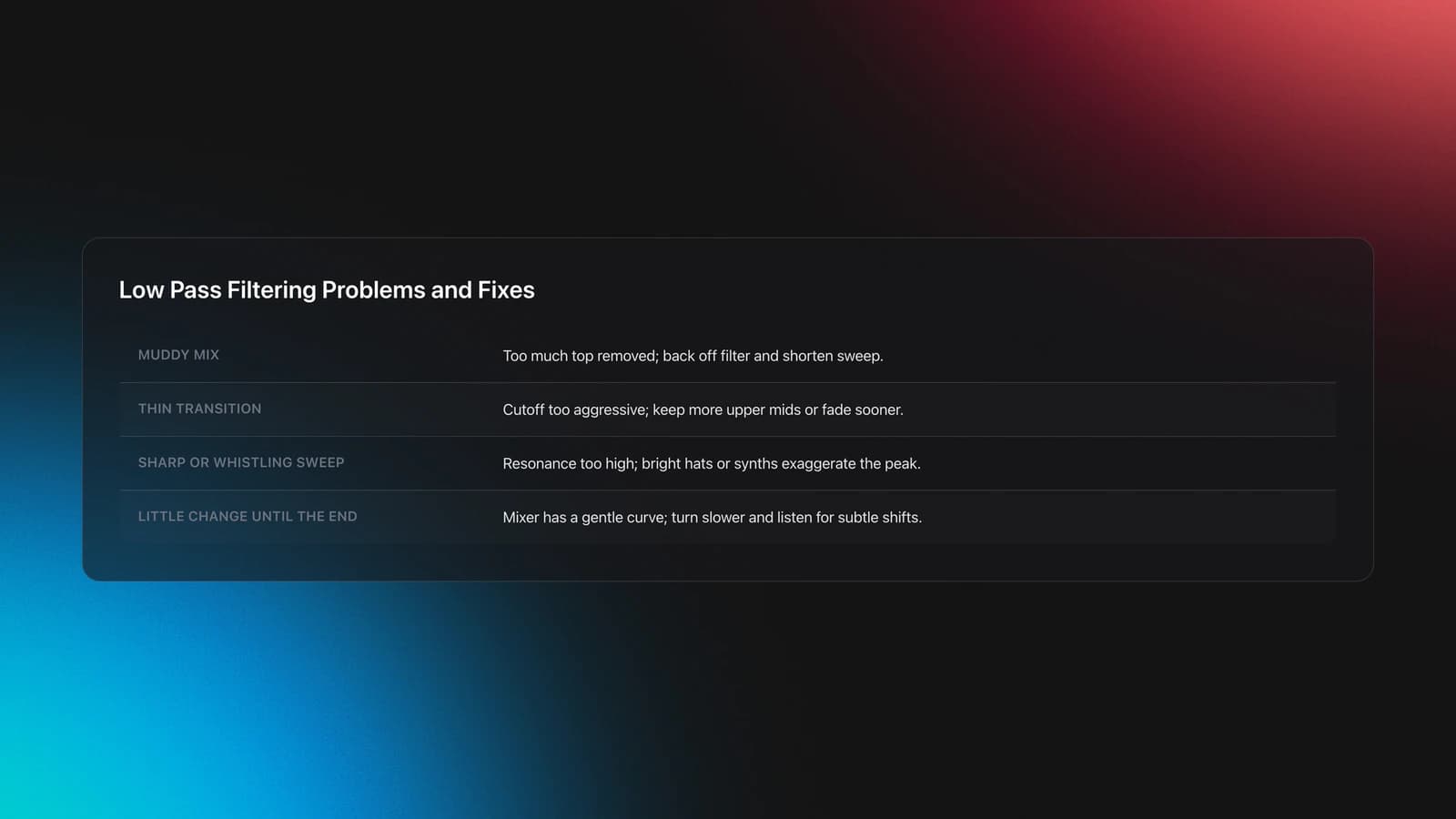
If your mix sounds muddy after filtering, you probably removed too much top end while leaving too much low-mid content. Back the filter off slightly and shorten the duration of the sweep.
If the transition sounds thin, the cutoff is likely too aggressive. Let more upper mids stay in the outgoing track, or fade the channel down sooner instead of relying on the filter alone.
If the sweep sounds sharp or whistling, resonance is too high for the material. Bright hats, vocal sibilance, and acid-style synths can exaggerate that peak.
If nothing seems to happen until the end of the knob travel, your mixer may have a wide gentle curve. That is normal. Practice slower turns and listen for smaller changes rather than waiting for a dramatic effect.
Musical Examples and Use Cases
Low Pass Filtering shows up most naturally in long-form club mixing. House and techno DJs often use it to make space for incoming percussion, to push a loop into the background, or to build tension before revealing the full spectrum again.
It also works well when moving from a busy track to a cleaner one. By softening the outgoing top end first, the incoming groove feels larger and more deliberate when it lands.
The technique is less useful in very fast, cut-heavy styles where transitions are short and abrupt by design. In those cases, timing and selection usually matter more than gradual tonal shaping.
How Long Does Low Pass Filtering Take to Learn?
Most beginners can use Low Pass Filtering in a basic way within a few sessions. Confident use takes longer because the real skill is judgment, not knob movement.
A realistic benchmark is one to two weeks to understand the motion, then another two to four weeks to apply it consistently across different tracks and energy levels. The learning speed depends on your phrasing, track choice, and how often you record your practice.
Wrap-Up
Low Pass Filtering is simple to start and hard to master, which is exactly why it belongs in every DJ's core toolkit. Used well, it clears space, shapes tension, and makes transitions feel musical instead of mechanical.
Key takeaways:
- Use the filter to guide attention, not to cover mistakes
- Tie every sweep to phrase timing and track role
- Practice short, repeatable drills and always reset the control
Start with one controlled 16-bar transition, then expand to loops, longer blends, and layered mixes. From there, the next step is combining this technique with stronger phrasing and finer EQ decisions.
The visual way to organize your DJ library
Tag tracks by vibe. See everything at once. Export to rekordbox, Serato, Traktor or Engine DJ.
14-day free trial. Full access, no strings attached.
or see how it works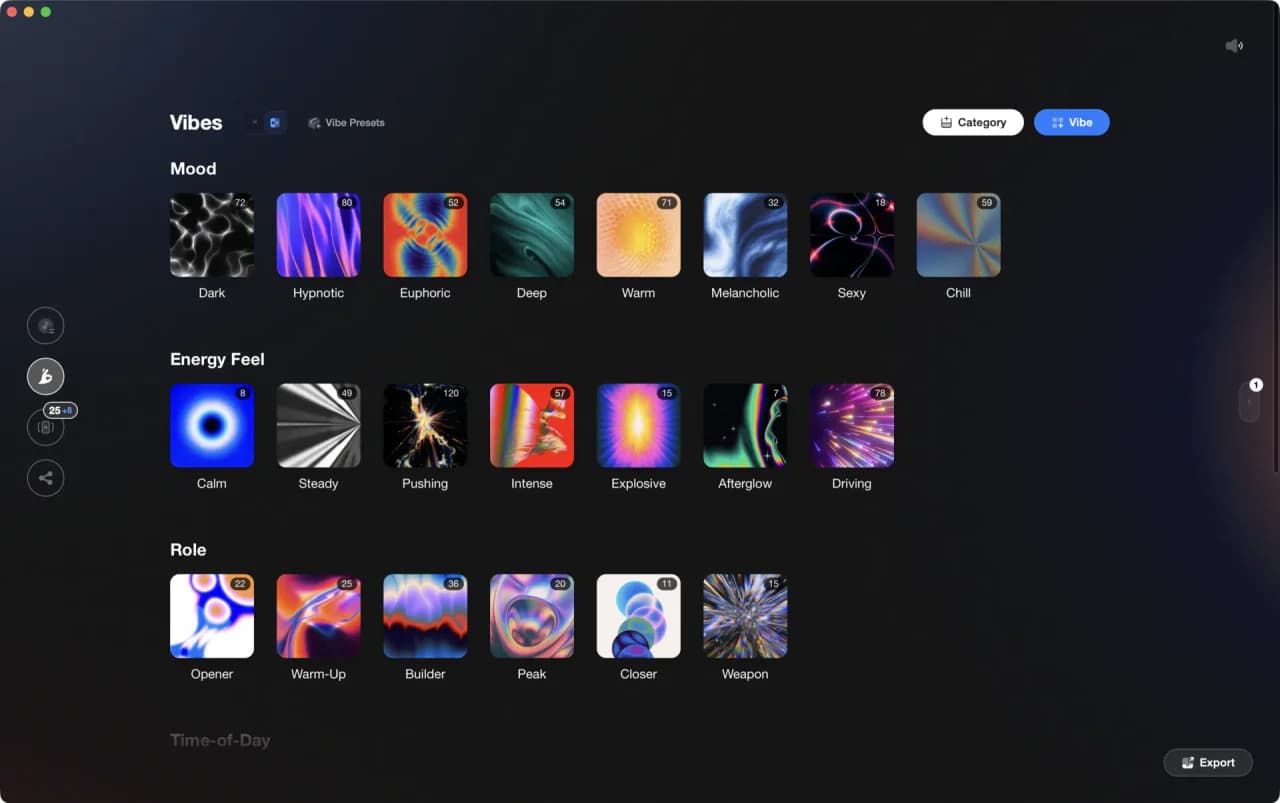
More Tutorials
Equipment You'll Need
VirtualDJ
optionalDJ software for Windows and macOS that handles audio mixing, video mixing, karaoke, stems, and broad hardware support.
Serato DJ Pro
optionalProfessional DJ software for mixing, performance, library management, recording, and hardware-integrated club workflows.
Mixed In Key 11
optionalStandalone harmonic-mixing and library-prep software that detects keys, energy levels, cue points, and tags for DJ sets.
Image-Line Soundgoodizer
optionalA simple stereo maximizer-enhancer plugin for FL Studio that applies one-knob processing based on the Maximus engine.
FL Studio
optionalA pattern-based digital audio workstation for beatmaking, recording, arrangement, mixing, and music production on Windows and macOS.
Frequently Asked Questions

Hey, it's Ben Modigell 👋
I DJ and produce as so I so: downtempo, minimal, dub house, tech house, and techno (releases on Spotify and SoundCloud, links above). Everything I write here comes from my own gigs, studio sessions, and library cleanups: the rules I follow, the failure modes I have actually hit, and the workflow I use when nobody is watching. If a technique did not earn its place in my own sets, it does not make it into a tutorial.