
Track Arrangement
Track arrangement is the skill of reading a song’s sections so you can choose better cue points, cleaner transitions, and more intentional energy changes.
Track Arrangement Tutorials

House Music YouTube Guide
Track [arrangement](/learn/techniques/arrangement) is the skill of hearing and mapping where a track changes section, such as the intro, breakdown, buildup, drop, and outro. For DJs, track arrangement matters because better section awareness leads to cleaner transitions, smarter cue points, and fewer rushed decisions when the energy shifts.
If your mixes feel random, late, or crowded, track arrangement is often the missing link. Learning track arrangement helps you predict what comes next, choose better entry points, and understand why one blend feels natural while another feels messy.
In practical terms, track arrangement gives you a map. Once you can read that map, build solid beat matching control becomes more useful, your transitions land on phrase boundaries, and your sets start sounding intentional instead of reactive.
The visual way to organize your DJ library. Tag by vibe, export to any DJ app.
What Is Track Arrangement?
Track arrangement is the order and length of a song’s sections over time. In DJ use, it means recognizing how intros, verses, choruses, breakdowns, drops, and outros are organized so you can mix at points that make musical sense.
Ableton describes arranging as the process of putting smaller patterns and sections together into a full song, while Native Instruments frames structure as the blueprint that gives a song shape and flow. Those ideas matter directly to DJs because transitions work best when they follow that shape rather than fight it.
Most dance music is built from repeating bars and phrases, often in groups of 4, 8, or 16 bars. Native Instruments notes that phrases are commonly 8 to 16 bars long, and that DJs use those phrase boundaries to create smoother, more logical blends.
This is why arrangement and phrasing are linked but not identical. Arrangement is the full map of the track. Phrasing is the timing skill you use to move between those sections.
Why Track Arrangement Matters
Track arrangement matters because it turns track selection into track timing. When you know where the tension rises, where elements strip away, and where the payoff lands, you stop guessing and start mixing with purpose.
A well-timed mix preserves momentum. Native Instruments explains that phrase-based transitions sound more natural because they follow the song structure, and DJ TechTools makes a similar point by stressing that new sections should enter at phrase starts rather than collide with peak moments.
It also helps you control the floor. Energy problems often come from inconsistent phrasing, vocal overlap, or choosing a section that clashes with the outgoing track’s intensity. Reading arrangement lets you avoid those errors before they happen.
- Spot safer mix-in and mix-out points
- Place cue points where sections actually change
- Avoid vocal and energy collisions
- Predict drops and breakdowns earlier
- Prepare transitions that sound deliberate
Track Arrangement Fundamentals
The core of track arrangement is section recognition. You listen for what enters, what leaves, and what the section is trying to do emotionally.
In many club tracks, the intro establishes tempo and groove with fewer melodic elements. The breakdown removes drums or bass to create contrast. The buildup increases tension. The drop restores full energy. The outro gradually simplifies the track so it can leave cleanly.
Native Instruments highlights these exact section types in both its phrase mixing and transitions guides. It also notes that many dance and urban tracks are arranged in 8-bar sections, which makes counting especially useful when you prepare mixes.
Do not treat these labels as rigid rules. Some tracks skip obvious intros. Some start close to the hook. Some use long atmospheric passages instead of a clean breakdown. Track arrangement is about hearing function, not memorizing one fixed template.
| Section | What You Hear | DJ Use |
|---|---|---|
| Intro | Sparse drums or groove setup | Safe mix-in area |
| Main section | Full groove or verse energy | Carry momentum |
| Breakdown | Reduced drums, more space | Transition or tension reset |
| Buildup | Risers, snare rolls, automation | Prepare timing for the next move |
| Drop or chorus | Highest impact return | Peak energy point |
| Outro | Elements strip away | Safe mix-out area |
Once you hear these roles clearly, learn phrase mixing with confidence becomes much easier. Arrangement tells you where transitions can happen. Phrase mixing tells you when to trigger them.
How to Analyze Track Arrangement
To analyze track arrangement, listen through the track once, count bars, and mark each major section change. Your goal is not to label every second. Your goal is to find the moments that change mixing options.
Start with the downbeat and count in groups of four bars. Ableton’s song structure lesson explains that many styles use patterns combined in multiples of four, eight, or 16 bars, which makes these groupings a reliable way to hear section boundaries.
Next, listen for subtraction and addition. A new clap pattern, a removed kick, a vocal entry, or a bass return often marks a new phrase or section. If the energy changes but the tempo does not, that is still a structural event worth marking.
Then ask one simple question: what is this section for? Is it setting up, releasing, teasing, peaking, or exiting? Function-based labeling helps more than overcomplicated naming.
Finally, add cue points at starts of intros, breakdowns, buildups, drops, and outros. Native Instruments specifically recommends identifying phrases, then marking beginnings and endings with cue points before experimenting with transitions.
- Play the track from the first downbeat.
- Count bars in groups of 4 or 8.
- Mark every major energy change.
- Label intro, break, buildup, drop, and outro.
- Set cue points at the cleanest section starts.
- Test one mix-in and one mix-out point.
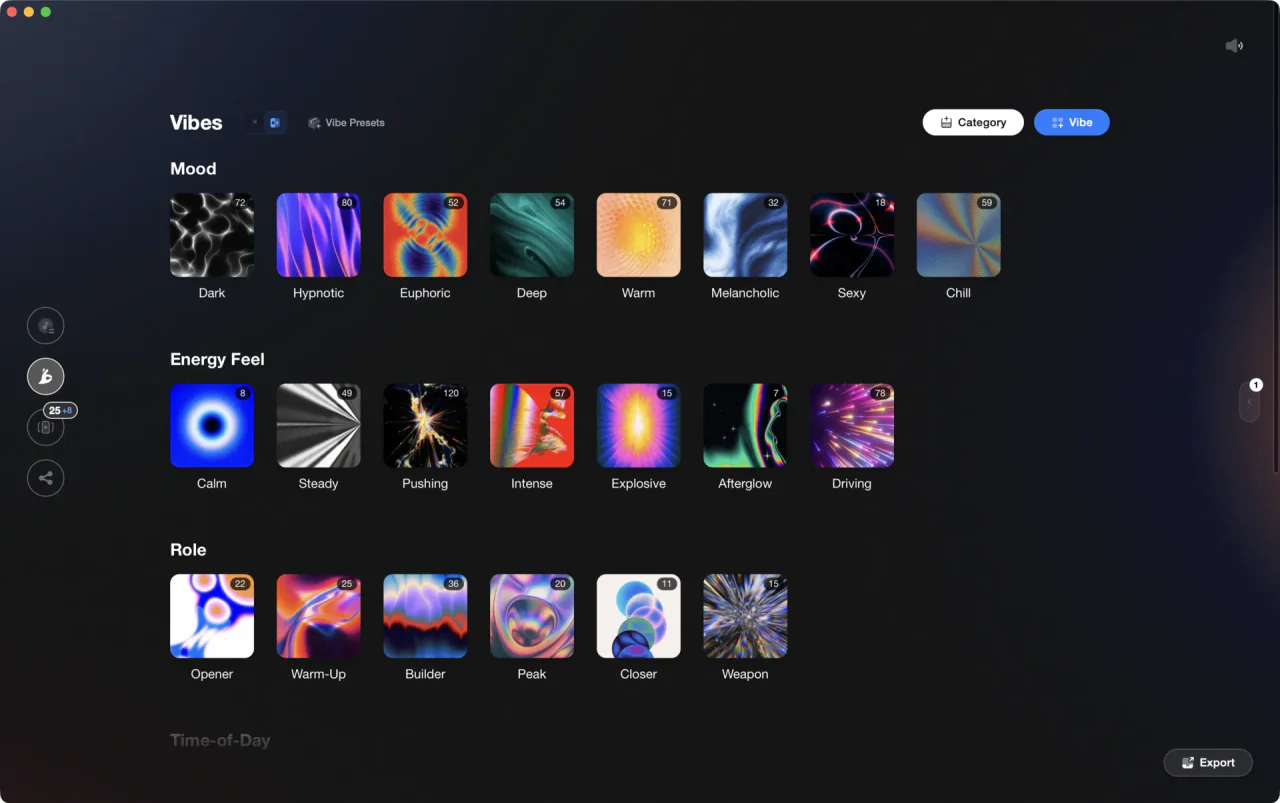
This is where organized prep helps. If you keep reference tracks grouped by intro length, breakdown style, or peak intensity in Vibes, it becomes much easier to compare arrangements and practice the same structural decision across many songs.
Practice Drills for Track Arrangement
The fastest way to learn track arrangement is repeated, short listening drills. Through daily 15-minute practice sessions over several years, I found that labeling one structural function at a time accelerated progress faster than trying to memorize an entire track in one pass.
Start with intros only. Load five tracks and identify where the intro ends. Then repeat the exercise with breakdowns, then drops, then outros. Isolating one section type trains your ear to hear function instead of surface detail.
Next, practice counting phrases without looking at the screen for the first listen. After that, check the waveform and see where your ears were right or wrong. This builds independence from visual cues while still using software feedback intelligently.
Then test transitions. Mix from one track’s outro into another track’s intro. Mix from a breakdown into a verse. Mix from one drop into a later phrase using a loop. DJ TechTools and Native Instruments both point out that arrangement awareness becomes most valuable when you test real transition timing.
A good weekly cycle is simple: two days of listening and labeling, two days of cue point prep, and two days of transition practice. Most DJs can hear clear improvement within 2 to 4 weeks if they stay consistent.
Common Mistakes in Track Arrangement
Most arrangement mistakes come from acting too late or labeling too loosely. If you wait until a breakdown is already happening, or if you mistake a small fill for a full phrase change, the mix feels rushed.
| Mistake | Why It Happens | Fix |
|---|---|---|
| Mixing only by waveform shape | Visual changes look bigger than they sound | Confirm every section with your ears first |
| Entering after the phrase start | Late counting or poor cue timing | Start counting earlier and cue the first downbeat |
| Ignoring short intros or outros | Assuming all tracks are DJ friendly | Use loops or alternate transition points |
| Confusing fills with section changes | Focusing on effects instead of function | Look for sustained energy shifts over several bars |
Another common problem is overvaluing clean intros and outros. Some tracks are easier to mix from a breakdown, vocal handoff, or looped section than from their official opening bars. Good arrangement reading stays flexible.
Troubleshooting Arrangement Problems
If track arrangement still feels fuzzy, simplify the task. Do not try to name every section perfectly. Instead, identify only three things: where the groove starts, where the energy drops, and where the payoff returns.
If two tracks refuse to blend, check whether the issue is really arrangement. It may be tempo drift, poor beat grids, or key clash. This is why many DJs eventually combine structure with harmonic mixing instead of treating arrangement as a complete solution on its own.
If the track has no obvious DJ intro, use a loop or choose a different handoff point. DJ TechTools specifically recommends loops and phrase changes for tracks with short or unfriendly intros and outros.
If you can hear sections at home but not in the booth, your monitoring may be the issue. Lower cue volume, focus on counting the downbeat, and listen for subtraction first. Removed elements are often easier to detect than added effects.
Equipment and Prep Needs
You do not need advanced gear to learn track arrangement. You need reliable cueing, clear waveforms, and a repeatable prep process.
At minimum, use headphones, DJ software or players that let you set cue points, and tracks you know well enough to replay often. Hot cues and colored markers speed up learning, but they are optional.
The more useful upgrade is organization. A small practice crate of 10 to 20 tracks with similar BPM ranges and clear section changes will teach you more than a huge, messy library. Native Instruments recommends starting phrase work with a selected group of compatible tracks, which is good standard practice here too.
Real-World Use in DJ Sets
In a real set, track arrangement helps you choose transitions that match context instead of following habit. Early in the night, you may want longer intros and slower builds. In peak time, you may move faster between strong chorus or drop moments to hold intensity.
This is also where arrangement affects crowd response. DJ TechTools notes that losing the floor can come from inconsistent phrasing or poor song selection. Arrangement knowledge improves both, because it helps you hear whether the next track supports the current moment or interrupts it.
As your ear develops, you stop asking only, “Can these tracks mix?” and start asking, “Which section pairing tells the best story?” That shift is where technical control becomes musical control.
Track Arrangement Summary
Track arrangement is the bridge between hearing a song and using it well in a set. Once you can identify section function, count phrases, and mark reliable cue points, your transitions become cleaner and your energy choices become more intentional.
Key takeaways:
- Learn section function before memorizing labels
- Count bars in 4, 8, and 16 bar groups
- Practice with small, organized track groups first
Start by labeling intros, breakdowns, drops, and outros on ten tracks this week. From there, test those markers in transitions, then move on to deeper skills like cue point strategy and advanced phrasing and transitions.
The visual way to organize your DJ library
Tag tracks by vibe. See everything at once. Export to any DJ software.
A visual system for organizing your DJ library.
Frequently Asked Questions

Hey, it's Ben Modigell 👋
I DJ and produce as so I so — downtempo, minimal, dub house, tech house, and techno (releases on Spotify and SoundCloud, links above). Everything I write here comes from my own gigs, studio sessions, and library cleanups: the rules I follow, the failure modes I've actually hit, and the workflow I use when nobody's watching. If a technique didn't earn its place in my own sets, it doesn't make it into a tutorial.