Drop Swap
Drop swap is a DJ transition technique that layers one track’s build-up with another and switches at the drop for a fast, high-impact energy change.
Drop Swap Tutorials

House Trance: Sound, Structure, Mixing
Drop swap is a fast, high-impact DJ transition built around tension and release. You layer the build-up of one track with another, then switch to the incoming drop at the exact moment the phrase lands. When drop swap is done well, it feels intentional, exciting, and bigger than a normal blend.
This technique matters because it teaches timing, phrase awareness, and energy control at the same time. If your mixes feel flat or too safe, drop swap gives you a way to create a clear crowd moment. It is especially useful in EDM, trap, dubstep, and other styles where the drop is the payoff.
The catch is that swapping the drops is not just about slamming one song into another. It depends on phrase alignment, stable beatmatching, and smart track choice. If you cannot count bars, predict the drop, and control low-end clashes, the transition will sound messy instead of powerful.
Start here if you already build solid beat matching control and can learn phrase mixing for cleaner timing. If you also use harmonic mixing to avoid clashes, your drop swap transitions will sound much more deliberate.
What Is Drop Swap?
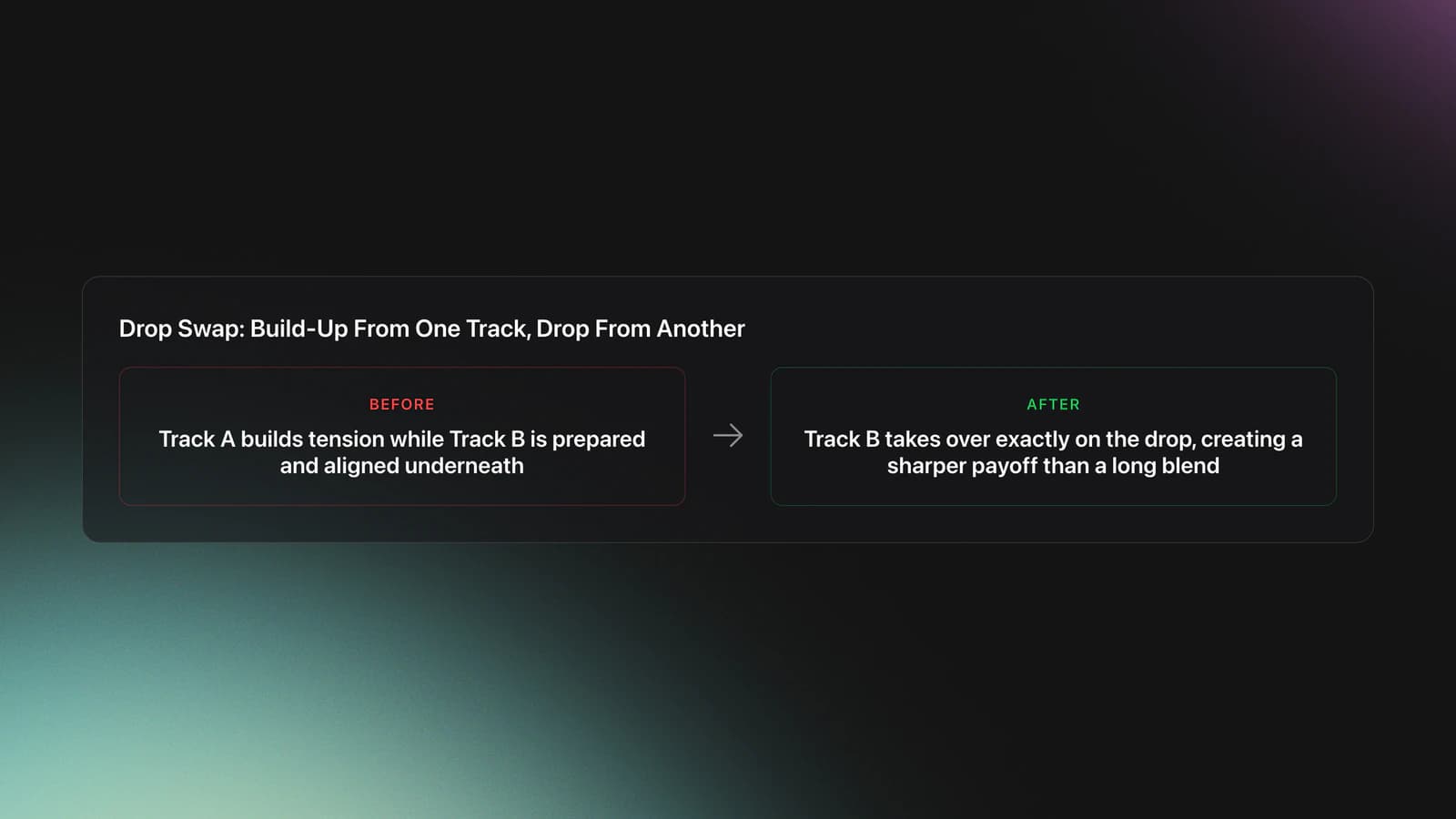
Drop swap is a DJ technique where you play the build-up of two tracks together and switch to the incoming track at the drop. Pioneer DJ describes it as playing two build-ups simultaneously and then quickly swapping before the drop, which matches common teaching across DJ education sources.
In practice, the outgoing track creates tension while the incoming track delivers the release. That release can feel dramatic because the crowd hears one build-up but gets a different payoff. The result is a sharper energy turn than a standard long blend.
This is why track selection matters so much. The build-up of track A must make musical and structural sense with the drop of track B. Good pairs share groove logic, phrase length, and enough tonal compatibility to prevent the handoff from sounding random.
Educational guides on phrasing and transition points consistently point back to the same foundation: count phrases, understand song structure, and place the new event on the one. That matters even more with drop swap because the transition window is short and unforgiving.
Why Drop Swap Works
Drop swap works because it preserves tension while changing the payoff. The crowd locks into one expectation during the build, then you redirect that energy into a new groove, bassline, or hook right when the phrase resolves.
That makes the technique useful when you want a clear lift in intensity, a faster track change, or a more memorable transition than an intro-outro blend. It also helps when the outgoing track has already delivered its main idea and you want the next record to arrive with impact.
- It creates a strong energy reset without stopping momentum.
- It shortens long transitions in drop-driven genres.
- It highlights phrase accuracy and crowd timing.
- It lets you change tracks at the most memorable moment.
The technique is not universal. In deeper house, long-form techno, or highly musical breakdowns, a drop swap can feel rushed. Use it when the set needs a punctuation mark, not as the default answer to every transition.
How to Execute a Drop Swap
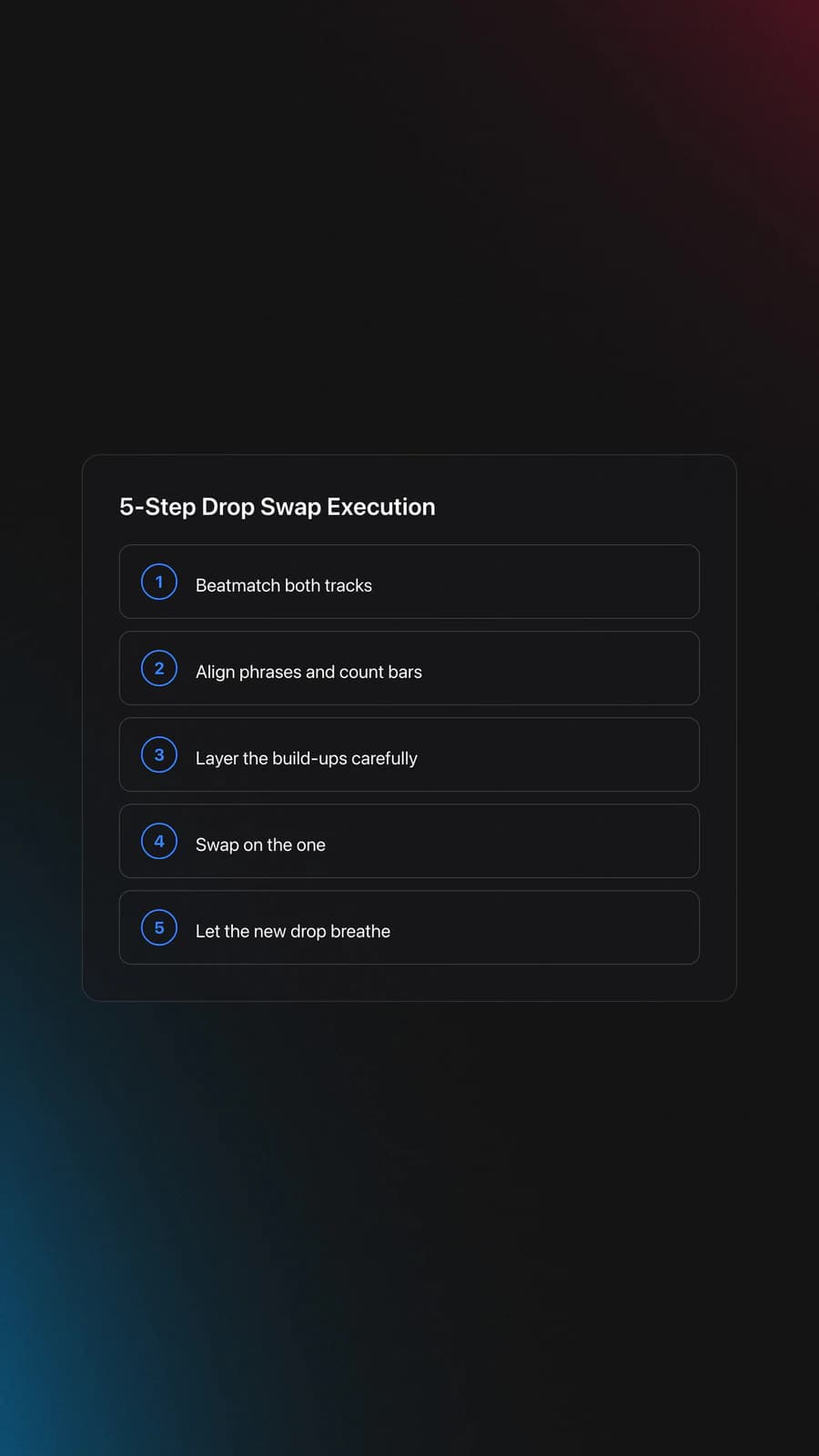
To execute a drop swap, beatmatch both tracks, align their phrases, layer the build-ups, reduce frequency clashes, and switch to the incoming track exactly on the drop. The entire move depends more on timing and track fit than on speed.
First, choose two tracks with compatible phrase lengths. A common setup is matching an 8-bar or 16-bar build-up from the incoming track against the final 8 or 16 bars before the outgoing drop. If one track resolves earlier, the swap will feel late or awkward.
Second, cue the incoming track at a reliable phrase start. Many DJs set this at the first beat of the build or at a clean downbeat leading into the rise. The goal is not just hitting play on time. The goal is landing the drop on the exact bar where the outgoing phrase resolves.
Third, manage overlap. During the shared build-up, both tracks may carry drums, risers, vocals, or tonal material. Keep one element in charge. Usually that means trimming lows on the incoming track, or reducing mids if both builds are dense.
Fourth, commit on the one. At the final beat before the drop, move the crossfader or channel faders decisively. Some DJs perform a hard cut. Others use a very fast fader move with a bass swap. Either way, hesitation is what makes the transition sound weak.
| Step | Action | Key Point |
|---|---|---|
| 1 | Beatmatch both tracks | Stable tempo matters before anything else |
| 2 | Align phrases and count bars | Both drops must resolve together |
| 3 | Layer the build-ups carefully | Avoid vocal and low-end clashes |
| 4 | Swap on the downbeat | Commit exactly on the one |
| 5 | Let the new drop breathe | Do not over-correct after the switch |
If you are unsure whether a pair works, compare the emotional promise of the build-up to the character of the incoming drop. A tense cinematic rise into a playful or minimal drop can feel disappointing. A direct, punchy rise into a stronger groove usually feels better.
Track Choice and Musical Fit
Good drop swap transitions start with track choice. The best pairs share phrase logic, similar rhythmic weight, and a drop that feels like a believable answer to the build-up that came before it.
This does not mean both tracks must be nearly identical. In fact, contrast is often the point. But the contrast has to sound intentional. BPM range, rhythmic density, and tonal center still need enough overlap to make the switch feel designed rather than accidental.
That is where organized practice helps. If you keep a small crate of proven transition pairs inside Vibes, labeled by phrase length, energy level, and whether the incoming track needs bass reduced before the drop, you remove guesswork and make repetition easier.
Use a simple test when preparing pairs. Ask three questions. Do the builds resolve at the same length? Does the new drop sound stronger or at least equally satisfying? Can the overlap survive 8 to 16 bars without obvious clashing?
If the answer to any of those is no, save the pair for another technique. A normal blend, loop transition, or echo exit may fit better.
Practice Drills for Drop Swap
The best way to learn drop swap is with short, repeatable drills. In practice, focused repetitions with the same two or three track pairs improve timing faster than marathon sessions with constant new music.
Start with tracks that have obvious 16-bar builds and clean, drum-led drops. Avoid vocal-heavy songs at first. You want the structure to be easy to hear so your timing errors are obvious.
Your first benchmark is simple. Can you land the incoming drop on time five times in a row with no trainwreck and no obvious phrase error? Once that is consistent, add harder pairs with denser builds, vocals, or wider energy differences.
Next, practice decision-making. Try one pair with a hard cut, then the same pair with a fast EQ-led swap. Listen back and compare which version sounds more confident. This is where technique turns into taste.
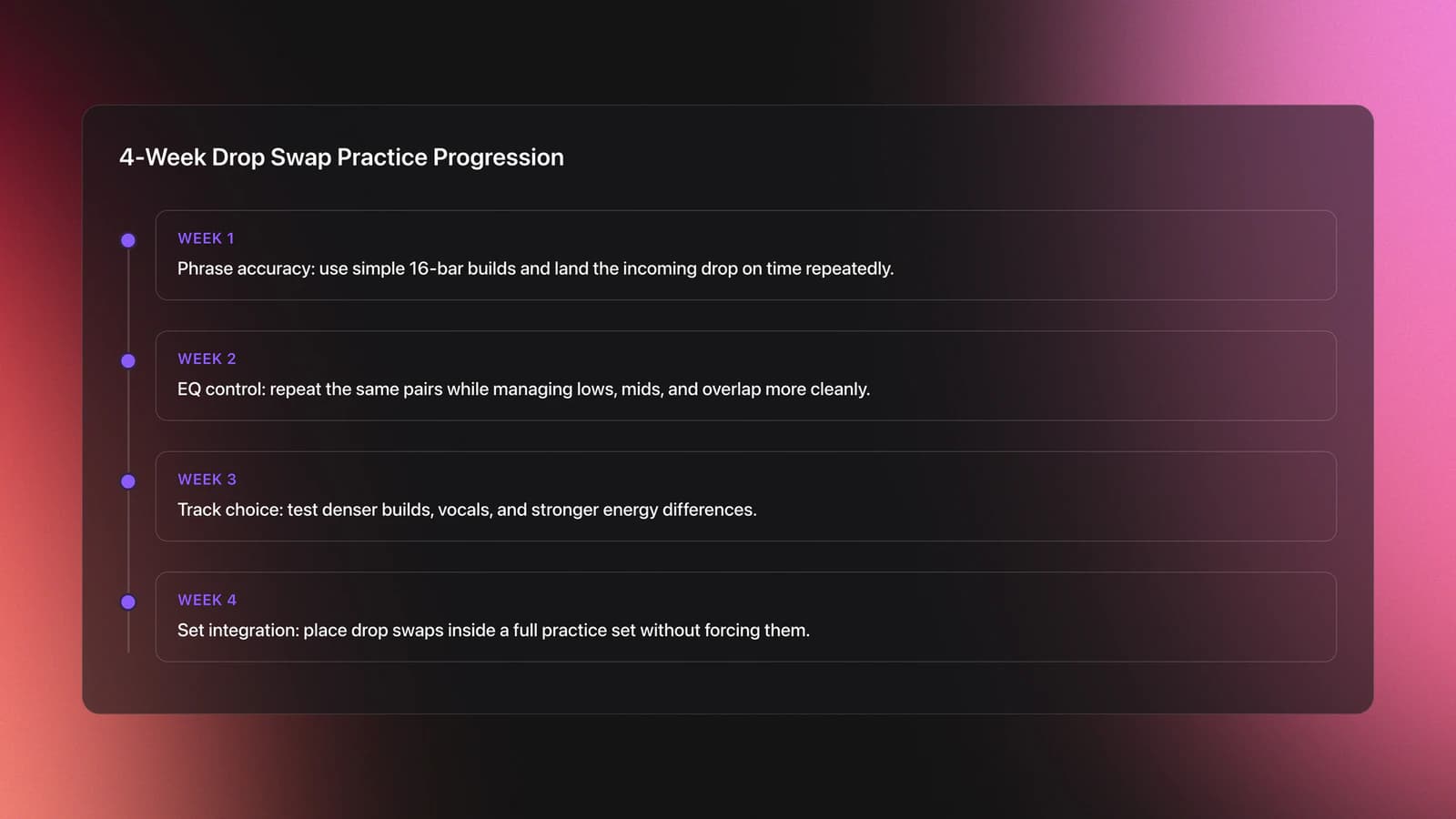
A useful progression cycle is 2 to 4 weeks. Week one is phrase accuracy. Week two is EQ control. Week three is better track choice. Week four is applying the transition inside a full practice set without forcing it.
Common Mistakes With Drop Swap
Most drop swap problems come from bad timing, weak track selection, or frequency clutter. The fix is usually simpler than DJs think. Slow down, count the phrases, and make one track responsible for most of the build energy.
| Mistake | Why It Happens | Solution |
|---|---|---|
| Drop lands late or early | Phrases were not counted correctly | Count 8 or 16 bars and set cue points on phrase starts |
| Transition sounds muddy | Both tracks keep bass or dense mids during overlap | Cut lows on one track and reduce competing mids |
| New drop feels disappointing | Incoming track does not match the build’s promise | Choose a drop with equal or stronger payoff |
| Swap feels abrupt in a bad way | Fader move is hesitant or off-grid | Commit on the downbeat with one clear motion |
Why do most beginners struggle here? Because they focus on the dramatic final switch and ignore the quiet preparation before it. If the beatmatch, phrase map, and EQ plan are not stable first, the drop swap has nothing solid to stand on.
Troubleshooting Difficult Swaps
If a drop swap keeps sounding wrong, the problem is usually structural rather than technical. The tracks may be on tempo but still disagree in phrase length, arrangement density, or emotional shape.
When the builds feel crowded, shorten the overlap. Try bringing the incoming track in for only the last 4 or 8 bars instead of 16. That often reduces vocal conflict and leaves less time for the audience to notice tonal friction.
When the low end explodes at the switch, do not just turn everything down. Decide which kick and bassline should own the room first. Then cut or delay the other low end until the new drop is established.
When the transition feels technically clean but emotionally flat, the pair is probably wrong. Replace one track. No amount of mixer skill can force two mismatched drops into a memorable moment.
Equipment and Setup for Better Results
You do not need advanced gear to perform a drop swap. Two playable decks, working cue controls, headphones, and responsive faders are enough. What matters more is knowing your tracks and setting reliable cue points.
That said, some tools make the technique easier. Hot cues let you jump directly to the build. Waveforms help confirm phrase placement. Loops can rescue a mistimed setup by extending the outgoing section until the incoming phrase catches up.
Use headphones carefully during repeated practice. Keep cue volume high enough for timing, but not so high that fatigue hides your mistakes. If your ears tire, your phrase judgment usually gets worse before you notice it.
When to Use Drop Swap in a Set
Use drop swap when the set needs a clear injection of energy, a sharp change in character, or a fast move between tracks that both deserve a big entrance. It works best when the crowd is already engaged and ready for a payoff.
Avoid using it every few minutes. Too many swaps make a set feel chopped up and reduce the impact of each one. The strongest DJs treat it like emphasis, not default punctuation.
In practice, that means saving your best drop swap transitions for moments where the room can actually feel the contrast. If the dance floor is still warming up, a smoother blend may be more effective.
Key Takeaways for Learning Drop Swap
Drop swap is really a timing technique disguised as a hype technique. When you count phrases correctly, manage overlap, and choose track pairs with believable payoffs, the move sounds huge without sounding careless.
Keep these points in mind as you practice:
- Phrase alignment matters more than flashy fader moves.
- Track choice decides whether the drop feels satisfying.
- Short, repeated drills build timing faster than random long sessions.
Start with one reliable pair, count the build aloud, and aim for five clean swaps in a row. Then expand to harder tracks and related skills like phrase mixing and harmonic control. From there, the technique becomes a creative choice rather than a risky gamble.
The visual way to organize your DJ library
Tag tracks by vibe. See everything at once. Export to rekordbox, Serato, Traktor or Engine DJ.
14-day free trial. Full access, no strings attached.
or see how it works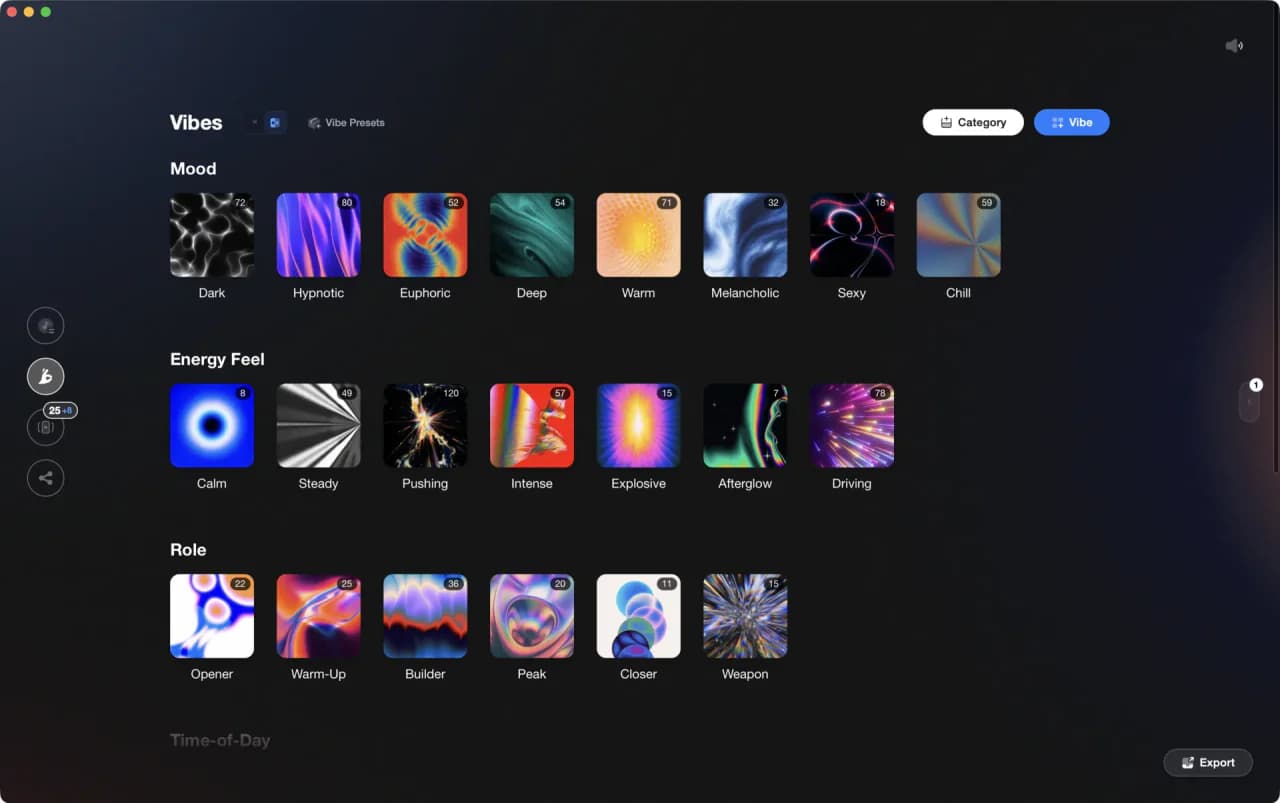
Frequently Asked Questions

Hey, it's Ben Modigell 👋
I DJ and produce as so I so: downtempo, minimal, dub house, tech house, and techno (releases on Spotify and SoundCloud, links above). Everything I write here comes from my own gigs, studio sessions, and library cleanups: the rules I follow, the failure modes I have actually hit, and the workflow I use when nobody is watching. If a technique did not earn its place in my own sets, it does not make it into a tutorial.