
- Verdict
- Compatible
- Relationship
- Simple Mix Upper
- Camelot distance
- 1 step
- Energy change
- Up
- Routes found
- Direct + 3
Verdict is based on the 13 named Camelot wheel relationships: safe matches read as Compatible, energy and advanced moves read as caution, and anything outside the 13 reads as a clash.
Click to set Key A
8A (A minor) · 9A (E minor)
Next stepVibes runs this same check across your whole library: pick a track and it filters everything else down to what actually mixes. Find Compatible in Vibes
Can you mix different keys without a key clash? Enter two keys to find out. This harmonic key checker works with Camelot codes, Open Key, and standard musical keys.
- Instant result
- No sign-up
- Free to use
Reference
Compatibility Rules
- Same key, perfect harmonic match, guaranteed to sound smooth
- Adjacent (+1 or -1), subtle key change, barely noticeable to most listeners
- Relative major/minor, same number, different letter (A↔B). Changes the energy without clashing harmonically
- Everything else, may clash. Not impossible, but requires careful EQ and timing
For the full wheel view, see the interactive Camelot wheel; for the complete 24-key reference, see the cheat sheet. For a live-set walkthrough, see how to use the Camelot Wheel.
Routing
From Verdict to Route
A yes or no verdict tells you whether two keys mix, but not what to do when they clash. That is where routing comes in. When two tracks are not directly compatible, this checker looks for a bridge: an intermediate key that sits in a safe relationship with both sides. Playing one track in that bridge key splits a jarring jump into two smooth transitions, each of which obeys the Camelot rules.
The tool ranks every possible bridge by combined quality. Perfect, adjacent, and relative moves rank above energy shifts, which rank above riskier advanced jumps, and ties break toward the tightest wheel distance. Even when your two keys already mix directly, the alternative routes give you options for a longer, more gradual blend. Each key in a route links to its Camelot wheel view and its track directory, and you can pin a whole route to the wheel’s Set Builder to keep planning your set.
Technique
Advanced Key Mixing Techniques
- Energy boost: Jump +7 on the Camelot wheel (e.g., 5A → 12A) for a dramatic key lift that energizes the dancefloor
- Diagonal mixing: Move +1 and switch letter (e.g., 8A → 9B) for a double shift in both key and energy
- Bass swap: When keys clash, cut the bass of the incoming track during the blend and only bring it in after the outgoing track drops out
- Acapella bridges: Use vocal-only sections to bridge incompatible keys because vocals are more forgiving than full harmonic content

Hey, it's Ben Modigell 👋
I've been DJing and producing music as "so I so," focusing on downtempo, minimal, dub house, tech house, and techno. My background in digital marketing, web development, and UX design over the past 6 years helps me create DJ tutorials that are clear, practical, and easy to follow.
Methodology
Last updated
Author and Methodology
Maintained by Ben Modigell, founder of Vibes. Ben builds DJ library, preparation, BPM, and harmonic-mixing tools for working DJs.
- Source
- Vibes DJ-tool taxonomy and page logic maintained by Vibes.
- Evidence
- Page output checked against the current tool behavior and internal DJ reference data.
- How this page is made
- Tool pages are built from reusable page logic, internal DJ reference data, and visible on-page calculations. Programmatic reference pages are generated from structured data rather than hand-written one by one.
BPM, key, and genre labels can vary by edit, remaster, detection engine, and DJ software. Use these pages as a practical mixing reference, then verify important tracks in your own library.
Report a correctionThe visual way to organize your DJ library
Tag tracks by vibe. See everything at once. Export to rekordbox, Serato, Traktor or Engine DJ.
14-day free trial. Full access, no strings attached.
or see how it works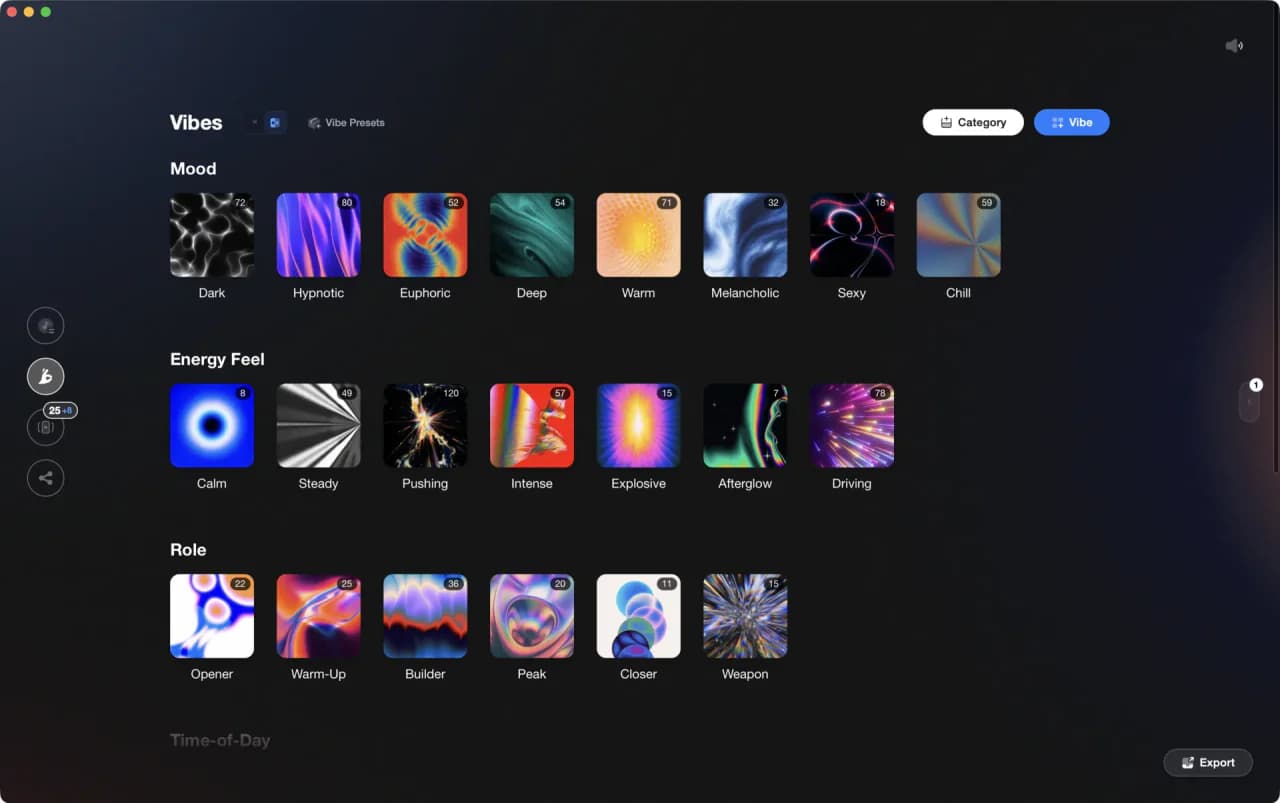
Frequently Asked Questions
Related Tools
Song Key & BPM Finder
Analyze any audio file: key, Camelot code, and BPM detected in your browser
Key & BPM Changer
Change a song's key, tempo, or speed in your browser with exact BPM targets
Camelot Wheel
Interactive Camelot wheel for harmonic mixing
Harmonic Mixing Chart
Complete reference chart for all key notations
Camelot Wheel Cheat Sheet
Printable reference of all 24 Camelot keys and compatible keys
Camelot Wheel SVG Pack
29 free Camelot Wheel SVG diagrams for blog posts, courses, and tutorials
Key Transposer
Transpose keys by semitones with Camelot and Open Key notation
Scale Finder
See the notes of any scale with Camelot and relative keys
Semitone Calculator
Count semitones between notes and transpose by any interval
Note Frequency Chart
Convert Hz to note and note to frequency, with the full chart