
Find the BPM of a Song
Next stepVibes runs this same key and BPM analysis on every track you import, automatically, across your whole library instead of one file. Track analysis in Vibes
Drop in a song and get its BPM in seconds, with its musical key alongside it. You get precise decimal BPM plus half and double-time alternates, the key as a name, a Camelot code and Open Key notation, and an energy rating. Detection runs entirely in your browser, so your files never leave your device. AIFF works too, even though browsers can't normally decode it, and you can export everything as CSV for free.
- On-device analysis
- Audio never uploads
- Results stay local
Method
How It Works
- Drop an audio file (or several) into the analyzer above
- Your browser decodes it and resamples to the analysis rate, all locally
- Tempo detection scores thousands of beat-grid candidates against the onset pattern of the track
- Key detection runs a neural network over the full harmonic spectrum, the same model that ships in the Vibes app
Analyzing a File vs Looking Up a Released Song
This analyzer is for audio files you have on your device: promos, downloads, your own productions, untagged edits. If you want the key and BPM of a released track you don't have as a file, you can search our track database instead; it covers tens of thousands of electronic releases with key, BPM, energy, and harmonic-mixing suggestions per track, or browse by key via the artist directory.
Reading a File, Tapping It, or Looking It Up
There are only three ways to get a tempo, and they suit different moments. Reading the file is the most exact: a beats per minute finder measures the audio itself, so it works on promos, edits and your own bounces, and it is the only method that also gives you the key. Tapping is the fastest when there is no file at all, which is what the tap tempo tool is for: a track on the radio, in a club, or a live band. Looking the number up in a database is quickest for a released track you do not own, and our track database covers tens of thousands of releases. A music tempo finder that reads the file, like this one, is the one to reach for when the answer has to be right rather than close.
Your Files Never Leave Your Device
Most online key and BPM finders upload your audio to a server for processing, which means waiting on the upload, size limits, and your unreleased edits sitting on someone else's machine. This tool works differently: the analysis engine is compiled to run inside your browser. Decoding, tempo detection, and the key-detection neural network all execute on your own device. Nothing is transmitted, stored, or queued. That matters if you are analyzing unreleased promos, your own productions, or bootleg edits you would rather not upload anywhere.
Reading the Result
- BPM is the snapped whole-number tempo DJs use; the precise decimal underneath is what your DJ software will show after beat-gridding
- Half / double time shows the same groove counted at half or twice the tempo. Genres like drum & bass and dubstep are routinely written one way and felt the other, so if the main reading feels wrong, one of these is your answer
- Key is shown three ways: musical name (A minor), Camelot code (8A), and Open Key (1m). Click the Camelot code to browse tracks in the same key in our track directory
- Energy is a 1-10 intensity rating in the Mixed In Key tradition, estimated from loudness, dynamics, bass weight, percussive activity, and tempo of the beat-active section. Use it to sort warm-up material from peak-time weapons
- Confidence tells you how unambiguous the detection was. Low BPM confidence usually means sparse or shifting percussion; low key confidence usually means heavy atonal content or long mixed sections
What to Do With Key and BPM
Once you know a track's key and tempo, harmonic mixing is mechanical: tracks mix cleanly with others that share their Camelot code or sit one step away on the wheel. Use the key compatibility checker to test a specific pairing, the harmonic mixing chart as a full reference, or the key transposer when you plan to pitch a track up or down. For tempo planning across a whole set, the halftime/doubletime calculator and set time calculator pick up where the analyzer leaves off.
Batch Analysis and CSV Export
Drop as many files as you like; they queue up and analyze one after another, and your results stay saved on this device between visits. The Export CSV button downloads everything (BPM, precise BPM, half/double-time, key in all three notations, energy, confidence) as a spreadsheet-ready file, free and without an account. AIFF users get special treatment: browsers can't decode AIFF natively, so this tool ships its own AIFF reader, covering the format most DJ libraries actually run on.
Analyzing One Track vs Your Whole Library
This page is built for spot checks: a promo you just downloaded, a track someone sent you, a file with missing tags. If you need key and BPM across thousands of files, plus playlists organized by energy and mood, that is what the Vibes app does. It runs this same analysis engine across your entire library automatically and writes the results where Rekordbox, Serato, and Traktor can read them.

Hey, it's Ben Modigell 👋
I've been DJing and producing music as "so I so," focusing on downtempo, minimal, dub house, tech house, and techno. My background in digital marketing, web development, and UX design over the past 6 years helps me create DJ tutorials that are clear, practical, and easy to follow.
Methodology
Last updated
Author and Methodology
Maintained by Ben Modigell, founder of Vibes. Ben builds DJ library, preparation, BPM, and harmonic-mixing tools for working DJs.
- Data used
- Benchmarked against 952 professionally keyed and beat-gridded reference tracks (Mixed In Key ground truth). The in-browser BPM engine is a port of the desktop app's DSP detection stage (identical output on all 318 benchmark samples for that stage); the desktop analyzer adds a neural network and an ML ensemble on top. Its rhythm-aware analysis-window selection scores 85% within ±2 BPM on the 318-track benchmark, ahead of fixed-window analysis at 83%.
- Source
- Vibes analysis engine (in-browser build)
- Evidence
- Page output checked against the current tool behavior and internal DJ reference data.
- How this page is made
- BPM detection ports the DSP stage of the Vibes desktop analyzer (onset-envelope autocorrelation with beat-grid alignment scoring); the desktop app adds a neural network and an ML ensemble the browser version does not run. Key detection runs the S-KEY neural network (ICASSP 2025) via WebAssembly, using the same model weights as the desktop app. All analysis happens on your device.
BPM, key, and genre labels can vary by edit, remaster, detection engine, and DJ software. Use these pages as a practical mixing reference, then verify important tracks in your own library.
Report a correctionThe visual way to organize your DJ library
Tag tracks by vibe. See everything at once. Export to rekordbox, Serato, Traktor or Engine DJ.
14-day free trial. Full access, no strings attached.
or see how it works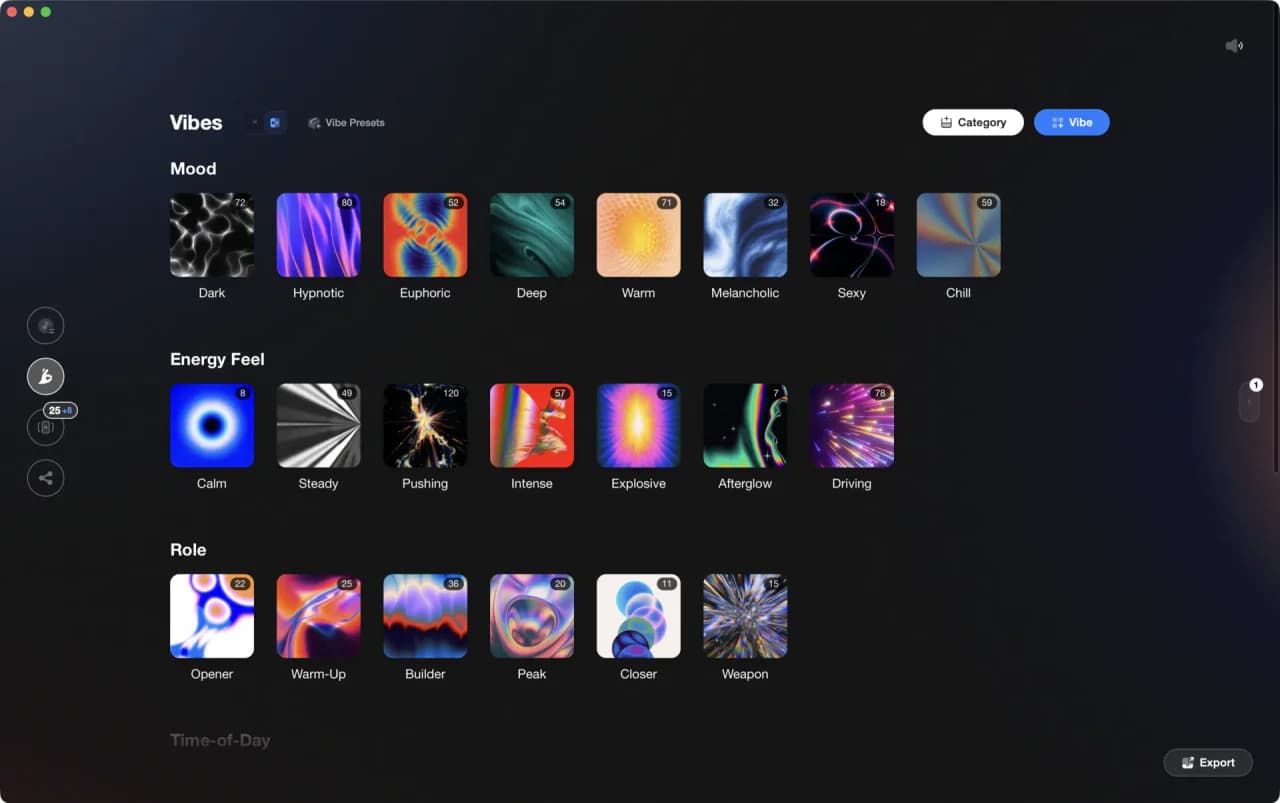
Frequently Asked Questions
Related Tools
Key & BPM Changer
Change a song's key, tempo, or speed in your browser with exact BPM targets
Camelot Wheel
Interactive Camelot wheel for harmonic mixing
Harmonic Mixing Chart
Complete reference chart for all key notations
Key Compatibility Checker
Check if two keys mix well together
Camelot Wheel Cheat Sheet
Printable reference of all 24 Camelot keys and compatible keys
Camelot Wheel SVG Pack
29 free Camelot Wheel SVG diagrams for blog posts, courses, and tutorials
Key Transposer
Transpose keys by semitones with Camelot and Open Key notation
Scale Finder
See the notes of any scale with Camelot and relative keys
Semitone Calculator
Count semitones between notes and transpose by any interval
Note Frequency Chart
Convert Hz to note and note to frequency, with the full chart