
Key & BPM Changer
Next stepOnce you know the target key and tempo, Vibes filters your whole library down to the tracks that already match it. Find Compatible in Vibes
Change a song's key, tempo, or speed right in your browser. The tool detects the current key and BPM first, so you can set an exact target tempo instead of guessing with percentage sliders, and transpose to a compatible key with the semitone math done for you. Free lossless WAV export, nothing uploaded.
- Live preview
- Local processing
- Export ready
Method
How It Works
- Drop a track; its current key and BPM are detected by the same engine as our Song Key & BPM Finder
- Type the exact BPM you want, or use the quick 85/90/110/125 percent presets
- Pick a target key; the semitone shift is computed from the Camelot wheel automatically
- Processing runs locally (Signalsmith Stretch, a high-quality open time-stretch engine), then the output is re-analyzed to confirm it landed on your targets
Exact BPM, Not Percentages
The common complaint about online tempo changers is that they only move speed by percentages, leaving you to work out what 6 percent faster means in beats per minute. Because this tool detects the source tempo first, you work in BPM directly: a 122 BPM track that needs to sit in a 126 set is one number away. The precise stretch ratio, down to the detected decimal, is handled for you, and the re-analysis step shows the output BPM so you are not taking it on faith.
Slowed, Sped Up, and Vinyl Mode
By default, tempo changes preserve pitch (time-stretching) and key changes preserve tempo (pitch-shifting), independently. Vinyl mode links them the way a turntable does: slow the track down and the pitch drops with it. That is the sound of classic slowed edits (around 85 percent speed) and, in the other direction, sped-up and nightcore-style versions (115 to 125 percent). The quick percentage presets under the BPM field cover both.
Which Control Moves What
Three sliders, three different jobs. As an audio key changer, pitch moves the notes and leaves the running time intact, so an acapella can be dropped into a new key without going out of time. As a song bpm changer, tempo moves the running time and leaves the notes alone, which is the one you want for beatmatching; as an audio bpm changer that is the only slider that matters. Vinyl mode ties them together the way a turntable does. A music pitch and speed changer that only offers the tied version cannot do the first job at all, which is why the controls are separate here, and why the same page serves both a pitch changer online and an online bpm changer. A key and bpm changer only earns the name when it can move either one on its own.
Transposing for Harmonic Mixing
Re-keying a track opens transitions that the original key forbids: shift an acapella two semitones to sit on your instrumental, or nudge a melodic track one semitone so it becomes Camelot-compatible with the next record. The target-key dropdown shows every same-mode key with its semitone distance, and the key compatibility checker and Camelot wheel tell you which targets are worth aiming for. Keep shifts small: one or two semitones pass unnoticed on full mixes, while larger moves start to color the timbre.
Private by Architecture
Like our analyzer, this tool does all of its work in your browser: decode, stretch, transpose, encode. Unreleased edits, premieres, and your own productions never touch a server. That is also why it is free without limits; there is no processing bill to recover.

Hey, it's Ben Modigell 👋
I've been DJing and producing music as "so I so," focusing on downtempo, minimal, dub house, tech house, and techno. My background in digital marketing, web development, and UX design over the past 6 years helps me create DJ tutorials that are clear, practical, and easy to follow.
Methodology
Last updated
Author and Methodology
Maintained by Ben Modigell, founder of Vibes. Ben builds DJ library, preparation, BPM, and harmonic-mixing tools for working DJs.
- Source
- Vibes DJ-tool taxonomy and page logic maintained by Vibes.
- Evidence
- Page output checked against the current tool behavior and internal DJ reference data.
- How this page is made
- Tool pages are built from reusable page logic, internal DJ reference data, and visible on-page calculations. Programmatic reference pages are generated from structured data rather than hand-written one by one.
BPM, key, and genre labels can vary by edit, remaster, detection engine, and DJ software. Use these pages as a practical mixing reference, then verify important tracks in your own library.
Report a correctionThe visual way to organize your DJ library
Tag tracks by vibe. See everything at once. Export to rekordbox, Serato, Traktor or Engine DJ.
14-day free trial. Full access, no strings attached.
or see how it works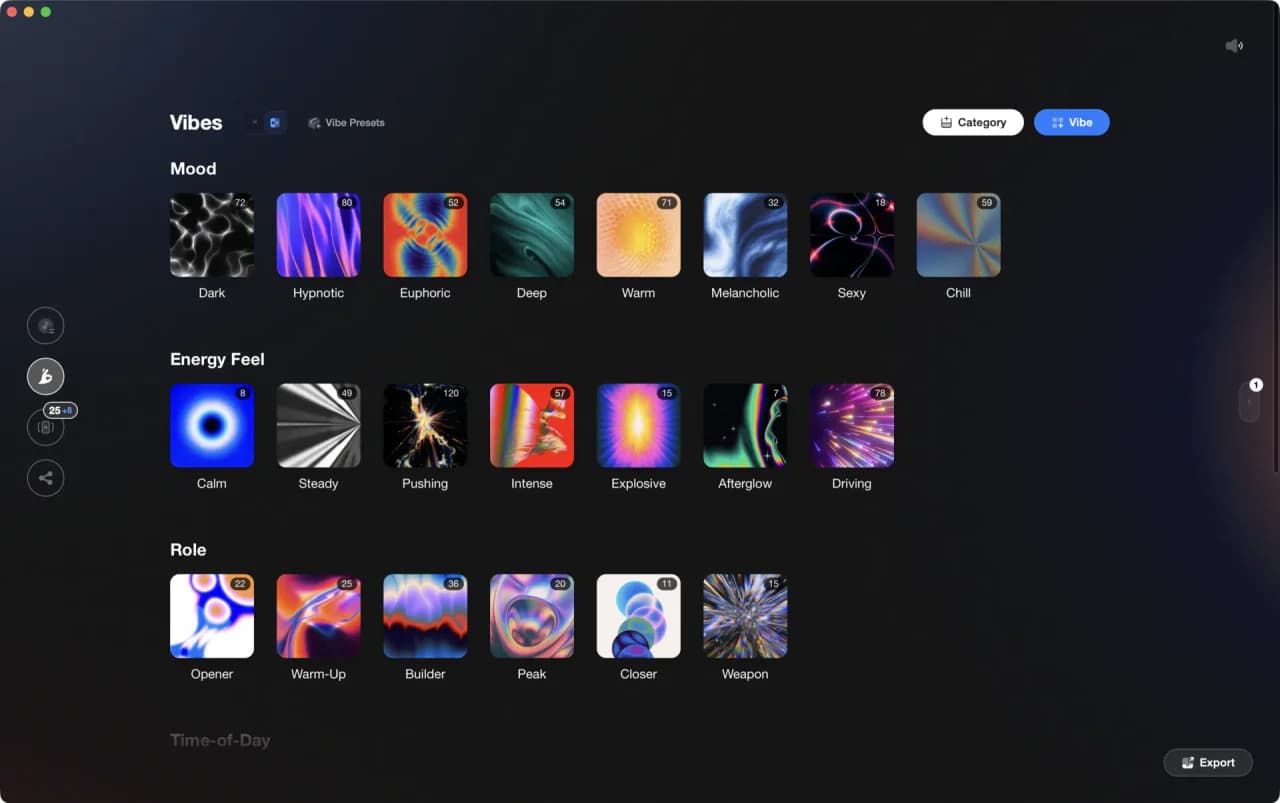
Frequently Asked Questions
Related Tools
Song Key & BPM Finder
Analyze any audio file: key, Camelot code, and BPM detected in your browser
Camelot Wheel
Interactive Camelot wheel for harmonic mixing
Harmonic Mixing Chart
Complete reference chart for all key notations
Key Compatibility Checker
Check if two keys mix well together
Camelot Wheel Cheat Sheet
Printable reference of all 24 Camelot keys and compatible keys
Camelot Wheel SVG Pack
29 free Camelot Wheel SVG diagrams for blog posts, courses, and tutorials
Key Transposer
Transpose keys by semitones with Camelot and Open Key notation
Scale Finder
See the notes of any scale with Camelot and relative keys
Semitone Calculator
Count semitones between notes and transpose by any interval
Note Frequency Chart
Convert Hz to note and note to frequency, with the full chart