
Traxsource
·TraxsourceTraxsource is a digital music download store focused on house and underground dance music for DJs.

Traxsource is a specialist DJ download store, not a hardware unit or plugin. It matters because many DJs still need permanent files they can organize, tag, back up, and trust in a club. If you play house, Afro house, soulful house, or adjacent underground styles, Traxsource is one of the clearest places to start.
Traxsource Overview
Traxsource is a digital download platform built around house-focused DJ culture. For the right buyer, the appeal is simple: permanent files, genre depth, and a discovery flow that often suits underground selectors better than general music stores.
The key point is ownership. Traxsource sells DRM-free files in 320 kbps MP3, plus uncompressed [AIFF](/glossary/wav-aiff) and WAV formats, according to Traxsource file format support and Traxsource format guidance. That makes it a different tool from streaming platforms that rely on an active subscription.
Traxsource is most valuable when your workflow depends on curation. You dig, buy, download, tag, and move tracks into Rekordbox, Serato, Engine DJ, or another library manager. In other words, it fits DJs who want control instead of rental access.
That focus also defines the catalog. Community discussion and long-time user commentary consistently point to Traxsource as especially useful for house, soulful house, Afro house, and related underground styles, even when users prefer other stores for broader mainstream coverage, as seen in DJ community discussion on Traxsource.
If your set prep revolves around chart digging and niche label browsing, Traxsource can be a better fit than a broad all-genre store. If you need maximum open-format coverage, compare it with Beatport alternatives, Bandcamp buying options, and a broader DJ music buying guide.
Key Features
Traxsource stands out through specialization rather than flashy features. The main strengths are its house-focused catalog, multiple audio formats, and a browsing structure that helps DJs discover tracks by chart, label, genre, and release activity.
- House-led catalog with strong depth in Afro house, soulful house, deep house, disco, and tech house
- Downloads available in 320 kbps MP3, 16-bit 44.1 kHz AIFF, and 16-bit 44.1 kHz WAV
- DRM-free purchases for long-term local library management
- Downloader app for handling purchased files outside the browser
- Charts and genre pages that support discovery-led digging
The format options matter more than many newer DJs expect. Traxsource states that MP3 is available at 320 kbps, while AIFF and WAV are fully uncompressed, 16-bit files at 44.1 kHz. That gives buyers a practical choice between file size, metadata convenience, and maximum source quality.
In practice, most working DJs can use MP3 for routine gigs. Lossless AIFF or WAV becomes more attractive if you play on larger systems, do edits, or want a cleaner archive. Traxsource itself frames WAV and AIFF as the better fit for large club and festival playback in its own support guidance.
The Downloader app is another useful feature. Traxsource Downloader exists to simplify file retrieval and avoids the clumsy browser-only process that still slows down some download stores.
This is where the platform feels most purposeful. It is less about endless convenience and more about building a stable crate. If that is your priority, Traxsource makes more sense than pure streaming tools like Beatsource-style services or subscription-first DJ streaming platforms.
Technical Specifications
The practical specs for Traxsource are service-level details, not physical hardware measurements. The important facts are file formats, delivery method, and how the store fits into a permanent DJ library workflow.
| Specification | Details |
|---|---|
| Product type | Digital DJ music download store |
| Primary access | Web-based platform |
| Download app | Traxsource Downloader desktop app |
| File formats | 320 kbps MP3, 16-bit 44.1 kHz AIFF, 16-bit 44.1 kHz WAV |
| DRM | DRM-free files |
| Best-known genres | House, Afro house, soulful house, deep house, tech house, disco |
| Physical dimensions | Not applicable |
| Power requirements | Not applicable |
Specifications not publicly available in a hardware sense as of April 21, 2026. There are no official dimensions, weight, or I/O figures because Traxsource is an online music service rather than a physical device.
Who Is This For
Traxsource is best for DJs who want to buy and keep music, especially in house-led genres. It suits beginners building a serious library, experienced selectors who dig by label and chart, and professionals who still prefer owned files over streaming dependence.
It is a strong match for club DJs, bar residents, and house specialists. The catalog focus helps when your sound lives in soulful house, Afro house, deep house, or disco-adjacent territory.
It also works well for newer DJs who are learning good library habits. Buying fewer tracks, tagging them properly, and testing them before a gig often leads to a tighter collection than dumping thousands of streamed tracks into one folder.
It is less ideal for mobile DJs who need huge open-format coverage fast. In that case, a record pool or streaming platform may be more cost-effective. It is also not the best first stop if you mostly buy direct from artists, where Bandcamp download workflows can be stronger.
In Practice
Traxsource works best as part of a deliberate prep workflow. You browse charts, labels, and genres, shortlist tracks, choose a format, download them, then move everything into your DJ software for cue points, grids, and playlists.
That sounds basic, but it changes how you play. Owned files are easier to back up, faster to trust, and less stressful before a set. The result is a library you actually know.
From an underground-club perspective, this matters more than feature marketing. In real club use, a readable, reliable, low-light-friendly workflow usually matters more than a long feature list. Traxsource fits that mindset well.
The platform is strongest when you already know how to dig. If you follow labels, producers, remixers, and weekly charts, Traxsource rewards that behavior. If you expect algorithm-heavy discovery or streaming-style playlist abundance, it may feel narrower.
There is also a format decision every buyer should make upfront. AIFF often gives you the best balance of lossless quality and metadata handling, while WAV stays useful for pure archival or production workflows. MP3 keeps cost and storage lower, which is still enough for many real-world gigs.
Pros and Cons
Traxsource is easy to recommend when its genre focus matches your sound. The trade-off is that it is a specialist store, not an all-purpose answer for every DJ.
Pros
- Focused underground catalog.
- Useful chart-driven discovery.
- DRM-free ownership.
- MP3, AIFF, and WAV options.
- Better fit than streaming for DJs who want reliable local files.
Cons
- -Limited value if you need broad mainstream coverage.
- -Per-track costs add up quickly.
- -Not every user agrees on preview quality or file consistency, based on community feedback.
The community view is mixed in a useful way. Some DJs praise Traxsource for unique underground selection, while others criticize preview quality or file consistency in certain cases. That balance is important because it shows the platform is respected, but not above scrutiny.
Price and Value
Traxsource is usually a pay-per-track service, so value depends on how selectively you buy. A common starting point for MP3 tracks in this market is around $1.99, which converts to roughly €1.75 and £1.49 using simple current approximations for this page.
That makes Traxsource affordable per purchase, but not cheap if you buy in bulk every week. If you are disciplined and only grab tracks that truly earn a place in your crate, the pricing stays reasonable. If you need volume, subscription pools can be cheaper.
Lossless formats cost more in this category, and Traxsource positions AIFF and WAV as premium-quality options. For many DJs, the smarter move is buying MP3 for routine play and reserving lossless files for key tracks, edits, or large-system sets.
The real value is not just audio quality. It is control. You own the file, you back it up, and you can keep using it even if your subscription stack changes. That alone makes Traxsource more useful than streaming for some working DJs.
Alternatives
Traxsource has clear rivals, and each one solves a slightly different problem. The best alternative depends on whether you prioritize genre depth, artist-direct support, broader electronic coverage, or lower monthly cost.
| Product | Price | Key Difference |
|---|---|---|
| Beatport | $1.99+ | Broader electronic catalog with stronger reach in techno, EDM, and crossover releases |
| Bandcamp | Varies | Artist-direct buying and flexible pricing, often better for indie labels and direct support |
| Juno Download | Varies | Broad electronic store with solid genre spread beyond house |
If you want the most comparable path, start with Beatport for electronic DJ sets. If artist support matters more, look at Bandcamp for DJ libraries. If you are still deciding between buying and renting, a DJ music sourcing guide will help frame the trade-offs.
Bottom Line
Traxsource is not trying to be everything. That is exactly why it still matters. It is a specialist DJ music store built for people who want owned files, genre depth, and a workflow centered on curation rather than subscription convenience.
Choose it if you play house-led music and want a permanent library. Skip it if you need broad mainstream coverage at scale. For the right DJ, Traxsource remains a practical and focused tool.
The visual way to organize your DJ library
Tag tracks by vibe. See everything at once. Export to rekordbox, Serato, Traktor or Engine DJ.
14-day free trial. Full access, no strings attached.
or see how it works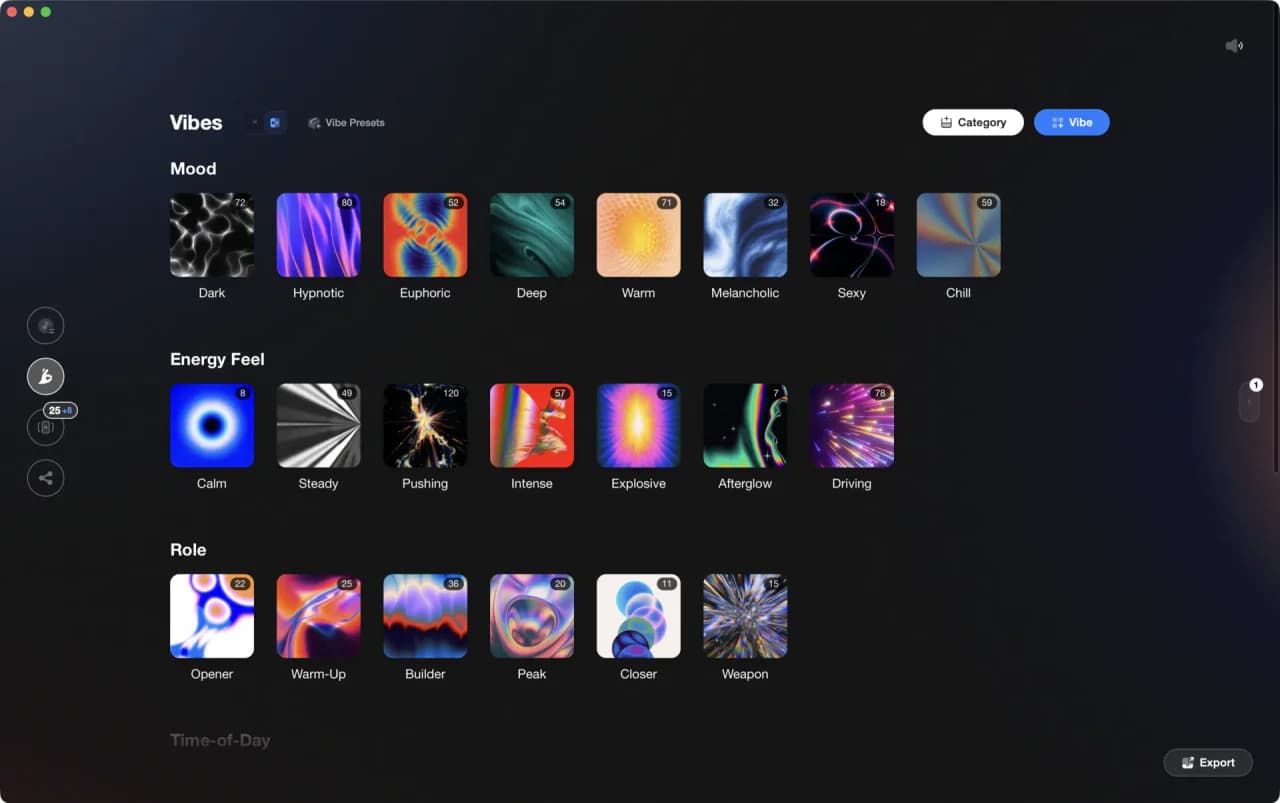
Tutorials Using Traxsource


DJ Techniques Using This Gear
See how DJs and live performers incorporate Traxsource into their workflow.

Frequently Asked Questions

Hey, it's Ben Modigell 👋
I DJ and produce as so I so: downtempo, minimal, dub house, tech house, and techno (releases on Spotify and SoundCloud, links above). Everything I write here comes from my own gigs, studio sessions, and library cleanups: the rules I follow, the failure modes I have actually hit, and the workflow I use when nobody is watching. If a technique did not earn its place in my own sets, it does not make it into a tutorial.