Watch Doctor Mike’s tutorial above (7.2M views on YouTube).
Quick Answer
This is for DJs, selectors, and electronic music fans trying to pin down what hard house actually is. If you are stuck between hard house, techno, and other hard dance styles, this will give you a usable definition, a listening framework, and a practical way to spot hard house in real sets. Hard house is a fast, punchy branch of house-led club music built around driving kick drums, offbeat bass movement, sharp riffs, and high-energy drops.
The useful part is not the label itself. The useful part is knowing what sonic signals define hard house, where it overlaps with nearby genres, and how to organize it if you DJ with large local libraries. If you already use DJ library organization systems, energy-based playlist workflows, or genre tagging for DJs, this article will fit straight into that workflow.
What Defines a Hard House?
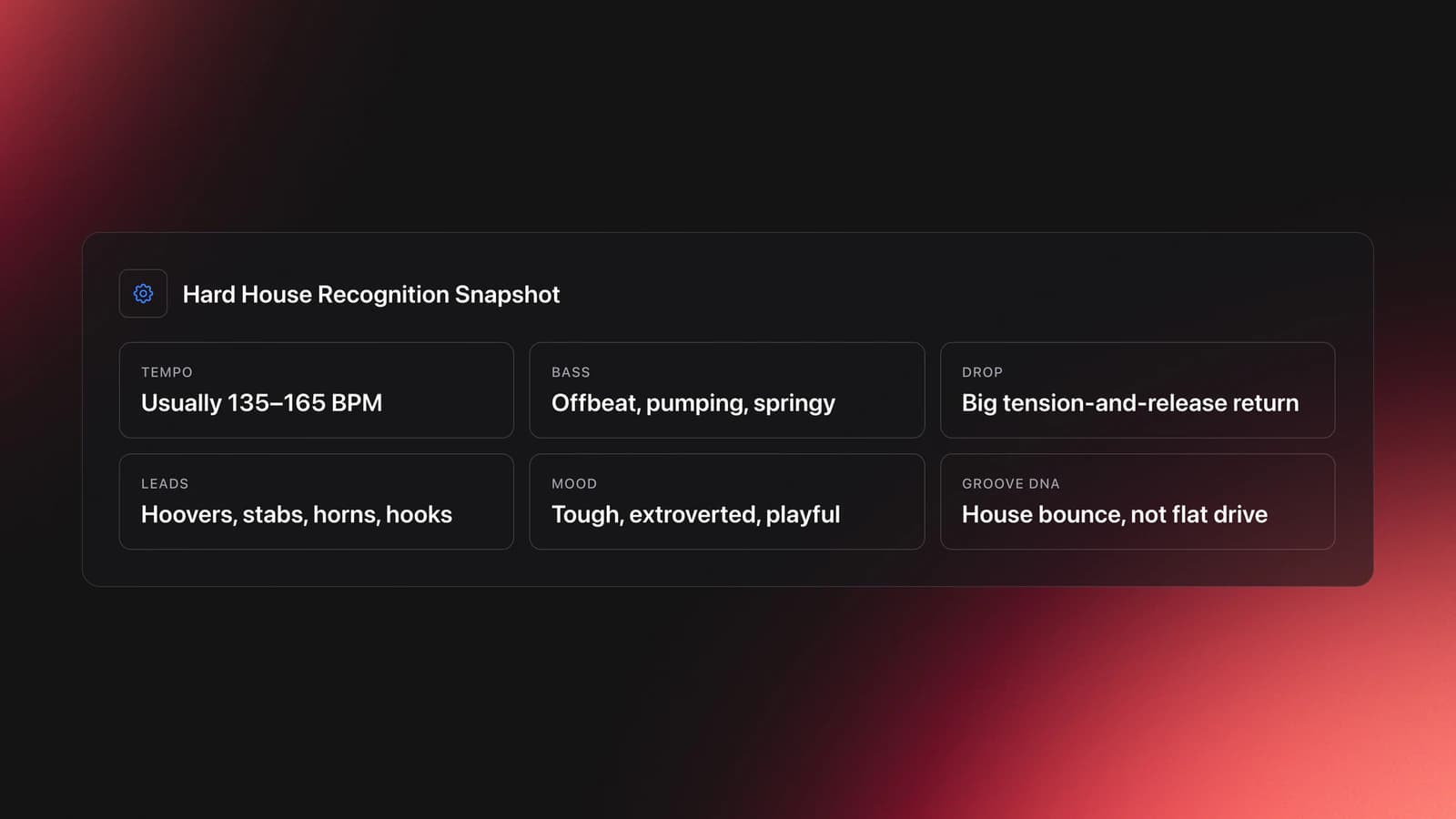
Hard house is usually defined by speed, punch, and attitude. In practice, that means a four-on-the-floor kick, a brisk tempo, aggressive stabs or hoovers, offbeat basslines, and breakdowns designed to build pressure before a very obvious return. Hard house typically runs 140-150 BPM, with the classic UK style clustering around 145-148 BPM, though database tagging still varies by platform. According to Beatport's genre taxonomy, hard house remains an active sub-genre listing under its hard dance classification, and broad reference sources describe UK hard house as a fast, riff-driven style tied to the 1990s club scene. Beatport Genres and Sub Genres
That broad definition is useful. It is not enough on its own.
To recognize hard house fast, I use a simple three-part filter. First, listen for pace. Second, listen for bass behavior. Third, listen for drop design. If all three point in the same direction, you are usually in hard house territory.
- Pace: faster than standard house, but still groove-led rather than pounded flat.
- Bass behavior: offbeat stabs, pumping movement, or a springy low-end push.
- Drop design: obvious tension-and-release, often with rolls, pauses, or dramatic build-ups.
- Lead material: hoovers, rave stabs, horns, or bright synth hooks rather than deep pads.
- Mood: tougher and more extroverted than most house, but often more playful than hard techno.
This is where many genre arguments go wrong. People compare hard house to modern hard techno by tempo alone. Tempo matters, but groove design matters more. Hard house still tends to feel like house pushing into hard dance. It swings, shoves, and bounces. It does not usually flatten into a straight, industrial drive.
Hard house reference tracks
A starting crate of hard house, pulled from our DJ track index with live BPM and Camelot keys (these run roughly 128-145 BPM). Beatmatch to each track's tempo, use the long intros and outros to blend, and swap on the phrase. Click any row to open its full sonic profile.




Hard House Origins and Scene Context
Most discussions of hard house point back to the UK club ecosystem of the early 1990s. The style is strongly associated with that scene, even though some reference material also notes parallel development in other markets and later local variations. The key point for listening is that hard house grew out of house, rave, and hard dance pressures at the same time, which is why it can sound familiar from several angles at once. UK hard house
That mixed lineage explains the genre's identity problem. Hard house borrowed house structure, rave energy, acid touches, and hard dance theatrics. So when newer listeners hear a track with a fast kick and a big synth stab, they often file it under techno, trance, or even hardstyle. Sometimes that is understandable. Often it is still wrong.
You hear this most clearly in classic UK hard house. The bassline tends to bounce. The riffs feel cheekier or brasher. The arrangement sets up crowd reaction points. That combination gives hard house a very physical kind of momentum.
For DJs, that history matters because it affects where hard house sits in a set. It often works as a bridge between high-energy house, trance-adjacent material, and tougher hard dance records. It is not just a genre tag. It is a functional energy tool.
Hard House Sound: Core Traits
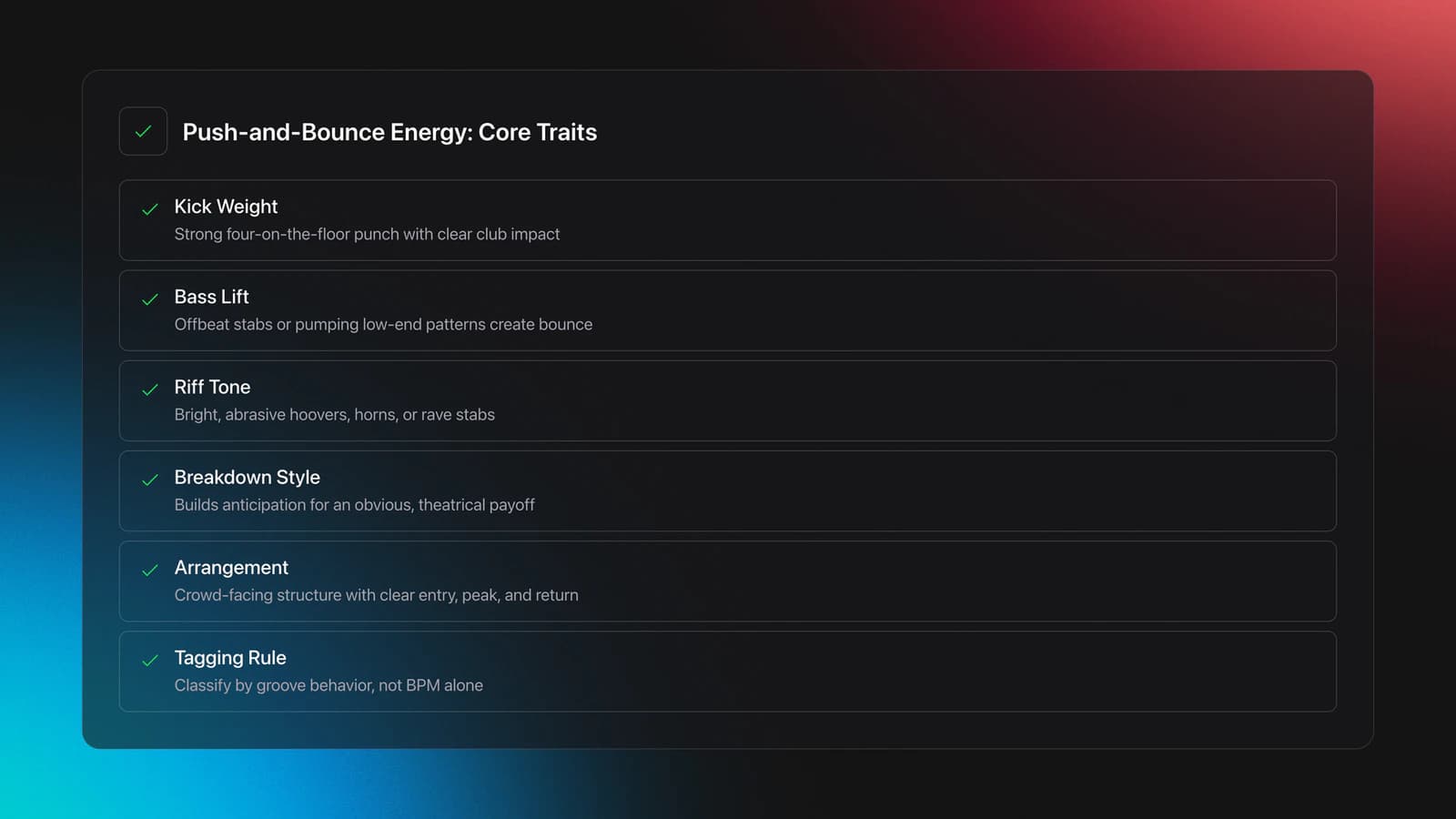
If you want to identify hard house quickly, stop asking whether the track is "hard." Ask how the track creates motion. Hard house relies on what I call push-and-bounce energy. The kick pushes straight ahead. The bassline and riffs bounce around it. That is the core feel.
You can hear that in at least five recurring traits.
- A strong, clean four-on-the-floor kick with obvious club weight.
- Offbeat bass stabs or pumping low-end patterns that create lift.
- Bright or abrasive synths, often hoovers, horns, or short rave riffs.
- Breakdowns that create anticipation rather than subtle atmosphere.
- A crowd-facing arrangement with clear entry, peak, and return points.
That last point matters more than people think. Hard house is built for reaction. A lot of tracks telegraph the payoff. The break strips energy back. The riser or roll tightens it. Then the drop lands with very little ambiguity.
A concrete example helps. Imagine two tracks at 150 BPM. Track A has a rigid, linear groove, little bass swing, and a dark, punishing texture. Track B has offbeat bass punches, a cheeky rave stab, and a big breakdown before a theatrical return. Track A probably reads as hard techno or hard trance-adjacent. Track B is much more likely to read as hard house.
Another example. Take a 145 BPM record with a chunky kick, playful vocal chop, and a bouncing bassline. Even before the main riff hits, the groove may already tell you this is hard house music rather than straight techno. The arrangement wants release. It wants a grin. It wants movement, not just force.
Failure mode matters here. A lot of DJs mislabel any fast house-adjacent track as hard house. The symptom is a crate full of records that do not mix emotionally. Some are bouncy and reactive. Others are flat and punishing. The fix is simple. Tag by behavior, not just by BPM.
Validation Check
Hard House vs Techno: Selection Guide
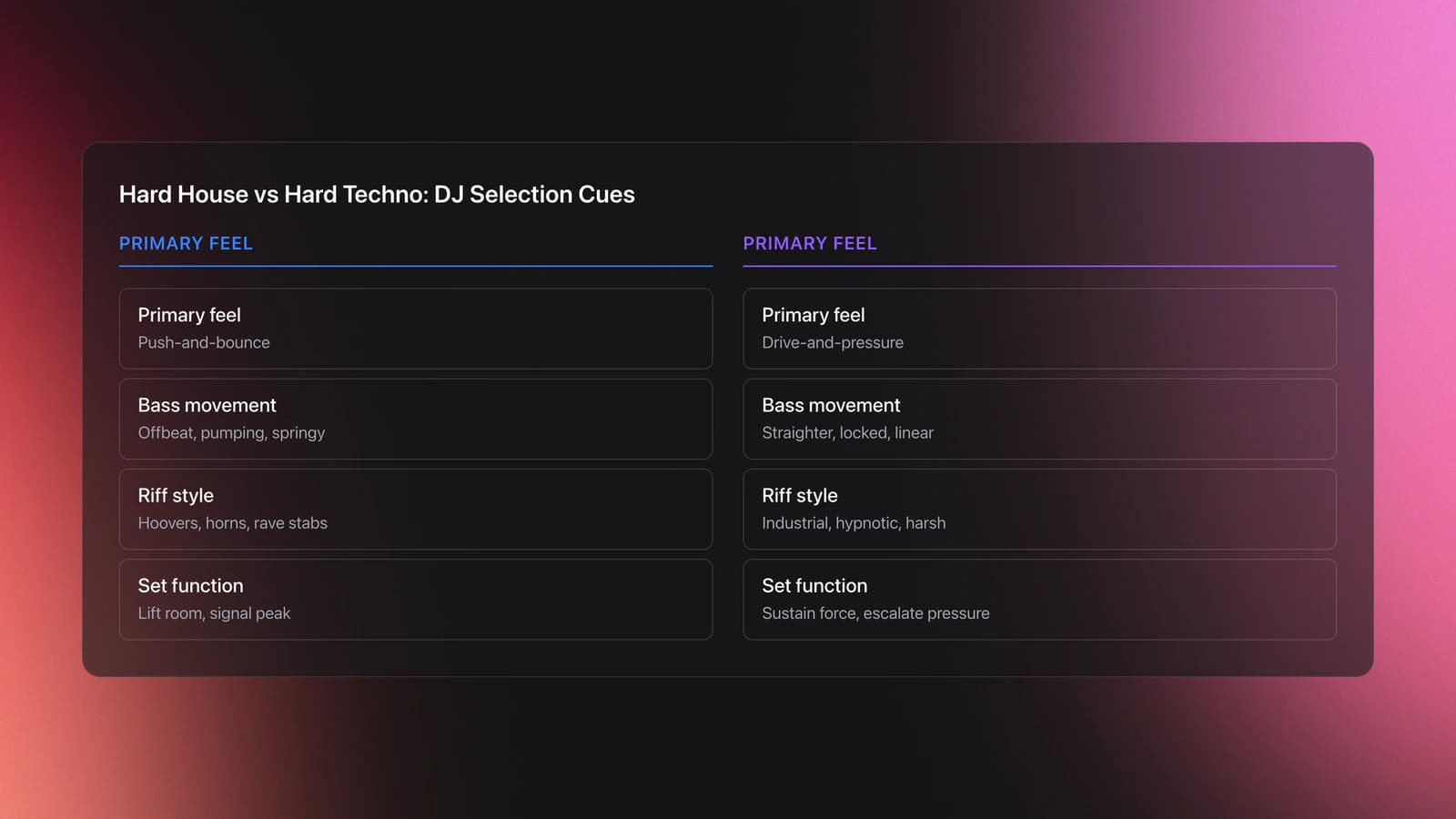
What is the difference between hard house and techno? The short answer is groove logic. Hard house usually bounces and cues obvious release points. Hard techno usually drives more linearly, with less emphasis on playful offbeat bass behavior and more emphasis on relentless forward force.
That does not mean the border is clean. It rarely is. Modern tagging is messy, and platforms do not always agree. But for DJ use, the distinction below is practical.
| Trait | Hard House | Hard Techno or Adjacent |
|---|---|---|
| Primary feel | Push-and-bounce | Drive-and-pressure |
| Bass movement | Offbeat, pumping, springy | Straighter, more locked, more linear |
| Riff style | Hoovers, horns, rave stabs, hooks | Industrial, hypnotic, percussive, harsh |
| Breakdowns | Big, obvious, crowd-facing | Can be shorter or more tension-led |
| Mood | Playful, cheeky, extroverted, peaky | Severe, dark, punishing, relentless |
| Set function | Lift the room and signal a peak | Sustain force or escalate pressure |
| House DNA | Still obvious | Often much less obvious |
| Mixing risk | Can clash with darker tools if mis-tagged | Can flatten a bouncy section if dropped too early |
A working distinction for DJs, selectors, and crate organization.
I have found the real-world difference easier to hear after years of changing practice rhythms. The more scattered the library, the harder it is to respond to room energy. Once tracks are organized by actual behavior, not just genre names, you stop guessing. You know where the right kind of pressure lives.
A second worked example. Suppose you are moving up from 138 BPM trancey house. A hard house record with a dramatic break and offbeat bass can make that step feel natural. A harder techno cut at the same tempo may feel like a hard left turn because the groove grammar changes, not just the intensity.
Common failure mode. DJs push into hard house too early because the BPM looks right. The symptom is that the set feels cartoonishly peak-time before the room is ready. The better move is to sequence by groove density first, then by tempo.
You will know you made the right call when the room reads the change as exciting rather than jarring. In your headphones, the low-end conversation should feel continuous even as the energy rises.
Hard House DJs and Key References
If you want to learn hard house properly, study DJs and labels as much as isolated tracks. Genre recognition gets easier when you hear how records function in a sequence.
Classic conversations around hard house often include names such as Tony De Vit, Lisa Lashes, Rachel Auburn, and links to labels and scenes that shaped the UK sound. Broad reference sources also connect the style to later branches like hard NRG and related regional scenes. en.wikipedia.org
Do not treat that as a closed museum list. Use it as a map. Listen for repeated structural habits across mixes. Where does the DJ use breakdown-heavy records? When do they switch from bounce to brute force? Which records sound house-rooted even at extreme tempos?
You can build a sharper ear by tracking three reference buckets.
- Foundational hard house: classic UK-style records with obvious bounce and peak-time riffs.
- Borderline records: tracks that flirt with techno, trance, or NRG but still feel house-led.
- False positives: fast tracks often mislabeled as hard house that actually behave differently in a set.
That third bucket is underrated. Knowing what hard house is not will improve your track selection faster than reading another vague genre definition.
Is Hard House Still Popular?
Is hard house still popular? It is more accurate to say hard house remains active, influential, and periodically resurgent rather than universally dominant. Beatport still recognizes hard house in its genre structure, which matters because platform taxonomies usually reflect ongoing catalog activity, even when a genre is niche relative to bigger current trends. labelsupport.beatport.com
Popularity also depends on what you mean. Mainstream chart visibility is one thing. Club utility is another. Some styles never vanish because DJs keep using them when they need a specific kind of room response.
That is why comeback talk can be misleading. A genre can look absent from broad music media and still stay very alive in specialist sets, local scenes, reissue culture, and digital digging communities.
For hard house, the more useful question is this: does the sound still solve a set-building problem? The answer is yes. It still offers a distinct combination of speed, bounce, and payoff that neither standard house nor harder techno replaces cleanly.
In practice, if you hear more fast, rave-forward, hook-driven records returning in DJ sets, that does not always mean the original scene has come back unchanged. It may mean certain hard house functions have become useful again.
Use Hard House in DJ Sets
Hard house works best when you treat it as a function, not just a genre. Its main jobs are acceleration, release, and peak framing.
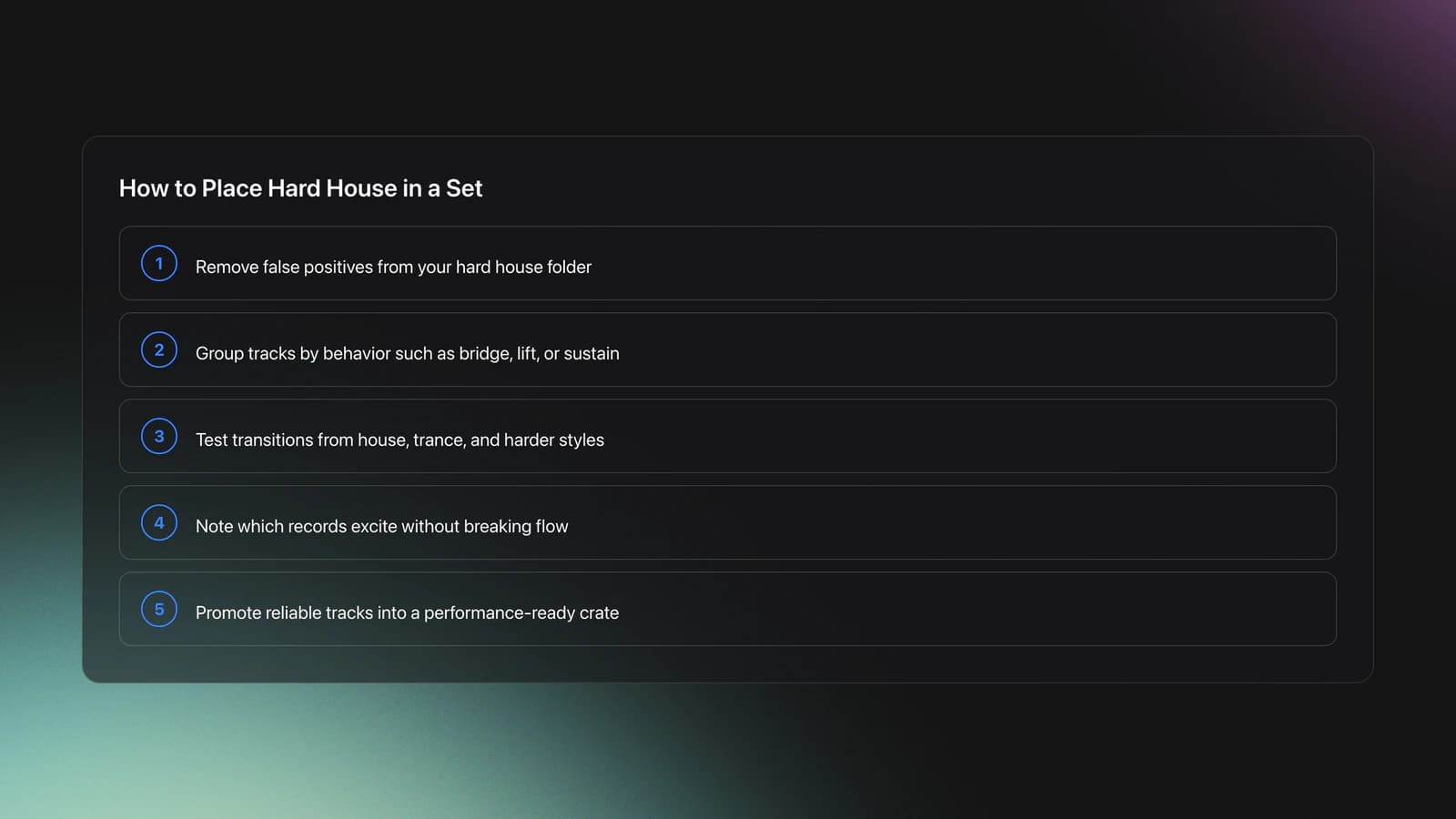
That gives you a simple step-by-step tutorial for using hard house in real sets.
- Start with your current hard house folder and remove obvious false positives.
- Group the remaining tracks by behavior, not just artist or release year.
- Mark which tracks lift energy and which tracks sustain it.
- Test transitions from house, trance, and harder techno into each group.
- Keep notes on which tracks create excitement without breaking flow.
- Promote reliable records into a performance-ready crate.
A worked example. Say you have a warm-up set moving from tough house at 132 BPM toward harder material. Your bridge track might be a 138 to 142 BPM record with a stronger offbeat bassline and brighter riff language. Then you move into a 145 to 150 BPM hard house cut with a larger breakdown. The listener feels escalation, not discontinuity.
Another example. In a late-peak set, you may already be at high intensity. Here, a more playful hard house record can reset the room's emotional response without actually lowering energy. That works because bounce can feel fresh where pure force starts to feel flat.
Common failure mode. A hard house track sounds great alone but feels huge too early in sequence. The symptom is that you reach a perceived peak with too much set left to play. The fix is to reserve the most theatrical breakdowns for moments when the room already trusts your pacing.
You will know your set placement is improving when hard house records stop feeling like novelty injections and start feeling like inevitable next moves.
Common Hard House Mistakes
| Mistake | Why It Happens | How to Avoid |
|---|---|---|
| Tagging by tempo alone | Fast BPM feels like enough information | Classify tracks by groove, bass behavior, and drop design |
| Mixing hard house and hard techno into one crate | Both feel intense and modern tagging is inconsistent | Split by bounce versus linear drive before performance prep |
| Using peak tracks too early | Big breakdowns feel exciting in solo listening | Sequence by room tension, not private listening impact |
| Keeping only one hard house folder | Genre-only organization feels simpler | Add functional labels such as bridge, peak, vocal, or ravey |
| Ignoring false positives | Platform genre labels are messy | Audit your folder regularly with short A/B listening tests |
Most hard house problems are really selection and organization problems.
Practice Routine for Hard House Listening
If you want to build a real feel for hard house music, use a short routine instead of passive listening.
- Week 1: Spend 15 minutes a day comparing one hard house track with one hard techno track. Write one sentence on groove difference.
- Week 2: Build a 10-track mini crate with only bounce-heavy hard house records. Practice two transition paths into and out of the crate.
- Week 3: Add five borderline tracks and decide whether each belongs in hard house, techno, or a bridge folder. Re-test in a 20-minute practice set.
This routine works because it trains discrimination, not just familiarity. After seven years of changing practice intensity, that has consistently mattered more than clocking random hours. Focused comparison builds faster judgment.
Measure Hard House Progress
You are improving with hard house when you can explain why a track belongs there before the main drop lands. Your ear should catch the groove logic early.
- You can sort borderline tracks in under 30 seconds.
- Your hard house crate sounds consistent across 10 to 15 records.
- Transitions into the crate feel intentional, not abrupt.
- You stop relying on BPM as the main classifier.
- You can describe the difference between bounce and brute force in plain words.
Conclusion
Hard house is best understood as fast, house-rooted club music built around bounce, pressure, and obvious release. The genre gets confusing when you treat BPM as the whole story. It gets much clearer when you listen for bass behavior, arrangement shape, and the emotional job the track does in a set.
Keep these takeaways in mind:
- Use groove behavior, not tempo alone, to identify hard house.
- Separate hard house from harder techno by bounce versus linear drive.
- Organize hard house by set function if you DJ it regularly.
Once you hear the pattern, hard house stops being a vague genre label and starts becoming a reliable tool in selection and set construction. From there, the next step is simple. Audit your library and test the category in a real mix.
The visual way to organize your DJ library
Tag tracks by vibe. See everything at once. Export to rekordbox, Serato, Traktor or Engine DJ.
14-day free trial. Full access, no strings attached.
or see how it works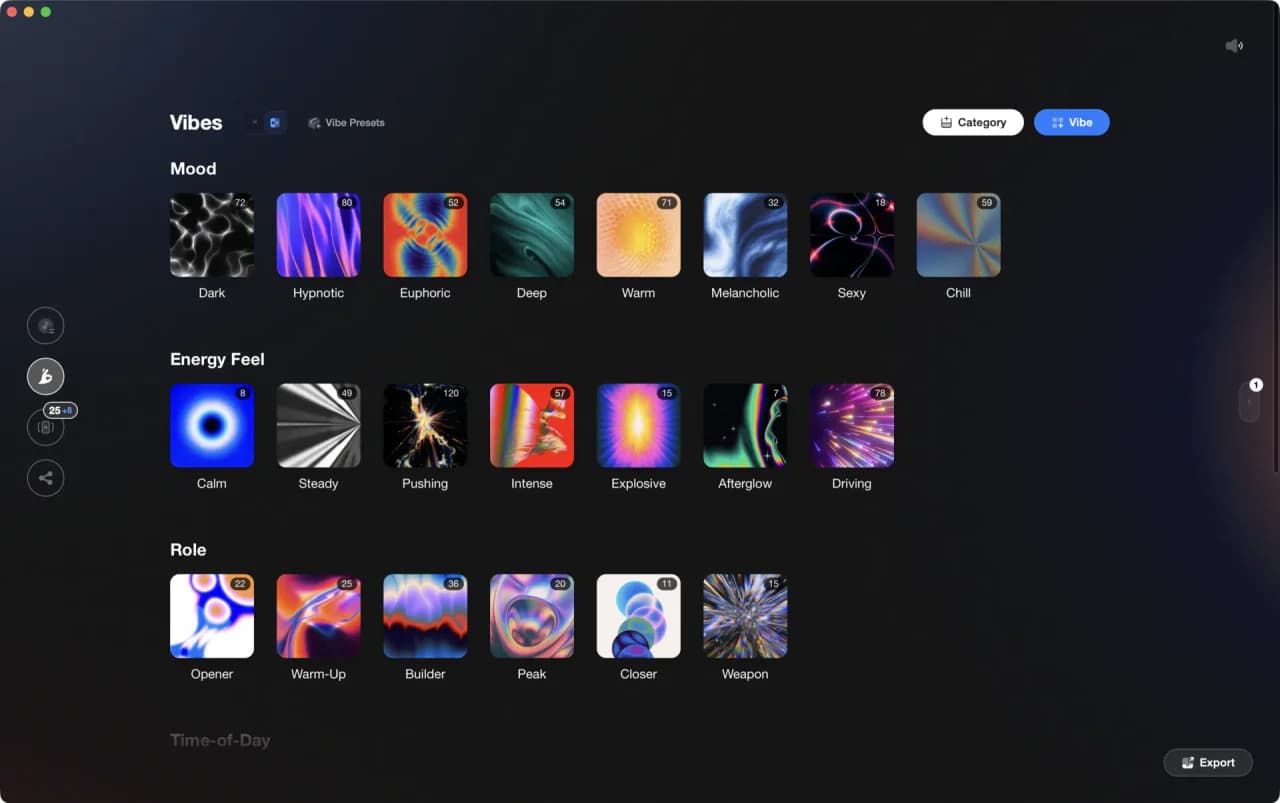
Techniques Covered
Equipment & Software
Featured Gear
Documentation
Continue Your Learning Journey
Start Here First




Related Content
House Music Explained
intermediate
Tech House: How to Build the Core Sound
intermediate
House Trance: Sound, Structure, Mixing
intermediate
90s House Music: Origins, Sound, Key Tracks
intermediate
Progressive House Music: How It Works
intermediate
Top Techno Songs That Still Work
intermediate
Frankie Knuckles: House Music Pioneer
intermediate
Harmonic Mixing Guide for DJs: Energy & Workflow
intermediate
DJ Key Wheel Decision Framework: Four Safe Moves and Advanced Jumps
intermediateFrequently Asked Questions

Hey, it's Ben Modigell 👋
I DJ and produce as so I so: downtempo, minimal, dub house, tech house, and techno (releases on Spotify and SoundCloud, links above). Everything I write here comes from my own gigs, studio sessions, and library cleanups: the rules I follow, the failure modes I have actually hit, and the workflow I use when nobody is watching. If a technique did not earn its place in my own sets, it does not make it into a tutorial.