
Watch Pablo Franco (franKeinas)’s tutorial above (71K views on YouTube).
This guide is for listeners trying to pin down what swedish house music actually is, why it feels different from other house scenes, and which artists define it. After reading, you will be able to recognize the sound, place Swedish House Mafia in context, and build a better starting playlist than a random algorithm gives you.
At its core, swedish house music is a melodic, polished, festival-scale branch of house that leans on strong chord progressions, clean builds, emotional vocals, and big payoffs. It sits inside the wider house tradition that began in Chicago, but its Swedish wave pushed progressive house and EDM aesthetics into a more cinematic, anthem-driven form through artists like Swedish House Mafia, Eric Prydz, Avicii, and Alesso.
If you want broader dance context first, start with house music basics. If you mainly care about set flow and energy control, DJ energy curve planning gives the practical lens.
Swedish House Music: Definition and Context
Swedish house music is not one rigid subgenre. It is better understood as a scene, a production sensibility, and a shared melodic language.
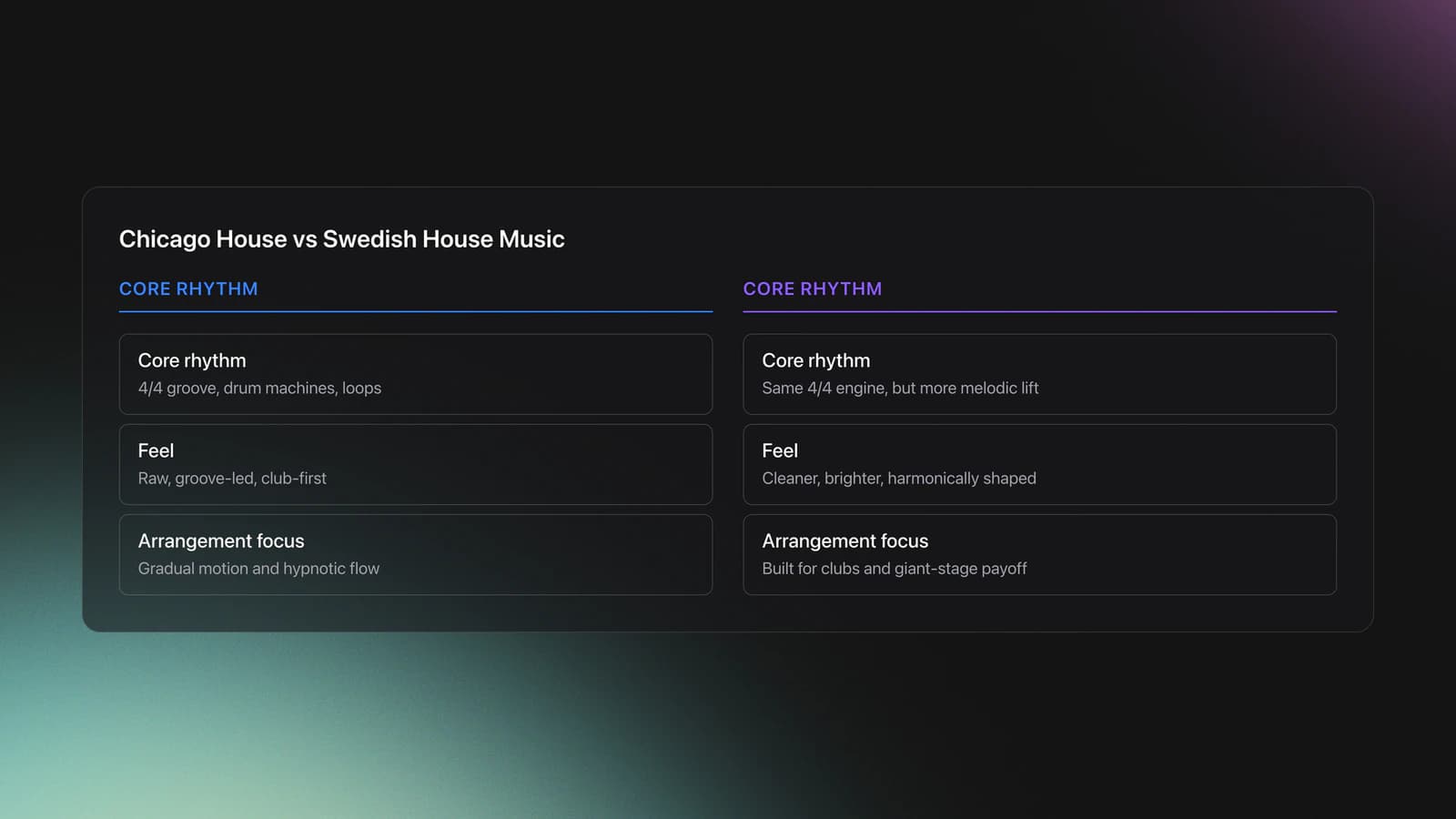
The house part still matters. House music emerged from Chicago club culture in the early 1980s and is built around repetitive 4/4 rhythm, drum machines, basslines, loops, and gradual arrangement changes, as summarized in the Encyclopaedia Britannica overview of house music and the broader house music reference entry.
The Swedish wave took that structure and changed the emotional scale. Producers kept the four-on-the-floor engine, but they pushed melody, clarity, and lift much harder than many earlier house styles.
That is the easiest way to hear the difference.
Chicago house often feels raw, groove-led, and club-first. Swedish house music often feels cleaner, brighter, more harmonically shaped, and built for both clubs and giant stages.
A useful mental model is this: groove is the chassis, melody is the engine, and arrangement is the launch ramp. When all three lock, you get the kind of euphoric payoff people associate with Swedish House Mafia music.
This also explains why the label gets messy online. Some listeners use swedish house music to mean any house record made by Swedes. Others use it to mean the specific big-room progressive style that exploded globally in the late 2000s and early 2010s.
In practice, the second meaning is the one most readers want.
Progressive / Swedish house reference tracks
A starting crate of progressive / Swedish house, pulled from our DJ track index with live BPM and Camelot keys (these run roughly 122-138 BPM). Beatmatch to each track's tempo, use the long intros and outros to blend, and swap on the phrase. Click any row to open its full sonic profile.





Swedish House Music Sound: What You Hear
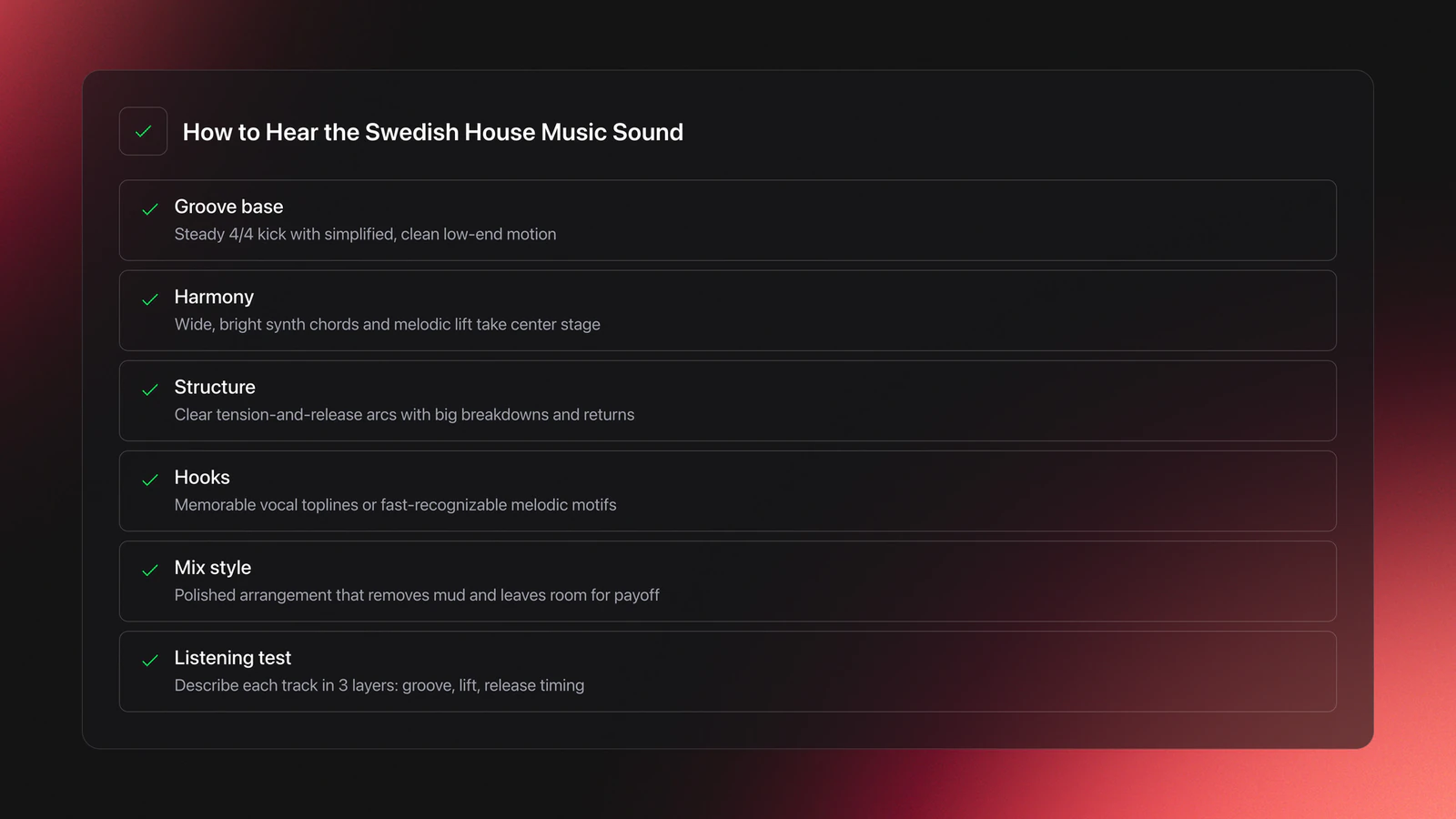
The fastest way to identify swedish house music is to listen for stacked emotional signals, not just tempo. The drums matter, but the signature usually sits in the harmony and the build.
Most tracks in this lane use some mix of these elements:
- steady 4/4 kick pattern
- wide, bright synth chords
- clear tension-and-release structure
- vocal hooks or memorable toplines
- big breakdowns followed by anthemic returns
- polished mixing and very controlled arrangement
What makes the style distinct is how those pieces are balanced. Swedish producers often remove mud, simplify the groove, and give the melodic hook more room than a dirtier club track would.
Example one. Compare a groove-first house record that lives on shuffle, swing, and loop hypnosis with a Swedish festival record that spends thirty seconds building one huge chord return. The first track pulls you inward. The second opens outward.
Example two. A track like Eric Prydz's work under Pryda often stretches a motif across long, disciplined progressions. A Swedish House Mafia song tends to sharpen the hook faster and aim for a more obvious crowd moment.
A common failure mode is confusing polish with sameness. New listeners hear the clean mixdowns and assume every record aims at the same peak-time payoff.
That is not quite right. Within swedish house music, you still get different emotional profiles. Some tracks are triumphant. Some are melancholic. Some are icy and restrained. Some sit closer to progressive house than to pop-leaning EDM.
You will know you are hearing the style clearly when you can describe the record in three layers. First, the groove. Second, the melodic lift. Third, the size and timing of the release.
That three-layer model is more useful than arguing over labels.
Swedish House Mafia and the Core Artists
Most readers searching swedish house music are really trying to place Swedish House Mafia inside the larger Swedish scene. That is the right instinct, but the trio is not the whole story.
Swedish House Mafia consists of Axwell, Sebastian Ingrosso, and Steve Angello. Their official site remains active, and the group has continued performing and releasing material in recent years through its own channels, including the main Swedish House Mafia website and current Beatport artist page for Swedish House Mafia.
If you only know the name, start here: Swedish House Mafia is a supergroup. Swedish house music is the broader movement and sound world around it.
That distinction answers one common search directly. What is Swedish House Mafia? It is not a genre. It is the trio that became the best-known public face of the Swedish progressive-house and EDM crossover wave.
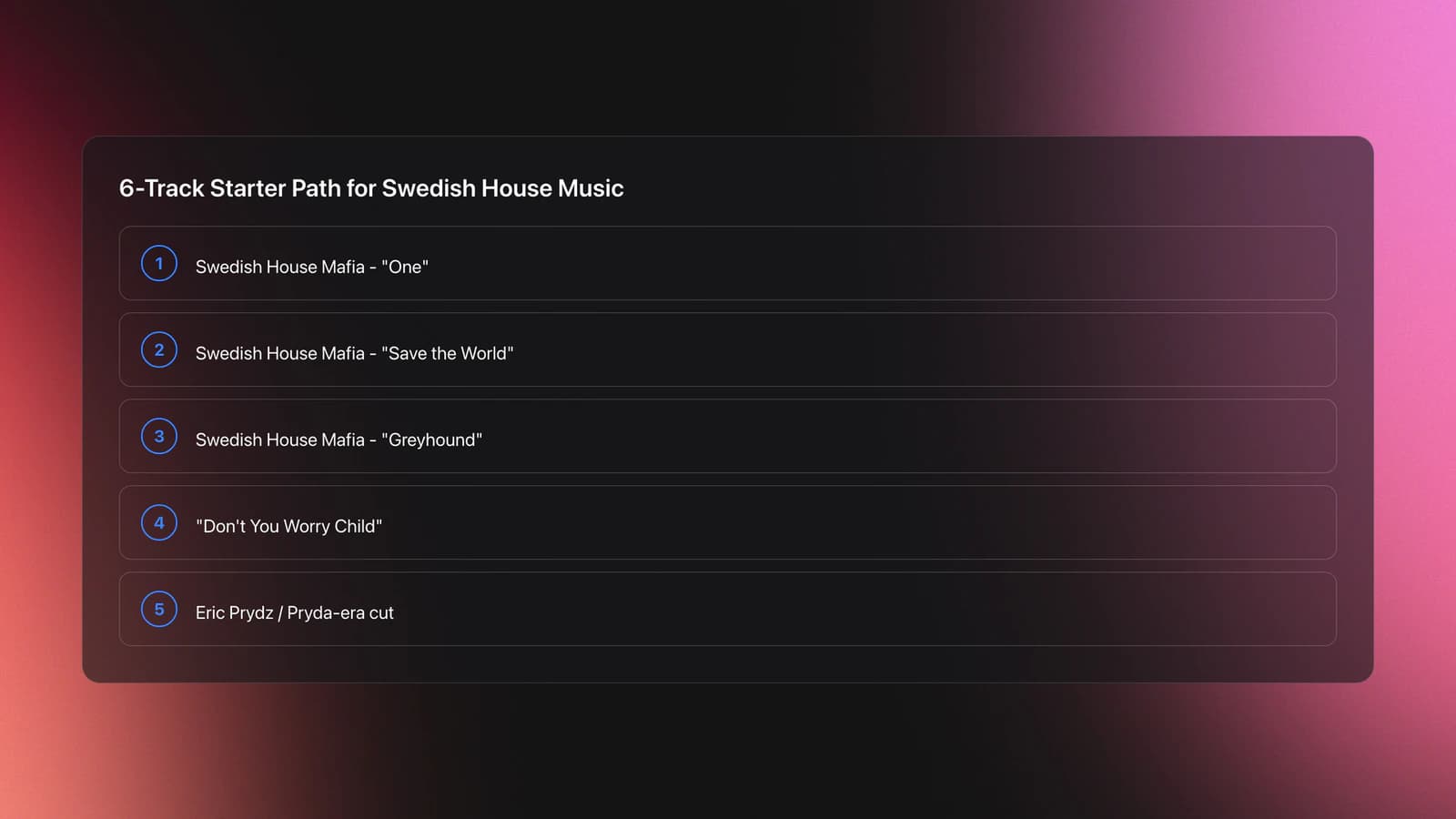
Their biggest catalog markers still do a lot of explanatory work. "One," "Save the World," "Greyhound," and "Don't You Worry Child" show the range from club tool to vocal anthem. Their debut album, *Paradise Again*, arrived on April 15, 2022, according to the album reference for Paradise Again.
The core supporting names matter too.
Eric Prydz is essential, even if people often ask the question in a messy way, like "eric prydz swedish house mafia." He was part of the same Swedish dance ecosystem, but his path became more progressive, more extended, and often more sonically meticulous than the main Swedish House Mafia arc.
Avicii matters because he translated Swedish melodic instincts into a broader songwriting language. Alesso matters because he sharpened the emotional festival formula with unusually strong harmonic hooks.
Here is the cleaner way to think about the scene:
- Swedish House Mafia: the flagship trio and mainstream symbol
- Eric Prydz: the precision progressive architect
- Avicii: the melodic crossover force
- Alesso: the euphoric hook specialist
- Axwell, Ingrosso, and Angello solo work: the connective tissue between club records and anthem records
A second failure mode is reducing the scene to only vocal hits. That misses a large part of why producers respect it. Arrangement control, mix clarity, and patience in the build are just as important as the hook.
You will know you have the artist map right when you can hear a track and ask two separate questions. Is this Swedish in sensibility? And is this specifically Swedish House Mafia in execution?
Best Swedish House Music Tracks to Start With
The best entry point is not a giant playlist. It is a small sequence that teaches the style in stages.
Start with records that each show one part of the sound clearly. Then add edge cases after your ear adjusts.
A practical starter sequence looks like this:
- Swedish House Mafia - "One" for the peak-time club blueprint
- Swedish House Mafia - "Save the World" for vocal uplift
- Swedish House Mafia - "Greyhound" for instrumental tension and release
- Swedish House Mafia - "Don't You Worry Child" for crossover anthem scale
- Eric Prydz - a Pryda-era progressive cut for melodic patience
- Alesso - an early breakout anthem for modern emotional phrasing
Why this order works is simple. It moves from function to feeling. First you hear the club architecture. Then you hear the vocal framing. Then you hear how the same scene handles instrumental drama.
Worked example one. If you play "One" and then "Don't You Worry Child," the input is two tracks from the same group. The process is to compare arrangement goals. The output is obvious: one is built around propulsion and release, the other around singalong memory and emotional resolution.
Worked example two. If you place a Prydz progressive cut next to a Swedish House Mafia anthem, the input is similar melodic DNA. The process is to listen for phrase length, payoff timing, and vocal centrality. The output is a cleaner distinction between progressive house discipline and anthem-driven Swedish house writing.
This is also where search terms like best swedish house mafia songs become useful but limited. They help you find entry tracks. They do not explain why those tracks work.
That explanation matters if you DJ. A list is not enough. You need tags that reflect function.
A practical checkpoint helps here.
Validation Check
Why Swedish House Music Broke Worldwide
Swedish house music did not spread globally by accident. It solved a market problem in dance music at exactly the right time.
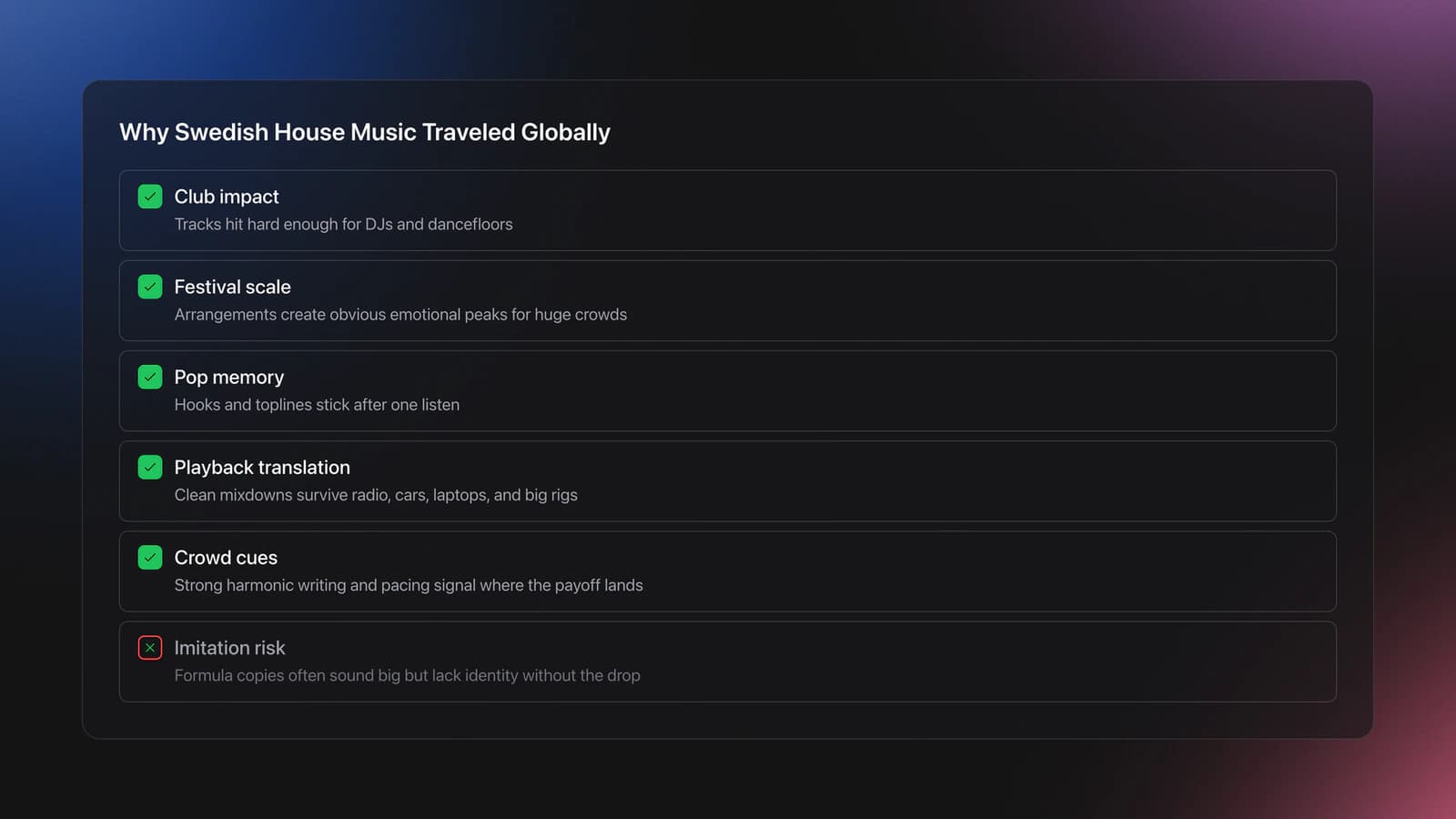
Clubs wanted tracks that hit hard. Festivals wanted records that scaled emotionally. Pop audiences wanted hooks they could remember after one listen. Swedish producers got unusually good at satisfying all three conditions in one arrangement.
This is the deeper structural reason the scene traveled.
The records were engineered for translation. A great underground cut can lose casual listeners. A great pop song can lose DJs. Swedish house music often met in the middle.
Three design choices helped:
- strong harmonic writing that survives bad speakers and huge systems
- arrangements that create obvious crowd cues
- mixdowns clean enough for radio, streaming, and festivals
Worked example one. A groove-heavy underground record may deliver subtle motion over six minutes. The output is dancer reward. A Swedish crossover anthem may signal its emotional center in under a minute. The output is instant recognition plus festival payoff.
Worked example two. A raw club track can sound excellent in a dark room and flat on casual playback. A Swedish anthem often keeps enough midrange hook and vocal identity to survive laptops, cars, radio edits, and giant outdoor rigs.
The downside is predictable. Once the formula became visible, weaker imitators copied the rise, the snare build, and the chord shape without understanding the pacing.
That is the main failure mode of the style. The symptom is a track that sounds expensive but feels empty.
You can validate the difference by asking a blunt question: if the drop vanished, would the track still have identity? The strongest Swedish house music usually passes that test because the chord logic and topline carry real weight.
Who Are the Swedish House DJs?
This question appears in People Also Ask for a reason. Many readers are less interested in genre theory than in the names they should know.
The shortest useful answer is that the best-known Swedish house DJs are Swedish House Mafia's three members, plus Eric Prydz, Avicii, and Alesso. Depending on how narrowly you define the lane, you could add other Swedish electronic acts, but those six names cover most of the scene's global identity.
Use this split to keep the names straight:
- Axwell: uplifting progressive-house instincts and label influence
- Sebastian Ingrosso: melodic tension and crossover songwriting
- Steve Angello: heavier edges and arena framing
- Eric Prydz: long-form progressive control
- Avicii: melody-first songwriting with broad crossover reach
- Alesso: emotional peak-time polish
If you want the artist relationships rather than just names, progressive house artists and EDM subgenres explained are useful companion reads.
Common Mistakes When Learning Swedish House Music
| Mistake | Why It Happens | How to Avoid |
|---|---|---|
| Treating Swedish House Mafia as the genre itself | The group is the most famous entry point | Separate the trio from the broader Swedish scene and compare related artists |
| Confusing all melodic EDM with Swedish house music | Big chords and builds appear in many styles | Listen for the specific mix of polish, phrasing, and progressive-house structure |
| Judging tracks only by the drop | Festival clips flatten the arrangement | Compare intro, breakdown, hook, and return before labeling the track |
| Ignoring instrumental tracks | Vocal hits dominate playlists and algorithms | Study both vocal anthems and instrumental records to hear the full style |
| Using giant playlists with no categories | Streaming encourages passive listening | Sort tracks by function, mood, and payoff so patterns become obvious |
The most common listening and classification errors around Swedish house music
Swedish House Music Listening Framework
If you want one framework to keep, use this one: lift, release, identity.
Lift means how the track builds expectation. Release means how it pays off. Identity means what remains memorable when the loudest moment is gone.
This framework works for casual listening, critical listening, and DJ prep. It gives you something more precise than "this sounds big."
Run every new record through three checks:
- Lift. Does the arrangement build tension with purpose, or just add noise?
- Release. Does the payoff feel earned by the chord and phrase setup?
- Identity. Would you remember the track without the loudest section?
If a track passes all three, it likely belongs in the stronger end of the swedish house music spectrum. If it only passes one, it may still work in a set, but it is probably not a defining example.
This same framework also keeps your library cleaner. Playlist organization for DJs and how to tag tracks by energy both extend this approach into real prep.
Conclusion
Swedish house music is best understood as a melodic, polished, emotionally scaled branch of house shaped by a Swedish production scene rather than a single narrow formula. Swedish House Mafia is the most visible symbol of that sound, but the scene makes more sense when you also hear Eric Prydz, Avicii, Alesso, and the solo work around the trio.
Keep these takeaways:
- Separate the genre wave from the Swedish House Mafia group
- Listen for lift, release, and identity, not just drops
- Use small, purpose-built track sets to train your ear faster
From there, the next step is simple. Build a short reference playlist, compare functions track by track, and stop relying on vague genre labels.
The visual way to organize your DJ library
Tag tracks by vibe. See everything at once. Export to rekordbox, Serato, Traktor or Engine DJ.
14-day free trial. Full access, no strings attached.
or see how it works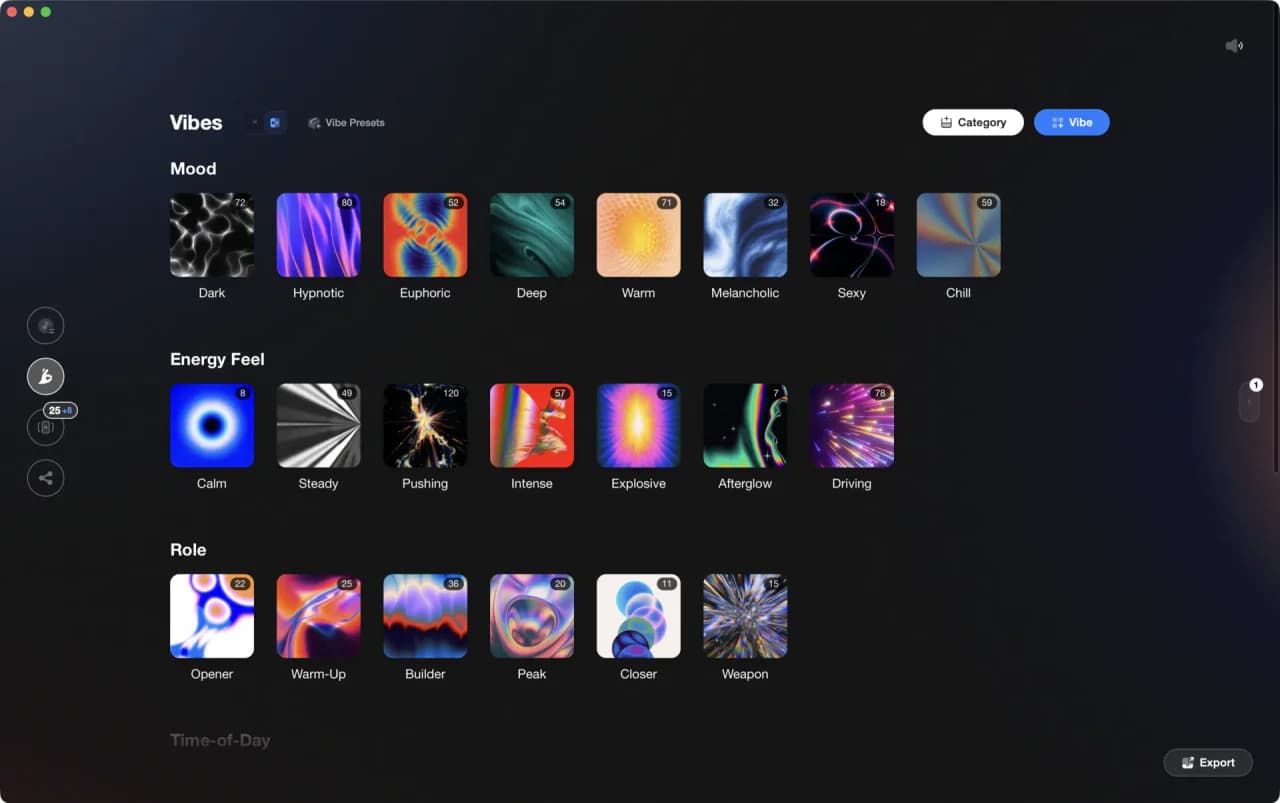
Equipment & Software
Continue Your Learning Journey

Frequently Asked Questions

Hey, it's Ben Modigell 👋
I DJ and produce as so I so: downtempo, minimal, dub house, tech house, and techno (releases on Spotify and SoundCloud, links above). Everything I write here comes from my own gigs, studio sessions, and library cleanups: the rules I follow, the failure modes I have actually hit, and the workflow I use when nobody is watching. If a technique did not earn its place in my own sets, it does not make it into a tutorial.