
Music Genre Tree
A visual classification of electronic music genres and how they branch into sub-genres. Each genre shows its BPM range and key characteristics. Use this chart to understand genre relationships and find new styles to explore.
- Interactive reference
- Keyboard friendly
- No sign-up
- Total entries
- 203
- Parent families
- 29
- Sub-genres
- 174
- BPM span
- 60-350 BPM
Electronic Music Genre Tree
203 entries across 29 parent families, spanning 60-350 BPM.
| Family | Genre | BPM Range | Typical BPM | Notes |
|---|---|---|---|---|
| House | House | 115-132 | 125 | The foundation of electronic dance music, born in Chicago in the early 1980s. Characterized by a steady four-on-the-floor kick drum pattern, synthesized basslines, and soulful vocals. |
| House | Chicago House | 118-128 | 122 | The original house sound from clubs like The Warehouse and Music Box. Drum machine patterns (TR-707, TR-909), Roland bass, and disco DNA. Pioneered by Frankie Knuckles, Marshall Jefferson, and Larry Heard. |
| House | Deep House | 118-125 | 122 | A smoother, more atmospheric take on house. Warm pads, jazzy chords, and subdued vocals create a hypnotic, late-night feel. |
| House | Tech House | 124-128 | 126 | Blends house groove with techno's minimalism. Punchy percussion, rolling basslines, and stripped-back arrangements dominate the dancefloor. |
| House | Progressive House | 126-132 | 128 | Long, evolving builds and breakdowns with layered melodies. Tracks develop gradually over 7-10 minutes with emotional peaks. |
| House | Acid House | 120-130 | 125 | Defined by the squelchy, resonant sound of the Roland TB-303 bass synthesizer. A pivotal genre in rave culture. |
| House | Electro House | 126-132 | 128 | Big, distorted basslines and aggressive synth leads. High-energy festival sound with dramatic drops. Distinct from classic 'electro' (electrofunk). |
| House | Funky House | 122-128 | 125 | Infuses house with funk and disco elements. Groovy basslines, filtered samples, and uplifting energy. |
| House | French House | 118-128 | 124 | Filter-driven house pioneered by Daft Punk, Cassius, Stardust, and the Ed Banger crew. Heavily filtered disco and funk samples, sidechain pumping, and phaser sweeps. |
| House | Disco House | 118-126 | 122 | House built on disco loops and live instrumentation feel. Strings, horns, slap bass, and four-on-the-floor uplift. Overlaps with French and funky house. |
| House | Soulful House | 120-128 | 124 | House with gospel-rooted vocals, jazzy keys, and live-feel arrangements. Defined by labels like Defected, Soulfuric, and artists like Louie Vega and Kerri Chandler. |
| House | Garage House | 122-128 | 125 | The New York/New Jersey vocal house sound from Paradise Garage and Tony Humphries era. Soulful, gospel-tinged vocals over swung drums. Direct ancestor of UK garage. |
| House | Future House | 124-128 | 126 | Bouncy, metallic-bass house pioneered by Tchami, Oliver Heldens, and Don Diablo. Mid-2010s Spinnin'/Mixmash sound bridging UK garage swing and big-room drops. |
| House | Bass House | 124-130 | 128 | Aggressive, bass-forward house drawing from UK bassline and dubstep. AC Slater, Joyryde, Habstrakt territory. Heavy mid-range growls over four-on-the-floor. |
| House | G-House | 124-128 | 126 | Gangsta-house: tech house with West Coast hip-hop samples and gangsta rap acapellas. Pioneered by AC Slater, Amine Edge & DANCE, and the Night Bass label. |
| House | Big Room House | 126-132 | 128 | Stripped-down festival house built around massive kick-driven drops. Hardwell, Martin Garrix, W&W era of Mainstage EDM at Tomorrowland and Ultra. |
| House | Tropical House | 100-118 | 110 | Slow, sun-soaked house with marimba/steel-drum leads, panflutes, and tropical instrumentation. Popularized by Kygo, Thomas Jack, and Matoma in 2014-2016. |
| House | Slap House | 110-125 | 120 | Plucked, slap-bass-driven house with downtempo trap-influenced energy. Brazilian Bass evolution: Imanbek, VIZE, Alok. Massive in 2019-2021. |
| House | Brazilian Bass | 120-128 | 124 | São Paulo-born deep house variant with prominent slappy bass and minimal arrangement. Alok, Bhaskar, and Vintage Culture defined the sound that birthed slap house globally. |
| House | Microhouse | 120-128 | 124 | Glitchy, micro-sampled minimal house pioneered by Akufen, Ricardo Villalobos, and the Perlon/Kompakt circle. Granular textures and click-house grooves. |
| House | Hard House | 140-150 | 145 | UK rave-era hard house with pumping kicks, hoover synths, and crowd-rallying energy. Tidy Trax, Trade nightclub heritage. Tony De Vit, BK, Lisa Lashes. |
| House | Italo House | 118-128 | 122 | Late-80s Italian house with piano stabs, female diva vocals, and synth strings. Black Box's 'Ride on Time' and 49ers epitomize the sound. |
| House | Latin House | 122-128 | 125 | House laced with congas, timbales, and Latin/salsa percussion. DJ Disciple, Erick Morillo, Roger Sanchez crossover sound. |
| House | Ghetto House | 130-150 | 135 | Raw, sexually explicit Chicago house with stripped 808/909 patterns. Dance Mania label sound: DJ Funk, DJ Deeon. Direct precursor to juke and footwork. |
| House | Jackin' House | 124-128 | 126 | Cut-up disco-loop house with chopped vocal stabs and bouncy swung drums. Strictly Rhythm/Defected territory. The 'jacking' references original Chicago house dance. |
| House | Outsider House | 115-128 | 120 | Raw, lo-fi, outsider-art house from labels like L.I.E.S., Mood Hut, and 1080p. DJ Sotofett, Huerco S., Anthony Naples. Tape hiss and DIY production aesthetics. |
| House | Lo-Fi House | 115-125 | 120 | Raw, tape-saturated house with intentionally degraded sound quality. Vintage samples, dusty drums, and DIY aesthetic. Ross From Friends, DJ Boring, Mall Grab. |
| House | Afro House | 120-128 | 124 | Fuses house music with African rhythms, percussion, and melodic elements. Rich in polyrhythmic patterns and organic instrumentation. Black Coffee, Keinemusik. |
| House | Afro-Tech | 122-128 | 125 | Tech house variant with African percussion layers, log drums, and organic textures. Sits between Afro House and tech house: Themba, Black Motion sound. |
| House | Organic House | 115-124 | 122 | Layered, percussive, melody-soft house championed by labels like All Day I Dream and Crosstown Rebels. Bedouin, Sébastien Léger, Tinlicker, Bona Fide. Subtle, warm, organic textures over deep grooves. |
| House | Melodic House | 118-126 | 122 | Anjunadeep-adjacent, emotional, melody-led house. Innellea, Massano, Cassian, Anyma, Argy. Distinct from melodic-techno: groovier, slightly slower, more song-like. |
| House | Tribal House | 124-130 | 126 | Percussion-heavy house with congas, djembes, bongos, and chant vocals. Pier Bucci, DJ Chus, Stephan Hinz territory. Different from Afro House: tribal is more global drum focused. |
| Techno | Techno | 130-150 | 138 | Originated in Detroit in the mid-1980s. Driven by repetitive, mechanical rhythms and futuristic synth textures. Designed for dark, immersive dancefloors. |
| Techno | Detroit Techno | 128-140 | 135 | The original techno sound. Melodic, soulful, and forward-looking: influenced by Kraftwerk, funk, and sci-fi. Belleville Three: Juan Atkins, Derrick May, Kevin Saunderson. |
| Techno | Minimal Techno | 125-135 | 130 | Stripped to essentials: sparse arrangements, subtle percussion, and hypnotic repetition. Less is more. Plastikman, Robert Hood, Ricardo Villalobos. |
| Techno | Industrial Techno | 135-150 | 142 | Raw, abrasive, and uncompromising. Distorted kicks, metallic textures, and relentless intensity. Perc, Ancient Methods, Blawan. |
| Techno | Acid Techno | 130-145 | 138 | Merges techno's drive with the squelchy TB-303 acid sound. Intense, psychedelic, and rave-oriented. Stay Up Forever, Liberator DJs. |
| Techno | Dub Techno | 120-135 | 128 | Combines techno with dub reggae techniques: heavy reverb, delay chains, and dubby chord stabs create a meditative, spacious sound. Basic Channel, Rhythm & Sound, DeepChord. |
| Techno | Hard Techno | 145-160 | 150 | Faster, harder, louder. Pounding kicks, screeching synths, and aggressive energy for peak-time dancefloors. SPFDJ, Sara Landry, Hector Oaks. |
| Techno | Schranz | 145-160 | 150 | German hard techno offshoot known for hammering, distorted kicks and minimal melodic content. Chris Liebing's Frankfurt sound, late-90s Cocoon era. |
| Techno | Birmingham Techno | 130-142 | 135 | Dark, mechanical UK techno school: Surgeon, Regis, British Murder Boys, Female. Downwards label sound built on dystopian repetition. |
| Techno | Peak Time Techno | 132-140 | 135 | Beatport's catch-all for festival-ready, dancefloor-focused techno: Charlotte de Witte, Amelie Lens, Adam Beyer territory. Driving but melodic enough for big rooms. |
| Techno | Raw Techno | 130-142 | 135 | Stripped, lo-fi techno with raw analog warmth. Berghain-aligned but drier: Answer Code Request, Kobosil, Fadi Mohem. |
| Techno | Hypnotic Techno | 130-142 | 135 | Long, looping, trance-inducing techno built on subtle evolution. Donato Dozzy, Voices From The Lake, early Nina Kraviz Trip releases. |
| Techno | Bleep Techno | 120-130 | 125 | Early-90s UK Yorkshire techno: Warp Records' formative sound. Sub-bass, melodic bleeps, and Detroit influence. LFO, Nightmares on Wax, Sweet Exorcist. |
| Techno | Tribal Techno | 130-138 | 134 | Drum-heavy techno with tribal percussion patterns and global drum influences. Adam Beyer's early Drumcode, Joel Mull, Marco Carola territory. |
| Techno | Ambient Techno | 100-130 | 120 | Atmospheric techno that prioritizes texture and mood over drive. Aphex Twin (Selected Ambient Works), B12, Biosphere, The Black Dog. |
| Techno | Broken Techno | 125-138 | 130 | Techno built on broken beats and irregular kick patterns instead of strict 4/4. Bruce, Batu, Pessimist, Livity Sound territory. UK bass-meets-techno. |
| Techno | Melodic Techno | 122-132 | 126 | Emotional melodies over driving techno rhythms. Popularized by Tale Of Us, Afterlife label, and festival main stages. Maceo Plex, Massano, Anyma. |
| Electro | Electro | 110-135 | 128 | True electro: the funky, robotic style descended from Kraftwerk and Afrika Bambaataa. Built on TR-808 syncopation rather than four-on-the-floor. Distinct from 'electro house'. |
| Electro | Electrofunk | 110-130 | 120 | Early-80s funk-electro hybrid. Talking-box vocals, P-funk DNA, and 808 bass. Zapp, Egyptian Lover, World Class Wreckin' Cru. |
| Electro | Detroit Electro | 120-135 | 128 | Sci-fi, aquatic, futurist electro from Drexciya, Aux 88, Anthony Shake Shakir. Underground Resistance/Direct Beat label sound. |
| Electro | Miami Bass | 120-145 | 130 | Sub-bass-heavy 80s/90s Florida electro. 2 Live Crew, DJ Magic Mike, Luke. Booty-shake party music with massive 808 sub-bass. |
| Electro | Electroclash | 118-130 | 124 | Early-2000s NY/Berlin retro-electro fusion with new wave vocals and analog synths. Fischerspooner, Miss Kittin, Peaches, Tiga, Vitalic. |
| Electro | Baile Funk | 130-150 | 140 | Funk carioca: Rio de Janeiro's hip-hop-inflected club music descended from Miami bass. Anitta, MC Kevin O Chris, DJ Polyvox. The modern '150 BPM' generation pushed the older 130 BPM standard up. |
| Electro | Kuduro | 130-150 | 140 | High-energy Angolan dance music fusing semba, zouk and techno. Buraka Som Sistema, Dog Murras, Tony Amado. Don Omar's 'Danza Kuduro' was the genre's mainstream crossover. |
| Electro | Skweee | 80-110 | 95 | Slow-tempo Scandinavian electro-funk on cheap synths. Daniel Savio, Eero Johannes, Flogsta Danshall: the Flogsta scene's signature sound. |
| Trance | Trance | 128-150 | 138 | Hypnotic melodies, euphoric builds, and extended breakdowns. Designed to induce a trance-like state through repetition and emotional progression. |
| Trance | Uplifting Trance | 136-142 | 138 | The classic trance sound: soaring melodies, big breakdowns, and euphoric drops that define the genre's emotional peak. Aly & Fila, Above & Beyond, Ferry Corsten. |
| Trance | Progressive Trance | 128-136 | 132 | Slower, deeper trance with gradual builds and subtle evolution. Less euphoric peaks, more groove and texture. Sasha & Digweed, Hernan Cattaneo. |
| Trance | Vocal Trance | 132-140 | 138 | Trance with foregrounded vocal performances. Dash Berlin, Tiësto's early-2000s output, ATB. Pop crossover potential. |
| Trance | Tech Trance | 135-145 | 140 | Merges trance's melodic elements with techno's driving, percussive energy. Harder edge than classic trance. Simon Patterson, Sean Tyas, Will Atkinson. |
| Trance | Hard Trance | 140-150 | 145 | Faster, harder trance: distorted hoover synths, pumping kicks, and hard-rave energy. Kai Tracid, Dumonde, Cosmic Gate's early sound. |
| Trance | Acid Trance | 135-145 | 140 | TB-303-driven trance: squelchy acid lines weaving through trance arrangements. Hardfloor, Union Jack, Trance Wax. |
| Trance | Dream Trance | 130-140 | 135 | Mid-90s Italian trance built on dreamy piano leads and emotional progressions. Robert Miles' 'Children' archetype, BBE, Zhi-Vago. |
| Trance | Balearic Trance | 118-128 | 124 | Sun-drenched, slower trance born from Ibiza's Café del Mar/Pacha sunset sets. Eclectic, melodic, and uplifting without the BPM. Chicane, Way Out West. |
| Trance | Orchestral Uplifting | 138-142 | 140 | Cinematic, symphonic uplifting trance: orchestral string sections, choir layers, and film-score builds. Andy Blueman, Soundlift, Activa. |
| Trance | Psytrance | 140-150 | 145 | Psychedelic trance with driving basslines, layered textures, and mind-bending sound design. Born from Goa trance. |
| Trance | Goa Trance | 140-150 | 145 | The original psychedelic trance from Goa, India. Layered acid lines, organic textures, and spiritual energy. Astral Projection, Infected Mushroom's early work. |
| Trance | Full-On Psytrance | 140-148 | 145 | Melodic, energetic Israeli/Brazilian psytrance variant. Vini Vici, Astrix, Infected Mushroom mainstream era. The festival-friendly face of psy. |
| Trance | Forest / Dark Psytrance | 145-160 | 148 | Dark, organic, woodland-mood psytrance with rolling acid basslines. Kindzadza, Para Halu, Terrafractyl. The opposite end from Full-On. |
| Trance | Hi-Tech Psytrance | 170-220 | 200 | Ultra-fast, experimental psytrance pushing tempo and sound design to extremes. Bizzare Contact, Outsiders, Furious, Para Halu. Glitchy, technical, often blurring with speedcore at the upper end. |
| Trance | Twilight Psytrance | 144-156 | 150 | Mid-tempo, melodic-but-edgy psytrance for the hours between night and dawn. Loud, Spectro Senses, Earthling. Sits between progressive psy and full-on with darker grooves. |
| Trance | Darkpsy | 148-160 | 152 | Heavier end of psytrance with relentless 4/4 kicks, rolling sub-bass, and dense FM/acid textures. Kindzadza, Bog, Penta. Robotic and chromatic where forest is organic and natural. |
| Trance | Progressive Psytrance | 130-140 | 135 | Slower, hypnotic psytrance focused on groove and gradual development. Liquid Soul, Ace Ventura, Vibrasphere, Atmos. The Swedish-born stripped-down side of psy. |
| Trance | Zenonesque | 126-140 | 132 | Australian-pioneered, left-field strain of progressive psytrance championed by Zenon Records. Sensient, Krumelur, Globular. Cerebral, jazzy, head-nod psychedelia over peak-time bombast. |
| Trance | Nitzhonot | 145-155 | 150 | Israeli melody-forward Goa offshoot from the late 1990s. Eyal Barkan, Holy Men, Astral Projection's brighter side. 'Victories' in Hebrew: celebratory, anthem-driven psytrance. |
| Trance | Suomisaundi | 140-160 | 150 | Finnish freeform psy: chaotic, irreverent, sample-collage psytrance. Squaremeat, Texas Faggott, Haltya. The DIY weirdo cousin of Goa. |
| Trance | Psybreaks | 130-150 | 140 | Psytrance hybridised with breakbeat drum patterns. Hyper-Frequencies, Tickle, Shanka, BSE. Mostly 130-140 BPM with broken kicks instead of 4/4. |
| Drum & Bass | Drum & Bass | 160-180 | 174 | Fast breakbeats and heavy sub-bass. Originated in the UK rave scene of the early 1990s. Energetic and bass-heavy. |
| Drum & Bass | Jungle | 160-180 | 170 | The precursor to drum & bass. Chopped breakbeats, Jamaican sound system influence, and ragga/dancehall vocal samples. Goldie, Roni Size, LTJ Bukem. |
| Drum & Bass | Liquid D&B | 170-178 | 174 | The melodic, soulful side of drum & bass. Smooth pads, vocals, and musical breakdowns over rolling beats. High Contrast, Calibre, London Elektricity. |
| Drum & Bass | Atmospheric D&B | 165-175 | 172 | Lush, ambient drum & bass: LTJ Bukem and Good Looking Records-defined. Jazz-tinged pads, deep bass, and meditative vibes. |
| Drum & Bass | Neurofunk | 170-178 | 174 | Technical, dark, and complex. Intricate sound design, glitchy bass, and precise engineering. Noisia, Black Sun Empire, Phace, Misanthrop. |
| Drum & Bass | Techstep | 168-178 | 174 | Late-90s dark, mechanical D&B that became the foundation for neurofunk. Ed Rush & Optical, Dom & Roland, Trace. No Knit roots. |
| Drum & Bass | Jump Up | 170-178 | 174 | Aggressive, crowd-oriented D&B with wobbly basslines and simple, high-energy arrangements designed to make people jump. Hazard, Original Sin, DJ Guv. |
| Drum & Bass | Darkstep | 170-180 | 174 | Aggressive, horror-tinged D&B. Distorted basslines, dark atmospheres, and brutal drops. Limewax, The Outside Agency, Cooh. |
| Drum & Bass | Crossbreed | 175-200 | 185 | Hybrid of D&B and hardcore: fast tempo, distorted hardcore kicks, and D&B drum patterns. Limewax, The Outside Agency, Forbidden Society. |
| Drum & Bass | Halftime | 170-180 | 174 | D&B produced at 170+ BPM but with halftime drum patterns: feels like 85 BPM hip-hop. Ivy Lab, Stray, Sam Binga, Dabs. |
| Drum & Bass | Drumfunk | 170-178 | 174 | Edit-heavy, broken D&B prioritising chopped breakbeats over wobble bass. Paradox, Fanu, Equinox, Macc. The drummer's drum & bass. |
| Drum & Bass | Minimal D&B | 168-176 | 172 | Reduced, atmospheric D&B with sparse arrangements. Calibre, Marcus Intalex, dBridge's Autonomic sound. |
| Drum & Bass | Ragga Jungle | 160-180 | 170 | Heavy on Jamaican ragga vocal samples and dub influence. Congo Natty, General Levy, Aphrodite. The reggae-soundsystem branch of jungle. |
| Drum & Bass | Drumstep | 140-150 | 140 | Hybrid of D&B and dubstep: D&B drum patterns at dubstep tempo (140 BPM). Excision, Datsik, Flux Pavilion crossover sound. |
| Drum & Bass | Deep DnB | 168-176 | 172 | Moody, minimalist drum & bass with weighty sub-bass and immersive atmospheres. Calibre, LSB, Marcus Intalex, S.P.Y. The 'less is more' branch pioneered around the Soul:r label. |
| Drum & Bass | Autonomic | 160-172 | 165 | Self-imposed 170 BPM 'speed limit' movement spearheaded by dBridge, Instra:mental and ASC on Exit Records around 2009-2011. Music first, drum & bass second: emotionally charged, spacious, sci-fi. |
| Drum & Bass | Sambass | 170-180 | 174 | Brazilian D&B blended with samba percussion and bossa nova feel. DJ Marky, Patife, XRS Land. Brazilian movement of late 90s/early 2000s. |
| Footwork | Footwork | 155-165 | 160 | Chicago dance-battle music descending from juke and ghetto house. Triplet kicks, chopped vocal samples, and 160 BPM intensity. RP Boo, DJ Rashad, Traxman. |
| Footwork | Juke | 155-165 | 160 | Footwork's predecessor: Chicago party music with stripped 808 patterns and faster tempos than ghetto house. Direct ancestor of footwork. |
| Dubstep | Dubstep | 138-142 | 140 | Heavy wobble bass, syncopated rhythms, and sparse arrangements at half-time feel. Originated in South London. |
| Dubstep | Deep Dubstep | 138-142 | 140 | The original UK dubstep sound: deep sub-bass, minimal percussion, and dark, spacious atmospheres. Rooted in dub and garage. Mala, Coki, Loefah, Skream. |
| Dubstep | Brostep | 140-150 | 145 | Aggressive, mid-range focused dubstep popularized by Skrillex. Heavy drops, complex sound design, and festival-oriented energy. |
| Dubstep | Riddim | 140-150 | 145 | Minimalist, repetitive dubstep with heavy emphasis on wobble patterns and triplet rhythms. Stripped back but hard-hitting. Subtronics, Infekt, PhaseOne. |
| Dubstep | Melodic Dubstep | 138-150 | 140 | Combines dubstep's bass weight with emotional melodies, vocals, and cinematic production. Popularized by Seven Lions and Illenium. |
| Dubstep | Tearout Dubstep | 140-150 | 145 | Aggressive UK-style dubstep with brutal mid-range bass. Trampa, Funtcase, Walter Wilde, Eptic. The harder UK answer to brostep. |
| Dubstep | 140 / Deep Bass | 138-142 | 140 | The modern UK underground dubstep sound: half-time, sub-bass driven, minimal. Hessle Audio, Tempa, Deep Medi-aligned. Often labelled simply '140'. |
| Dubstep | Future Garage | 130-140 | 135 | Atmospheric, vocal-chopped UK garage descendant: Burial, Untold, Pearson Sound. Late-night, rain-soaked, post-dubstep emotional sound. |
| Dubstep | Post-Dubstep | 130-140 | 135 | Post-2010 sound that took dubstep tempos but dropped wobble bass for songcraft and introspection. James Blake, Mount Kimbie, SBTRKT. |
| Dubstep | Wonky | 130-140 | 135 | Off-grid, syncopated bass music: drunken-feel rhythms and pitch-bent synths. Hudson Mohawke, Rustie, Flying Lotus crossover with the Glasgow LuckyMe scene. |
| Dubstep | Chillstep | 138-142 | 140 | Calm, ambient-toned dubstep with soft pads and gentle bass. Blackmill, CMA, Phaeleh. YouTube/SoundCloud-heritage relaxation soundtrack. |
| Dubstep | Grime | 135-145 | 140 | London MC-driven 140 BPM bass music: Wiley, Skepta, Dizzee Rascal, Stormzy. Eskibeat ancestry, dubstep cousin, hip-hop tempo. |
| Future Bass | Future Bass | 130-160 | 150 | Bright, melodic, supersaw-led bass music. Flume, Illenium, San Holo, Louis The Child. Stutter chords, vocal chops, and emotional drops. |
| Future Bass | Kawaii Future Bass | 140-160 | 150 | Anime-styled, hyper-cute future bass. Snail's House, Rin, Tomggg. Pixel-pop melodies, sugary vocal chops, J-pop influence. |
| Future Bass | Color Bass | 140-150 | 145 | Vibrant, harmonically dense subgenre with overlapping chord stacks and 'colorful' sound design. Chime, MYRNE, Crystal Skies aesthetic. |
| Future Bass | Glitch Hop | 100-115 | 108 | Hip-hop tempo bass music with heavy glitch processing. Pretty Lights, GRiZ, Opiuo. 110 BPM swing, funky drums, talkbox vocals. |
| Trap (EDM) | Trap (EDM) | 130-150 | 140 | Festival/EDM trap: rolling 808 sub-bass, snare rolls, and hip-hop drum DNA at 140 BPM. RL Grime, Flosstradamus, Baauer, Diplo. Distinct from rap trap. |
| Trap (EDM) | Hard Trap | 140-150 | 145 | Hard-hitting festival trap with heavier drops and aggressive sound design. UZ, Carnage, Yellow Claw. Often blurs into hybrid trap. |
| Trap (EDM) | Festival Trap | 140-150 | 145 | Big-room oriented trap built for mainstage moments. Bombs Away, TNGHT influence, Diplo's Mad Decent label aesthetic. |
| Trap (EDM) | Hybrid Trap | 140-150 | 145 | Trap fused with dubstep/riddim sound design. Wakaan label sound: Liquid Stranger, Mersiv, Boogie T. Heavy mid-range bass over trap drums. |
| Trap (EDM) | Hyperpop | 140-200 | 160 | PC Music-rooted maximalist pop pushed to breaking point. SOPHIE, A.G. Cook, 100 gecs, Charli XCX, Dorian Electra. Pitch-shifted vocals, glitch production, plastic synths, internet-native chaos. |
| Trap (EDM) | Digicore | 130-180 | 160 | Trap-leaning sibling of hyperpop that grew out of SoundCloud's 'draincore' scene. glaive, ericdoa, midwxst, brakence, kmoe. Heavy autotune over sharp 808s and frantic hi-hats. |
| Trap (EDM) | Trapwave | 130-150 | 140 | Trap with vaporwave/synthwave aesthetics: distorted 808s, retro pads, melancholic vibes. Crossover with phonk and witch house. |
| Phonk | Phonk | 110-150 | 130 | Memphis rap-rooted bass music: distorted 808s, cowbells, chopped vocals. Massively revived in the 2020s through TikTok and drift culture. |
| Phonk | Drift Phonk | 140-165 | 150 | Russian-led aggressive phonk variant tied to Japanese drift-car culture. Kordhell, Phonk Killer, MoonDeity. The 2022 TikTok phonk explosion. |
| Phonk | Memphis Phonk | 70-90 | 80 | The original phonk: Memphis 90s rap source material. DJ Screw chops, Three 6 Mafia influence, lo-fi cassette aesthetic. SpaceGhostPurrp's 2011 revival. |
| Phonk | House Phonk | 130-145 | 138 | Phonk fused with house tempos and four-on-the-floor kicks. Brazilian and Russian scenes overlap here. |
| Phonk | Brazilian Phonk | 130-150 | 140 | São Paulo's funk-meets-phonk hybrid: funk-carioca DNA crossed with drift phonk. Massive 2022-2024 movement on TikTok. |
| Midtempo | Midtempo | 100-126 | 118 | Current club-scene Midtempo centers on bouncy midtempo: deep resonant basslines, dark-disco and indie-dance textures, slow-tech bounce, and enough groove to work before or after tech house. Older bass-scene usage also covers Rezz-style midtempo bass. |
| Midtempo | Midtempo Bass | 100-115 | 110 | The Rezz/HypnoVizion, 1788-L, and Blanke aesthetic: pulsing 100-110 BPM grooves, hypnotic kicks, and gritty mid-bass design. The genre's flagship bass-music sub-style. |
| Midtempo | Bouncy Midtempo | 110-126 | 120 | Club-focused bouncy Midtempo: slow-tech and dark-disco energy with deep basslines, offbeat percussion, playful vocals, and a tempo that feels slower than peak-time tech house while still moving a dancefloor. |
| Midtempo | Cinematic Midtempo | 90-110 | 100 | Orchestral, trailer-music-inspired midtempo with epic builds and cinematic risers. Apashe, Black Tiger Sex Machine, Kompany at slower tempos. |
| Midtempo | Industrial Midtempo | 100-115 | 110 | Mechanical, dystopian midtempo with industrial sound design. 1788-L, Hi I'm Ghost, Spag Heddy. Nine Inch Nails-coded production. |
| Midtempo | Phonkstep / Phonk Midtempo | 100-115 | 108 | Phonk crossover with midtempo bass design: distorted 808s, cowbells, and slow hypnotic grooves. Bridge between phonk and Rezz-style bass. |
| Wave | Wave | 70-90 | 80 | Half-time, emotive, witch-house-adjacent bass music. Sidewalks and Skeletons, BL▲CK † CEILING, Klimeks, Skit. Programmed at 140-160 with a 70-80 BPM perceived feel. |
| Breakbeat | Breakbeat | 120-140 | 130 | Syncopated, non-four-on-the-floor drum patterns. Funky, energetic, and sample-heavy. |
| Breakbeat | Big Beat | 110-140 | 130 | Late-90s breakbeat with rock-band attitude. Chemical Brothers, Fatboy Slim, Prodigy, Crystal Method. Heavy drums, big riffs, festival appeal. |
| Breakbeat | Florida Breaks | 130-140 | 135 | Bass-heavy Miami breakbeat with Miami Bass DNA. DJ Icey, Baby Anne, Rabbit in the Moon. Massive on Florida rave circuit in the late 90s. |
| Breakbeat | Nu-Skool Breaks | 125-135 | 130 | Late-90s/early-00s UK funky breaks. Adam Freeland, Plump DJs, Stanton Warriors. Cleaner production, electro-influenced. |
| Breakbeat | Dariacore | 150-180 | 170 | Hyperflip / dariacore: frenetic cut-ups of recognizable pop hooks, anime snippets and internet ephemera over breakbeats and club triplets. Pioneered by Jane Remover (as 'leroy') in the early 2020s. |
| Breakbeat | Progressive Breaks | 128-138 | 132 | Progressive trance/house structures over breakbeat drums. Hybrid, BT, Way Out West. Builds and breakdowns with broken kicks. |
| UK Garage | UK Garage | 128-135 | 130 | Shuffled rhythms, pitched-up vocals, and a swinging groove. The sound of late-90s London nightlife. |
| UK Garage | 2-Step Garage | 128-135 | 132 | UK garage variant with snare on the 2 and 4 only: leaves space, creates the shuffle. Artful Dodger, MJ Cole, Sunship. |
| UK Garage | Speed Garage | 130-140 | 135 | Faster UK garage with reggae-influenced sub-bass. Double 99, 187 Lockdown, Tuff Jam. Pre-2-step UKG sound. |
| UK Garage | Bassline / Niche | 134-142 | 138 | Sheffield/Northern UK garage variant with 4/4 kicks and aggressive basslines. T2's 'Heartbroken', DJ Q, TS7. Niche club heritage. |
| UK Garage | UK Funky | 128-135 | 130 | Late-2000s house/garage hybrid with broken Afro-Caribbean drums. Crazy Cousinz, Roska, Cooly G, Lil Silva. Direct ancestor of UK funky-influenced UK funky. |
| Hardcore | Hardcore | 160-200 | 175 | Fast, aggressive, and intense. Distorted kicks, rapid tempos, and unrelenting energy. |
| Hardcore | Gabber | 160-200 | 180 | Rotterdam-born hardcore with severely distorted kicks ('gabber kicks') made from overdriven 909 kicks. Paul Elstak, Neophyte, Rotterdam Terror Corps. |
| Hardcore | Early Hardcore | 150-165 | 160 | Early-90s Rotterdam hardcore: pre-gabber breakbeat-driven sound. Holy Noise, Euromasters, Sperminator. The genre's birthplace. |
| Hardcore | Happy Hardcore | 160-180 | 170 | Bouncy, melodic, often piano-driven hardcore. Anglo-Dutch sound. Scott Brown, Hixxy, DJ Brisk. Big in 90s UK rave. |
| Hardcore | UK Hardcore | 170-185 | 175 | Modern UK happy-hardcore evolution with cleaner production. Darren Styles, Gammer, Hixxy. The 2000s-onwards UK festival sound. |
| Hardcore | Frenchcore | 200-220 | 210 | Fast-rolling French hardcore with the signature 'Frenchcore kick': a punchy distorted kick on every quarter. Dr. Peacock, Sefa, Radium. |
| Hardcore | Speedcore | 250-350 | 280 | Extreme hardcore at 250+ BPM. Distorted kicks blur into noise walls. Lenny Dee, Noisekick, The Speed Freak. |
| Hardcore | Terrorcore | 200-300 | 240 | Horror-themed extreme hardcore with movie samples and dystopian themes. Industrial Strength label, Lenny Dee, Stickhead. |
| Hardcore | Breakcore | 160-220 | 180 | Edit-heavy chaotic breakbeat hardcore. Venetian Snares, Aaron Spectre, Sickboy. Mash-up culture and IDM-meets-hardcore. |
| Hardcore | Industrial Hardcore | 175-200 | 185 | Dark, mechanical hardcore with industrial atmospheres. The Outside Agency, Tieum, Promo. Often blurs with crossbreed. |
| Hardcore | Mainstream Hardcore | 150-180 | 170 | Festival-friendly hardcore: Q-dance/Masters of Hardcore mainstage sound. Angerfist, Miss K8, Mad Dog. |
| Hardstyle | Hardstyle | 150-160 | 155 | Hard-hitting reverse bass kicks, euphoric melodies, and crowd-engaging energy. Massive in the Netherlands festival scene. |
| Hardstyle | Euphoric Hardstyle | 150-155 | 150 | The melodic side of hardstyle. Soaring leads, uplifting breakdowns, and anthemic energy designed for festival main stages. Headhunterz, Wildstylez, Brennan Heart. |
| Hardstyle | Rawstyle | 150-160 | 155 | The darker, harder side of hardstyle. Raw kicks, screech leads, and aggressive production with less emphasis on melody. Radical Redemption, Warface, Crypsis. |
| Hardstyle | Xtra Raw | 150-165 | 158 | Even harder rawstyle pushing toward uptempo territory. Screechy 'reese' style kicks, aggressive distortion. The brutal edge of rawstyle. |
| Hardstyle | Reverse Bass | 150-155 | 150 | Classic hardstyle sound built around the signature reverse bass kick: a key element that defines the genre's rhythmic character. |
| Hardstyle | Nu-Style Hardstyle | 140-150 | 145 | Mid-2000s hardstyle evolution: melodic, screech-led, more song-structured. Showtek, Headhunterz, Noisecontrollers. Bridge between classic and euphoric. |
| Hardstyle | Dubstyle | 140-150 | 145 | Hardstyle/dubstep crossover. Dubstep wobble bass over hardstyle drum patterns. Coone, Endymion experiments. |
| Hardstyle | Psystyle | 140-155 | 150 | Hybrid of hardstyle's distorted kick-and-tail anthems with psytrance's rolling triplet bass and acid leads. Coone, Ran-D × Adaro, Zatox, Sound Rush. Festival-ready and relentless. |
| Hardstyle | Uptempo Hardcore | 165-200 | 180 | Faster-than-hardstyle, slower-than-speedcore offshoot. Sometimes classified under hardcore. Sefa, Crisis Era, Killshot. Dutch festival upper-tempo bracket. |
| Moombahton | Moombahton | 100-115 | 108 | Reggaeton-house hybrid invented by Dave Nada in 2009. Pitched-down house at 108 BPM with reggaeton dembow rhythm. Diplo, Munchi, Major Lazer. |
| Moombahton | Reggaeton | 85-100 | 92 | Latin urban music built on the dembow rhythm, rooted in Panamanian reggae en español and Puerto Rican club culture. Bad Bunny, Daddy Yankee, J Balvin, Karol G. Now the dominant Latin pop sound. |
| Moombahton | Dembow | 110-130 | 120 | Faster, rawer Dominican cousin of reggaeton. El Alfa, Rochy RD, Yailin la Más Viral, Tokischa. Heavy percussion, 'pámpara' calls, party-driven club tempos. |
| Moombahton | Moombahcore | 110-130 | 115 | Heavier, dubstep-influenced moombahton. Dillon Francis, Diplo, Knife Party. Bigger drops, harder sound design. |
| Amapiano | Amapiano | 108-118 | 112 | South African house sub-genre defined by deep log drums, jazzy keys, and slow groove. Massive global movement since 2019. Kabza De Small, DJ Maphorisa, Focalistic. |
| Amapiano | Afrobeats | 100-115 | 108 | West African pop juggernaut blending hip-hop, R&B, dancehall and indigenous rhythms. Wizkid, Burna Boy, Davido, Tems, Rema. Distinct from Fela's 1970s 'Afrobeat' (singular). |
| Amapiano | Kwaito | 95-112 | 105 | 1990s South African slowed-down house with chanted vocals and looped local samples. Mandoza, TKZee, Boom Shaka, Brenda Fassie. The genre that opened the door for amapiano. |
| Gqom | Gqom | 120-130 | 125 | Raw, dark Durban house variant: minimalist, percussion-led, often without melody. DJ Lag, Citizen Boy, Rudeboyz. South African underground export. |
| Nu-Disco | Nu-Disco | 100-125 | 118 | Modern disco revival with house DNA. Live-feel basslines, strings, and four-on-the-floor warmth. Todd Terje, Daft Punk's RAM, Lindstrøm. |
| Nu-Disco | Italo Disco | 110-130 | 120 | Early-80s Italian electronic disco. Synth basslines, vocoders, and futuristic vibes. Giorgio Moroder, Ryan Paris, Gazebo. |
| Nu-Disco | Hi-NRG | 130-150 | 135 | Faster gay-club disco descendant: Patrick Cowley, Bobby O, Sylvester. Pumping octave basslines, big claps. Pre-house bridge. |
| Nu-Disco | Disco | 100-130 | 118 | The 70s parent genre that birthed house. Live drums, strings, four-on-the-floor, soulful vocals. Donna Summer, Chic, Bee Gees. |
| Nu-Disco | Eurodance | 130-145 | 140 | 90s European pop-dance crossover. Female vocals + male rap formula. 2 Unlimited, Snap!, Ace of Base, Vengaboys. |
| Nu-Disco | Boogie | 105-120 | 112 | Post-disco / electro-funk hybrid from the late 1970s and early 80s. Zapp, Evelyn 'Champagne' King, Roy Ayers, Dam-Funk. Synth bass, accented 2-and-4 groove, no four-on-the-floor. |
| Nu-Disco | Future Funk | 110-130 | 120 | Vaporwave-adjacent re-edits of 70s/80s Japanese city pop, funk and disco. Yung Bae, Macross 82-99, Night Tempo, Saint Pepsi. Glossy four-on-the-floor with chopped vocal hooks. |
| Synthwave | Synthwave | 80-115 | 100 | 80s-inspired retro electronica: gated reverb drums, FM-synth pads, neon nostalgia. Kavinsky's Drive soundtrack era. The Midnight, FM-84. |
| Synthwave | Outrun | 80-115 | 100 | Highway/driving-themed synthwave subgenre: soundtrack-feel arpeggios and arena-rock drums. Mitch Murder, Lazerhawk, Miami Nights 1984. |
| Synthwave | Darksynth | 90-130 | 110 | Aggressive horror-tinged synthwave. Perturbator, Carpenter Brut, GosT. John Carpenter scoring DNA. Often crosses into metal-tempo. |
| Synthwave | Vaporwave | 60-90 | 75 | Slowed/chopped 80s/90s smooth-jazz/lounge samples. Macintosh Plus 'Floral Shoppe', Saint Pepsi. Internet-aesthetic adjacent. |
| Synthwave | Chillwave | 80-110 | 95 | Hazy, dreamy late-2000s indie-electronic: Washed Out, Toro y Moi, Neon Indian. Lo-fi pop with synth nostalgia. |
| IDM | IDM | 90-160 | 130 | Intelligent Dance Music: the cerebral, listening-focused branch of electronic. Aphex Twin, Autechre, Squarepusher, μ-Ziq. Warp Records' Artificial Intelligence series defined the term. |
| IDM | Glitch | 100-150 | 130 | Music built from digital errors: clicks, pops, bit-crushes. Oval, Alva Noto, Pole. Mille Plateaux label sound. |
| IDM | Drill 'n' Bass | 150-180 | 170 | IDM/D&B hybrid with hyper-edited drum programming. Squarepusher, Aphex Twin (Come to Daddy era), Venetian Snares. |
| IDM | Braindance | 90-160 | 130 | Term coined by Rephlex Records (Aphex Twin/Grant Wilson-Claridge) for their broader IDM/acid output. Embraces playful melody alongside programming complexity. |
| IDM | Ambient IDM | 60-100 | 80 | Slow, textural IDM emphasising atmosphere over rhythm. Boards of Canada, Ulrich Schnauss, Tycho's earlier work. Music for night drives. |
| EBM | EBM | 110-140 | 130 | Electronic Body Music: Belgian/German industrial-techno predecessor. Front 242, Nitzer Ebb, DAF. Sequenced bass, militant chants, factory aesthetics. |
| EBM | Aggrotech | 130-150 | 140 | Aggressive, distorted EBM evolution: Combichrist, Suicide Commando, Hocico. Goth-club staple, distorted screamed vocals. |
| EBM | Industrial | 100-140 | 125 | Throbbing Gristle/SPK/Cabaret Voltaire originated noise/electronic genre. Later split into industrial rock (NIN, Ministry) and EBM. Harsh textures, machine sounds. |
| Ambient | Ambient | 60-120 | 90 | Atmospheric, textural music designed for deep listening. Gentle pads, field recordings, and evolving soundscapes. Often beatless or with very subtle rhythms. Brian Eno, Stars of the Lid. |
| Ambient | Dark Ambient | 60-80 | 70 | Cinematic, ominous ambient. Lustmord, Atrium Carceri, Cryo Chamber label. Often beatless, drone-heavy. |
| Ambient | Drone | 60-80 | 60 | Sustained-tone music. Stars of the Lid, Eliane Radigue, Tim Hecker. Often without measurable BPM: labelled here as base pulse only. |
| Downtempo | Downtempo | 80-115 | 95 | Relaxed electronic beats with warm textures. Perfect for chill-out rooms, opening sets, and afternoon listening. |
| Downtempo | Chillout / Lounge | 80-105 | 95 | Slow, atmospheric electronic for chill-out rooms and Café del Mar settings. Café del Mar comps, Air, Thievery Corporation. |
| Downtempo | Psybient | 60-110 | 90 | Psychedelic ambient: psytrance's chill-out cousin. Shpongle, Carbon Based Lifeforms, Entheogenic, Solar Fields. Long-form evolving soundscapes with organic instrumentation and psy FX. |
| Downtempo | Chillhop | 70-95 | 85 | Cleaner, jazz-leaning sibling of lo-fi hip-hop popularised by the Chillhop Music label. Idealism, j'san, Birocratic, Aso. Boom-bap drums softened with vinyl crackle and Rhodes. |
| Trip-Hop | Trip-Hop | 70-100 | 90 | Bristol-born downtempo with hip-hop drums, dub bass, and cinematic atmosphere. Massive Attack, Portishead, Tricky, Morcheeba. |
| Jersey Club | Jersey Club | 130-145 | 140 | Rapid-fire kicks, bed-squeaking samples, and chopped vocals from Newark, NJ. High energy and sample-driven. DJ Sliink, UNIIQU3, Brick Bandits crew. |
| Baltimore Club | Baltimore Club | 130-140 | 135 | Baltimore's regional club music: 8/4 kick patterns, breakbeat samples, call-and-response vocals. DJ Class, Rod Lee, Scottie B. Predates Jersey Club. |
| Philly Club | Philly Club | 130-145 | 140 | Philadelphia's club-music variant: bridges Jersey Club energy with Philly hip-hop heritage. Chopped vocals, hard kicks. |
The foundation of electronic dance music, born in Chicago in the early 1980s. Characterized by a steady four-on-the-floor kick drum pattern, synthesized basslines, and soulful vocals.
Originated in Detroit in the mid-1980s. Driven by repetitive, mechanical rhythms and futuristic synth textures. Designed for dark, immersive dancefloors.
True electro: the funky, robotic style descended from Kraftwerk and Afrika Bambaataa. Built on TR-808 syncopation rather than four-on-the-floor. Distinct from 'electro house'.
Hypnotic melodies, euphoric builds, and extended breakdowns. Designed to induce a trance-like state through repetition and emotional progression.
Fast breakbeats and heavy sub-bass. Originated in the UK rave scene of the early 1990s. Energetic and bass-heavy.
Chicago dance-battle music descending from juke and ghetto house. Triplet kicks, chopped vocal samples, and 160 BPM intensity. RP Boo, DJ Rashad, Traxman.
Heavy wobble bass, syncopated rhythms, and sparse arrangements at half-time feel. Originated in South London.
Bright, melodic, supersaw-led bass music. Flume, Illenium, San Holo, Louis The Child. Stutter chords, vocal chops, and emotional drops.
Festival/EDM trap: rolling 808 sub-bass, snare rolls, and hip-hop drum DNA at 140 BPM. RL Grime, Flosstradamus, Baauer, Diplo. Distinct from rap trap.
Memphis rap-rooted bass music: distorted 808s, cowbells, chopped vocals. Massively revived in the 2020s through TikTok and drift culture.
Current club-scene Midtempo centers on bouncy midtempo: deep resonant basslines, dark-disco and indie-dance textures, slow-tech bounce, and enough groove to work before or after tech house. Older bass-scene usage also covers Rezz-style midtempo bass.
Half-time, emotive, witch-house-adjacent bass music. Sidewalks and Skeletons, BL▲CK † CEILING, Klimeks, Skit. Programmed at 140-160 with a 70-80 BPM perceived feel.
Syncopated, non-four-on-the-floor drum patterns. Funky, energetic, and sample-heavy.
Shuffled rhythms, pitched-up vocals, and a swinging groove. The sound of late-90s London nightlife.
Fast, aggressive, and intense. Distorted kicks, rapid tempos, and unrelenting energy.
Hard-hitting reverse bass kicks, euphoric melodies, and crowd-engaging energy. Massive in the Netherlands festival scene.
Reggaeton-house hybrid invented by Dave Nada in 2009. Pitched-down house at 108 BPM with reggaeton dembow rhythm. Diplo, Munchi, Major Lazer.
South African house sub-genre defined by deep log drums, jazzy keys, and slow groove. Massive global movement since 2019. Kabza De Small, DJ Maphorisa, Focalistic.
Raw, dark Durban house variant: minimalist, percussion-led, often without melody. DJ Lag, Citizen Boy, Rudeboyz. South African underground export.
Modern disco revival with house DNA. Live-feel basslines, strings, and four-on-the-floor warmth. Todd Terje, Daft Punk's RAM, Lindstrøm.
80s-inspired retro electronica: gated reverb drums, FM-synth pads, neon nostalgia. Kavinsky's Drive soundtrack era. The Midnight, FM-84.
Intelligent Dance Music: the cerebral, listening-focused branch of electronic. Aphex Twin, Autechre, Squarepusher, μ-Ziq. Warp Records' Artificial Intelligence series defined the term.
Electronic Body Music: Belgian/German industrial-techno predecessor. Front 242, Nitzer Ebb, DAF. Sequenced bass, militant chants, factory aesthetics.
Atmospheric, textural music designed for deep listening. Gentle pads, field recordings, and evolving soundscapes. Often beatless or with very subtle rhythms. Brian Eno, Stars of the Lid.
Relaxed electronic beats with warm textures. Perfect for chill-out rooms, opening sets, and afternoon listening.
Bristol-born downtempo with hip-hop drums, dub bass, and cinematic atmosphere. Massive Attack, Portishead, Tricky, Morcheeba.
Rapid-fire kicks, bed-squeaking samples, and chopped vocals from Newark, NJ. High energy and sample-driven. DJ Sliink, UNIIQU3, Brick Bandits crew.
Baltimore's regional club music: 8/4 kick patterns, breakbeat samples, call-and-response vocals. DJ Class, Rod Lee, Scottie B. Predates Jersey Club.
Philadelphia's club-music variant: bridges Jersey Club energy with Philly hip-hop heritage. Chopped vocals, hard kicks.
Next stepGenres only get you so far. Vibes lets you tag the same library by mood, energy, and role, in categories you define. Vibe organization in Vibes
How Electronic Music Genres Evolved
Electronic dance music traces its roots to the late 1970s and early 1980s. House music emerged from Chicago's club scene, evolving from disco. Techno was born in Detroit, inspired by Kraftwerk, Parliament-Funkadelic, and Italo disco. These two genres became the foundation for most modern EDM.
The UK rave scene of the early 1990s produced several new branches: jungle and drum and bass from sped-up breakbeats, UK garage from house with a shuffled rhythm, and dubstep from the intersection of garage, dub, and grime. Meanwhile, trance developed in Germany and the Netherlands as a more melodic, euphoric evolution of techno.
Each parent genre continued to splinter as producers explored different tempos, sound palettes, and cultural influences. Today, the genre tree is constantly growing as new sub-genres emerge when artists blend existing styles in novel ways.
Mixing Across Genre Families
- House ↔ Techno, tech house (124-128 BPM) and melodic techno (122-132 BPM) bridge these families naturally
- Techno ↔ Trance, tech trance (135-145 BPM) merges driving techno percussion with trance melodies
- Dubstep ↔ D&B, halftime D&B and drumstep bridge the tempo gap between 140 and 174 BPM
- Techno ↔ Hardstyle, hard techno (145-160 BPM) overlaps with hardstyle's lower range
- House ↔ Breakbeat, both sit around 120-140 BPM, differing mainly in drum pattern (four-on-the-floor vs broken beats)
Use our halftime/doubletime calculator to find mathematical tempo relationships between genres, or check the EDM genre chart for a BPM-focused comparison.
Hey, it's Ben Modigell 👋
I've been DJing and producing music as "so I so," focusing on downtempo, minimal, dub house, tech house, and techno. My background in digital marketing, web development, and UX design over the past 6 years helps me create DJ tutorials that are clear, practical, and easy to follow.
Methodology
Last updated
Author and Methodology
Maintained by Ben Modigell, founder of Vibes. Ben builds DJ library, preparation, BPM, and harmonic-mixing tools for working DJs.
- Source
- Vibes DJ-tool taxonomy and page logic maintained by Vibes.
- Evidence
- Page output checked against the current tool behavior and internal DJ reference data.
- How this page is made
- Tool pages are built from reusable page logic, internal DJ reference data, and visible on-page calculations. Programmatic reference pages are generated from structured data rather than hand-written one by one.
BPM, key, and genre labels can vary by edit, remaster, detection engine, and DJ software. Use these pages as a practical mixing reference, then verify important tracks in your own library.
Report a correctionThe visual way to organize your DJ library
Tag tracks by vibe. See everything at once. Export to rekordbox, Serato, Traktor or Engine DJ.
14-day free trial. Full access, no strings attached.
or see how it works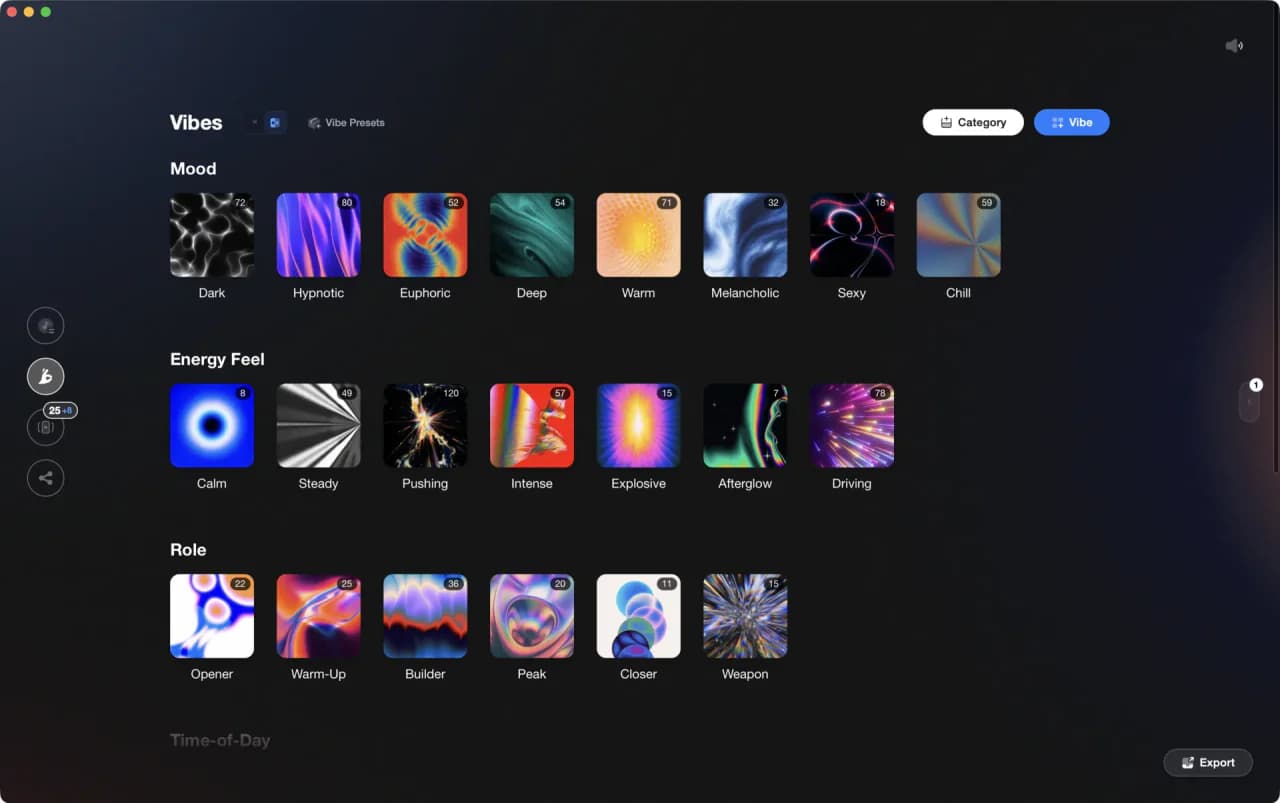
Frequently Asked Questions
Related Tools
EDM Genre Chart
Interactive genre tree with BPM ranges
House Music BPM Guide
BPM ranges for house music and all sub-genres
Techno BPM Guide
BPM ranges for techno and all sub-genres
Drum & Bass BPM Guide
BPM ranges for drum and bass and all sub-genres
Trance BPM Guide
BPM ranges for trance and all sub-genres
Dubstep BPM Guide
BPM ranges for dubstep and all sub-genres
Hardstyle BPM Guide
BPM ranges for hardstyle and all sub-genres