
EDM Genre Chart
Mainstream club EDM usually sits around 100-180 BPM, with house at 115-132 BPM, techno at 130-150 BPM, trance at 128-150 BPM, dubstep near 138-142 BPM, and drum & bass at 160-180 BPM. This wider electronic music chart spans roughly 60-350+ BPM when ambient, vaporwave, terrorcore, and speedcore are included, and maps the BPM range and typical tempo for 150+ genres and sub-genres.
- Interactive reference
- Keyboard friendly
- No sign-up
- Genre families
- 29
- Sub-genres mapped
- 174
- BPM span
- 60-350
- Showing
- 29 families
Expand a family to see every sub-genre with its BPM range and typical tempo.
Next stepThis chart sorts genres by BPM. Vibes lets you cut across genre entirely and tag your library by mood and energy instead. Vibe organization in Vibes
EDM tempo
What BPM Is EDM?
EDM has no single BPM. It spans roughly 60 BPM ambient and downtempo through 350+ BPM speedcore, while most club-oriented EDM sits around 100-180 BPM. Use the chart below to compare house, techno, trance, dubstep, drum & bass, hardstyle, and 150+ related genres.
Style comparison
Electro Music Tempo: Electro vs Electro House
Classic electro usually sits around 110-135 BPM, with many tracks near 120-128 BPM. Electro house is different: it is a house subgenre usually around 125-135 BPM, centered near 128 BPM. Classic electro is built around TR-808 syncopation, robotic vocals, and funk or early hip-hop rhythm; electro house uses four-on-the-floor house drums, heavier bass, and build-drop arrangements.
| Style | BPM Range | Typical BPM | How to Identify It |
|---|---|---|---|
| Electro | 110-135 | 128 | TR-808 syncopation, robotic vocals, funk and early hip-hop roots. |
| Electrofunk | 110-130 | 120 | Early electro-funk with talkbox vocals, 808 bass, and P-funk DNA. |
| Detroit Electro | 120-135 | 128 | Sci-fi electro with cold synths, aquatic themes, and machine-funk drums. |
| Electroclash | 118-130 | 124 | Retro-electro mixed with new wave vocals, punk attitude, and analog synths. |
| Electro House | 125-135 | 128 | A house subgenre with four-on-the-floor drums, heavy bass, and festival drops. |
Full reference
Complete EDM Genre BPM Reference
Related BPM Tools
Once you know the target BPM for a genre, use the BPM to milliseconds converter to dial in delay and reverb times, the half-time and double-time BPM calculator to bridge tempo gaps between tracks, or the pitch-to-tempo calculator when nudging a track to match the BPM of another. For a broader map of genre relationships, see the music genre tree.
How to Use This Chart
- The colored bar shows the typical BPM range: wider bars mean more tempo variation within the genre
- The thin vertical line marks the "sweet spot" tempo most tracks fall around
- Genres with overlapping BPM ranges are natural mixing partners
- Use the genre search or BPM finder to quickly compare sub-genres
How These BPM Ranges Are Chosen
These BPM ranges are practical DJ and producer ranges, not hard genre rules. Many tracks use half-time or double-time feel, and genre labels are better identified by tempo plus drum pattern, rhythmic feel, bass design, sound palette, and historical context. Use the chart as a fast reference for organizing, selecting, and mixing tracks, then trust the actual groove of the record.
Continue exploring
Browse Genre and BPM References
Use the chart to spot the tempo zone, then jump into the exact reference page for a genre, a genre-family BPM chart, or tracks around a specific BPM.
Genre
BPM range, sub-genres, common keys, tracks, and adjacent styles.
Core families
The main floor references most DJs reach for first.Club and breaks
Broken rhythms, open-format zones, and groove-led club styles.House and techno
Common set-building branches inside four-on-the-floor music.Psy, bass and rave
Higher-energy and heavier references for faster transitions.Charts
Family-level BPM charts for the larger electronic scenes.

Hey, it's Ben Modigell 👋
I've been DJing and producing music as "so I so," focusing on downtempo, minimal, dub house, tech house, and techno. My background in digital marketing, web development, and UX design over the past 6 years helps me create DJ tutorials that are clear, practical, and easy to follow.
Methodology
Last updated
Author and Methodology
Maintained by Ben Modigell, founder of Vibes. Ben builds DJ library, preparation, BPM, and harmonic-mixing tools for working DJs.
- Source
- Audio features sourced from ReccoBeats (https://reccobeats.com); track metadata via Spotify Search API. Spotify deprecated audio-features for new apps in Nov 2024. Manual label reference tracks use Beatport BPM/key metadata where available.
- Evidence
- 150+ genre and sub-genre ranges from the Vibes taxonomy, linked to the full generated genre, BPM chart, key, and tracks-at-BPM index.
- How this page is made
- Tool pages are built from reusable page logic, internal DJ reference data, and visible on-page calculations. Programmatic reference pages are generated from structured data rather than hand-written one by one.
This chart is a DJ planning reference. Genre ranges overlap, and tracks may use halftime or doubletime feel, so always verify the actual track groove before a set.
Report a correctionThe visual way to organize your DJ library
Tag tracks by vibe. See everything at once. Export to rekordbox, Serato, Traktor or Engine DJ.
14-day free trial. Full access, no strings attached.
or see how it works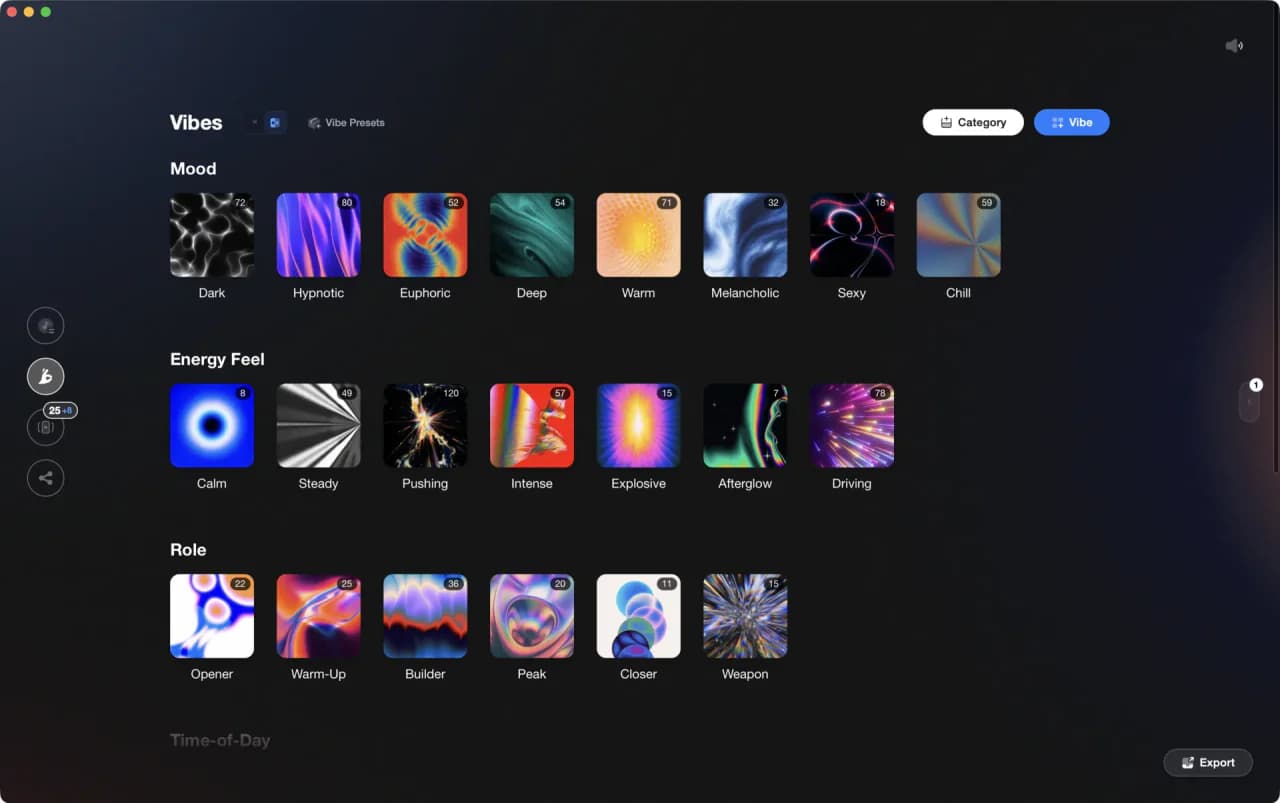
Frequently Asked Questions
Related Tools
Music Genre Tree
Complete electronic music genre taxonomy with BPM ranges
House Music BPM Guide
BPM ranges for house music and all sub-genres
Techno BPM Guide
BPM ranges for techno and all sub-genres
Drum & Bass BPM Guide
BPM ranges for drum and bass and all sub-genres
Trance BPM Guide
BPM ranges for trance and all sub-genres
Dubstep BPM Guide
BPM ranges for dubstep and all sub-genres
Hardstyle BPM Guide
BPM ranges for hardstyle and all sub-genres