
+0% from 128 BPM.
- Original BPM
- 128 BPM
- Pitch adjustment
- +0%
Master Tempo / key lock keeps the key stable even as pitch changes the tempo.
Next stepVibes detects the exact BPM and key of every track in your library, so this math starts from real numbers, not estimates. Track analysis in Vibes
Calculate how pitch fader adjustments affect BPM, or find the exact pitch % needed to match two tempos. Works with any DJ setup -CDJs, turntables, or software.
- Instant result
- No sign-up
- Free to use
Method
How Pitch Faders Work
The pitch fader on a CDJ, turntable, or DJ controller changes the playback speed of a track by a percentage. Moving the fader to +4% speeds the track up by 4%, increasing both the tempo and (without key lock) the pitch. This is the fundamental mechanism behind manual beatmatching.
The formula is straightforward: new BPM = original BPM × (1 + pitch% / 100). A 128 BPM track at +6% plays at 135.68 BPM. Going the other direction, to find the pitch adjustment needed: pitch% = ((target / original) - 1) × 100.
Reference
Pitch Fader Ranges by Equipment
| Equipment | Pitch range |
|---|---|
| Pioneer CDJ-3000 | ±6%, ±10%, ±16%, Wide (±100%) |
| Pioneer CDJ-2000NXS2 | ±6%, ±10%, ±16%, Wide |
| Technics SL-1200 | ±8% (standard), ±16% with modifications |
| Traktor / Serato / Rekordbox | Software-configurable, typically ±8% to ±100% |
Pitch, Tempo, and Key
Without key lock (Master Tempo), changing the pitch fader affects both tempo and musical key. Every ~6% change shifts the key by approximately one semitone. This means a +6% speed boost on a track in C major would play it roughly in C♯ major. Modern CDJs and DJ software offer Master Tempo / Key Lock to decouple tempo from pitch, keeping the key stable even when the speed changes. Use our Key Transposer to see exactly how pitch shifts affect key.

Hey, it's Ben Modigell 👋
I've been DJing and producing music as "so I so," focusing on downtempo, minimal, dub house, tech house, and techno. My background in digital marketing, web development, and UX design over the past 6 years helps me create DJ tutorials that are clear, practical, and easy to follow.
Methodology
Last updated
Author and Methodology
Maintained by Ben Modigell, founder of Vibes. Ben builds DJ library, preparation, BPM, and harmonic-mixing tools for working DJs.
- Source
- Vibes DJ-tool taxonomy and page logic maintained by Vibes.
- Evidence
- Page output checked against the current tool behavior and internal DJ reference data.
- How this page is made
- Tool pages are built from reusable page logic, internal DJ reference data, and visible on-page calculations. Programmatic reference pages are generated from structured data rather than hand-written one by one.
BPM, key, and genre labels can vary by edit, remaster, detection engine, and DJ software. Use these pages as a practical mixing reference, then verify important tracks in your own library.
Report a correctionThe visual way to organize your DJ library
Tag tracks by vibe. See everything at once. Export to rekordbox, Serato, Traktor or Engine DJ.
14-day free trial. Full access, no strings attached.
or see how it works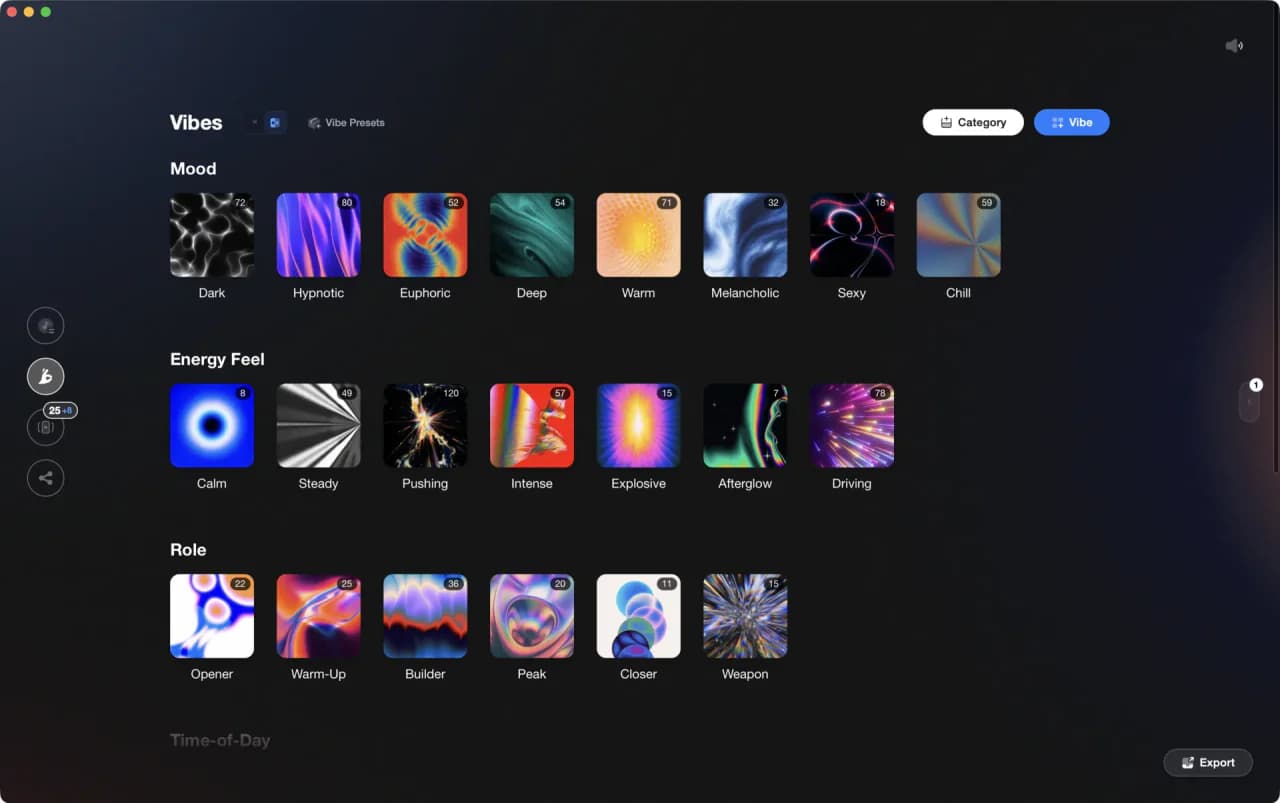
Frequently Asked Questions
Related Tools
BPM Tapper
Tap to detect BPM in real-time
BPM to Milliseconds
Convert BPM to delay times for every note subdivision
Halftime / Doubletime
Calculate half, double, and triplet tempo variants
Set Time Calculator
Plan how many tracks you need for your set
Beats to Time Calculator
Convert bars and beats to seconds at any BPM
MS to BPM Calculator
Convert milliseconds to BPM: delay times, loop lengths, and beat intervals
DJ Transitions Guide
Every DJ transition type with BPM bridging and key-compatible techniques
Tracklist Maker
Build a tracklist and export YouTube timestamps, 1001tracklists, and cue formats