
- Taps counted
- --
- Averaged over
- --
- Ms per beat
- --
- Half / double tempo
- --
Ms per beat and half/double tempo are derived from the current averaged BPM. Tap for at least 8 beats for a stable reading.
Next stepVibes detects the BPM of every track in your library automatically on import, so you never tap one out yourself. Track analysis in Vibes
Tap along to any track to find its BPM. This tap tempo tool works as a beat counter and BPM counter, hit spacebar or click the button in time with the beat.
- Instant result
- No sign-up
- Free to use
Method
How It Works
- Play any song and listen to the beat
- Tap spacebar or click the button in rhythm with the kick drum
- After a few taps, the BPM will stabilize. The more taps, the more accurate
- Uses a rolling average of your last 8 taps for stability
Tips for Accurate Results
- Tap along to the kick drum because it's usually the most consistent rhythmic element
- Wait for at least 8 taps before reading the BPM
- If you lose the rhythm, press Escape to reset and start over
- Most electronic music falls between 120-150 BPM. If your result is way outside that range, you may be tapping on the offbeat
When Tapping Beats Analysing
Tap tempo exists for the moment you have no file. You can tap beats per minute against anything you can hear: a record in a shop, a support act, a rehearsal, a video that will not let you download it. An analyser is more exact and gives you the key as well, but it needs the audio on your disk, which is why the key and BPM finder and this page answer different questions. Used as a tap bpm finder it is also a quick beats per minute checker on a number you already believe: tap to bpm against a track your software has gridded and a disagreement usually means the grid is wrong, not your ear. Tempo tap first, analyse later.
What Is BPM?
BPM stands for beats per minute, the standard measurement of tempo in music. A song at 120 BPM has 120 beats in one minute. Knowing the BPM of a track is essential for DJs to beatmatch, plan transitions, and organize their music library by energy level. Most electronic music falls between 120-150 BPM, though genres like drum and bass reach 170+ and downtempo sits around 80-110.
Reference
Common BPM Ranges by Genre
| Genre | BPM range |
|---|---|
| Deep House | 118-125 BPM |
| House | 115-132 BPM (typical 125) |
| Tech House | 124-128 BPM |
| Techno | 130-150 BPM |
| Hardstyle | 150-160 BPM |
| Trance | 128-150 BPM |
| Dubstep | 138-142 BPM (halftime feel at ~70) |
| Drum & Bass | 160-180 BPM |
See our house BPM guide, techno BPM guide, or the full EDM genre chart for detailed breakdowns.
BPM Tapper vs BPM Finder
A BPM tapper (also called tap tempo or tempo tapper) lets you manually tap along to music to determine the tempo. It works with any audio source, from a track playing at a club to a song on the radio or a live performance. A BPM finder (or BPM detector) uses audio analysis algorithms to detect tempo automatically from a file. DJ software like Rekordbox, Traktor, and Serato include built-in BPM detection for your library. Use a tapper when you need tempo on the fly; use a finder when processing your collection.

Hey, it's Ben Modigell 👋
I've been DJing and producing music as "so I so," focusing on downtempo, minimal, dub house, tech house, and techno. My background in digital marketing, web development, and UX design over the past 6 years helps me create DJ tutorials that are clear, practical, and easy to follow.
Methodology
Last updated
Author and Methodology
Maintained by Ben Modigell, founder of Vibes. Ben builds DJ library, preparation, BPM, and harmonic-mixing tools for working DJs.
- Source
- Vibes DJ-tool taxonomy and page logic maintained by Vibes.
- Evidence
- Page output checked against the current tool behavior and internal DJ reference data.
- How this page is made
- Tool pages are built from reusable page logic, internal DJ reference data, and visible on-page calculations. Programmatic reference pages are generated from structured data rather than hand-written one by one.
BPM, key, and genre labels can vary by edit, remaster, detection engine, and DJ software. Use these pages as a practical mixing reference, then verify important tracks in your own library.
Report a correctionThe visual way to organize your DJ library
Tag tracks by vibe. See everything at once. Export to rekordbox, Serato, Traktor or Engine DJ.
14-day free trial. Full access, no strings attached.
or see how it works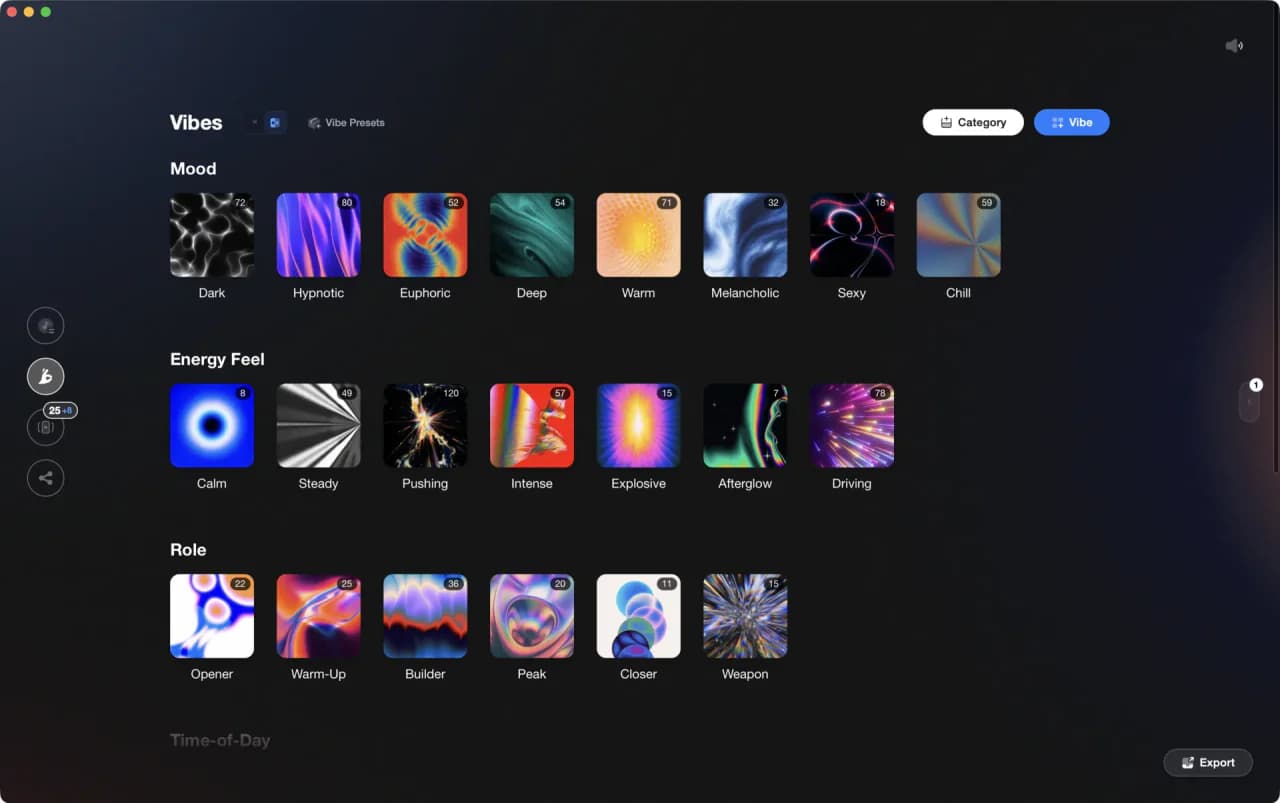
Frequently Asked Questions
Related Tools
BPM to Milliseconds
Convert BPM to delay times for every note subdivision
Halftime / Doubletime
Calculate half, double, and triplet tempo variants
Set Time Calculator
Plan how many tracks you need for your set
Pitch & Tempo Calculator
Calculate BPM after pitch changes or find pitch % between tempos
Beats to Time Calculator
Convert bars and beats to seconds at any BPM
MS to BPM Calculator
Convert milliseconds to BPM: delay times, loop lengths, and beat intervals
DJ Transitions Guide
Every DJ transition type with BPM bridging and key-compatible techniques
Tracklist Maker
Build a tracklist and export YouTube timestamps, 1001tracklists, and cue formats