16 bars at 4/4 and 128 BPM.
- Milliseconds
- 30000 ms
- Total beats
- 64
- Sec / beat
- 0.469
16 bars at 4/4 and 128 BPM.
Quick reference at 128 BPM
| Bars | Duration |
|---|---|
| 4 bars | 7.5s |
| 8 bars | 15.0s |
| 16 bars | 30.0s |
| 32 bars | 1m 0.0s |
| 64 bars | 2m 0.0s |
| 128 bars | 4m 0.0s |
Next stepVibes already knows the BPM of every track in your library, so bars-to-seconds math starts from a measured tempo, not a guess. Track analysis in Vibes
Enter a BPM and number of bars to see the exact duration in seconds. Useful for planning transitions, setting cue points, and understanding phrase lengths at any tempo.
- Instant result
- No sign-up
- Free to use
Why it matters
Why Bars and Beats Matter for DJs
Electronic music is built on phrases, repeating patterns that typically span 8, 16, 32, or 64 bars. Understanding these phrase lengths in real time (seconds) is essential for planning transitions. A 32-bar intro at 128 BPM lasts exactly 60 seconds, which tells you how far before the drop you need to start your blend.
This tool helps you convert between musical time (bars and beats) and clock time (seconds and milliseconds). Whether you're setting hot cues in Rekordbox, planning a transition in Ableton, or figuring out how long your intro loop runs, knowing the exact duration at your working tempo is fundamental.
Reference
Common Phrase Lengths in EDM
| Phrase | Role |
|---|---|
| 4 bars | Single musical phrase, loop length for effects and fills |
| 8 bars | Common intro/outro for stripped-down elements (kick only, hi-hats only) |
| 16 bars | Standard DJ intro/outro length, typical for blending |
| 32 bars | Full section length (verse, build, breakdown, or drop) |
| 64 bars | Extended mix intro, full arrangement section |
The Formula
Duration = (bars × beats per bar × 60) / BPM. For 4/4 time: seconds = (bars × 4 × 60) / BPM. At 128 BPM, each beat is 0.469 seconds and each bar is 1.875 seconds. Use our BPM to milliseconds converter for note-level precision.
Plan a Whole Set, Not Just One Transition
Planning a 60-minute set? Use the DJ set time calculator to map total set length from average BPM and track count. Bridging a big tempo jump between two tracks? Half-time and double-time BPM shows the compatible relative tempos.

Hey, it's Ben Modigell 👋
I've been DJing and producing music as "so I so," focusing on downtempo, minimal, dub house, tech house, and techno. My background in digital marketing, web development, and UX design over the past 6 years helps me create DJ tutorials that are clear, practical, and easy to follow.
Methodology
Last updated
Author and Methodology
Maintained by Ben Modigell, founder of Vibes. Ben builds DJ library, preparation, BPM, and harmonic-mixing tools for working DJs.
- Source
- Vibes DJ-tool taxonomy and page logic maintained by Vibes.
- Evidence
- Page output checked against the current tool behavior and internal DJ reference data.
- How this page is made
- Tool pages are built from reusable page logic, internal DJ reference data, and visible on-page calculations. Programmatic reference pages are generated from structured data rather than hand-written one by one.
BPM, key, and genre labels can vary by edit, remaster, detection engine, and DJ software. Use these pages as a practical mixing reference, then verify important tracks in your own library.
Report a correctionThe visual way to organize your DJ library
Tag tracks by vibe. See everything at once. Export to rekordbox, Serato, Traktor or Engine DJ.
14-day free trial. Full access, no strings attached.
or see how it works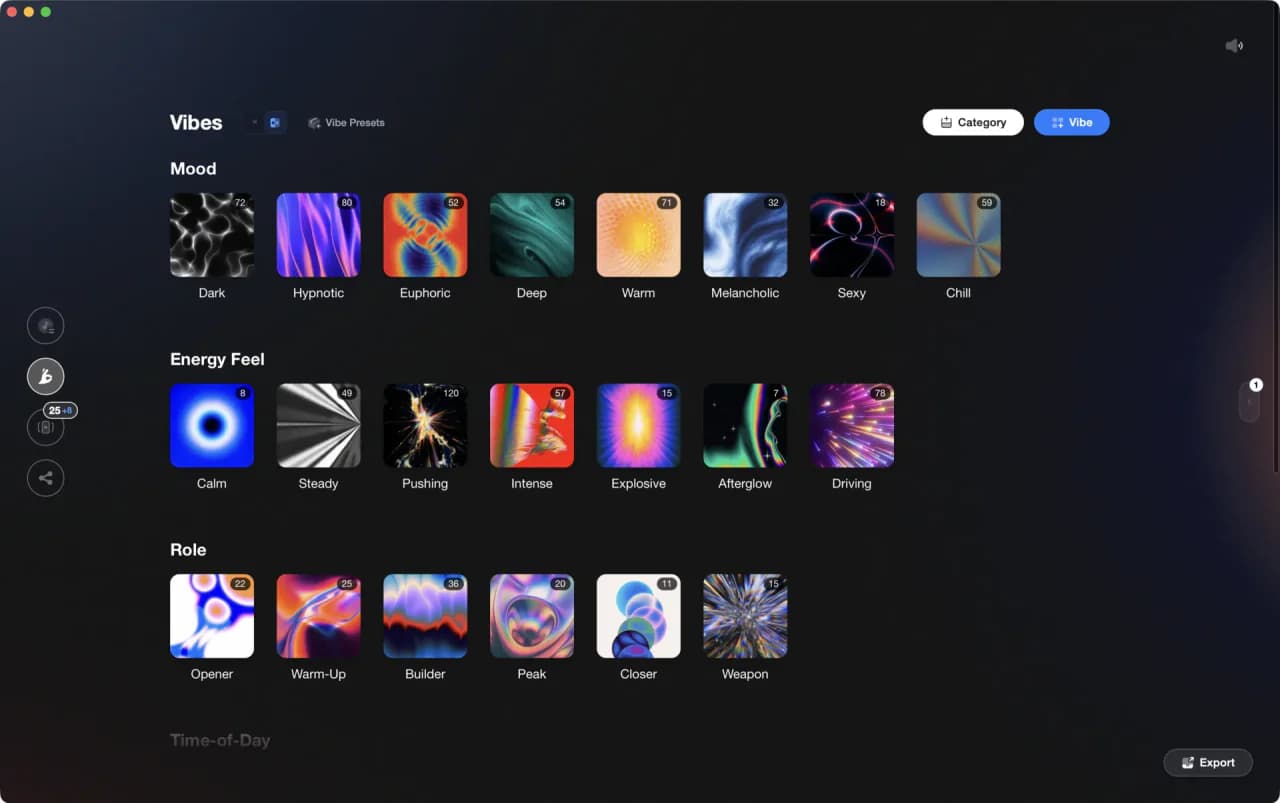
Frequently Asked Questions
Related Tools
BPM Tapper
Tap to detect BPM in real-time
BPM to Milliseconds
Convert BPM to delay times for every note subdivision
Halftime / Doubletime
Calculate half, double, and triplet tempo variants
Set Time Calculator
Plan how many tracks you need for your set
Pitch & Tempo Calculator
Calculate BPM after pitch changes or find pitch % between tempos
MS to BPM Calculator
Convert milliseconds to BPM: delay times, loop lengths, and beat intervals
DJ Transitions Guide
Every DJ transition type with BPM bridging and key-compatible techniques
Tracklist Maker
Build a tracklist and export YouTube timestamps, 1001tracklists, and cue formats