
Future Bass BPM
Future Bass is usually mixed around 130-160 BPM, with 150 BPM as a practical DJ target. The reference tracks on this page span 100-170 BPM because some future-bass-adjacent records are slower, while some faster readings work better as halftime grids.
- DJ-ready reference
- Printable
- Methodology included
Future Bass BPM Reference
Future Bass: 130-160 BPM, typical 150 BPM.
| Genre | BPM Range | Typical BPM | Notes |
|---|---|---|---|
| Future Bass | 130-160 | 150 | Bright, melodic, supersaw-led bass music. Flume, Illenium, San Holo, Louis The Child. Stutter chords, vocal chops, and emotional drops. |
| Glitch Hop | 100-115 | 108 | Hip-hop tempo bass music with heavy glitch processing. Pretty Lights, GRiZ, Opiuo. 110 BPM swing, funky drums, talkbox vocals. |
| Color Bass | 140-150 | 145 | Vibrant, harmonically dense subgenre with overlapping chord stacks and 'colorful' sound design. Chime, MYRNE, Crystal Skies aesthetic. |
| Kawaii Future Bass | 140-160 | 150 | Anime-styled, hyper-cute future bass. Snail's House, Rin, Tomggg. Pixel-pop melodies, sugary vocal chops, J-pop influence. |
vibesdj.io/dj-tools - BPM ranges are practical DJ references, not strict genre boundaries.
Future Bass
Bright, melodic, supersaw-led bass music. Flume, Illenium, San Holo, Louis The Child. Stutter chords, vocal chops, and emotional drops.
Sub-genre tempo spectrum
3 styles- Core DJ range
- 130–160 BPM
- Practical target
- 150 BPM
- Track spread
- 100–170 BPM
- Track evidence
- 9 shown
Check grid, loops, and phrasing before doubling or halving slower readings.
Next stepVibes detects the exact BPM of every track in your library automatically, so you always know the tempo without checking a chart. Track analysis in Vibes
Why Some Tracks Show 100, 115, or 170 BPM
The reference tracks on this page span 100-170 BPM because some future-bass-adjacent records are slower, while some faster readings work better as halftime grids.
| Reading | Meaning | Action |
|---|---|---|
| 130-160 BPM | Core Future Bass / melodic bass DJ range | Beatmatch normally and check phrasing around builds and drops. |
| 65-80 BPM | Halftime interpretation of the core range | Double the grid if loops, cue points, or phrase markers feel too slow. |
| 100-125 BPM | Slower future-bass-adjacent, electropop, or melodic electronic zone | Use as a tempo bridge; avoid calling it core 150 BPM Future Bass without a note. |
| 170 BPM | Could behave like 85 BPM halftime | Check the grid and phrasing before using it as a fast transition. |
Track Evidence
The rail below shows the raw track sample behind this page. It is why the guide treats 150 BPM as a practical target while still showing slower bridge records honestly.
- Tracks shown
- 9
- Track spread
- 100-170 BPM
- Inside core range
- 3 tracks
- Below · above
- 5 · 1
- Mean of shown
- 129 BPM
- Median of shown
- 124 BPM
- Evidence level
- 9 tracks, 3 core
Future Bass Reference Tracks
Core Future Bass examples
These resolved examples sit inside the 130-160 BPM core DJ range.
Adjacent and outlier examples
These tracks still help explain the Future Bass neighborhood, but they should not be treated as core 150 BPM examples without checking the grid.
| Track | BPM | DJ note |
|---|---|---|
| ShelterPorter Robinson, Madeon | 100 BPM | Slower melodic-electronic crossover; useful as a future-bass-adjacent bridge, not a core 150 BPM reference. |
| All My FriendsMadeon | 106 BPM | Pop-leaning Madeon reference; treat it as a slower bridge record. |
| Better Not (with Wafia)Louis The Child, Wafia | 114 BPM | Future-bass-adjacent pop tempo; check whether doubling the grid helps your loops. |
| Say My NameODESZA, Zyra | 115 BPM | ODESZA-style melodic electronic; close in palette, slower than core drop-driven Future Bass. |
| All I NeedSlushii | 124 BPM | Near the lower edge; useful for moving from pop/electro into the core range. |
| Take You DownILLENIUM | 170 BPM | 170 BPM can behave like 85 BPM halftime. Check phrasing before using it as a fast transition. |
See a wrong BPM, key, or version? Report a correction.
Mix Into Future Bass
BPM overlap is not enough. For Future Bass, the safest transitions preserve melodic phrasing, halftime feel, and emotional energy.
| Genre | BPM fit | Style fit | Best transition | DJ note |
|---|---|---|---|---|
| Color Bass | High | High | Long blend or drop swap | Closest modern bass-music neighbor; compare sound design density. |
| Kawaii Future Bass | High | High | Harmonic blend | Works when the set can handle a brighter, cute, J-pop influenced palette. |
| Melodic Dubstep | High | High | Breakdown into drop | Shares emotional builds and bass drops; watch heaviness and vocal density. |
| Trap (EDM) | High | Medium-high | Half-time bridge | Shared halftime logic makes 140-150 BPM transitions practical. |
| Dubstep | High | Medium | Drop swap | Use when the energy can move heavier without losing the melodic thread. |
| Drum & Bass | Medium | Medium | 85/170 halftime bridge | Works best through a breakdown, vocal bridge, or 170 BPM outlier. |
| Hard Techno | High | Low | Deliberate contrast only | Tempo overlap does not make it a natural style match. |
| Schranz | High | Low | FX stop or hard reset | Not a natural mix; use only as a clear contrast move. |
DJ Genre Overview
For DJs, Future Bass is less about one exact BPM and more about melodic bass phrasing: big emotional drops, bright chord movement, and halftime-friendly drums.
| Aspect | Detail |
|---|---|
| Sound palette | Bright supersaws, vocal chops, stuttered chords, wide melodic leads, and emotional vocal hooks. |
| Drum feel | Often halftime-feeling even when the grid sits around 140-160 BPM. |
| Arrangement | Intro or vocal idea, build, large melodic drop, breakdown, and a second drop with energy variation. |
| Set use | Works as a melodic peak, emotional reset, or bridge between pop-leaning electronic and heavier bass music. |
| Often confused with | Melodic Dubstep, Trap, Color Bass, Kawaii Future Bass, future pop, and slower melodic electronic. |
How to Beatgrid Future Bass
- Confirm the first downbeat, then tap along for 16 or 32 beats.
- Test an 8-bar loop before the first drop; the loop should come back cleanly on phrase.
- If a 100-125 BPM reading feels slow, test the doubled grid before setting cues.
- If a track reads near 170 BPM, test whether it behaves like 85 BPM halftime.
- Use the BPM that makes intro, build, drop, breakdown, and outro cue points land cleanly.
Useful checks: verify tempo with the BPM tapper, plan half/double-time moves with the halftime/doubletime calculator, and match melodic records with the Camelot wheel.
Analyze your own Future Bass tracks in Vibes
Find tracks around 130-160 BPM, spot slower bridges and 170 BPM outliers, tag energy and set role, then build crates for Rekordbox, Serato, Traktor, or Engine DJ.
Keys and Artists in These Tracks
These are facts from the tracks shown here, not universal Future Bass rules. Use them to check harmonic options after the grid feels right.
| Artist | Tracks | Keys |
|---|---|---|
| Madeon | 2 tracks, 100-106 BPM | 8B, 1A |
| Charli xcx | 1 track, 137 BPM | 8B |
| ILLENIUM | 1 track, 170 BPM | 1B |
| Louis The Child | 1 track, 114 BPM | 11B |
| Marshmello | 1 track, 142 BPM | 10B |
| ODESZA | 1 track, 115 BPM | 11A |
| Porter Robinson | 1 track, 100 BPM | 8B |
| San Holo | 1 track, 150 BPM | 3B |
For more tempo context, compare these examples with tracks around 150 BPM and the Future Bass BPM chart.
Explore Related References

Hey, it's Ben Modigell 👋
I've been DJing and producing music as "so I so," focusing on downtempo, minimal, dub house, tech house, and techno. My background in digital marketing, web development, and UX design over the past 6 years helps me create DJ tutorials that are clear, practical, and easy to follow.
Methodology
Last updated
Author and Methodology
Maintained by Ben Modigell, founder of Vibes. Ben builds DJ library, preparation, BPM, and harmonic-mixing tools for working DJs.
- Data used
- 9 resolved Future Bass / future-bass-adjacent reference tracks from a 391-track snapshot.
- Source
- Audio features sourced from ReccoBeats (https://reccobeats.com); track metadata via Spotify Search API. Spotify deprecated audio-features for new apps in Nov 2024. Manual label reference tracks use Beatport BPM/key metadata where available.
- Evidence
- The page compares the 130-160 BPM core DJ range with the raw reference tracks on this page, then labels slower and faster examples as adjacent or outlier records instead of treating them as core examples.
- How this page is made
- This pilot page is rendered from structured genre data, resolved track metadata, computed evidence statistics, and Future Bass-specific DJ notes.
Because the sample includes several adjacent tracks, this page should be treated as a practical DJ guide rather than a statistical genre study.
Report a correctionThe visual way to organize your DJ library
Tag tracks by vibe. See everything at once. Export to rekordbox, Serato, Traktor or Engine DJ.
14-day free trial. Full access, no strings attached.
or see how it works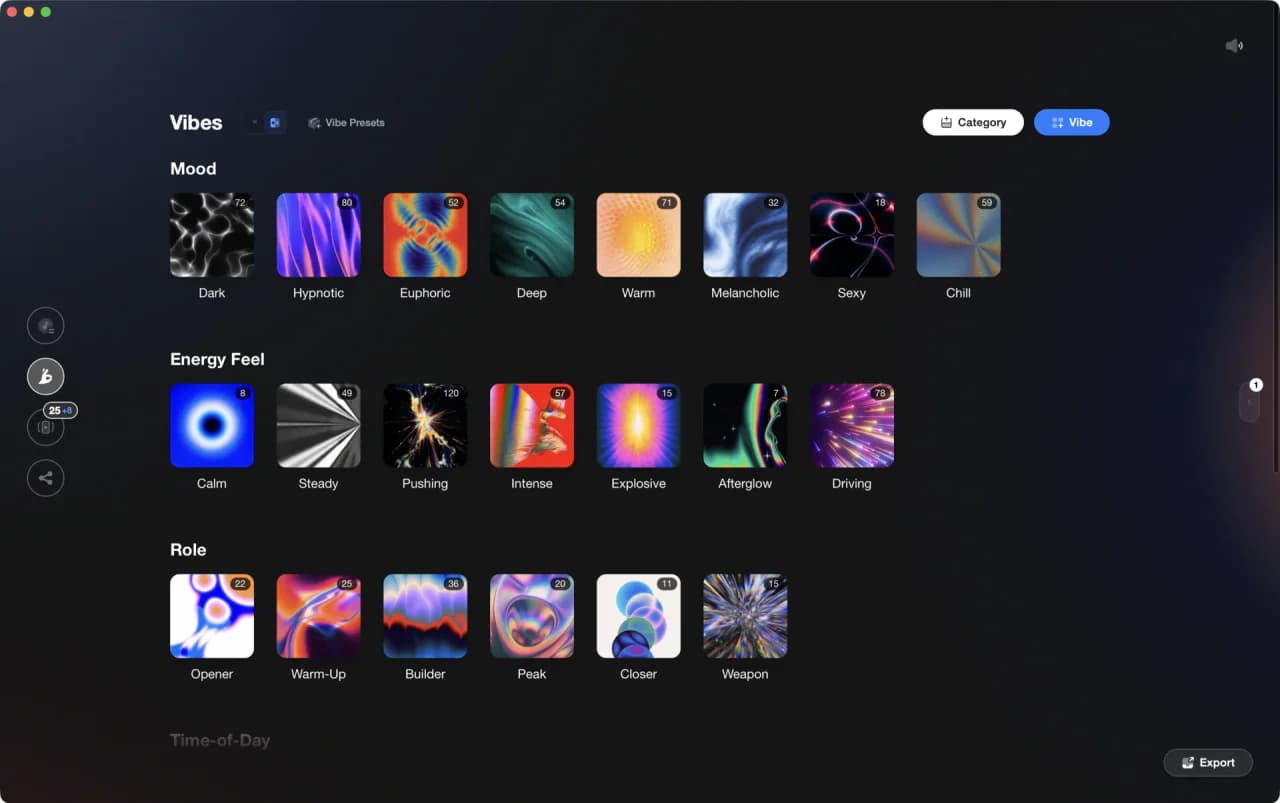
Frequently Asked Questions
Related Tools
Music Genre Tree
Complete electronic music genre taxonomy with BPM ranges
EDM Genre Chart
Interactive genre tree with BPM ranges
House Music BPM Guide
BPM ranges for house music and all sub-genres
Techno BPM Guide
BPM ranges for techno and all sub-genres
Drum & Bass BPM Guide
BPM ranges for drum and bass and all sub-genres
Trance BPM Guide
BPM ranges for trance and all sub-genres