Watch Martin Gonzalez’s tutorial above (148K views on YouTube).
This guide is for DJs and techno listeners trying to separate durable records from disposable hype. If you are stuck between classic techno songs, hard techno music, and newer crowd weapons, this will give you a workable map. By the end, you will know which top techno songs belong in a foundation crate, why they matter, and how to sort them by function instead of opinion.
Top techno songs are the records that still work across time, context, and systems. They define a sound, solve a dancefloor problem, or keep showing up because their structure, groove, and tension still hold.
That last point matters most. A great techno track is not just famous. It is useful.
If you are still building your foundations, pair this list with DJ library organization, playlist structure for DJs, and how to prepare a DJ set.
Top Techno Songs: Quick Answer
The best top techno songs usually come from a few repeat sources: Detroit foundations, warehouse-era European records, peak-time groove weapons, and modern hard-edged cuts. Start with tracks like "Strings of Life," "No UFO's," "Energy Flash," "Spastik," and "The Bells," then expand by substyle, tempo, and set function.
Techno reference tracks
A starting crate of techno, pulled from our DJ track index with live BPM and Camelot keys (these run roughly 122-160 BPM). Beatmatch to each track's tempo, use the long intros and outros to blend, and swap on the phrase. Click any row to open its full sonic profile.




Techno Songs: What Makes One Last
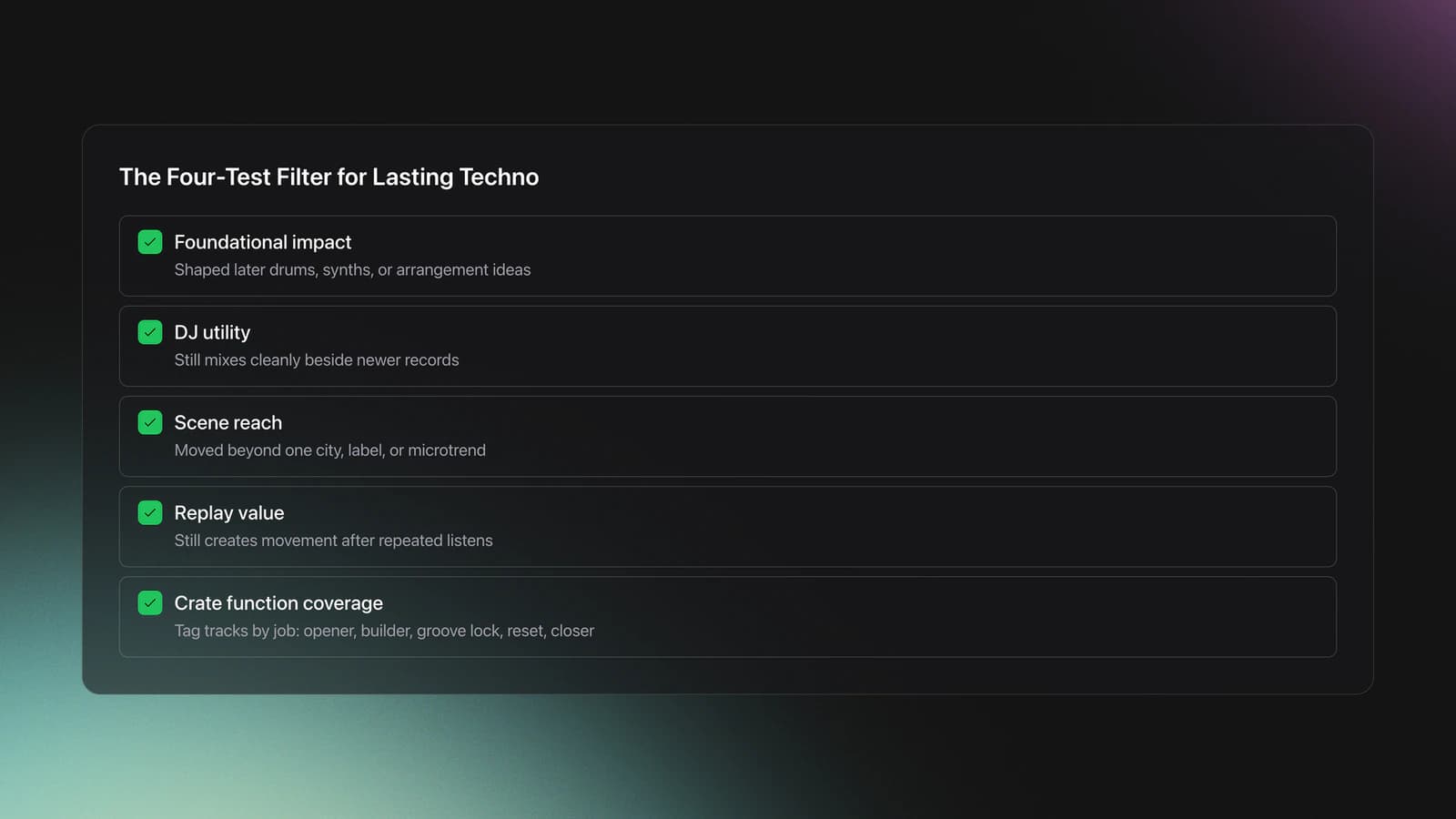
Before you rank tracks, you need a filter. Otherwise every list turns into personal nostalgia, algorithm residue, or whatever was popular last month.
A durable techno record usually does at least two of four things. It establishes a genre language. It changes DJ behavior. It survives format shifts. It still creates tension on a modern system.
I call this the four-test filter. It is a simple way to judge top techno music without pretending there is one objective canon.
- Foundational impact. Did the track shape how later producers built drums, synths, or arrangement?
- DJ utility. Can you still mix it into a set without it collapsing next to newer records?
- Scene reach. Did it move beyond one city, label, or short-lived microtrend?
- Replay value. Does it still create movement after repeated listens?
That is why some tracks stay in circulation while others become trivia. A record can be historically important and still fail in a live set. Another can be less canonical but impossible to replace at 3 a.m.
Techno emerged in Detroit in the 1980s and spread globally in the 1990s, with the Belleville Three central to its early formation. Britannica traces the genre to Detroit and highlights Juan Atkins, Derrick May, and Kevin Saunderson as key early figures, while Red Bull's history coverage connects Detroit's early scene to Kraftwerk and later European uptake. techno
In practice, this means your best of techno crate should not be one long favorites list. It should contain openers, tension-builders, groove locks, reset tracks, and closers.
Classic Techno Songs That Built the Core
If you want a serious list of top techno songs, start with records that changed the language. These are not the only important tracks. They are the ones that keep reappearing because they solved something fundamental.
The first group is Detroit. Juan Atkins is often credited with one of the earliest true techno records, and Model 500's "No UFO's" remains one of the key reference points in the genre's early identity. Britannica and MasterClass both point to Atkins as a central early figure, and Red Bull places Detroit at the start of the genre's development. britannica.com
Then you get Derrick May's "Strings of Life." It still works because it carries urgency without depending on a modern kick design. The piano riff is emotional. The rhythm is insistent. The arrangement keeps moving.
Kevin Saunderson's work matters for a different reason. It widened the bridge between raw machine music and club usability. That matters when you are tracing how techno became both underground and broadly playable.
A second cluster comes from the harder warehouse axis. Joey Beltram's "Energy Flash" is one of the clearest examples. It sounds dangerous, stripped, and spatially aggressive. Even now, it cuts through polite programming.
Richie Hawtin's Plastikman project gave techno another lesson. Minimal does not mean empty. Tracks like "Spastik" show how drum design alone can become the hook.
Jeff Mills pushed that logic further. "The Bells" became a reference record not because it is subtle, but because it is direct. One motif. One tension shape. Maximum recall.
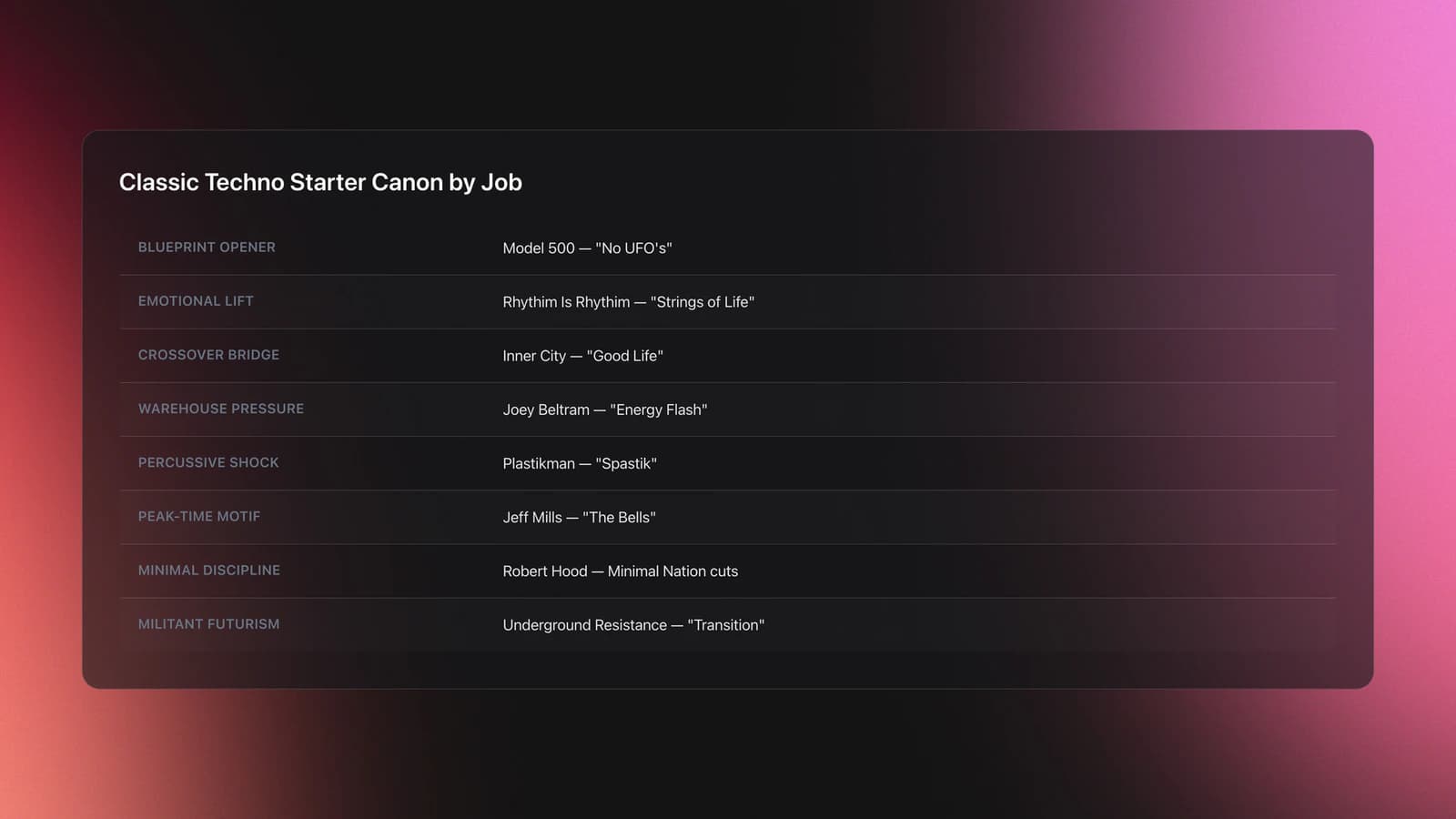
Here is a usable starter canon for classic techno songs.
- Model 500. "No UFO's"
- Rhythim Is Rhythim. "Strings of Life"
- Inner City. "Good Life"
- Joey Beltram. "Energy Flash"
- Plastikman. "Spastik"
- Jeff Mills. "The Bells"
- Robert Hood. "Minimal Nation" era cuts
- Underground Resistance. "Transition" and related essentials
Notice the spread. Some of these are peak-time weapons. Some are blueprint records. Some are crossover markers. That range is what makes the list useful.
Worked example one. If your set lives around 132 BPM and you want a controlled rise, "Strings of Life" is not a brute-force drop tool. It works better as a lift point after three darker tracks. Input: dense, loop-heavy first half. Process: introduce emotional movement without leaving techno. Output: the room opens up without losing momentum.
Worked example two. If your floor is already locked and you need sharper physical impact, "Spastik" solves a different problem. Input: crowd is moving but energy is flattening. Process: bring in a track with extreme percussive identity and almost no unnecessary decoration. Output: attention snaps back to rhythm.
Failure mode: newer DJs often treat every classic as an obligatory play. The symptom is a set that feels educational instead of alive. You will know your selections are working when the classics feel functional, not ceremonial.
For crate building, connect this section with techno set flow and energy curve for DJs.
Types of Techno Music and the Tracks That Represent Them
Most bad techno lists flatten the genre. That is a mistake. Top techno songs are easier to understand when you group them by function and substyle.
This does not mean every track fits one box. It means boxes help you hear why records behave differently in a set.
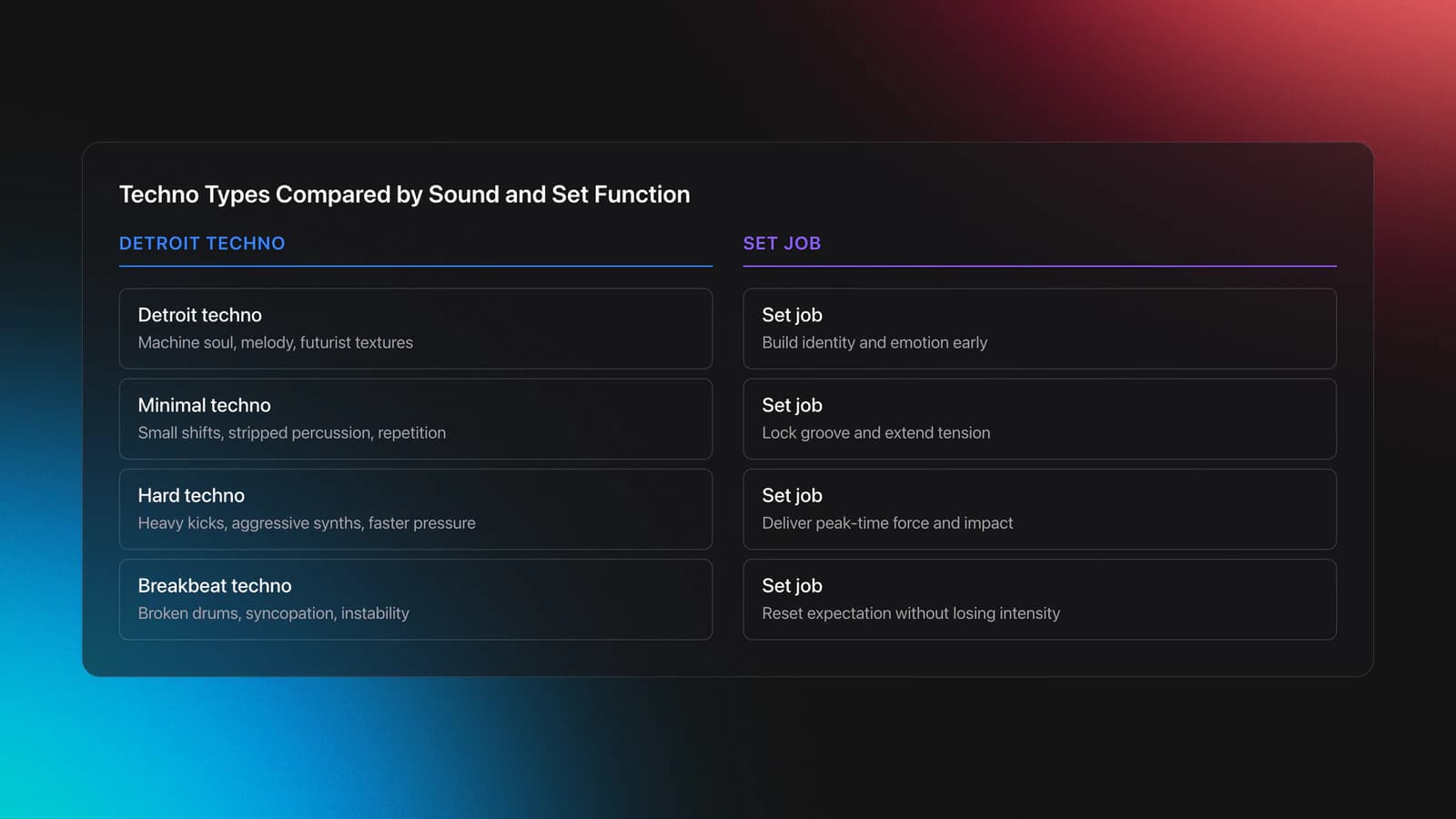
Start with Detroit techno. It is often more melodic, futurist, and machine-soul driven than later industrial branches. The emotional range is wider than many casual listeners expect.
Then there is minimal techno. The surface sounds spare, but the internal motion is precise. Small changes matter more. Groove discipline matters more.
Next is hard techno music. This is built for force, pressure, and impact. The kick is more dominant. The arrangement often pushes faster payoff. The room response is immediate.
Breakbeat techno changes the movement pattern. Instead of the straight four-on-the-floor lock, broken drums add instability and swing. This can refresh a room that has become too mechanically stable.
You also get acid, industrial, hypnotic, and groove-led branches. Each one answers a slightly different dancefloor need.
| Type | What You Hear | Set Function | Example Direction |
|---|---|---|---|
| Detroit techno | Machine soul, melody, futurist textures | Build identity and emotion | Model 500, Derrick May, Underground Resistance |
| Minimal techno | Small shifts, stripped percussion, repetition | Lock the floor and extend tension | Plastikman, Robert Hood |
| Hard techno music | Heavy kicks, aggressive synths, faster pressure | Peak-time impact | Modern warehouse and festival sets |
| Breakbeat techno | Broken drums, syncopation, tension | Reset listener expectation | Beltram-adjacent and rave crossover zones |
| Acid techno | Resonant bass lines, squelch, motion | Inject energy and movement | 303-led club tools |
Use substyles as functional categories, not purity tests.
Worked example one. Suppose you open with hypnotic 128-130 BPM material in a medium room. A Detroit or groove-led selection lets you establish identity before going harder. Input: early-night floor. Process: choose records with memorable phrasing and moderate pressure. Output: people commit without feeling rushed.
Worked example two. Suppose the room has stalled after an hour of straight-looped hard material. A breakbeat techno record can create contrast without killing momentum. Input: fatigue from too much sameness. Process: switch rhythmic pattern while preserving intensity. Output: the floor wakes up because the body has something new to track.
Validation Check
This is another place where structure beats memory. If you keep local files, a system that lets you sort by energy, function, and mood can save real time. Vibes, for example, supports custom hierarchical categories and keyboard-driven sorting, which is useful when you are trying to separate hard techno music from deeper groove tracks without rebuilding playlists by hand.
What Are the Best Techno Songs of All Time?
The honest answer is that there is no clean universal top 10. There is a stable upper tier, then a large argument zone shaped by city, era, and what you think techno is supposed to do.
Still, some records appear so often in serious conversations that they function as common ground. That is useful if you want a practical answer, not a philosophical one.
A strong all-time list balances origin records with tracks that remained playable beyond their release cycle. It should also avoid collapsing techno into festival hard mode only.
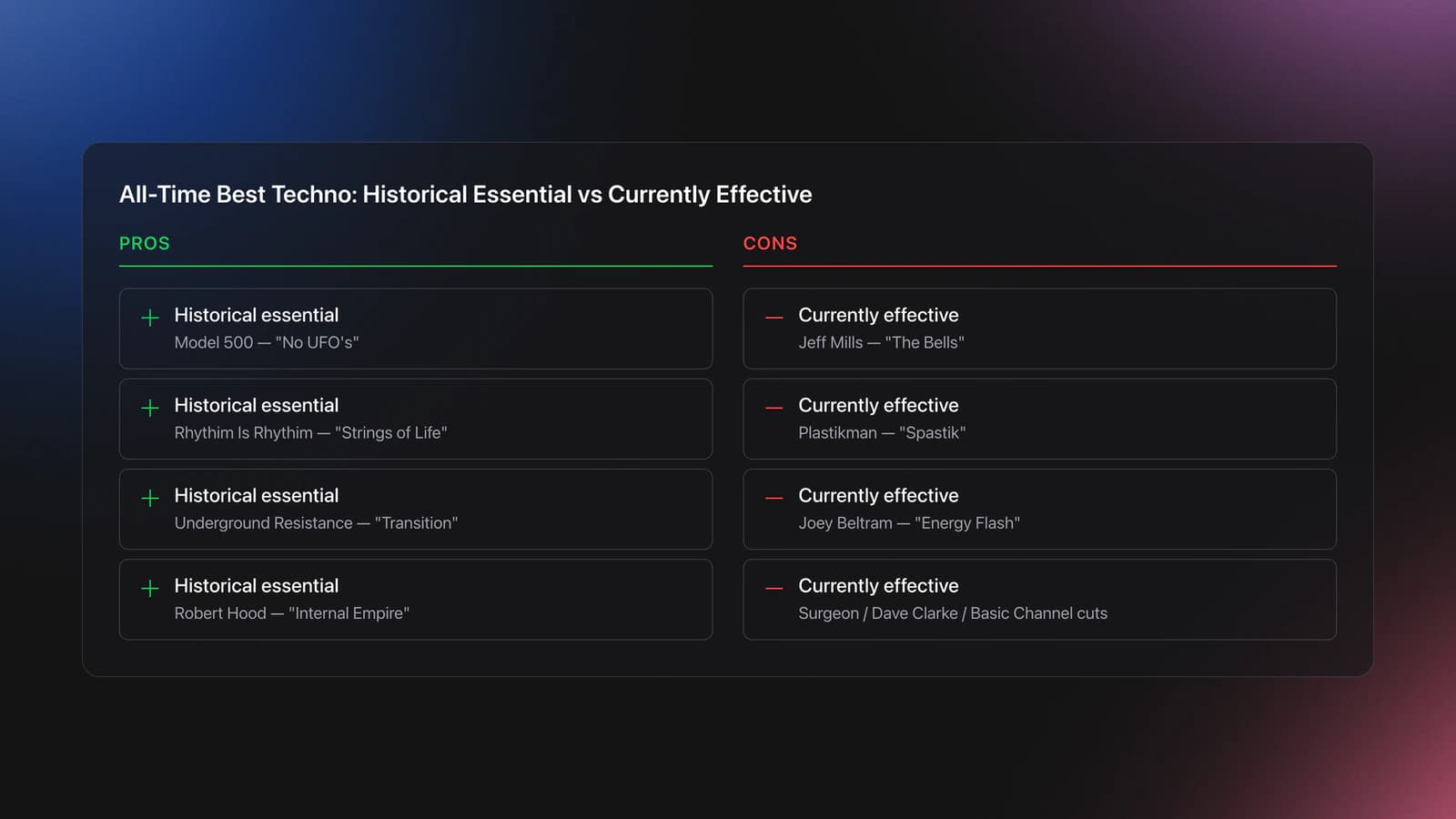
- Model 500. "No UFO's"
- Rhythim Is Rhythim. "Strings of Life"
- Joey Beltram. "Energy Flash"
- Jeff Mills. "The Bells"
- Plastikman. "Spastik"
- Underground Resistance. "Transition"
- Robert Hood. "Internal Empire"
- Surgeon. key late-90s tools
- Dave Clarke. peak warehouse-era cuts
- Basic Channel. dub-techno crossover essentials
Why this shape? Because it covers invention, pressure, minimalism, and long-term usability. That gives you a truer picture of best techno music than a list built only around stream counts or current social media clips.
Mixmag's long-running dance-track rankings and techno retrospectives repeatedly highlight records such as "Spastik" and foundational Detroit material, while Britannica's history of techno reinforces Detroit's role in formalizing the genre. These sources do not produce a final canon, but they do support the idea that certain tracks and artists recur because of lasting influence, not short-term popularity. what is the greatest dance track of a...
If your taste runs newer, that is fine. Just keep two lists in your head. One is historically essential. The other is currently effective. Confusing them leads to weak recommendations.
Most Played Techno Song vs Best Techno Song
This is where search results usually get sloppy. The most played techno song is not necessarily the best techno song, and neither term means the same thing across clubs, streaming platforms, radio, or festival circuits.
A most-played track usually wins because it is easy to deploy. It may have a big central motif, a predictable arrangement, and broad crowd recognition. That makes it powerful. It also makes it easier to overuse.
A best track can be harder to classify. It might be less famous but more structurally perfect. It might work in more contexts. It might have changed what came after.
For DJs, this distinction is practical.
- Use most-played tracks when you need instant recognition or a shared peak.
- Use best tracks when you need identity, depth, or long-form control.
- Do not fill a crate with only one type.
Worked example one. If you are playing a mixed crowd and need a certainty point, a widely recognized peak-time record can anchor the set. Input: drifting floor, low trust. Process: deploy a familiar weapon. Output: immediate collective response.
Worked example two. If you are playing a heads-down room with strong trust already built, a subtler classic may do more. Input: locked-in audience. Process: choose a track with less obvious payoff but deeper groove logic. Output: stronger continuity and less cheese.
Failure mode: confusing crowd reaction with track quality. The symptom is ranking every obvious weapon above every nuanced record. You will know your judgment is improving when you can explain not only what worked, but why it worked in that room.
How to Build Your Own Top Techno Music List
Do not copy one list and stop there. Build your own, but make it testable.
A good personal list uses three layers. First, the historical layer. Second, the functional DJ layer. Third, the preference layer.
The historical layer answers which records matter whether or not you love them. The functional layer answers which tracks solve real set problems. The preference layer is where your taste gets to dominate.
That structure prevents two common errors. You do not confuse personal favorites with scene history. You also do not fill your crates with respectable records you never actually play.
- Pick 20 historically important tracks.
- Pick 20 tracks that work in your actual set range.
- Pick 20 personal favorites that still fit your workflow.
- Remove duplicates and obvious dead weight.
- Sort the remaining tracks by function, not release date.
You will know your list is solid when three things happen. You can pull from it fast. It covers more than one energy state. And at least half of it still feels valid six months later.
For the next step, see how to tag DJ tracks, organize by energy and mood, and Rekordbox playlist workflow.
Common Mistakes When Ranking Top Techno Songs
| Mistake | Why It Happens | How to Avoid |
|---|---|---|
| Ranking by current hype only | Recency bias makes new tracks feel bigger than they are | Compare newer cuts against records that have survived years of play |
| Ignoring substyles | Everything gets flattened into one generic techno bucket | Group by Detroit, minimal, hard, breakbeat, acid, and groove-led functions |
| Confusing famous with useful | Big tracks are easier to remember than versatile tracks | Test each record in at least two set contexts |
| Keeping ceremonial classics | Historical respect overrides actual playability | Keep only classics that still solve a job in your set |
| Overfilling peak-time tracks | Peak moments are more emotionally memorable | Force yourself to keep openers, bridges, and resets in the same crate |
Most ranking problems come from weak criteria, not weak taste.
Top Techno Songs: Quick Crate Checklist
Run this checklist before you expand your list again. Keep it short and brutally practical.
- Keep 10 historical essentials.
- Keep 10 current personal weapons.
- Keep at least 5 lower-intensity transition records.
- Tag tracks by function, energy, and substyle.
- Delete anything you admire but never play.
The result is a crate that reflects both best of techno history and your actual workflow.
Top Techno Songs: Final Take
The point of a top techno songs list is not to win an argument. It is to help you hear the genre clearly and play it better.
Keep the core insight simple. Separate historical importance, set utility, and personal taste. When you do that, your crate gets cleaner fast.
- Start with durable classics, not just current hype.
- Group tracks by substyle and set job.
- Keep only records that still earn their place.
From there, refine the list every few months. The goal is not a perfect canon. The goal is a crate you trust when the room is moving.
The visual way to organize your DJ library
Tag tracks by vibe. See everything at once. Export to rekordbox, Serato, Traktor or Engine DJ.
14-day free trial. Full access, no strings attached.
or see how it works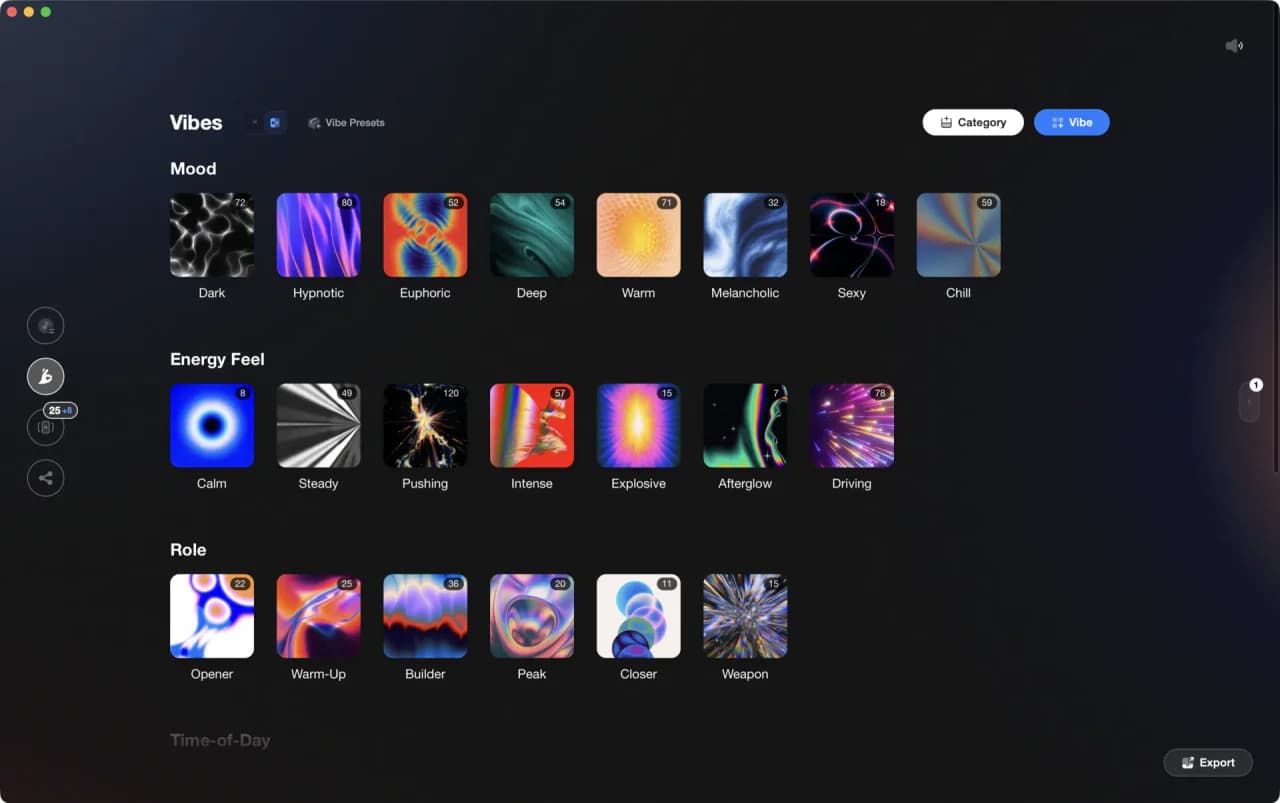
Techniques Covered
Continue Your Learning Journey
Start Here First




Related Content
Tech House: How to Build the Core Sound
intermediate
Progressive House Music: How It Works
intermediate
90s House Music: Origins, Sound, Key Tracks
intermediate
House Trance: Sound, Structure, Mixing
intermediate
DJ Library Organization System: Tags, Crates, Keys
intermediate
DJ Transitions: The Three-Layer Handoff for Beginners
intermediate
DJ Record Pool Guide for Working DJs
intermediate
DJ Playlist Spotify: Mixing With Streaming Inside Rekordbox
intermediate
House Music Explained
intermediate
Transition DJ Online: Browser Mixer Workflow
intermediate
Frankie Knuckles: House Music Pioneer
intermediateFrequently Asked Questions

Hey, it's Ben Modigell 👋
I DJ and produce as so I so: downtempo, minimal, dub house, tech house, and techno (releases on Spotify and SoundCloud, links above). Everything I write here comes from my own gigs, studio sessions, and library cleanups: the rules I follow, the failure modes I have actually hit, and the workflow I use when nobody is watching. If a technique did not earn its place in my own sets, it does not make it into a tutorial.