Best House Music Songs for DJ Sets: Tracks That Work
Watch Crossfader’s tutorial above (273K views on YouTube).
This guide is for DJs, selectors, and listeners trying to sort great house music songs from disposable playlist filler. If you know the genre is broad but struggle to identify what makes certain records work in sets, this will give you a practical framework. By the end, you will know which house music songs matter, why they work, and how to group them for real-world use.
The main mistake is treating all house tracks as one pool. In practice, the best house music songs solve different jobs. Some hold a groove. Some lift a room. Some create a vocal memory point. Some exist mainly to make the next record land harder.
That is the lens for this article. Instead of giving you a random pile of house music hits, I am using a simple selection model: foundation tracks, energy-shift tracks, vocal-layer tracks, and peak records. Once you hear songs this way, building playlists and planning transitions gets much easier.
If you are also tightening your broader DJ workflow, it helps to connect track choice with library structure. A solid tagging system and set-prep routine makes house music songs easier to find by mood, function, and energy. That is the same principle behind tools like DJ library organization systems, playlist hierarchy for DJs, energy flow in DJ sets, and mixing in key basics.
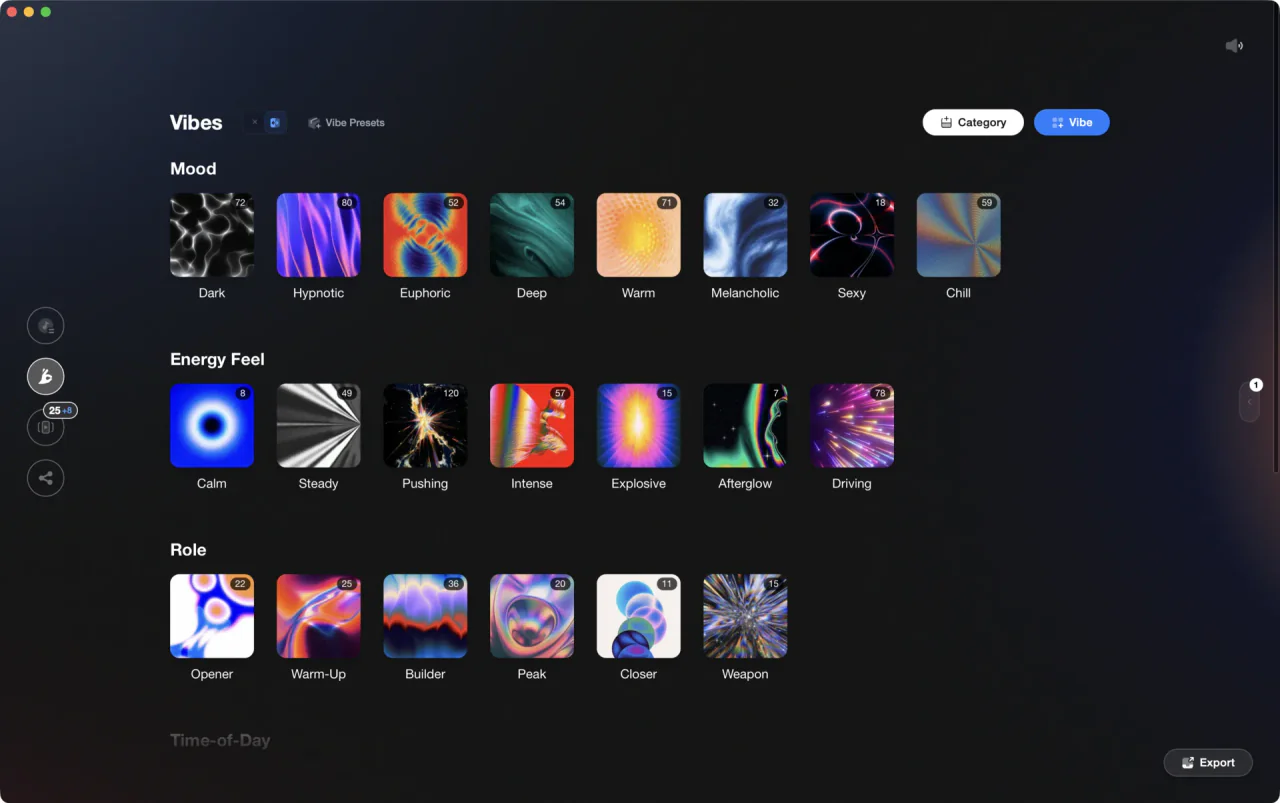
The visual way to organize your DJ library. Tag by vibe, export to any DJ app.
House Music Songs: What Makes One Stick
A house record lasts when it does one job extremely well. Usually that job is groove, tension, release, vocal recall, or emotional color. The production can be simple. The arrangement cannot be careless.
Experienced DJs rarely judge a track by its first drop alone. They listen for usable intros, phrase clarity, bassline discipline, and whether the energy curve gives them options. A strong record is not only good to hear. It is good to play.
This is where many “best house songs ever” lists go wrong. They rank tracks by nostalgia or chart memory. DJs need a second test. Can the track enter, sit, swap, layer, and exit cleanly without fighting the mix?
The Crossfader tutorial behind this article makes that point clearly. The same two tracks can feel warm, sharp, or driving depending on phrasing and EQ choices. That means your track selection should start before the transition. The arrangement tells you what kind of mix the song wants.
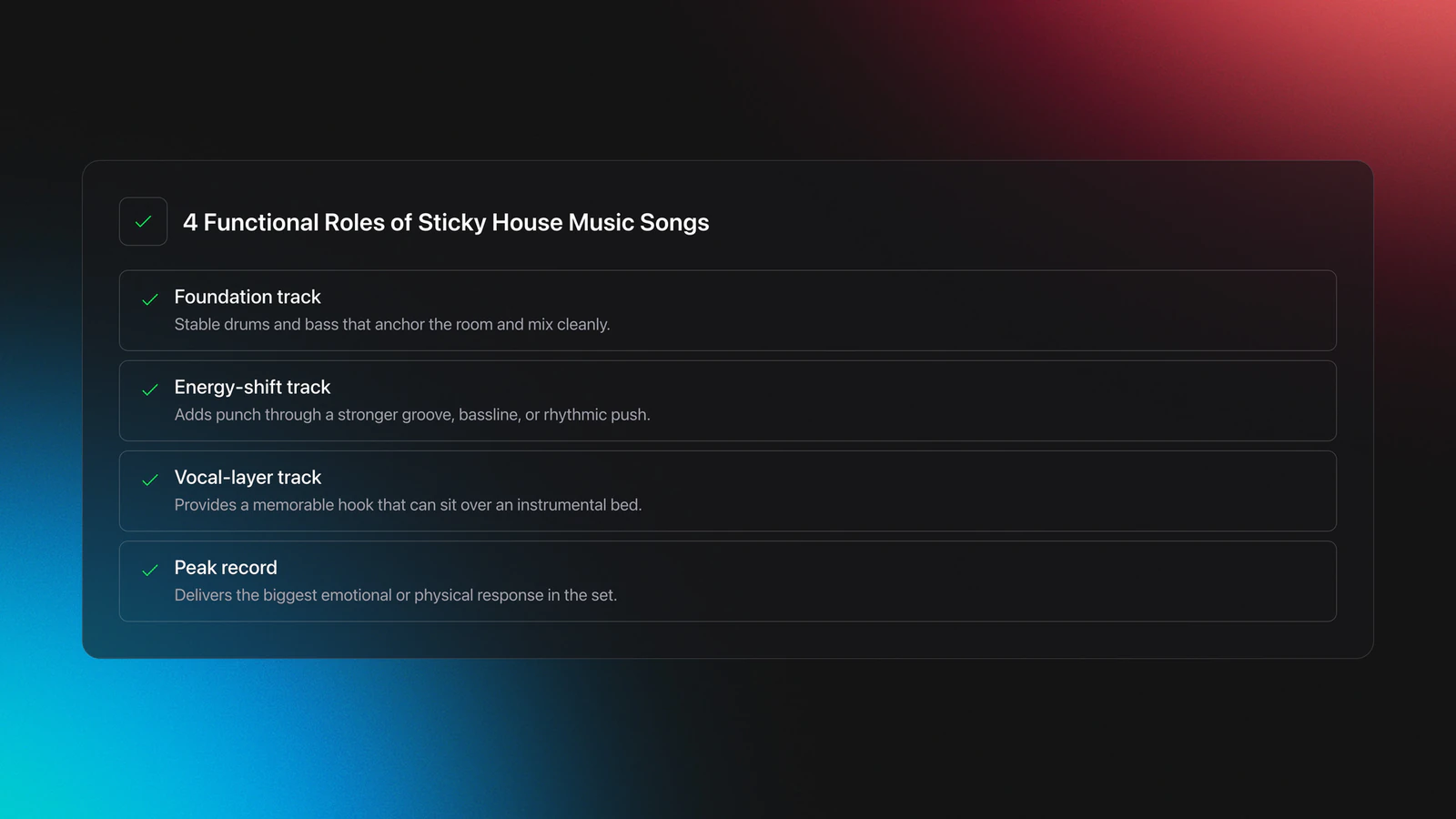
- Foundation track. Stable drums and bass. Holds the room together.
- Energy-shift track. Adds punch with a new groove or stronger bassline.
- Vocal-layer track. Gives you a memorable hook over an instrumental bed.
- Peak record. Delivers the biggest emotional or physical response.
You can use this four-part framework to sort both classics and new finds. It also stops you from overloading a set with tracks that all demand the same moment.
Best House Music Songs by Function
If you want a useful list of house music songs, sort by function first, not release date. That gives you records you can actually use in warm-ups, club peaks, after-hours sets, and vocal transitions.
Start with foundation records. These are groove-first tracks with clean drums, enough repetition to lock the room in, and enough detail to stay interesting. Many DJs build long sections of a set on records like this because they support seamless blends and gradual EQ movement.
Classic examples often come from Chicago, Detroit, and early deep house. Frankie Knuckles, Marshall Jefferson, Mr. Fingers, Kerri Chandler, and Masters At Work all produced records that reward phrased transitions. Mixmag’s retrospectives on pre-1990 house and vocal house anthems are useful reference points when you want canon-level records rather than algorithmic playlist churn.
Then you need energy-shift records. These are the tracks that let you move from steady to urgent without jumping genres. In the tutorial, the quick EQ-swap method works best when the incoming song has a bassline or rhythmic hook strong enough to justify the sharper handoff. That is not just a mixing choice. It is a track-choice decision.
Vocal-layer tracks sit in a different category. They work when the vocal has enough identity to ride over an instrumental, but enough space to avoid turning the mix muddy. Producers learn this quickly. After writing and arranging a lot of dance music, you start hearing where vocals compete with mids, where tension builds, and where breakdowns create room. That arrangement awareness helps you choose good house music, not just popular house music.
Peak records are the easiest to overrate and the hardest to place well. A huge hook or iconic piano line can feel obvious at home but excessive in the wrong part of a set. The best house song in one room can be the wrong record in another. Context matters more than reputation.
Validation Check
That level of specificity is what separates a pile of house music hits from a playable library.
Classic House Songs That Still Work
Classic house songs stay alive because they solve modern problems. They still mix cleanly. They still create tension. They still give the room a memorable shape.
A few patterns show up again and again in durable classics. The drums are direct. The bass is functional. The vocal, if there is one, has a clear role. The arrangement leaves enough space for DJs to blend rather than just crossfade.
Tracks commonly treated as foundational include records tied to Frankie Knuckles, Marshall Jefferson, and Larry Heard. Mixmag’s classic-house and vocal-house roundups repeatedly return to these artists because the records still define key branches of the genre, from jacking Chicago grooves to more melodic and vocal-led forms.
Here is the useful distinction. A classic is not only old and respected. A classic is reusable. If a record still teaches phrasing, EQ discipline, and energy control, it belongs in the conversation.
Take two common use cases. First, a warm-up set. You want records with patient intros, low drama, and enough swing to settle a room. Second, a mid-set lift. You want a track whose bassline or vocal arrival can justify a quicker swap without sounding abrupt. Both jobs can be filled by classics. They just require different classics.
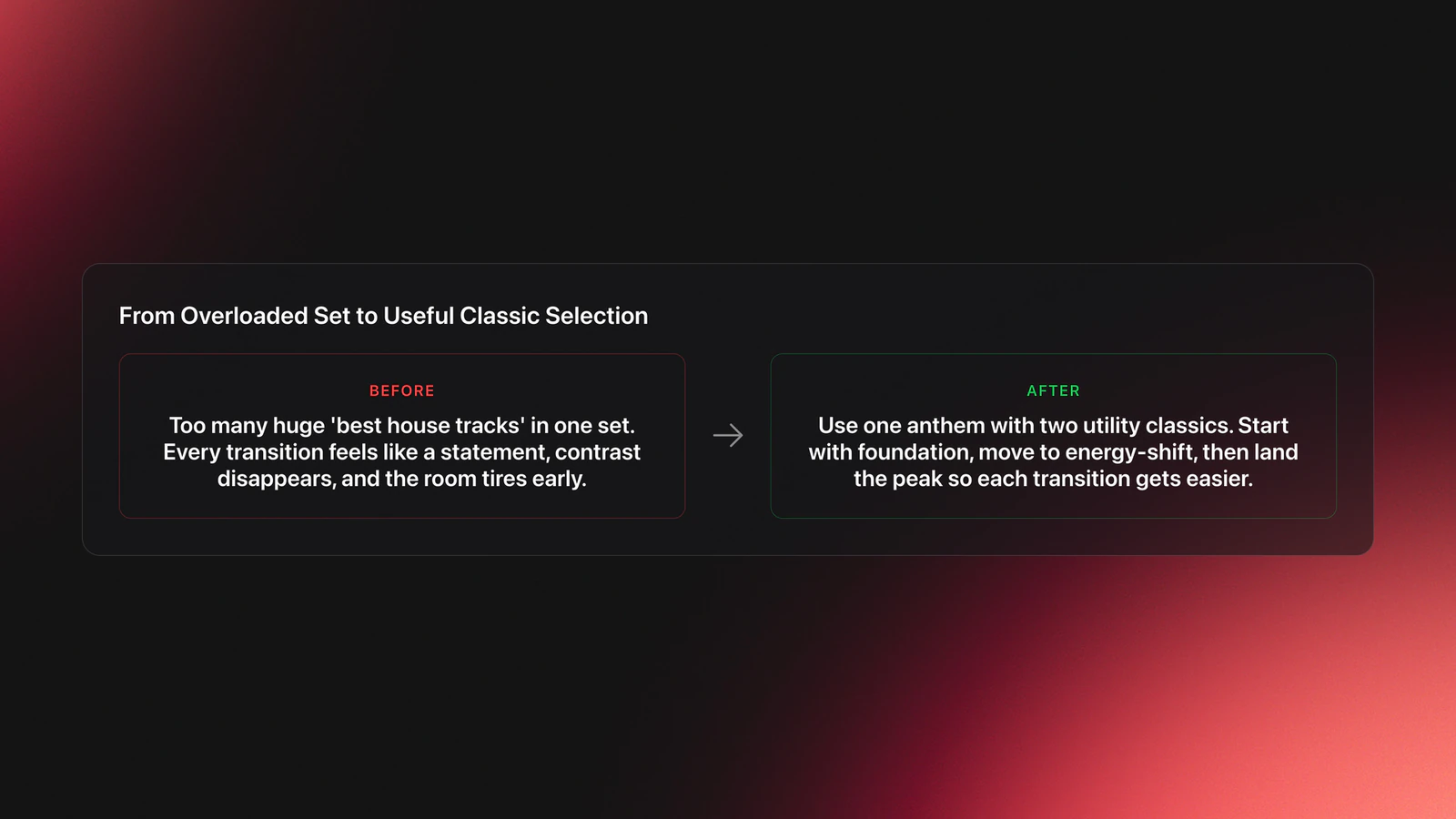
Failure mode matters here too. DJs often load up on “best house tracks” that are all huge. The symptom is obvious. Every transition feels like a statement, and nothing has room to grow. The room gets tired before the set reaches its real peak.
A better approach is contrast. Pair one bigger anthem with two utility tracks that support it. That way the big record arrives as a release, not as background noise.
You can test this quickly. Build a mini-sequence of three records. Start with a foundation track. Follow with an energy-shift track. End with a peak record. If each transition feels easier than the last, your selections are doing their jobs.
You will know you chose the right classics when the mix starts to feel simpler. Good records reduce workload. They phrase clearly, they leave EQ room, and they tell you where to act.
What Is the Most Popular House Music?
The most popular house music usually sits at the crossover point between club function and broad recall. These are the tracks casual listeners know, but DJs still respect enough to play. They tend to have simple hooks, strong vocal memory, and arrangements that work outside specialist club contexts.
That does not always mean they are the best house music songs for mixing. Popularity and playability overlap, but they are not the same thing. A track can dominate streaming and still be awkward in a set because the intro is too short, the vocal is too dense, or the dynamics are too compressed.
This is why lists of most popular house songs need interpretation. They are useful for cultural awareness. They are not enough for set building.
In practice, popularity tends to follow a few subtypes:
- Vocal anthems with a chorus people remember instantly.
- Piano house tracks with a strong lift and accessible harmony.
- Crossover club records with pop-level reach.
- Festival-friendly modern house with simplified drops and broad hooks.
When you are selecting from popular house music songs, ask a practical question. Is this record useful because people know it, or because it supports the next ten minutes of the set? Sometimes the answer is both. Often it is not.
That distinction matters even more if you manage multiple gig contexts. A terrace set, a warm-up room, and a late club slot all define “popular” differently. Organizing by context solves that. Some DJs use separate crates. Others use hierarchical systems. Vibes takes that second route, letting you group local tracks by custom categories and then prepare named sets on a visual canvas. That is useful when a record is popular in one environment but wrong in another.
There is also a workflow tradeoff across DJ software. Rekordbox and Engine DJ both handle performance libraries, but many DJs still end up doing the real thinking elsewhere or in ad hoc folders. A more organized prep layer helps when you want to separate house music hits from true utility tracks before you get to performance software. The tool choice matters less than the discipline. Organized beats unorganized every time.
House Music Songs for Mixing and Set Building
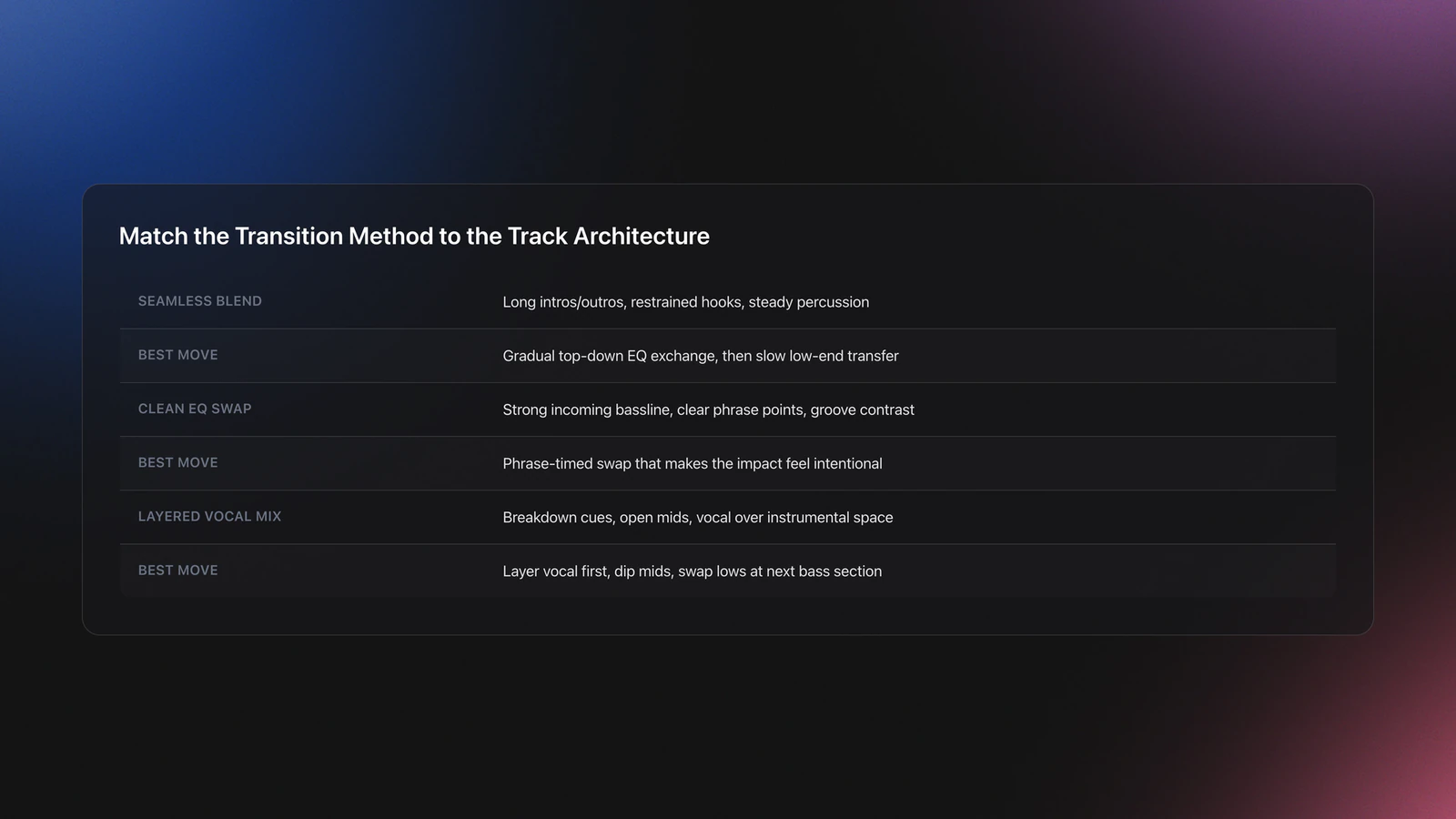
The transcript behind this article is nominally about transitions, but the deeper lesson is track architecture. House music songs become easier to mix when you understand how their phrasing, vocals, and bass movements shape the available transition styles.
Three mixing approaches map cleanly to three track types.
- Seamless blend. Best with long intros and outros, restrained hooks, and steady percussion.
- Clean EQ swap. Best with strong incoming basslines, clear phrase points, and confident groove contrast.
- Layered vocal mix. Best with breakdown cues, open mids, and a vocal that can sit over instrumental space.
That means track selection should happen with transition intent in mind. If a record has a cluttered intro, it may still be excellent. It is just not your best seamless-blend candidate. If a track has a dramatic bass entrance, it may be perfect for a phrase-timed low-end swap.
Worked example one. Track A is a rolling 127 BPM groove with a 16-bar outro and light percussion. Track B is also 127 BPM, harmonically compatible, with a patient intro and a bassline that stays out until the next phrase. This is ideal for a gradual top-down EQ exchange, then a slower low-end transfer over 8 or 16 bars.
Worked example two. Track A has an established groove. Track B brings a bolder bassline and sharper rhythmic character at the phrase change. Here a clean EQ swap makes sense. You are not trying to hide the transition. You are using the arrangement to make the impact feel intentional.
Worked example three. Track A has an instrumental main section. Track B has a vocal breakdown marked with a hot cue. If the breakdown lands at the right phrase point, you can layer the vocal over Track A, dip the mids on the instrumental side, then swap the lows when the next bass section arrives. That keeps energy moving instead of dropping into a full reset.
The failure mode is easy to recognize. The vocal sounds crowded, the low end smears, or the transition feels rushed. Usually the problem is not technique alone. The song choice was wrong for the method.
Validation Check
This is also why production awareness helps. After producing a large number of dance tracks, you stop hearing only surfaces. You hear where the arrangement leaves a pocket, where tension is being stored, and where the new element can arrive without conflict. That perspective improves how you select house music songs for sets.
Best House Tracks by Era and Substyle
If you are building a broad library, era matters because arrangement norms changed. House music songs from the 1980s and early 1990s often leave more air in the mix. Many 2000s and later records hit harder, fill more frequency space, and arrive with more obvious hooks.
That does not make one era better. It changes how you use the tracks.
A practical split looks like this:
- 1980s house music songs. Foundational grooves, direct drum programming, early Chicago identity.
- 1990s house music songs. Strong vocal house, piano house, deeper garage crossover, wider anthem pool.
- 2000s house music songs. More polished mixdowns, crossover energy, filtered disco influence, electro-house overlap.
- Modern house music songs. Cleaner low end, stronger loudness control, more substyle fragmentation.
Substyle matters just as much. Deep house, classic vocal house, jackin house, soulful house, and tech-leaning house all create different mixing demands. If you search only for “best house songs ever,” you flatten those differences and make crate building harder.
A better method is to keep one anchor list per substyle and one utility list per workflow. For example, you might maintain a classics list for historical touchpoints, a modern rollers list for long blends, and a vocal-lift list for crowd recognition.
This approach helps both DJs and listeners. DJs get clarity on use. Listeners get context on why certain records are repeatedly named in house history.
Authoritative genre roundups can help you seed those lists. Mixmag’s features on pre-1990 house, piano house, and vocal house provide strong starting points because they separate strands of the genre rather than treating all house as a single chart playlist.
Common Mistakes When Choosing House Music Songs
| Mistake | Why It Happens | How to Avoid |
|---|---|---|
| Picking only peak-time records | Big hooks feel impressive in isolation | Balance every anthem with utility tracks and groove records |
| Ignoring phrase structure | People focus on drops instead of arrangement | Check intro, breakdown, and bass-entry points before adding a track |
| Overvaluing popularity | Streaming familiarity gets confused with playability | Separate cultural favorites from practical mixing tools |
| Tagging too broadly | Everything gets labeled just “house” | Add function labels such as foundation, vocal-layer, and peak |
| Forcing layered vocal mixes | Two strong midrange elements collide | Test vocal space and reduce competing mids before committing |
Common selection problems that make house sets harder than they need to be
How Do You Find Good House Music Songs?
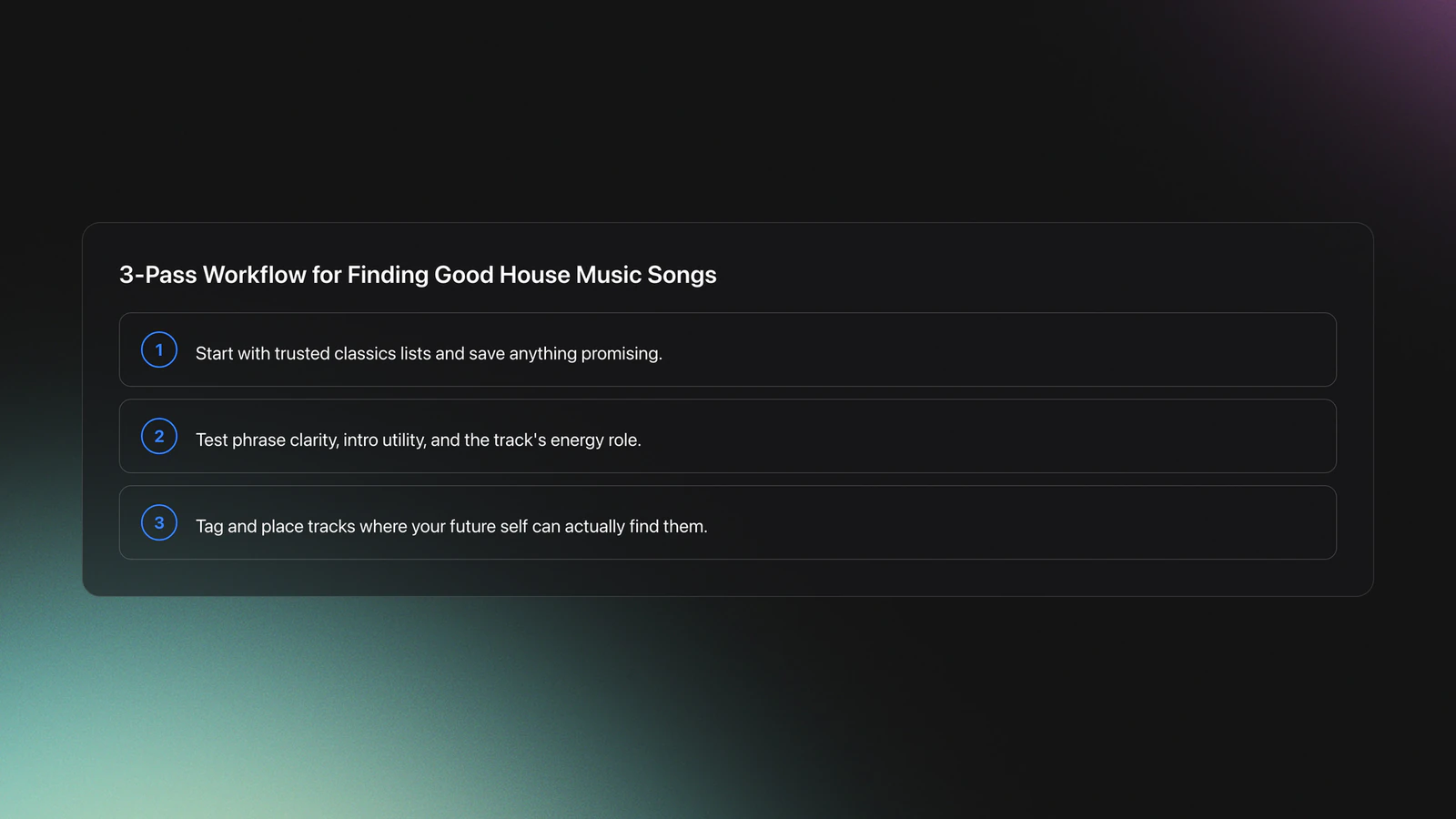
You find good house music songs by combining reference listening with workflow discipline. Start with a few trusted classics lists, note which records solve different jobs, then dig sideways by label, producer, and substyle. The key is not just finding tracks. It is remembering why you kept them.
In practice, use three passes. First, discovery. Save anything promising. Second, evaluation. Test phrase clarity, intro utility, and energy role. Third, organization. Place the track where your future self will actually find it.
If a song sounds great but you cannot describe its use case, keep listening. Good taste gets sharper when paired with usable labels.
Conclusion: Build a Playable House Library
The fastest way to get better with house music songs is to stop treating them as one category. Sort them by job. Listen for phrasing. Notice where vocals sit, where bass enters, and how much room the arrangement leaves for you.
Three takeaways matter most:
- Pick tracks by function first. Foundation, energy-shift, vocal-layer, or peak.
- Match transition style to track architecture, not just BPM and key.
- Organize your library so future set building is fast and specific.
Do that, and both listening and mixing improve. You stop collecting random house music hits and start building a library that actually works.
The visual way to organize your DJ library
Tag tracks by vibe. See everything at once. Export to any DJ software.
A visual system for organizing your DJ library.
Techniques Covered
Seamless Blend
Track Selection

Track Matching by Key and BPM
Track Transition Techniques: How to Pick the Right Move

Track Analysis

Smart Playlists for DJs
Library Optimization
Equipment & Software
Featured Gear
Continue Your Learning Journey
Start Here First

Swedish House Music: Sound, Artists, Key Tracks
beginner
How to DJ: First Mix, Step by Step
beginner
DJ Starter Equipment: What to Buy First (and What to Skip)
beginner
When Mix and Key Actually Matters: A DJ's Guide to Harmonic Decisions
beginner
Beginner DJ Setup: Wire Your Controller, Then Play Your First Mix
beginnerRelated Content
House Music Explained
intermediate
1980s House Music: Origins, Tracks, DJs
intermediate
House Trance: Sound, Structure, Mixing
intermediate
90s House Music: Origins, Sound, Key Tracks
intermediate
DJ Record Pool Guide for Working DJs
intermediateDJ Library Organization System: Tags, Crates, Keys
intermediateHow To Mix In Key Live: Worked Transitions And Failure Fixes
intermediate
DJ Playlist Spotify: Mixing With Streaming Inside Rekordbox
intermediate
Mix and Key: Practical Guide to Melodic DJ Mixing
intermediate
DJ Transitions: The Three-Layer Handoff for Beginners
intermediate
How to Mix and Edit Songs Together
intermediate
DJ Setup Guide: Wire a Reliable Rig From Bedroom to Club
intermediate
Harmonic Mixing Guide for DJs: Energy & Workflow
intermediateTransition DJ Online: Browser Mixer Workflow
intermediateFrequently Asked Questions

Hey, it's Ben Modigell 👋
I DJ and produce as so I so — downtempo, minimal, dub house, tech house, and techno (releases on Spotify and SoundCloud, links above). Everything I write here comes from my own gigs, studio sessions, and library cleanups: the rules I follow, the failure modes I've actually hit, and the workflow I use when nobody's watching. If a technique didn't earn its place in my own sets, it doesn't make it into a tutorial.