

Edit track info in Engine DJ.
In Engine DJ Desktop, click a track once to select it, click the field you want to change, type, and press Enter to save. Twelve fields are editable this way: Title, Artist, Album, Key, Rating, Comment, Track #, Genre, Year, Label, Composer and Mixartist. BPM is not one of them, and a fast double-click loads the track to Deck 1 instead of opening the field.
$49$79USD one-time purchase. First 250 licenses at this price. 14-day free trial.
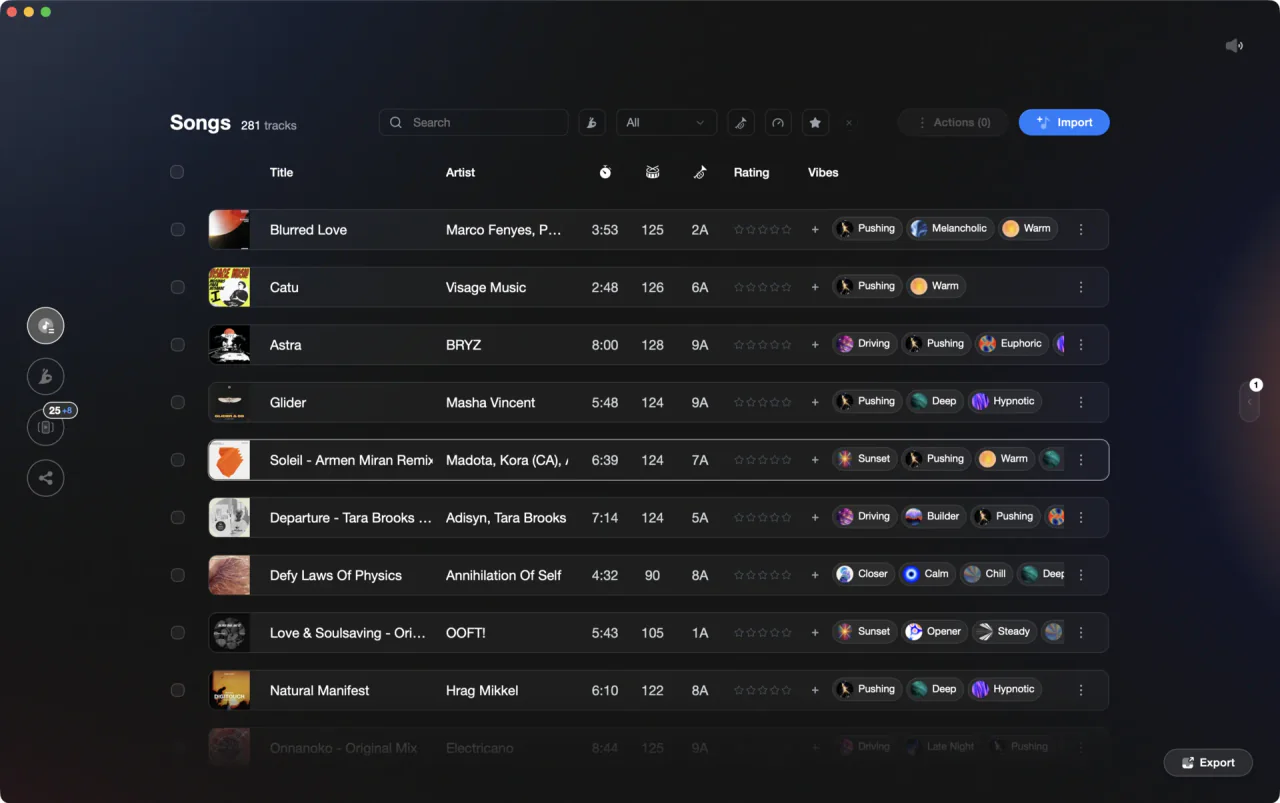
Metadata lives in the track list, so that is where you fix it.
Fix track metadata in Engine DJ, step by step.
Engine DJ Desktop has no separate tag editor window. Every change happens in the track list itself, so the guide below covers the single-track edit, the Shift batch edit, and the fields that live somewhere else.
Show the columns you want to edit
Right-click any column header in the track list and tick the fields you need: Title, Artist, Album, Key, Rating, Comment, Track #, Genre, Year, Label, Composer, Mixartist. Click and drag a column into a new position, or drag the name inside that right-click menu, so the fields you change most often sit next to each other.
Click the track, then click the field
Click a track once to select it, then click the field you want to change. A cursor appears and you can type over the existing value. Press Enter on your computer keyboard to save the edit. Two separate clicks are the whole trick here, because a quick double-click loads the track to Deck 1 instead of opening the field.
Change the same field on many tracks at once
Hold Shift and click to select the tracks you want, then double-click the field while you are still holding Shift. Type the new value and press Enter. A window appears asking you to confirm that you want to change the metadata for those tracks. Every selected track gets the same value, which suits Genre, Album, Label or Year.
Pull in tags you edited outside the app
If you fixed the ID3 tags in another tag editor, Engine DJ does not notice on its own. Right-click the track and choose Re-import track information to read the file's tags again. A track shown in red text has been moved and is inaccessible until you right-click it and choose Relocate Missing File, which also updates its ID3 information from the new file.
Fix key and BPM where they actually live
Key is an editable field in the list, and the Library tab of Preferences sets whether it displays as Sharps, Flats, Open Key or Camelot. BPM is not in the editable list. Load the track to a deck and use the Grid Edit Controls instead: Tap Tempo, the +/- BPM buttons, /2 and 2X for half and double time, and Reset to return to the analyzed tempo.
Bring edits made on a drive or player back
Changes made on Engine OS hardware live on the drive. Connect it, then click Resync Track Info in the media devices panel to resync cues, loops, beat grid and meta tag data back to the main database. In Sync Manager, the Sync to Engine button returns cue and loop points, beat grids, waveform data, star ratings, BPM and key.
The catch
Every edit happens in the track list, one field at a time, and the Shift batch edit writes one identical value across the selection. That covers a genre or a label, but a few thousand imported tracks with wrong titles, empty artists and missing keys still turn into an afternoon of clicking.


The faster way
Clean up the whole imported library in one pass.
Vibes reads your Engine DJ database, playlists included, and puts the collection in one keyboard-first list. Fix a title, artist, genre or key per track in the Track Inspector, select everything missing BPM or key and bulk re-analyze in a single pass, and pull existing Genre, Mood or Grouping text in as tags. When the library is clean, export your playlists and vibes back to Engine DJ.
See how it worksOrganize in Vibes, export to Engine DJ.
Your playlists, tags, ratings, and cue points travel back to the gear you play on, so nothing you do in Vibes is locked away.

Track 001
Artist A
Afterhours Mysterious
 Introspective
Track 002
Artist B
 Cozy FloorPeaceful
 Home
Home
Track 003
Artist C
Rave Aggressive
 Festival
 Build & Release
Frequently asked questions
The honest answers, including the trade-offs.
From a Vibes customer
The import worked perfectly. Have created several sets now and my life is so much easier
One-time purchase
Get Vibes with a single payment. No subscription.
Vibes is the step before you open your DJ software, not a replacement for it.
First 250 licenses at this price, then $79.
14 days • Full access
No strings attached
Secure checkout with Stripe
Already have Companion Pro? Upgrade instead

Methodology
How we keep this honest.

Verified against the app
Every step is checked against the current version of Engine DJ.
We own our bias
We make Vibes. We show the native way first and honestly, then where Vibes genuinely helps, and we say when it does not.
Live pricing
The Vibes price shown comes straight from our checkout, never a hardcoded marketing number.
Kept current
Last reviewed September 2026.
Keep exploring
Compare Vibes
DJ apps head to head
Works with your software
Vibes for DJs
Vibes features
How-to guides
Best DJ software
Move between apps
Learn to DJ