

Move from iTunes to Traktor.
Moving an iTunes collection into Traktor brings it into a laptop rig built for effects-heavy mixing. Here is exactly what carries across, what gets lost, and how to bring your whole library over without starting from scratch.
$49$79USD one-time purchase. First 250 licenses at this price. 14-day free trial.
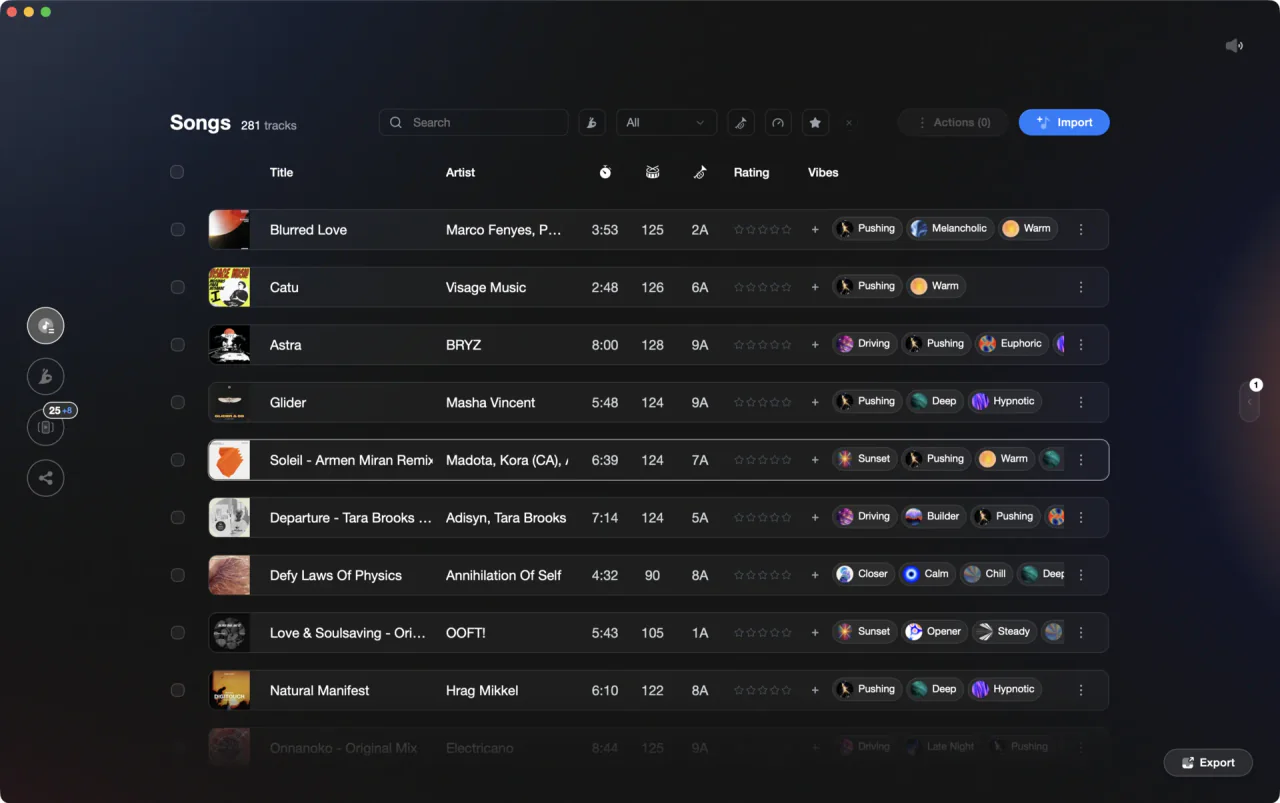
Bring your collection across without losing your work.
Moving from iTunes to Traktor runs through a hand-exported library xml: local DRM-free files and playlists carry, Apple Music streams stay behind, and Vibes imports the same folders or Library.xml and exports playlists, cue points and ratings into Traktor.
Your music already lives in iTunes, the Music app on current macOS, and Traktor can read that library directly. The real work is not the transfer. It is turning a listening library into a DJ library: analysis, organization, and playlists that survive on their own.
What transfers from iTunes to Traktor.
| Capability | Carries | What happens |
|---|---|---|
| Audio files | Local, DRM-free files link up. Apple Music streaming tracks do not come across. | |
| Playlists | Playlists appear via the iTunes import; make them native so they live in Traktor without the XML. | |
| Key & BPM | iTunes stores no DJ analysis; Traktor analyzes tracks fresh after the import. | |
| Hot cues | iTunes has no cue points, so you start clean rather than losing anything. | |
| Beatgrids | Created by Traktor's own analysis after import. | |
| Star ratings | Carry where the app reads iTunes ratings; spot-check after import. | |
| Comments & tags | Comments saved in the file tags travel with the files themselves. |
Using Traktor's built-in iTunes import. iTunes never stored DJ data like cues or beatgrids, so those start fresh no matter which path you take.
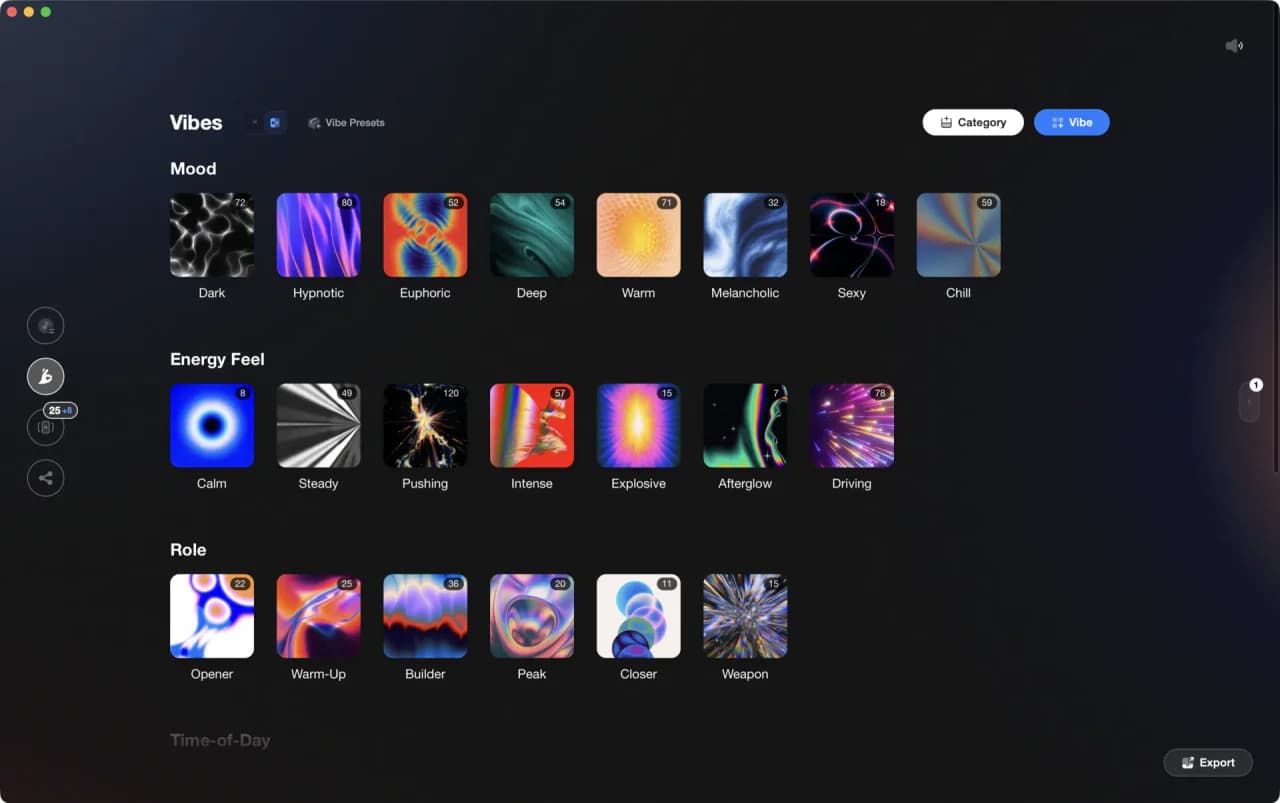
Moving from iTunes to Traktor, step by step.
Traktor has a built-in iTunes import, so the native path genuinely works. It links your local files and playlists; it just does not create any of the DJ-layer data iTunes never had.
Export the XML from the Music app
Traktor's iTunes node runs on the library XML, and the Music app on current macOS does not produce one automatically. Export it manually via File, then Library, then Export Library, and remember this is a snapshot: when your Music library changes, you export again and right-click the iTunes node in Traktor to refresh its playlists. Only local, DRM-free files carry; protected tracks show up greyed out.
Point Traktor at the XML
In Traktor, open Preferences and go to File Management, then set the iTunes Music Library XML path to the file you exported. Your iTunes playlists appear under the iTunes node in Traktor's browser.
Import into the Track Collection
The iTunes node is read-only: you can browse and load from it, but you cannot edit tags, and Smartlists ignore tracks that only live there. Drag the playlists you keep into Traktor's own playlist tree so the tracks enter the Track Collection and become fully Traktor's.
Analyze and pick your key notation
Run Analyze (Async) on the imported tracks so Traktor detects BPM, key, and beatgrids; iTunes stored none of that. Set the key notation to Open Key if you mix harmonically: Traktor offers Musical and Open Key notations, and Open Key follows the same wheel logic as Camelot with different labels.
The XML link is manual on current macOS: no export, no update. And everything DJ-specific, cues, grids, and energy tags, still has to be created in Traktor after the move.


The cleaner path
One library, every app.
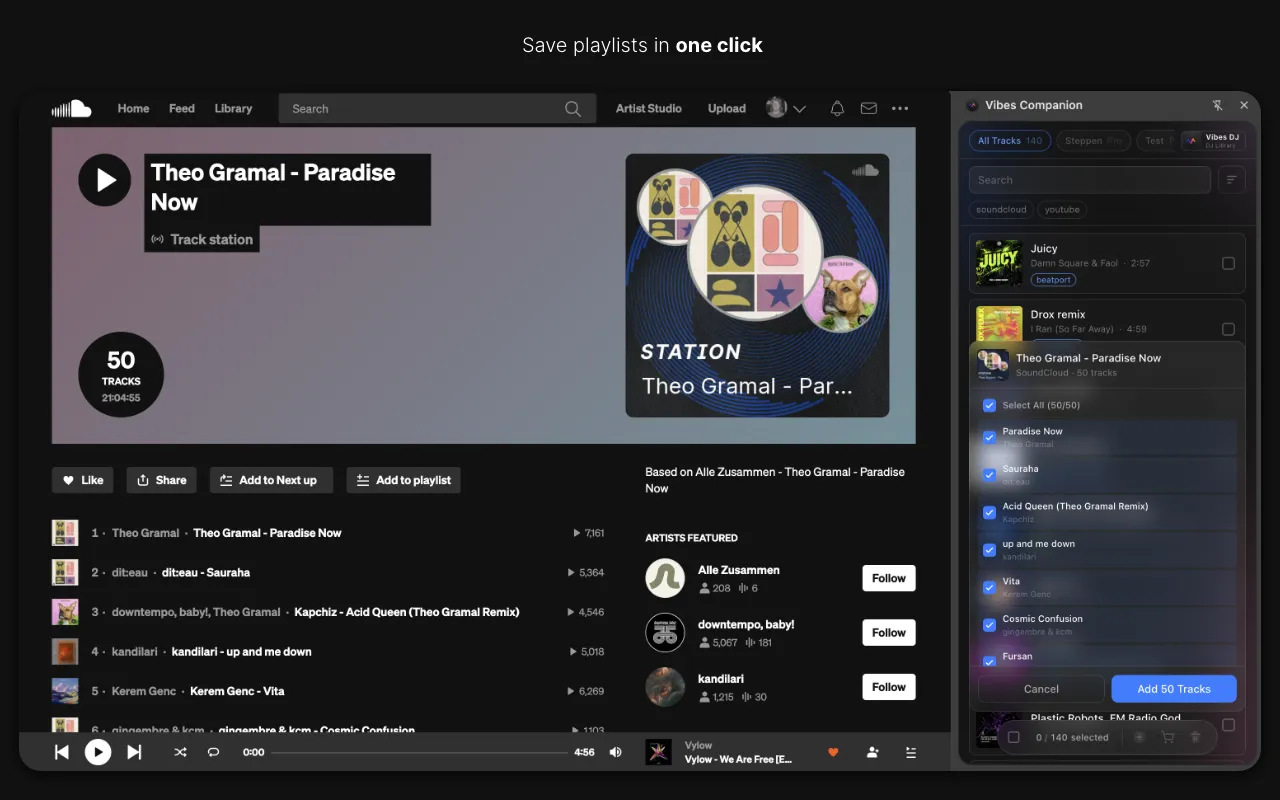
Vibes does not need the XML: it imports the folders where your music already lives, analyzes BPM, key, and track sections, and adds the mood and energy organization iTunes never had. Then it exports playlists, tags, ratings, and cue points straight into Traktor, so you arrive with a DJ-ready library instead of a flat track list.
See the DJ LibraryOrganize once, export to Traktor.
Your playlists, tags, ratings, and cue points travel to the gear you play on, so nothing you do in Vibes is locked away.

Track 001
Artist A
Afterhours Mysterious
 Introspective
Track 002
Artist B
 Cozy FloorPeaceful
 Home
Home
Track 003
Artist C
Rave Aggressive
 Festival
 Build & Release
Frequently asked questions
The honest answers, including the trade-offs.
From a Vibes customer
The import worked perfectly. Have created several sets now and my life is so much easier
One-time purchase
Get Vibes with a single payment. No subscription.
Vibes is the step before you open your DJ software, not a replacement for it.
First 250 licenses at this price, then $79.
14 days • Full access
No strings attached
Secure checkout with Stripe
Already have Companion Pro? Upgrade instead

Methodology
How we keep this honest.

Verified against the apps
What transfers is tested against the current versions of iTunes and Traktor.
We own our bias
We make Vibes. We show the native process and its limits honestly, and we are upfront about what no tool can carry across.
Live pricing
The Vibes price shown comes straight from our checkout, never a hardcoded marketing number.
Kept current
Last reviewed September 2026.
Keep exploring
Compare Vibes
DJ apps head to head
Works with your software
Vibes for DJs
Vibes features
How-to guides
Best DJ software
Move between apps
Learn to DJ