DJ App Transfer Matrix
Pick a source and a destination to see what survives the move: audio files, playlists, key and BPM, hot cues, beatgrids, ratings, and tags, with an honest note on each.
- Interactive reference
- Keyboard friendly
- No sign-up
| Capability | Status | Note |
|---|---|---|
| Audio files | Carries | Your tracks move with the library and the files are never modified. |
| Playlists & crates | Carries | Folders and playlists are rebuilt in Rekordbox. |
| Key & BPM | Carries | Analyzed values carry across, or are re-analyzed cleanly and accurately. |
| Hot cues | Carries | Hot and memory cues carry; export to USB to use them on CDJs. |
| Beatgrids | Carries | Beatgrids carry so your tracks stay locked in time. |
| Star ratings | Carries | Star ratings carry into Rekordbox. |
| Comments & tags | Partial | Comments carry; map your tags to My Tag for full filtering. |
Using a metadata-aware library tool. A manual drag-and-drop rebuild loses everything except the audio files. Rekordbox has no Serato importer; the documented bridge is a tool-generated rekordbox xml or a direct database write.
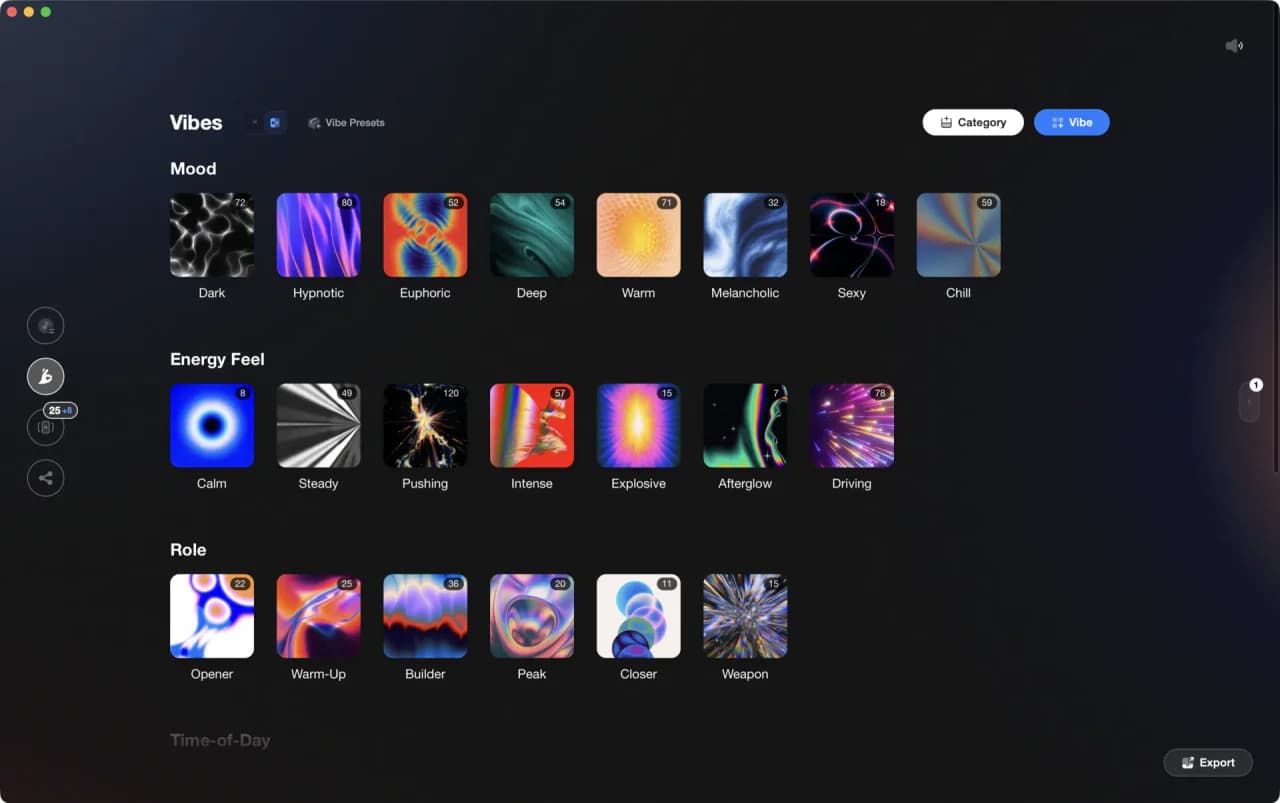
Full guide: move from Serato DJ to RekordboxNext stepVibes imports directly from rekordbox, Serato, Traktor, and Engine DJ and keeps playlists and crates intact, so the move is not manual. DJ library in Vibes
Reading the Matrix
How to read the matrix
Carries means the data survives the move with a metadata-aware library tool. Partial means it survives with caveats, usually a format limit on the destination side, like the eight-cue-slot limits in Serato and Traktor. Starts fresh means the source never stored that data at all, so the destination creates it during analysis; nothing is lost because nothing existed.
A manual drag-and-drop rebuild is the worst case in every pair: only the audio files make it, and every playlist, cue, and rating has to be recreated by hand. Each pair links to a full migration guide with the step-by-step path, including the native options where they exist.
Behind the Matrix
Why transfers lose data
Every DJ app stores its library in a proprietary format: Rekordbox and Engine DJ use databases, Traktor uses NML files, Serato uses crate files, and iTunes uses a library XML. None of them read each other's formats, so anything beyond the audio file itself needs translation. That is the whole reason library tools exist: they read the source format, map the DJ layer, and write the destination's format, so moving between apps stops meaning starting over.

Hey, it's Ben Modigell 👋
I've been DJing and producing music as "so I so," focusing on downtempo, minimal, dub house, tech house, and techno. My background in digital marketing, web development, and UX design over the past 6 years helps me create DJ tutorials that are clear, practical, and easy to follow.
Methodology
Last updated
Author and Methodology
Maintained by Ben Modigell, founder of Vibes. Ben builds DJ library, preparation, BPM, and harmonic-mixing tools for working DJs.
- Source
- Vibes DJ-tool taxonomy and page logic maintained by Vibes.
- Evidence
- Page output checked against the current tool behavior and internal DJ reference data.
- How this page is made
- Tool pages are built from reusable page logic, internal DJ reference data, and visible on-page calculations. Programmatic reference pages are generated from structured data rather than hand-written one by one.
BPM, key, and genre labels can vary by edit, remaster, detection engine, and DJ software. Use these pages as a practical mixing reference, then verify important tracks in your own library.
Report a correctionThe visual way to organize your DJ library
Tag tracks by vibe. See everything at once. Export to rekordbox, Serato, Traktor or Engine DJ.
14-day free trial. Full access, no strings attached.
or see how it works