
Export your library to USB in Engine DJ.
In Engine DJ Desktop, click Export in the toolbar to open Sync Manager, pick your drive from the dropdown, check the playlists you want, and click Export to Drive. Alongside the audio files Engine writes its own database onto the drive, and that database is what carries your playlists, cue points, loops, beat grids and waveforms to a standalone player. Leave roughly 500 MB free for it, and format the drive exFAT or FAT32 before you start.
$49$79USD one-time purchase. First 250 licenses at this price. 14-day free trial.
Decide what deserves the drive first, then pack it in Engine DJ.
Export your library to USB in Engine DJ, step by step.
Engine DJ packs music onto a drive with Sync Manager. It copies the files and writes an Engine database next to them, which is what lets a standalone player read your collection with no laptop in the booth.
Add your music and let analysis finish
In Engine DJ Desktop, drag tracks or folders from Finder or Explorer onto the track list or the Collection pane. Dropping a folder structure onto the Collection pane imports the tracks into playlists named after the subfolders. Leave Auto Analyze on under Preferences, Library, then watch the Job Monitor at the bottom of the window until it reads No jobs running.
Format and connect the drive
Engine DJ recommends an exFAT partition for best performance, and FAT32 is also supported. Check that your player supports the file system and the capacity of the drive. Budget roughly 500 MB or more of free space for the Engine database on top of the audio. Plug the drive in, then click the Drives icon in the Collection pane and confirm it shows up.
Open Sync Manager
Click Export in the toolbar, or press the Sync Manager button in the bottom-left corner of the window. Sync Manager shows every drive connected to your computer, so pick yours from the dropdown menu. If Engine DJ does not support a drive, a warning icon appears next to it, and hovering over the icon shows a tooltip explaining why.
Tick the playlists you want packed
In the Sync Manager collection pane, check the box next to each Playlist or Smartlist you want on the drive. Checking a top-level folder selects everything inside it. The total size of your selection and a drive capacity indicator sit at the bottom of the pane. If the capacity bar turns red, you have picked more than the drive holds, so deselect until you are back under.
Click Export to Drive
Press the Export to Drive button at the bottom of the collection pane. Engine DJ copies the selected files and their associated Engine DJ data across, and a progress bar shows how long it has left. Clicking Cancel stops the files still queued, while anything already copied stays on the drive until you remove it.
Eject, then verify what actually landed
Use the Eject button in Sync Manager or in the media devices panel. A drive with operations still running cannot be ejected, so wait for the jobs to clear. Before you unplug it, right-click a column header in the track list and switch on the Packed column. A dot next to a track means that file has been copied to a drive.
Bring the gig back with Sync to Engine
After the night, plug the drive in, open Sync Manager, select the drive and click Sync to Engine. It updates your home collection with the cue points, hot cues, loop points, beat grids, waveform data, BPM, key and star ratings you set on the players. The button is disabled when there is nothing new to sync.
The catch
Sync Manager mirrors your selection rather than only adding to it. Uncheck a playlist that is already on the drive and Engine DJ warns you that those tracks will be removed on the next export, unless the same file also sits in another list still on the drive.


The faster way
Decide what deserves the drive before you open Sync Manager.
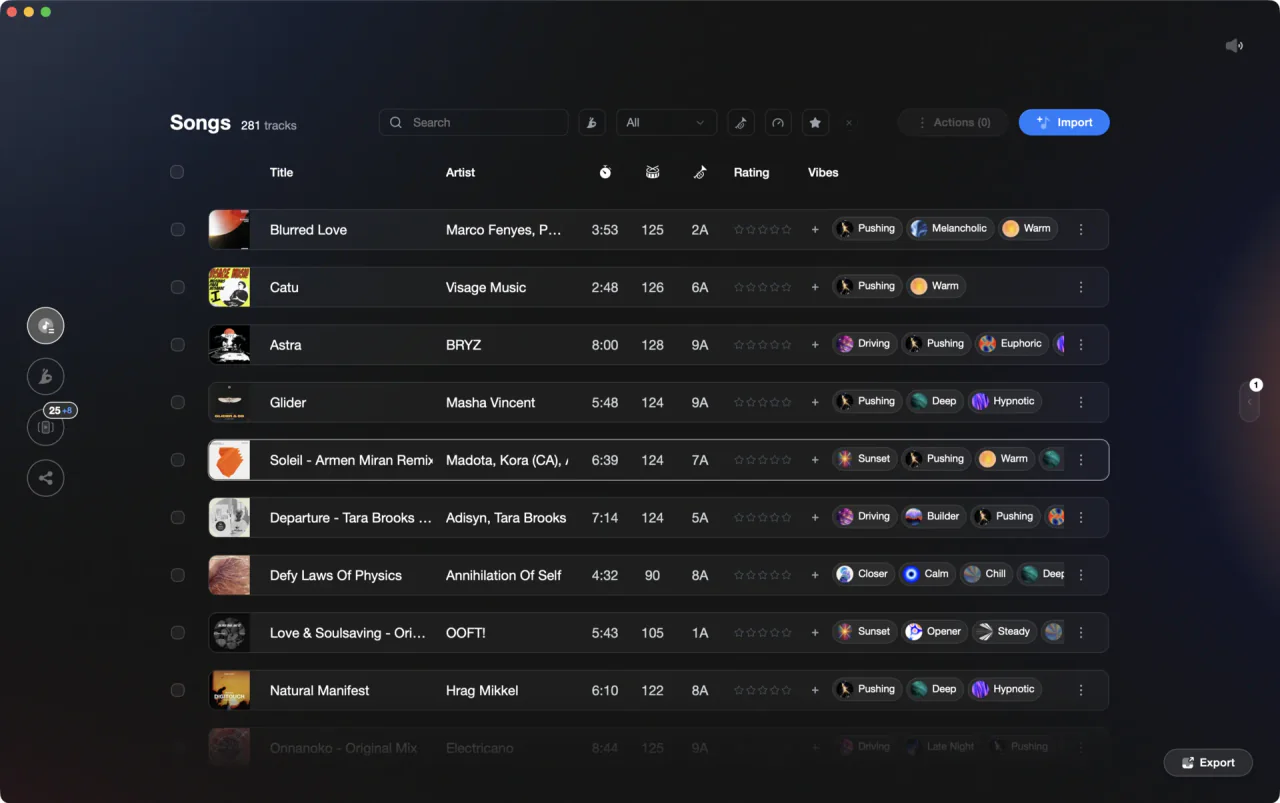
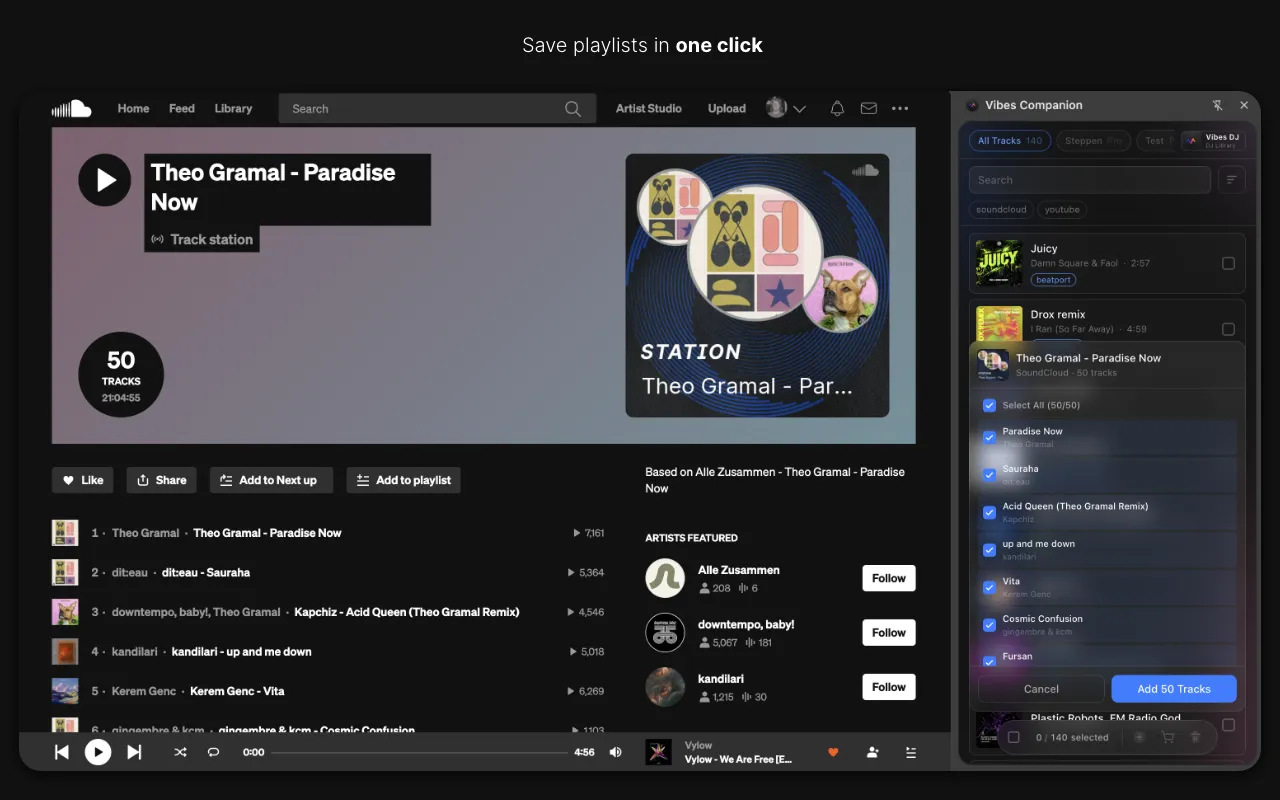
The slow part of a drive export is rarely the copying. It is deciding which tracks earn the space, which is a library job, not a transfer job. Vibes imports your Engine Library, tags it into your own vibes, and analyzes every track for BPM, key and energy so a gig-ready playlist takes minutes. Export those playlists back to Engine DJ and pack them with Sync Manager. Vibes never writes to the drive itself. That step always goes through Engine DJ.
See how it worksOrganize in Vibes, export to Engine DJ.
Your playlists, tags, ratings, and cue points travel back to the gear you play on, so nothing you do in Vibes is locked away.

Track 001
Artist A
Afterhours Mysterious
 Introspective
Track 002
Artist B
 Cozy FloorPeaceful
 Home
Home
Track 003
Artist C
Rave Aggressive
 Festival
 Build & Release
Frequently asked questions
The honest answers, including the trade-offs.
From a Vibes customer
The import worked perfectly. Have created several sets now and my life is so much easier
One-time purchase
Get Vibes with a single payment. No subscription.
Vibes is the step before you open your DJ software, not a replacement for it.
First 250 licenses at this price, then $79.
14 days • Full access
No strings attached
Secure checkout with Stripe
Already have Companion Pro? Upgrade instead

Methodology
How we keep this honest.

Verified against the app
Every step is checked against the current version of Engine DJ.
We own our bias
We make Vibes. We show the native way first and honestly, then where Vibes genuinely helps, and we say when it does not.
Live pricing
The Vibes price shown comes straight from our checkout, never a hardcoded marketing number.
Kept current
Last reviewed September 2026.
Keep exploring
Compare Vibes
DJ apps head to head
Works with your software
Vibes for DJs
Vibes features
How-to guides
Best DJ software
Move between apps
Learn to DJ