
Your first session in Engine DJ.
Engine DJ Desktop is the computer half of the system: you drag your audio files into the Collection, Auto Analysis reads BPM, key and beat grids, you group tracks into playlists, then Sync Manager packs everything onto a USB drive. The drive carries its own Engine database, which is what a Denon DJ, Numark or RANE player actually reads at the gig. The software is a free download for Mac and Windows.
$49$79USD one-time purchase. First 250 licenses at this price. 14-day free trial.
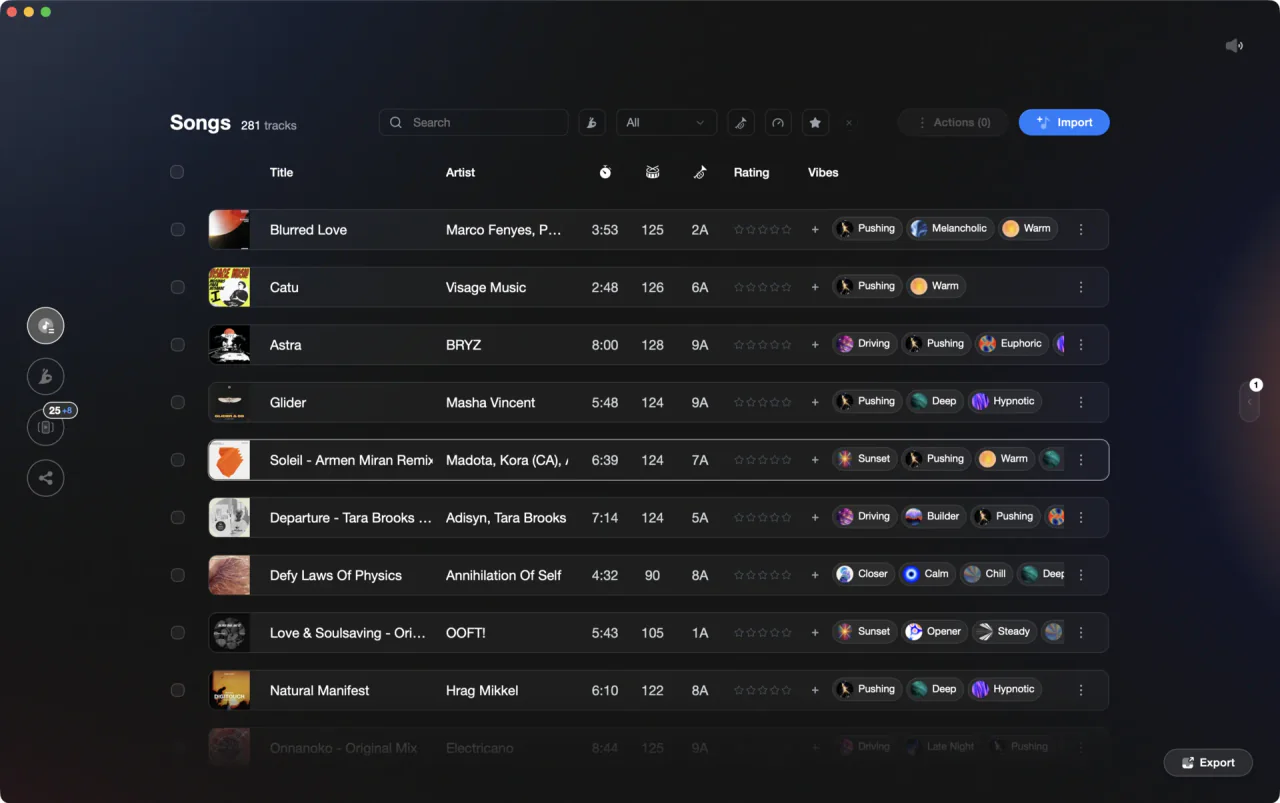
Sort the library first, then let Engine DJ analyze it and pack it to your drive.
Get started in Engine DJ, step by step.
Engine DJ Desktop is free for Mac and Windows, and this is how to use Engine DJ from a clean install: settings first, then music, then playlists, then a drive your player can read.
Install Engine DJ Desktop and open it
Download the installer from enginedj.com, double-click the .exe on Windows or the .dmg on macOS, and follow the on-screen instructions. You need Windows 10 or 11 (64-bit) or macOS 14, 15 or 26, 8 GB of RAM and 5 GB of free space. Open it from the Start menu or your Applications folder. On a fresh install with no tracks, the Import Assistant opens by itself.
Set your preferences before you add anything
Click the Preferences icon in the Toolbar. It has two tabs. Under Library, leave Auto Analysis On so tracks analyze as they arrive, pick your Key Notation (Sharps, Flats, Open Key or Camelot) and set the BPM Range that suits your music. Under Performance, choose your Audio Device, then set Cue/Loop Quantization and the Waveform Style, Tri-Band or RGB.
Add your music to the Collection
Drag tracks or whole folders from Explorer or Finder onto the track list or the Collection pane. Drop a folder structure onto the Collection and the sub-folders come in as playlists with their own names. The File System Browser in the Collection pane does the same job without leaving the app. Engine DJ reads AAC/M4A, AIFF, ALAC, FLAC, MP3, MP4, Ogg Vorbis and WAV. DRM-protected files cannot be added.
Let the analysis finish
With Auto Analysis on, Engine DJ works through the queue as you add files. It detects waveform data, BPM, key and the beat grid, and picks up cue points, hot cues and loops already stored by Engine DJ, Rekordbox or Serato DJ. The Job Monitor at the bottom shows progress and reads No jobs running when it is done. Right-click a track for Analyze: Get missing analysis data.
Build playlists and audition tracks
Click the playlist plus icon next to Collection, or press Ctrl+N on Windows or Command+N on macOS, then drag tracks in. Each playlist holds up to 1,000 tracks; sort by the # column to drag them into set order. Filter boxes narrow the list by Genre, Artist, Album, BPM and Key, and Key Compatibility set to Compatible shows harmonic matches. Double-click a track to load Deck 1.
Set hot cues, loops and a straight beat grid
Each deck has eight performance pads. In Hot Cue mode a click drops a cue; in Loop mode the first click sets the loop in point and the second the out point. Right-click a filled pad to rename, recolor or clear it. Switch the deck to Grid Edit Controls to tap the tempo, halve or double the BPM, insert an anchor, or lock the grid.
Export to a USB drive with Sync Manager
Format the drive as ExFAT, or FAT32, and leave roughly 500 MB free for the Engine database. Click Export in the Toolbar, or Sync Manager in the bottom-left, pick the drive, and check the playlists and smartlists you want. Watch the capacity bar, click Export to Drive, then eject. Later, Sync to Engine pulls cues, loops, beat grids, star ratings, BPM and key back off the drive.
The catch
Engine DJ Desktop prepares and auditions; it does not perform. The deck controls stop at cues, loops, sync, key lock and a crossfader for testing a blend, and the set itself happens on Engine OS hardware. One more trap: never rename an external drive after you add tracks from it, or Engine DJ stops detecting those tracks until the old name comes back.


Where Vibes fits
Sort the library before it ever reaches the Collection.
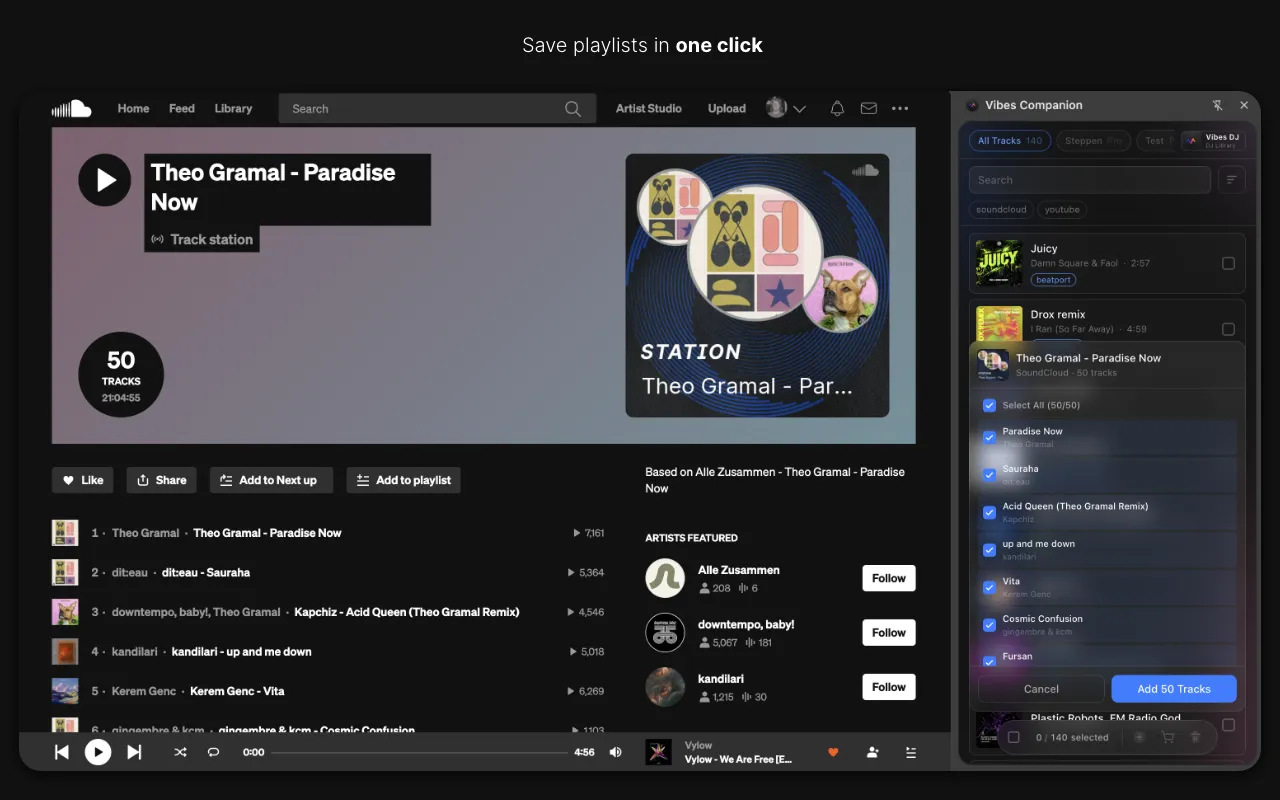
Vibes does not play, mix or record anything, and it never talks to your Engine OS hardware: the drive still gets packed in Sync Manager. It works one step earlier, on files you own. Import your folders or an existing Engine DJ, rekordbox, Serato, Traktor or Apple Music library, tag every track into vibes, check BPM, Camelot key and energy, then export playlists back to Engine DJ so the Collection arrives already sorted.
See how it worksOrganize in Vibes, export to Engine DJ.
Your playlists, tags, ratings, and cue points travel back to the gear you play on, so nothing you do in Vibes is locked away.

Track 001
Artist A
Afterhours Mysterious
 Introspective
Track 002
Artist B
 Cozy FloorPeaceful
 Home
Home
Track 003
Artist C
Rave Aggressive
 Festival
 Build & Release
Frequently asked questions
The honest answers, including the trade-offs.
From a Vibes customer
The import worked perfectly. Have created several sets now and my life is so much easier
One-time purchase
Get Vibes with a single payment. No subscription.
Vibes is the step before you open your DJ software, not a replacement for it.
First 250 licenses at this price, then $79.
14 days • Full access
No strings attached
Secure checkout with Stripe
Already have Companion Pro? Upgrade instead

Methodology
How we keep this honest.

Verified against the app
Every step is checked against the current version of Engine DJ.
We own our bias
We make Vibes. We show the native way first and honestly, then where Vibes genuinely helps, and we say when it does not.
Live pricing
The Vibes price shown comes straight from our checkout, never a hardcoded marketing number.
Kept current
Last reviewed September 2026.
Keep exploring
Compare Vibes
DJ apps head to head
Works with your software
Vibes for DJs
How-to guides
Best DJ software
Move between apps
Learn to DJ