

Learn how to use Rekordbox.
Rekordbox has two halves: EXPORT mode, where you import music files, analyze them for BPM, key and beatgrid, and sort them into playlists, and PERFORMANCE mode, where you load those tracks onto decks and mix. Work in that order every time: install and sign in, import, analyze, playlist, then either mix on screen or drag the playlist onto a USB stick for the club's players. Below is how to use Rekordbox 7 step by step, plus the plan and hardware rules that decide what you can actually do.
$49$79USD one-time purchase. First 250 licenses at this price. 14-day free trial.
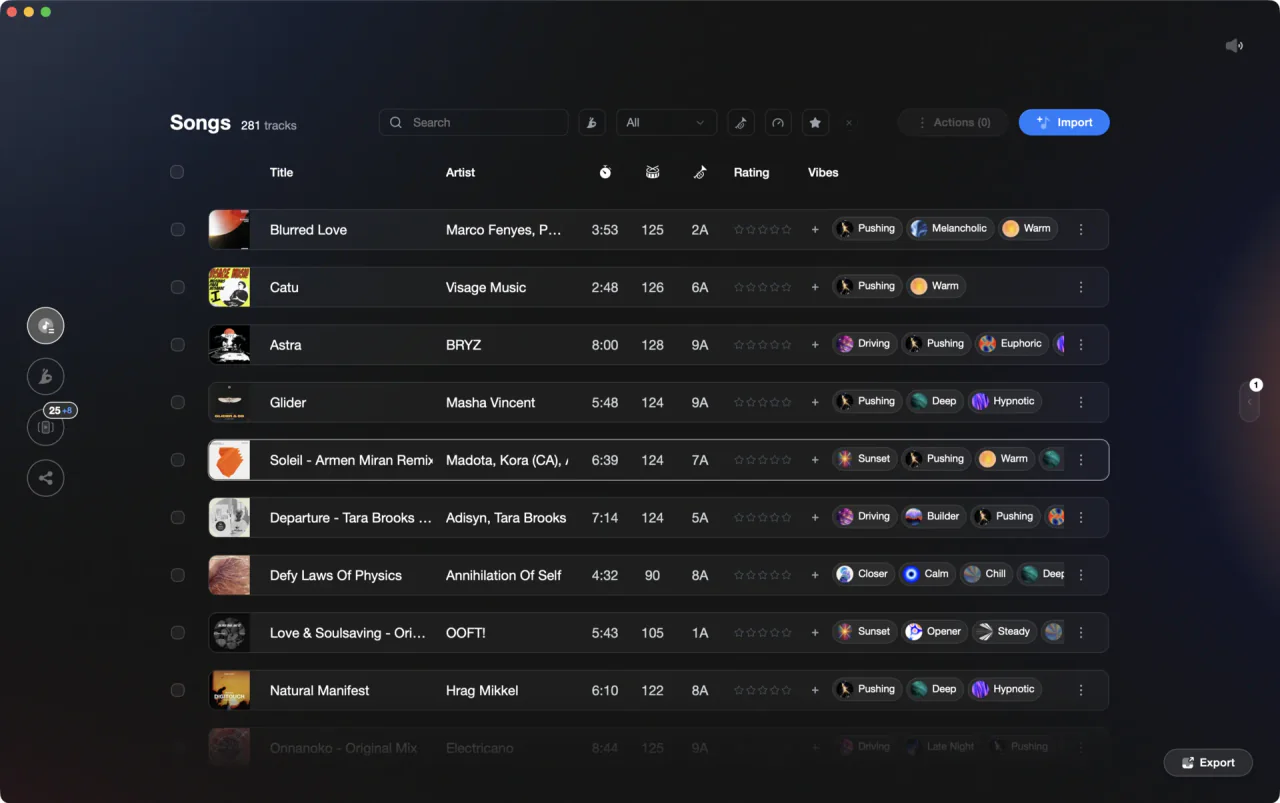
Prep the library first. Rekordbox is where you load the decks.
Get started in Rekordbox, step by step.
This is how to use Rekordbox for beginners: one sitting, from a fresh install to a playlist you can hand to a club player. The screens are version 7. If you still use Rekordbox 6, it can stay installed next to version 7, though only one of the two runs at a time.
Install it and create an AlphaTheta account
Download the installer from rekordbox.com, agree to the licence, and run it with administrator rights. To use Rekordbox on Mac, open Applications, the rekordbox 7 folder, then rekordbox.app; on Windows, use the desktop shortcut. The first launch asks you to create an AlphaTheta account, confirm it by email, and sign in.
Import your music into Collection
Click EXPORT in the upper left, then File > Import > Import Track for single files or Import Folder for a whole folder. Dragging files in works too. Everything lands in Collection. Streaming sits in the same Media Browser tree: to use TIDAL with Rekordbox, click the TIDAL icon and log in, but note that streaming tracks are blocked from USB EXPORT.
Let analysis run before anything else
Analysis is what makes sync, waveforms and cues work. With Preferences > Analysis > Track Analysis > Auto Analysis set to Enable, files are analyzed as they land. Otherwise select tracks, right-click and choose Analyze Track. Use high precision BeatGrid analysis is slower but more accurate, which is worth it on live or hand-played material.
Build playlists and folders
Click the plus icon on the right of Playlists in the tree view, type a name, press Enter. Open Collection, show the playlist in the sub browser, and drag tracks in. Playlist folders group them, and an Intelligent Playlist fills itself from filter rules instead. This tree is exactly what your USB stick and the club player will show.
Set up audio, then load a deck
Open Preferences > Audio and pick your speakers or audio interface under Audio. Switch to PERFORMANCE in the upper left and drag a track onto deck 1. To monitor, click CUE in the mixer panel for that deck, set MIX in the headphones panel to the middle and bring LEVEL up from zero.
Mix your first two tracks
Load a second track on deck 2. Click MASTER on the deck already playing, then BEAT SYNC on the other one, and Rekordbox matches its BPM and beat positions using the grid from step three. Bring the second channel in with the channel fader and crossfader. MT, short for Master Tempo, keeps the key steady while the tempo moves.
Try the sampler, Automix and stems
To use SAMPLER in Rekordbox, open the sampler deck from the global section and drag a track into one of its 16 slots, four banks deep. To use Automix, Rekordbox plays a playlist for you: drop one into the Automix window and start it. If you want to use stems, Rekordbox splits a playing track once the STEMS function is on in Preferences > Extensions.
Export a playlist to a USB stick
Back in EXPORT mode, plug the stick in and it appears under Devices, which is where you use Rekordbox with USB sticks. Drag a playlist onto it and Rekordbox copies the files with their cues, grids and waveforms. Format the stick FAT32, or exFAT only for the newer players that support it, because NTFS is not supported. Eject it from Rekordbox before pulling it out.
The catch
Rekordbox is free to download, but the Free plan is mostly an EXPORT mode plan: library, analysis, playlists and USB export. Controlling PERFORMANCE mode needs either a Hardware Unlock device or a paid plan, and the plan table lists DVS and STEMS as paid, so to use Track Separation on Rekordbox you need a subscription. Each free account gets one 30-day trial of the paid functions.


Where Vibes fits
The library part, done before you open Rekordbox.
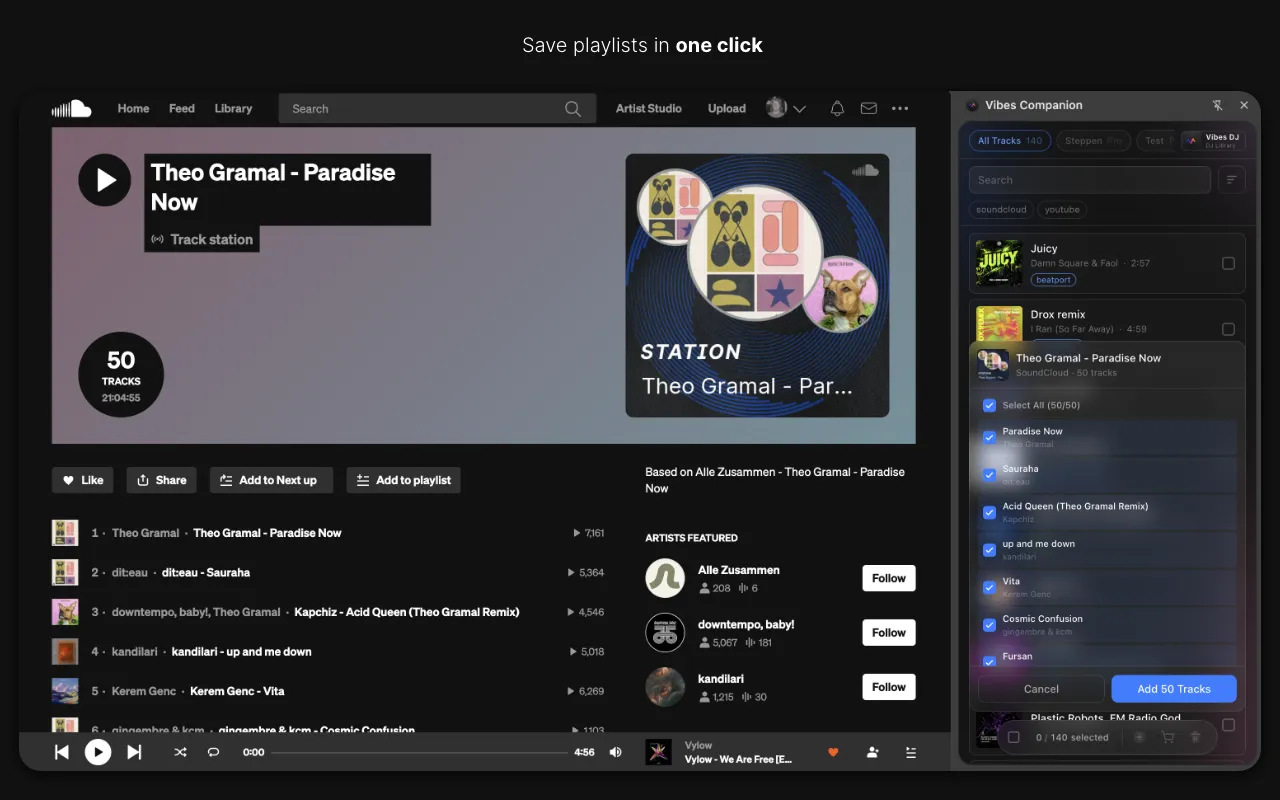
Vibes has no decks, no mixer and no recorder, and it never talks to your controller: playing and mixing stay in Rekordbox. What it takes over is the slow half of step two through four. Smart Import reads your existing rekordbox library, an iTunes Library.xml or plain folders, Vibes analyzes every track, Auto-Tagging sorts them into vibes, and the result exports back to Rekordbox as a playlist folder tree.
See how it worksOrganize in Vibes, export to Rekordbox.
Your playlists, tags, ratings, and cue points travel back to the gear you play on, so nothing you do in Vibes is locked away.

Track 001
Artist A
Afterhours Mysterious
 Introspective
Track 002
Artist B
 Cozy FloorPeaceful
 Home
Home
Track 003
Artist C
Rave Aggressive
 Festival
 Build & Release
Frequently asked questions
The honest answers, including the trade-offs.
From a Vibes customer
The import worked perfectly. Have created several sets now and my life is so much easier
One-time purchase
Get Vibes with a single payment. No subscription.
Vibes is the step before you open your DJ software, not a replacement for it.
First 250 licenses at this price, then $79.
14 days • Full access
No strings attached
Secure checkout with Stripe
Already have Companion Pro? Upgrade instead

Methodology
How we keep this honest.

Verified against the app
Every step is checked against the current version of Rekordbox.
We own our bias
We make Vibes. We show the native way first and honestly, then where Vibes genuinely helps, and we say when it does not.
Live pricing
The Vibes price shown comes straight from our checkout, never a hardcoded marketing number.
Kept current
Last reviewed September 2026.
Keep exploring
Compare Vibes
DJ apps head to head
Works with your software
Vibes for DJs
Vibes features
How-to guides
Best DJ software
Move between apps
DJ tools
Learn to DJ