

Learn to use Traktor.
To use Traktor, install it through Native Access, drag your music onto the Track Collection in the Browser Tree, and run Analyze (Async) so every track has a BPM, a key, and a beatgrid. Then load Deck A, load Deck B, click SYNC on Deck B, and move the crossfader across while you pre-listen on the Headphone Cue channel. The eight steps below are that first session in Traktor Pro 4, in order.
$49$79USD one-time purchase. First 250 licenses at this price. 14-day free trial.
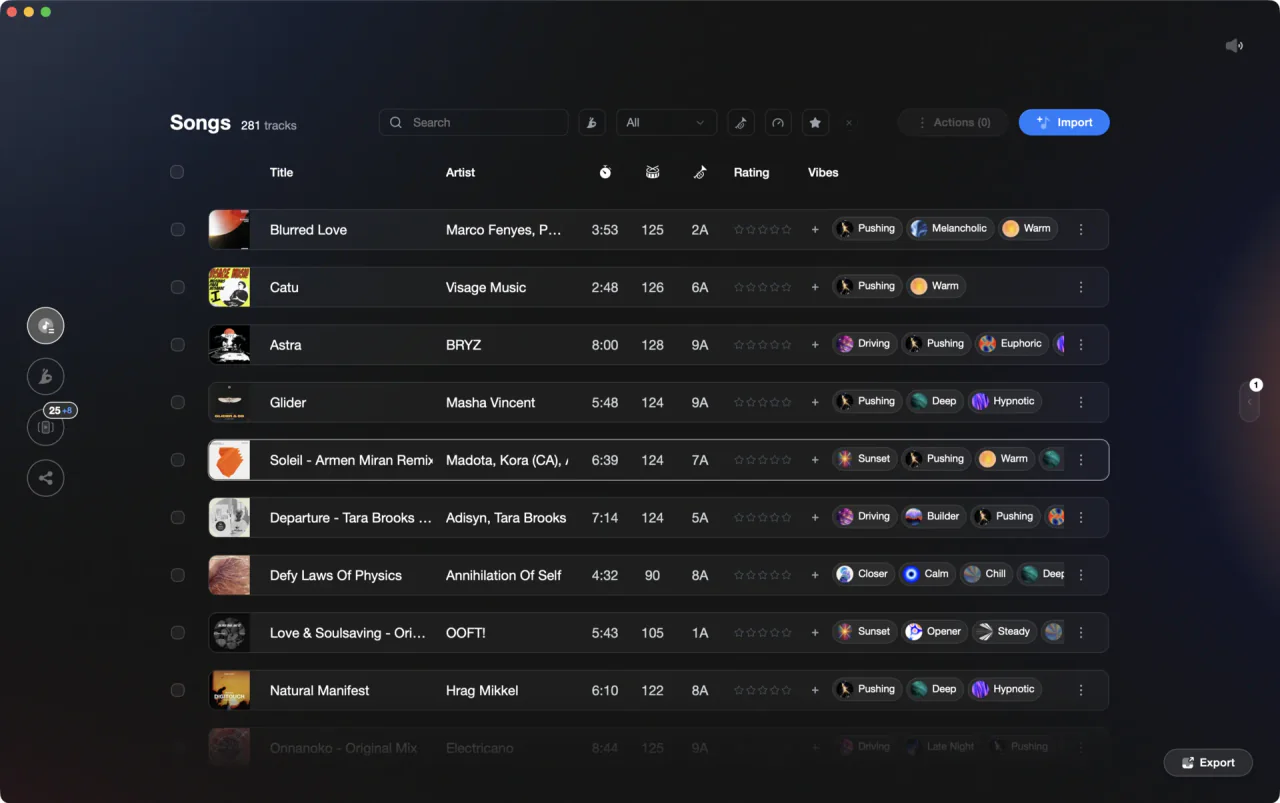
Sort and analyze the library at home, then open Traktor with the browsing already done.
Get started in Traktor, step by step.
New to Traktor, how to use it end to end comes down to six things: install, import, analyze, load, mix, and save what you played. The steps follow the current Traktor Pro 4 manual and use the software controls, so they work with or without a controller.
Install Traktor through Native Access
Traktor is installed and activated through Native Access, Native Instruments' download and license manager, so set up an NI account first. Pick the version before you install: Traktor Play runs two decks and a short feature list, and Traktor Pro 4 runs four decks, four Effect Units, Remix Decks, mix recording, and CDJ HID support.
Set the audio device and the headphone pair
Click the Preferences button in the Header, open Audio Setup, and choose your interface from the Audio Device drop-down menu. Then open Output Routing, set Mixing Mode to Internal, and assign Output Master and Output Monitor. Output Monitor is the headphone pair: you cannot use headphones with Traktor for cueing until it is assigned, and the manual notes that the Cue function needs a multi-channel audio device.
Import your music into the Track Collection
Drag your music files onto the Track Collection folder in the Browser Tree, or right-click the Track Collection root folder and choose Import Music Folders. Traktor reads the metadata and lists the tracks. Tracks in your iTunes Library load straight from the iTunes node in the Browser Tree, without importing them first.
Analyze every track before you play it
Select the tracks in the Track List, right-click, and choose Analyze (Async). In the Analyze dialog choose All to use the defaults from the Analyze Options page in Preferences, or Special to set BPM, Beatgrid, Key, and Gain yourself, then click OK. Analysis runs in the background. Stem files always need analyzing before they load into a Deck.
Load Deck A and pre-listen in headphones
Drag a track from the Track List onto Deck A, or right-click it and load it from the context menu, then click the Play button. Press the CUE channel button on that Mixer channel to send it to the Headphone Cue channel, and balance what you hear with the Headphone Cue Mix and Headphone Cue Vol controls beside the crossfader.
Mix your first two tracks
Set the crossfader fully left, both Channel faders up, and the MAIN knob at 0.0 dB. With Deck A playing, load a track of similar tempo into Deck B, click SYNC on Deck B, start it on a phrase, then drag the crossfader to the middle and across. Auto Gain levels the incoming signals, so one track does not jump out.
Use the EQ, Mixer FX, and the FX Units
The EQ knobs and EQ Kill buttons shape the blend; the standard move is pulling the bass out of the incoming track before the transition. Each Mixer channel also has a Mixer FX On button and a Mixer FX Amount knob. Above the decks sit the four FX Units. In Traktor Pro, how to use the FX Units well takes practice, so start with one unit in Single FX Mode.
Save a playlist and set up the next one
Right-click the Playlists folder in the Browser Tree and choose Create Playlist, or drag a selection of tracks onto the Playlists folder and name it. Right-click a playlist and choose Select as Preparation List to mark what you are building next; those tracks show a diamond icon in the Track List. Export Playlist copies the playlist and its tracks to a folder you choose.
The catch
Traktor sorts on what the files already contain, plus the BPM and key its own analysis writes. Nothing in the browser knows how a track feels, so the warm-up and peak-time split lives in your head, in star ratings, or in comment text you type in track by track.


Where Vibes fits
The mixing is yours to learn. The library work does not have to be.
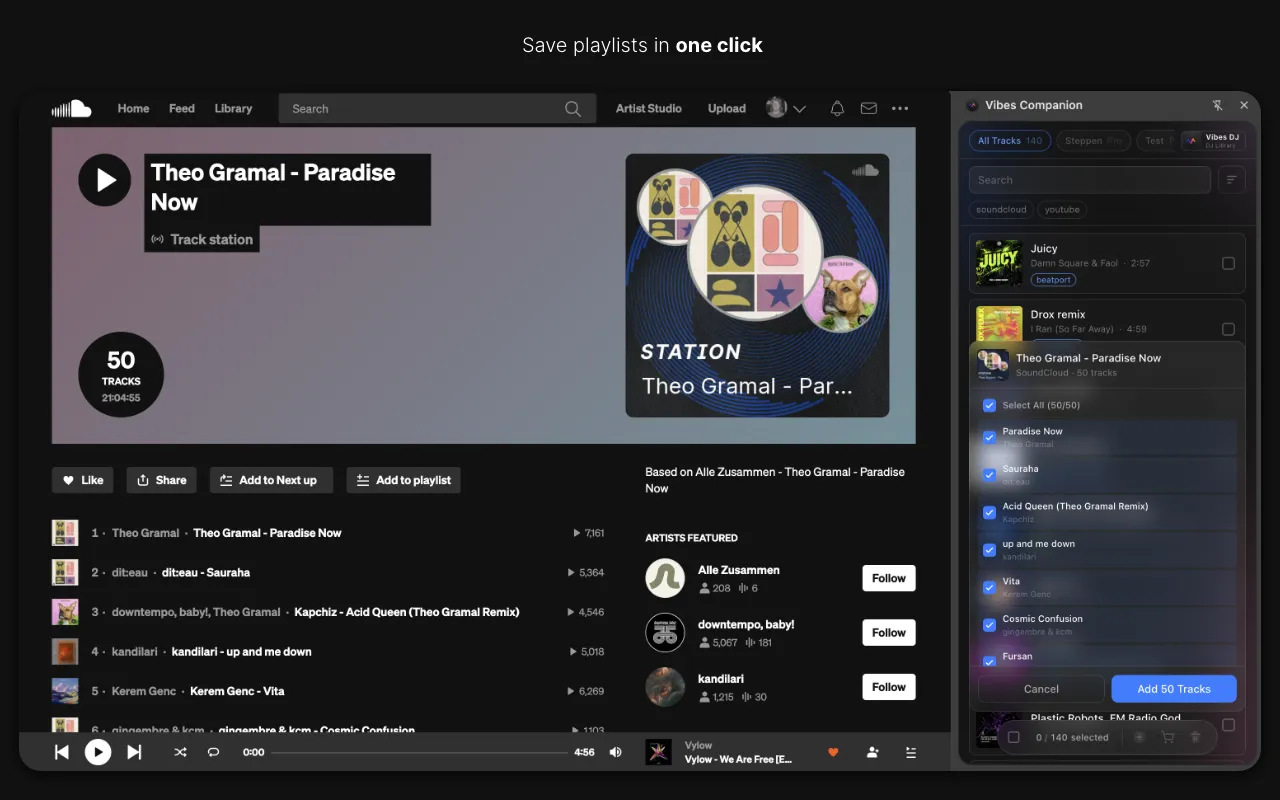
Vibes has no decks, no mixer, and no recorder, so it does not mix, play out, or replace anything in this guide. It reads your existing Traktor collection or a plain folder, analyzes BPM, key, energy, and track sections, and tags tracks into vibes you name yourself. Playlists and vibes export back to Traktor as a folder tree, so the first thing you meet in the Browser Tree is a library that is already sorted.
See how it worksOrganize in Vibes, export to Traktor.
Your playlists, tags, ratings, and cue points travel back to the gear you play on, so nothing you do in Vibes is locked away.

Track 001
Artist A
Afterhours Mysterious
 Introspective
Track 002
Artist B
 Cozy FloorPeaceful
 Home
Home
Track 003
Artist C
Rave Aggressive
 Festival
 Build & Release
Frequently asked questions
The honest answers, including the trade-offs.
From a Vibes customer
The import worked perfectly. Have created several sets now and my life is so much easier
One-time purchase
Get Vibes with a single payment. No subscription.
Vibes is the step before you open your DJ software, not a replacement for it.
First 250 licenses at this price, then $79.
14 days • Full access
No strings attached
Secure checkout with Stripe
Already have Companion Pro? Upgrade instead

Methodology
How we keep this honest.

Verified against the app
Every step is checked against the current version of Traktor.
We own our bias
We make Vibes. We show the native way first and honestly, then where Vibes genuinely helps, and we say when it does not.
Live pricing
The Vibes price shown comes straight from our checkout, never a hardcoded marketing number.
Kept current
Last reviewed September 2026.
Keep exploring
DJ apps head to head
Works with your software
Vibes for DJs
How-to guides
Best DJ software
Move between apps
Learn to DJ