

Learn to use Serato DJ.
To use Serato DJ, install the software, plug in a supported controller to unlock it, drag your music folders onto the All icon in the crate panel, run Analyze Files, then load a track to each deck and mix. Serato DJ Lite is free and Serato DJ Pro is the paid tier, but both read the same library and the same files, so nothing you organize on day one is wasted later.
$49$79USD one-time purchase. First 250 licenses at this price. 14-day free trial.
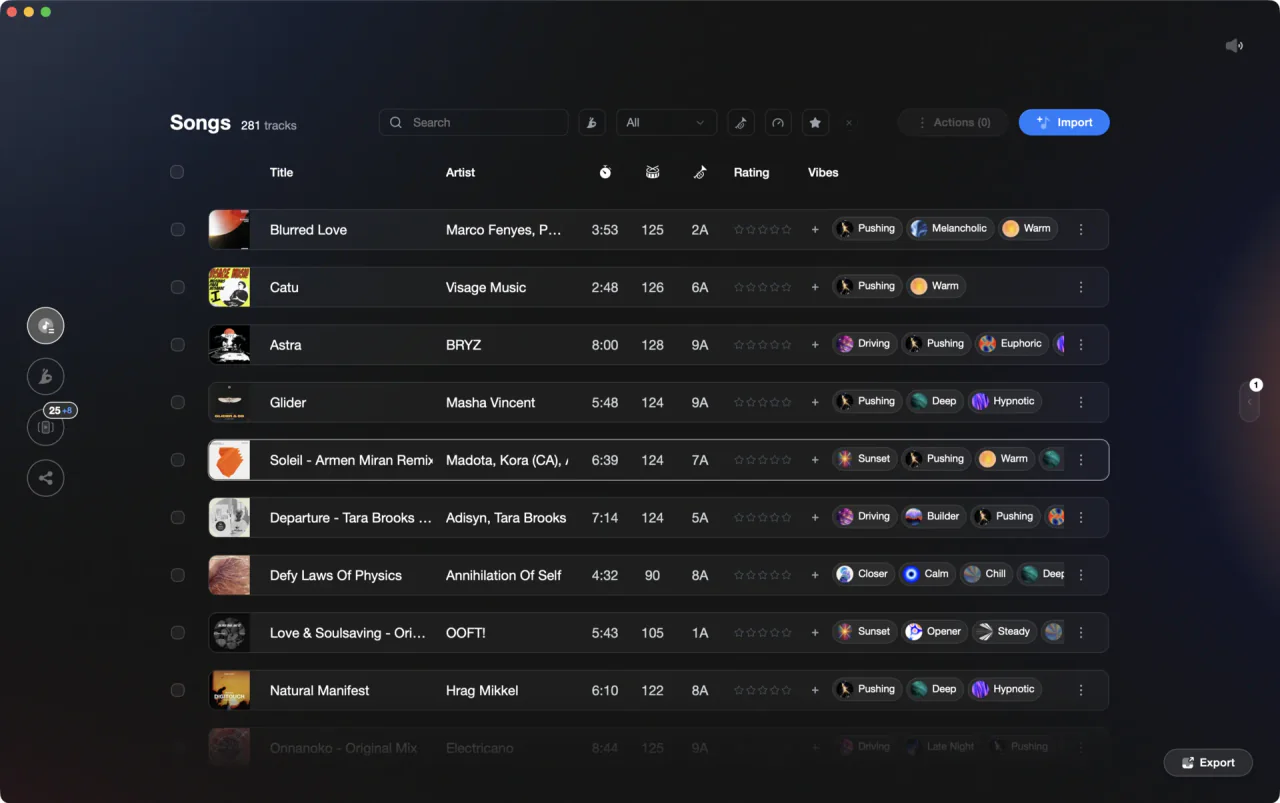
Prep the library first, then spend your Serato time mixing.
Get started in Serato DJ, step by step.
This is the first session in order, and most of it is identical in both editions. The app name gets written the other way round a lot, so if you searched for how to use DJ Serato, these are still the steps you want.
Download and install the software
Get the current installer from serato.com. On macOS, open the .pkg, accept the license agreement, and click Install. On Windows, extract the .zip and run the installer inside it. You do not need to buy anything to use Serato DJ software on day one, and you can use Serato DJ Lite for as long as you like without paying.
Connect a controller, or open Practice mode
Plug your controller into a USB port before you launch the app, so Serato detects it on start. With nothing connected you can still use Serato DJ Pro without controller hardware: the Offline player and Practice mode give you two decks driven by mouse and keyboard. Serato Play, a paid expansion pack, adds a full mixer panel so you can use Serato DJ Pro on laptop audio alone.
Import your music
Click the Files button to open the browser panel, find your music folder, and drag it onto the All icon at the top of the crates panel, the purple one in Serato DJ Lite. Serato references files where they already sit, it does not copy them. Record pool downloads are no different: to use BPM Supreme with Serato DJ, download the tracks to a folder first, then import that folder.
Analyze your files
Disconnect your hardware so the Analyze Files button appears above the library, then click it. Serato builds the waveform overviews, flags problem files, and writes BPM, beatgrid, and key when those boxes are ticked in Analysis Settings. Set the BPM Range to match your music so tracks do not land at half or double tempo.
Load a track and learn the deck
Drag a track onto a virtual deck, or press shift and the left arrow to load deck one. Play it, watch the waveform, and set a cue point on the first beat you would actually drop. Track gain, the pitch slider, and the deck info area all sit around the waveform, and what you set is stored with the track.
Beatmatch first, then reach for Sync
Match tempo by hand with the pitch slider and the jog wheel before you automate it. When you want the shortcut, open Setup, then Sync Preferences, and pick Simple Sync or Smart Sync. To use Sync in Serato DJ Pro, press SYNC on the deck you want to follow: it matches the BPM and snaps the transients to the other deck.
Link a streaming service, or skip it
Streaming lives under Setup, Library + Display, Music Streaming. Turn on Show Streaming Services and each service needs its own paid account: to use Tidal on Serato DJ Lite you need a Tidal DJ subscription, and to use SoundCloud on Serato DJ Lite you need SoundCloud Go+. Streamed tracks need a live connection, so local files stay the safer bet for a paid gig.
Build crates and back up before the gig
Click Add Crate and drag tracks in. A track can sit in as many crates as you want, and dropping one crate onto another makes a subcrate. Before a gig, copy the music drive together with the _Serato_ folder that lives on it. Serato reads the library from the drive the music is on, so the two travel together.
The catch
Serato has no export-to-USB step like rekordbox. The library lives on the drive with your files, so playing off someone else's laptop means bringing that drive and finding Serato installed on the machine you plug into.


Where Vibes fits
A clean library makes the first hour easier.
Vibes does not mix, record, or talk to your controller. Everything in this guide happens inside Serato DJ, and it stays that way. What Vibes handles is the part before you open it: importing what you already have, analyzing it properly, and tagging it by feel. The result goes back to Serato as a folder tree, with Camelot key or BPM sub-folders if you want them.
See how it worksOrganize in Vibes, export to Serato DJ.
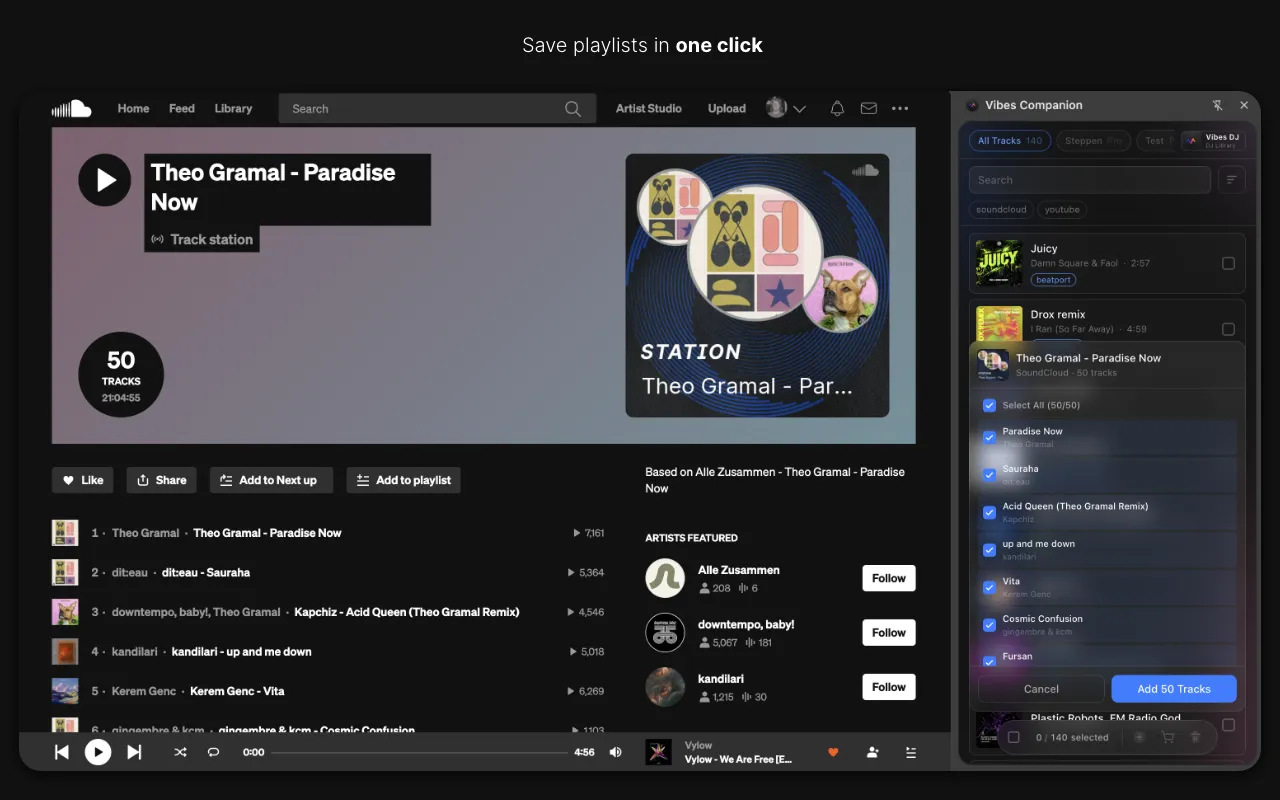
Your playlists, tags, ratings, and cue points travel back to the gear you play on, so nothing you do in Vibes is locked away.

Track 001
Artist A
Afterhours Mysterious
 Introspective
Track 002
Artist B
 Cozy FloorPeaceful
 Home
Home
Track 003
Artist C
Rave Aggressive
 Festival
 Build & Release
Frequently asked questions
The honest answers, including the trade-offs.
From a Vibes customer
The import worked perfectly. Have created several sets now and my life is so much easier
One-time purchase
Get Vibes with a single payment. No subscription.
Vibes is the step before you open your DJ software, not a replacement for it.
First 250 licenses at this price, then $79.
14 days • Full access
No strings attached
Secure checkout with Stripe
Already have Companion Pro? Upgrade instead

Methodology
How we keep this honest.

Verified against the app
Every step is checked against the current version of Serato DJ.
We own our bias
We make Vibes. We show the native way first and honestly, then where Vibes genuinely helps, and we say when it does not.
Live pricing
The Vibes price shown comes straight from our checkout, never a hardcoded marketing number.
Kept current
Last reviewed September 2026.
Keep exploring
Compare Vibes
DJ apps head to head
Works with your software
Vibes for DJs
Vibes features
How-to guides
Best DJ software
Move between apps
Learn to DJ