
Organize your Apple Music library for DJing.
Organizing an Apple Music or iTunes library for DJing means moving it into your DJ app first, then building the structure there: playlists or crates, colors, ratings, and searchable labels for feel. Every DJ app reads the same local library, either from the XML that Music writes under File > Library > Export Library or through its own iTunes setting, and none of them can play a protected or cloud-only file, so only music you actually own makes the trip.
$49$79USD one-time purchase. First 250 licenses at this price. 14-day free trial.
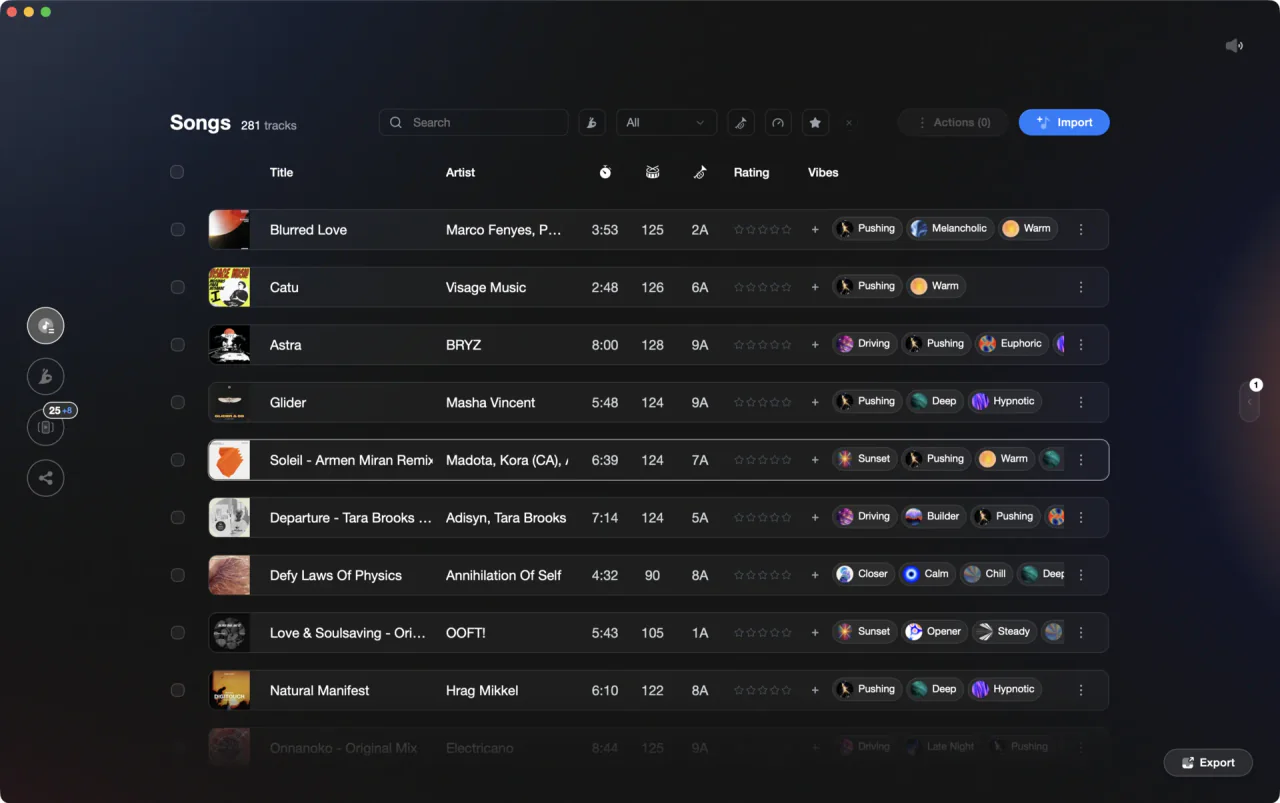
One place to organize iTunes library for DJ sets: BPM, key, rating, and vibe tags on every track.
Organize your Apple Music library for DJing, step by step.
The job splits in two: get the library out of Music cleanly, then rebuild the structure inside the DJ app you play on. These steps cover Rekordbox, Serato DJ, Traktor, and Engine DJ, because each one connects to the same library in its own way.
Separate the files from the streams
DJ apps organize files that sit on your drive. Serato's documentation treats the local iTunes library and Apple Music streaming as two separate things, and Native Instruments states that DRM-protected music files cannot be played back in Traktor. Sort the Music window by Kind and set aside anything that is not a plain file you own.
Turn off iCloud Music Library first
Serato advises against using iCloud Music Library or iTunes Match for a DJ library. When Apple swaps your local file for its own copy, the cue points, beat grids, saved loops and tags stored on that file are gone, and there is no way to recover them. Switch it off, then back up the folder before you touch anything.
Export the library XML from Music
On a Mac, choose File > Library > Export Library in the Music app. Apple saves the exported information in XML format. On Windows, open iTunes and tick Share iTunes Library XML with other applications under Edit > Preferences > Advanced. Serato also suggests disabling Keep Music Media folder organized so Music stops moving and renaming your files.
Point Rekordbox or Engine DJ at that XML
In Rekordbox, open Preferences > View > Layout and check [iTunes] under [Media Browser], then open Preferences > Advanced > Database > [iTunes] and click Browse next to [iTunes Library File]. In Engine DJ, set iTunes Library to On in Library preferences, choose the file with the Location button, click the iTunes/Apple Music icon in the Collection pane, then click Update Library.
Switch the integration on in Serato DJ or Traktor
In Serato DJ Pro, open the SETUP screen, go to the Library + Display tab and check Show iTunes library. Your Music playlists appear beside your crates. In Traktor, the iTunes folder already sits in the Browser Tree and gives direct access to your library and its playlists, but editing functions are not available there.
Copy the playlists into the DJ app's own library
This is the step most people skip. In Rekordbox, double-click [iTunes] in the tree view, double-click [Playlists], and drag a playlist under [Playlists]. In Serato, drag the tracks onto All or into a crate. In Traktor, right-click a playlist and choose Import to Playlists. In Engine DJ, right-click it and choose Import as Playlist.
Carry the ratings and Grouping across
Ratings are the one piece of Music metadata worth keeping. Serato DJ 4.0 added an Import Rating from iTunes button, which overwrites the current ratings on all iTunes files. Engine DJ imports ratings along with the library. Rekordbox has a Preferences > Advanced > Database option that converts the iTunes Grouping field into its own Label field.
Build the real structure, then cut the link
Organize where you will actually search: crates in Serato, playlists and My Tag in Rekordbox, Playlists in Traktor, Playlists and Smartlists in Engine DJ. Serato recommends unchecking Show iTunes library once your music is in crates, since those files then stay in Serato from their original location and stop depending on Music.
The catch
The XML is a snapshot, not a live link. Engine DJ shows the iTunes library read-only, Rekordbox reads whichever file you pointed it at, and anything you add in Music afterwards stays invisible until you export again and refresh. That is why copying tracks into the DJ app's own collection matters more than the connection itself.
 Euphoric
 Melancholic
 Mysterious
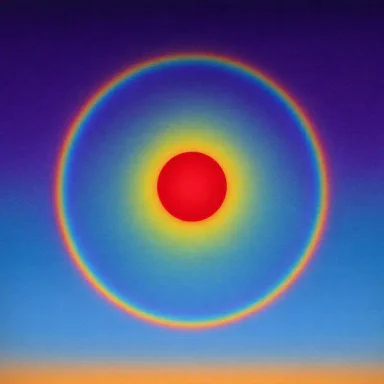 Aggressive
 Peaceful
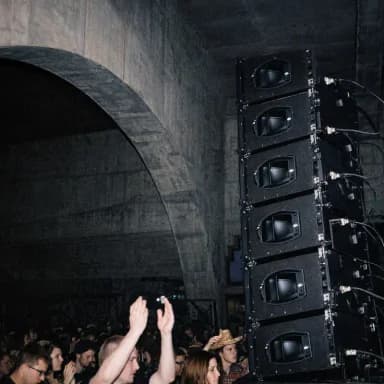 Rave
Rave Afterhours
 Club
Club Home
HomeThe faster way
One import, then tag the whole backlog by feel.
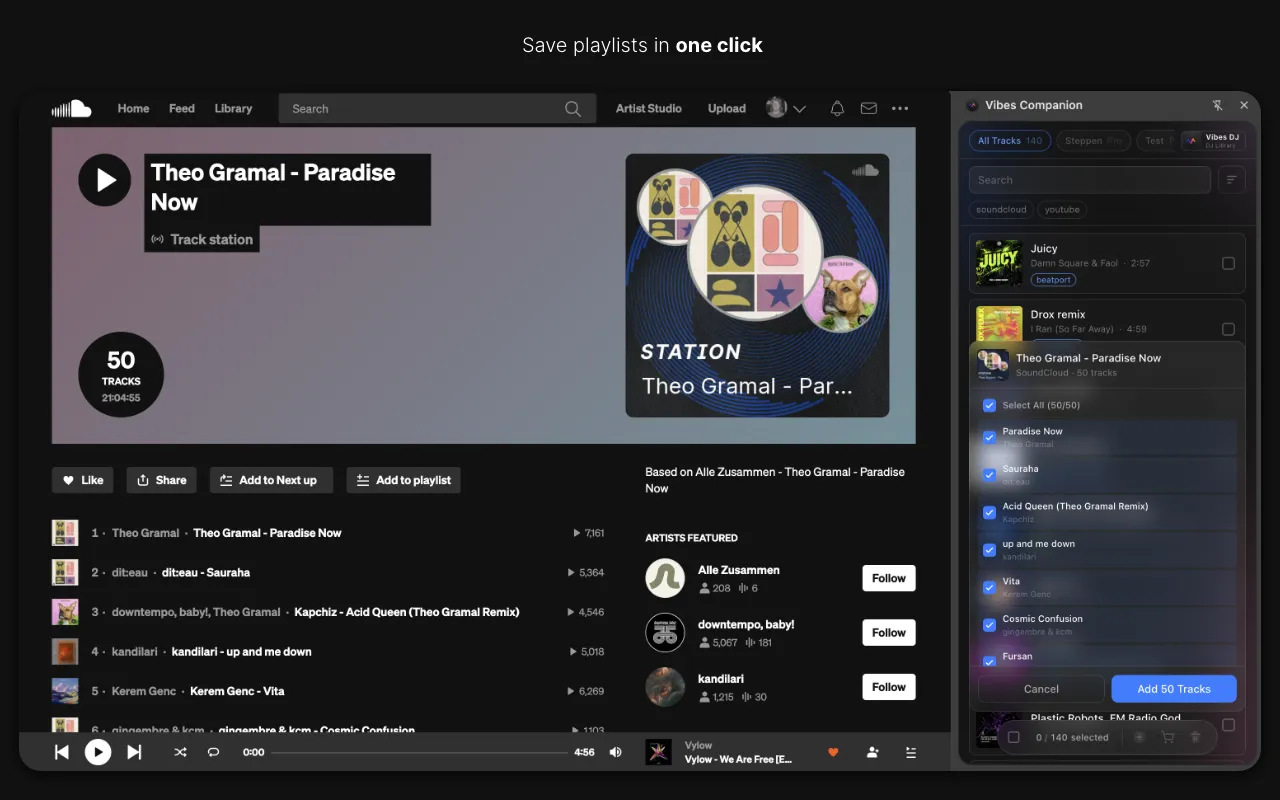
Vibes reads the same Apple Music and iTunes Library.xml export, and Smart Import detects the source for you, so you are not rebuilding the collection by hand. Every track is then analyzed for BPM, key, energy and section markers, and you label it by feel with Vibe Sort hotkeys or Auto-Tagging instead of dragging files between crates. When the structure is right, export it back to Rekordbox, Serato, Traktor, or Engine DJ as a folder tree.
See how it worksOrganize in Vibes, export to any DJ app.
Your playlists, tags, ratings, and cue points travel back to the gear you play on, so nothing you do in Vibes is locked away.
Track 001
Artist A
AfterhoursMysterious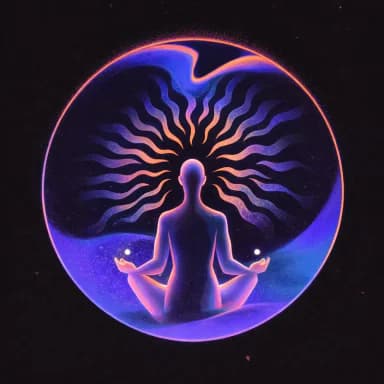 Introspective
Track 002
Artist B
 Cozy FloorPeacefulHome
Track 003
Artist C
RaveAggressive Festival
 Build & Release
Frequently asked questions
The honest answers, including the trade-offs.
From a Vibes customer
The import worked perfectly. Have created several sets now and my life is so much easier
One-time purchase
Get Vibes with a single payment. No subscription.
Vibes is the step before you open your DJ software, not a replacement for it.
First 250 licenses at this price, then $79.
14 days • Full access
No strings attached
Secure checkout with Stripe
Already have Companion Pro? Upgrade instead

Methodology
How we keep this honest.

Verified against the app
Every step is checked against the current version of any DJ app.
We own our bias
We make Vibes. We show the native way first and honestly, then where Vibes genuinely helps, and we say when it does not.
Live pricing
The Vibes price shown comes straight from our checkout, never a hardcoded marketing number.
Kept current
Last reviewed September 2026.
Keep exploring
DJ apps head to head
Works with your software
Vibes for DJs
Vibes features
How-to guides
Best DJ software
Move between apps
DJ tools
Learn to DJ