

Rebuild a DJ library after a crash.
A crash almost never destroys your audio files. What it destroys is the database that holds your playlists, cues, and ratings, and every major DJ app keeps a copy of that database you can restore: rekordbox from File > Library > Restore Library, Serato from its Backups folder, Traktor from Backup > Collection, Engine DJ from the Restore button in its Library settings. Start with the newest backup, then relocate whatever still reads as missing.
$49$79USD one-time purchase. First 250 licenses at this price. 14-day free trial.
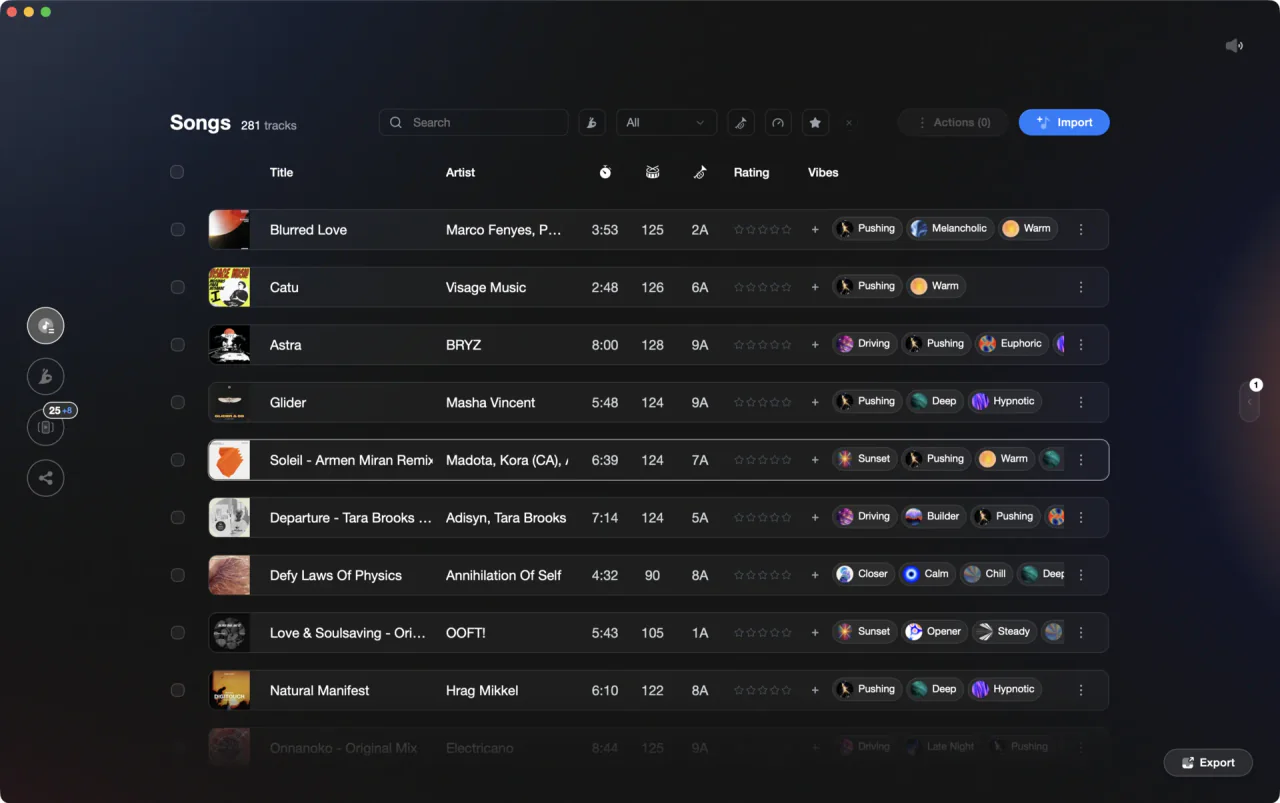
Import what survived, re-analyze the gaps, export back to your DJ app.
Rebuild a crashed library in any DJ app, step by step.
To recover DJ library data after a crash, work from the newest database backup your app already wrote, then fix the file paths it points at. The steps below cover rekordbox 7, Serato DJ Pro, Traktor Pro and Engine DJ.
Copy what survived before you change anything
Close the app first, then copy its data folder to a second drive so a failed repair costs you nothing. Serato keeps _Serato_ in your Music folder plus a Library folder in Application Support > Serato on macOS or AppData > Local > Serato on Windows. Traktor keeps its Root Directory in Documents > Native Instruments. Engine DJ uses Music > Engine Library.
Restore the rekordbox library from its backup
In rekordbox, click [Library] in the [File] menu, then [Restore Library], then [OK]. Select the backup data, a .zip or .edb file, and click [Open]. rekordbox replaces the current [Collection], playlists and analysis data with the backup and shows [Collection was restored.] when it finishes. If music files were backed up too, the rekordbox_bak folder has to sit at the same path as the backup data.
Put a Serato backup back by hand
Serato has no restore button. It backs the library databases up to the Serato/Library/Backups folder 15 minutes after you open the library, then every 24 hours and whenever the database structure changes, plus on exit if you confirm the prompt. Close Serato, copy the backup file to the original location, delete the old database and its related files, then rename the backup.
Import a backup collection into Traktor
Traktor writes a backup of the Track Collection every time you close the program, into Backup > Collection inside the Traktor Root Directory, named like Collection2009y12m31d_22h31m_32s.nml. Right-click Track Collection in the Browser tree, choose Import another Collection, and pick the newest file. Every Traktor update creates a new Root Directory, so check the previous version's folder too.
Restore the Engine Library
Open the Engine DJ preferences, go to the Library tab and find Library Backup in the System section. Click Restore to overwrite the current library with the latest backup, then click Yes to confirm. Engine DJ prompts a backup every seven days on exit. Only the database on your computer is covered, so a database on an external drive has to be copied across by hand.
Relocate the tracks that still show as missing
A restored database points at file paths that may have moved. In rekordbox, select [Display All Missing Files] from the [File] menu and click [Auto Relocate]. In Serato, use Relocate Lost Files in the Files panel. In Traktor, right-click Track Collection and run Check Consistency, then relocate from the report. In Engine DJ, right-click a red track and choose Auto Relocate All.
Pull back what the backup did not cover
Your gig USB is a second copy of part of the library. Connect it, right-click the playlist or folder under [Devices] in rekordbox and select [Import Playlist] or [Import Folder]. For files that are gone from the drive entirely, work through the purchase history in your store accounts and download them again before you rebuild anything on top.
Make a clean backup before you add anything
Once the library opens without errors, back it up while it is still small and correct. rekordbox: [File] > [Library] > [Backup Library], and answer yes to music files if you want the audio in there too. Engine DJ: Library Backup, then Backup. Traktor and Serato write theirs on their own, so copy those backup folders to a second drive as well.
The catch
Each of these restores overwrites the current library with the state of the backup, so tags, cues and ratings added since then are gone. Serato keeps only the most recent backups and has no in-app restore, Engine DJ leaves external drive databases out of its backup, and a Traktor backup sits in the Root Directory of the version that wrote it.


The faster way
Rebuild the library once, then push it back into your DJ app.
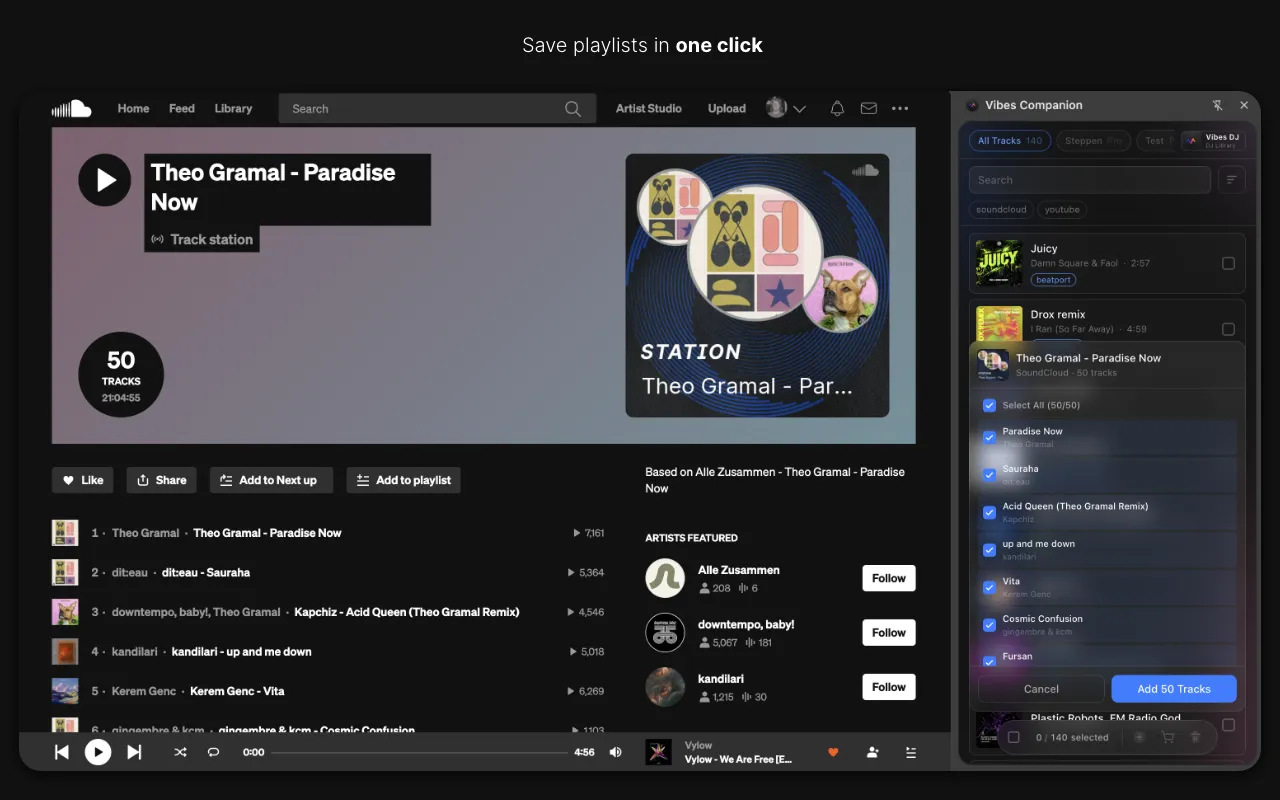
Vibes reads whatever survived. Point the Import Wizard at your rekordbox, Serato, Traktor, Engine DJ or Apple Music/iTunes Library.xml data, or at a plain folder of files, and Smart Import detects which app it came from. Bulk re-analyze fills in BPM, key, energy curve and section markers for tracks that lost theirs with the database, and the duplicate finder clears the copies a rushed recovery leaves behind. When the library is whole again, export playlists and vibes back to rekordbox, Serato, Traktor or Engine DJ.
See how it worksOrganize in Vibes, export to any DJ app.
Your playlists, tags, ratings, and cue points travel back to the gear you play on, so nothing you do in Vibes is locked away.

Track 001
Artist A
Afterhours Mysterious
 Introspective
Track 002
Artist B
 Cozy FloorPeaceful
 Home
Home
Track 003
Artist C
Rave Aggressive
 Festival
 Build & Release
Frequently asked questions
The honest answers, including the trade-offs.
From a Vibes customer
The import worked perfectly. Have created several sets now and my life is so much easier
One-time purchase
Get Vibes with a single payment. No subscription.
Vibes is the step before you open your DJ software, not a replacement for it.
First 250 licenses at this price, then $79.
14 days • Full access
No strings attached
Secure checkout with Stripe
Already have Companion Pro? Upgrade instead

Methodology
How we keep this honest.

Verified against the app
Every step is checked against the current version of any DJ app.
We own our bias
We make Vibes. We show the native way first and honestly, then where Vibes genuinely helps, and we say when it does not.
Live pricing
The Vibes price shown comes straight from our checkout, never a hardcoded marketing number.
Kept current
Last reviewed September 2026.
Keep exploring
Compare Vibes
DJ apps head to head
Works with your software
Vibes for DJs
Vibes features
How-to guides
Best DJ software
Move between apps
Learn to DJ