

Import an iTunes playlist into your DJ library.
In iTunes on Windows, choose File > Library > Import Playlist and pick the exported XML file; the Music app on Mac has the same command. That file carries track information only, never the audio, so it fills in nothing that is missing from the library it lands in, which is why DJ software reads the whole iTunes library XML instead of a single playlist file. This guide covers the export, the import, and how the same playlist reaches Rekordbox, Serato DJ, Traktor, and Engine DJ.
$49$79USD one-time purchase. First 250 licenses at this price. 14-day free trial.
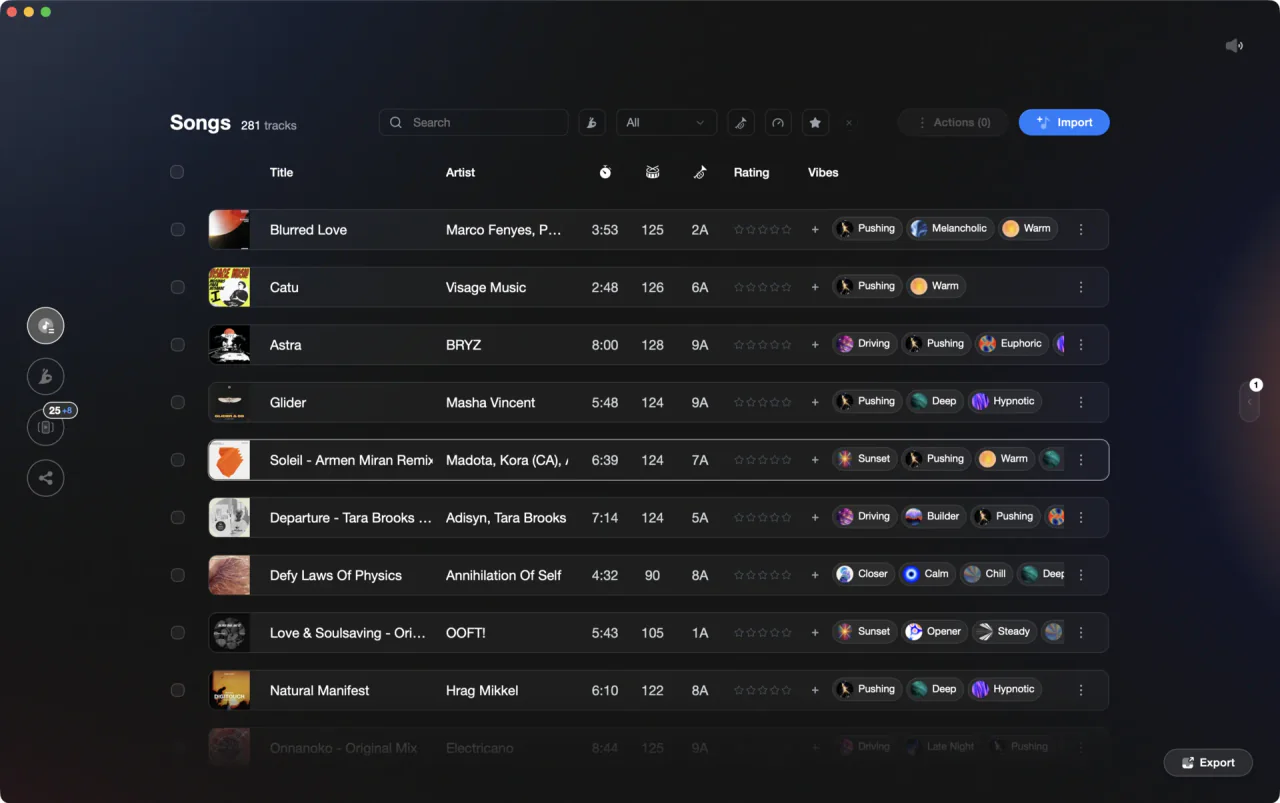
One imported playlist, every track matched to the file on your drive.
Import an iTunes playlist in any DJ app, step by step.
Apple exports a list, never the audio. Every DJ app reads that list from the same iTunes Library XML file, so the reliable way to import iTunes playlist data anywhere is to keep that file current, then point each app at it.
Export the playlist from iTunes or Music
Select the playlist in the sidebar, then choose File > Library > Export Playlist and pick XML from the Format pop-up menu. Choose Text files instead when you only want a readable track list. To save every playlist in one go, choose File > Library > Export Library, which writes the whole set as a single XML file.
Import the XML back into the library
On the receiving computer, choose File > Library > Import Playlist and select the XML file. Apple is blunt about the limit: the imported playlist includes only songs and videos already in your library, and unavailable items are removed from the list. So copy the audio across and add it to the library first, then import the list.
Turn on the library XML for other apps
DJ software does not read your exported file. It reads the library XML that iTunes maintains for other applications, and on Windows that file is not always written. Open iTunes, go to Preferences > Advanced, tick Share iTunes Library XML with other applications, then quit and reopen iTunes. Pioneer DJ notes that recent rekordbox versions need no such setting on Mac.
Open the playlist in Rekordbox or Traktor
In rekordbox, double-click [iTunes] in the Tree view, open [Playlists], and select your playlist; tracks stay hidden while only [iTunes] is selected. If the tree stays empty, point Preferences > Advanced > Database at the right xml file. In Traktor, select the iTunes node in the Browser Tree, then right-click the playlist and choose Import to Collection > as Tracks.
Open it in Engine DJ or Serato DJ
In Engine DJ, open Settings > Library and switch Apple Music Library on under Integration, then click the Apple Music icon on the left and click Update. In Serato DJ Pro, go to Setup > Library + Display and tick Show iTunes library. On Windows, Serato needs iTunes itself: it cannot import a library from the Apple Music app there.
Bring the same playlist into Vibes
Open the Import Wizard and choose your iTunes or Apple Music Library.xml. Smart Import detects the source, reads the playlists, and matches each entry to the file on your drive. Tag import can pull the Genre, Mood, and Grouping fields in at the same time, so the playlist arrives as a set of vibes rather than a flat list.
The catch
An exported playlist is a list of pointers. If the audio files are not on the machine you import into, the list arrives empty or half empty and no setting fixes it. Move the files first and keep them in one folder tree, or every import after this one hunts for the same missing tracks.


The faster way
One import, and the playlist is ready for every DJ app you use.
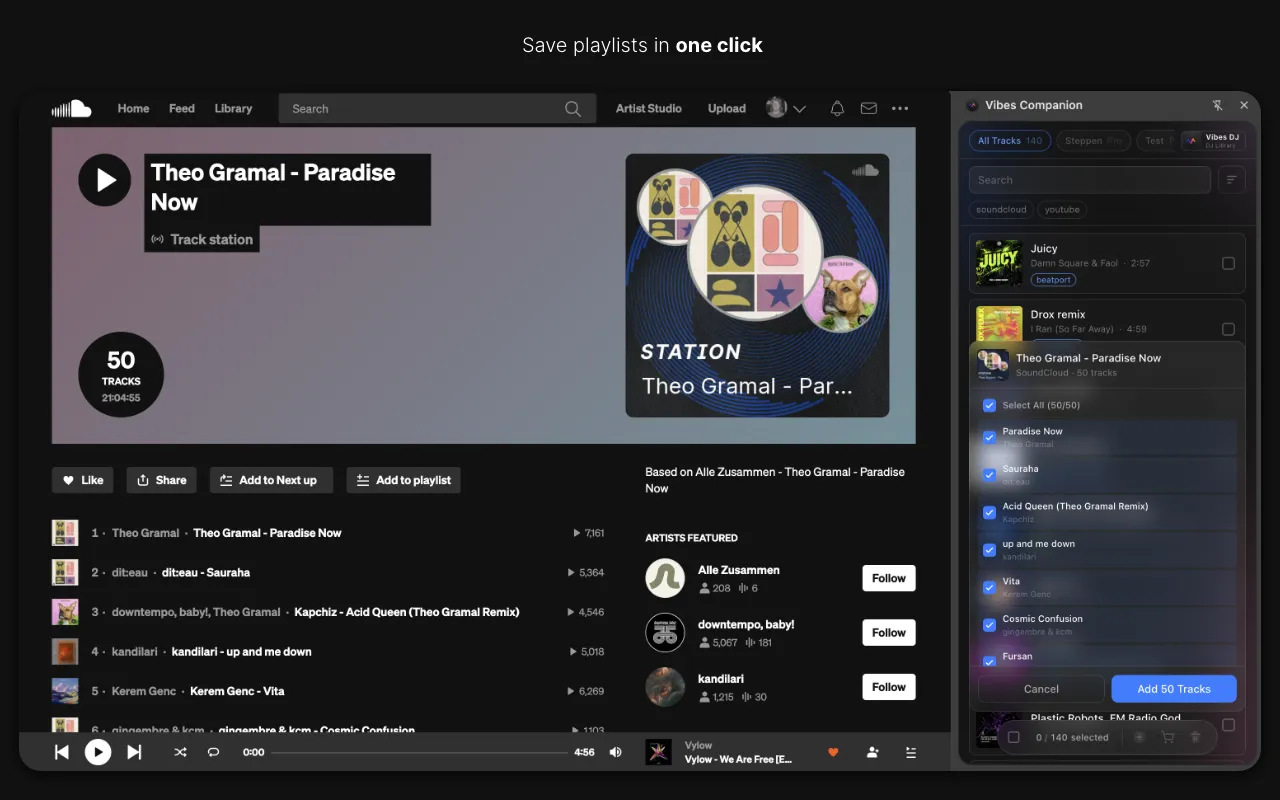
Point the Import Wizard at your iTunes or Apple Music Library.xml and Smart Import reads the playlists in one pass, files and all. Vibes then analyzes BPM, key, and energy for the tracks behind the names, so the list arrives sorted rather than merely copied. From there you export it back to Rekordbox, Serato, Traktor, or Engine DJ as a folder tree, with Camelot key or BPM sub-folders if you want them. It works on files you own, so nothing that depends on a subscription travels with it.
See how it worksOrganize in Vibes, export to any DJ app.
Your playlists, tags, ratings, and cue points travel back to the gear you play on, so nothing you do in Vibes is locked away.

Track 001
Artist A
Afterhours Mysterious
 Introspective
Track 002
Artist B
 Cozy FloorPeaceful
 Home
Home
Track 003
Artist C
Rave Aggressive
 Festival
 Build & Release
Frequently asked questions
The honest answers, including the trade-offs.
From a Vibes customer
The import worked perfectly. Have created several sets now and my life is so much easier
One-time purchase
Get Vibes with a single payment. No subscription.
Vibes is the step before you open your DJ software, not a replacement for it.
First 250 licenses at this price, then $79.
14 days • Full access
No strings attached
Secure checkout with Stripe
Already have Companion Pro? Upgrade instead

Methodology
How we keep this honest.

Verified against the app
Every step is checked against the current version of any DJ app.
We own our bias
We make Vibes. We show the native way first and honestly, then where Vibes genuinely helps, and we say when it does not.
Live pricing
The Vibes price shown comes straight from our checkout, never a hardcoded marketing number.
Kept current
Last reviewed September 2026.
Keep exploring
DJ apps head to head
Works with your software
Vibes for DJs
Vibes features
How-to guides
Best DJ software
Move between apps
Learn to DJ