

Export your played history in Engine DJ.
Engine DJ history is written onto the drive you played from, so connect that drive, open History in the Collection pane, and right-click the dated session to import it as a playlist. Then right-click that playlist and choose Export to save it as a CSV, M3U, or JSON tracklist, with the Start Time column showing when each track was played.
$49$79USD one-time purchase. First 250 licenses at this price. 14-day free trial.
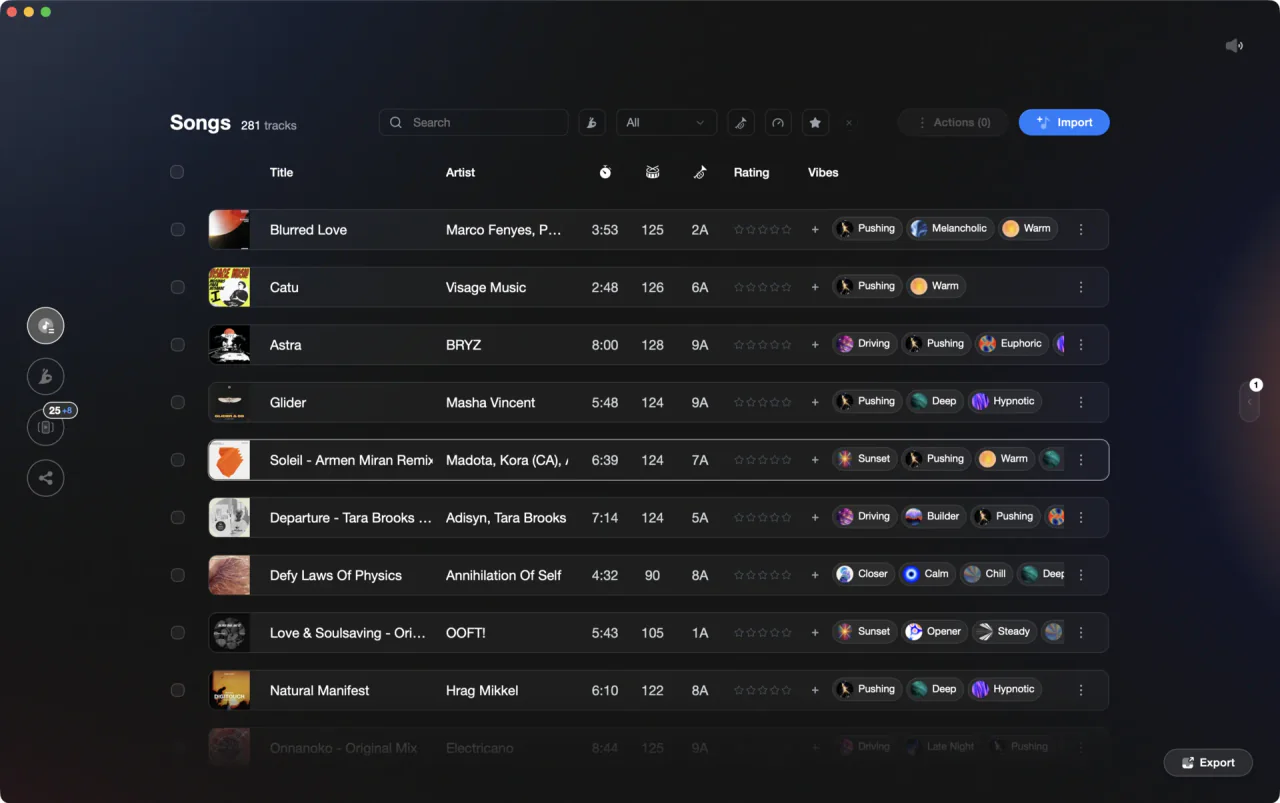
One night's tracklist, kept as something you can reuse instead of a list you lose with the drive.
Export your played history in Engine DJ, step by step.
Engine DJ Desktop keeps a History list of already-played tracks, in the order they were loaded into the player. Turning one night into a file you can keep takes two moves: import the session as a playlist, then export that playlist.
Connect the drive you played from
Engine DJ OS writes the played-track list onto the USB drive or SD card that was in the player, so start by plugging that drive into your computer. In Engine DJ Desktop, click the Drives icon in the Collection pane to open the drives panel, which shows the music libraries and playlists of every connected external storage drive and cloud storage folder.
Open the History list for that night
In the Collection pane, click History. The Engine Library History shows already-played tracks from your local storage and any external storage drive you have connected before, while the History under a drive in the Drives panel is specific to that drive. Sessions are listed by date, and the tracks sit in their playback order.
Turn on the Start Time column
Right-click any column header in the track list and tick Start Time. It records when the track was played on an Engine OS device and is the one column that exists only in History, which makes it the quickest way to check a set order or line the list up against a recording. Play Count, Date Added, and Drive are in the same menu.
Import the session as a playlist
Right-click the dated list and import it as a playlist. Engine DJ has supported that since version 2.0, the release where history lists from connected drives started appearing in the home collection and could be viewed without the drive attached. The new playlist sits in your Collection and survives after you unplug the drive. Each playlist holds up to 1,000 tracks.
Clean up the order and the name
Double-click the playlist to rename it, a venue and a date works well. Sort by the # column and drag tracks if you want to fix the order; if you sorted by another column instead, right-click a track and choose Re-number track order to lock the current order in. Right-click anything you did not really play and choose Remove From Playlist.
Export the tracklist as a file
Right-click the finished playlist and select Export. Engine DJ Desktop writes playlists out as CSV, M3U, or JSON files: CSV for a readable tracklist you can send to a promoter or paste into a reporting form, M3U for a list other players can open, JSON if you want to script something with it. Save it next to your set notes.
The catch
Every drive carries its own list. The History under a drive shows only what was played from that drive, so if you rotate USB sticks between gigs you have to connect the right one, and a night played off someone else's drive never reaches your library at all.


The faster way
Turn last night's tracklist into next week's set.
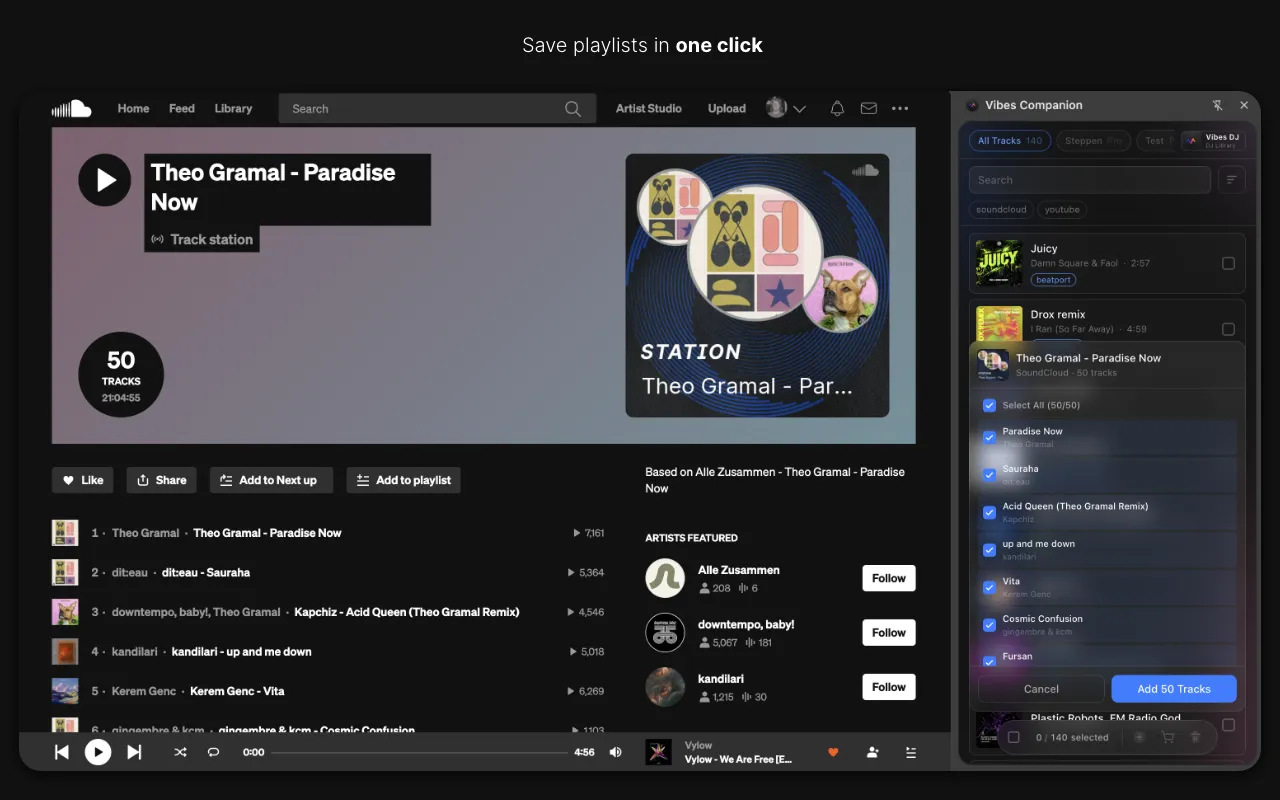
A history list tells you what you played. Vibes turns it into something you can build on: Smart Import reads your Engine DJ collection and playlists, so the session you just saved comes across with its track order intact. Tag the tracks that landed into a vibe with Vibe Sort, and every one of them carries BPM, Camelot key, an energy value, and section markers. When the next set is shaped, export it back as a playlist.
See how it worksOrganize in Vibes, export to Engine DJ.
Your playlists, tags, ratings, and cue points travel back to the gear you play on, so nothing you do in Vibes is locked away.

Track 001
Artist A
Afterhours Mysterious
 Introspective
Track 002
Artist B
 Cozy FloorPeaceful
 Home
Home
Track 003
Artist C
Rave Aggressive
 Festival
 Build & Release
Frequently asked questions
The honest answers, including the trade-offs.
From a Vibes customer
The import worked perfectly. Have created several sets now and my life is so much easier
One-time purchase
Get Vibes with a single payment. No subscription.
Vibes is the step before you open your DJ software, not a replacement for it.
First 250 licenses at this price, then $79.
14 days • Full access
No strings attached
Secure checkout with Stripe
Already have Companion Pro? Upgrade instead

Methodology
How we keep this honest.

Verified against the app
Every step is checked against the current version of Engine DJ.
We own our bias
We make Vibes. We show the native way first and honestly, then where Vibes genuinely helps, and we say when it does not.
Live pricing
The Vibes price shown comes straight from our checkout, never a hardcoded marketing number.
Kept current
Last reviewed September 2026.
Keep exploring
Compare Vibes
DJ apps head to head
Works with your software
Vibes for DJs
Vibes features
How-to guides
Best DJ software
Move between apps
Learn to DJ