Streaming & Digital

Streaming DJing

Reviewed by

The practice of DJing using tracks accessed in real time from a streaming service rather than locally stored files.

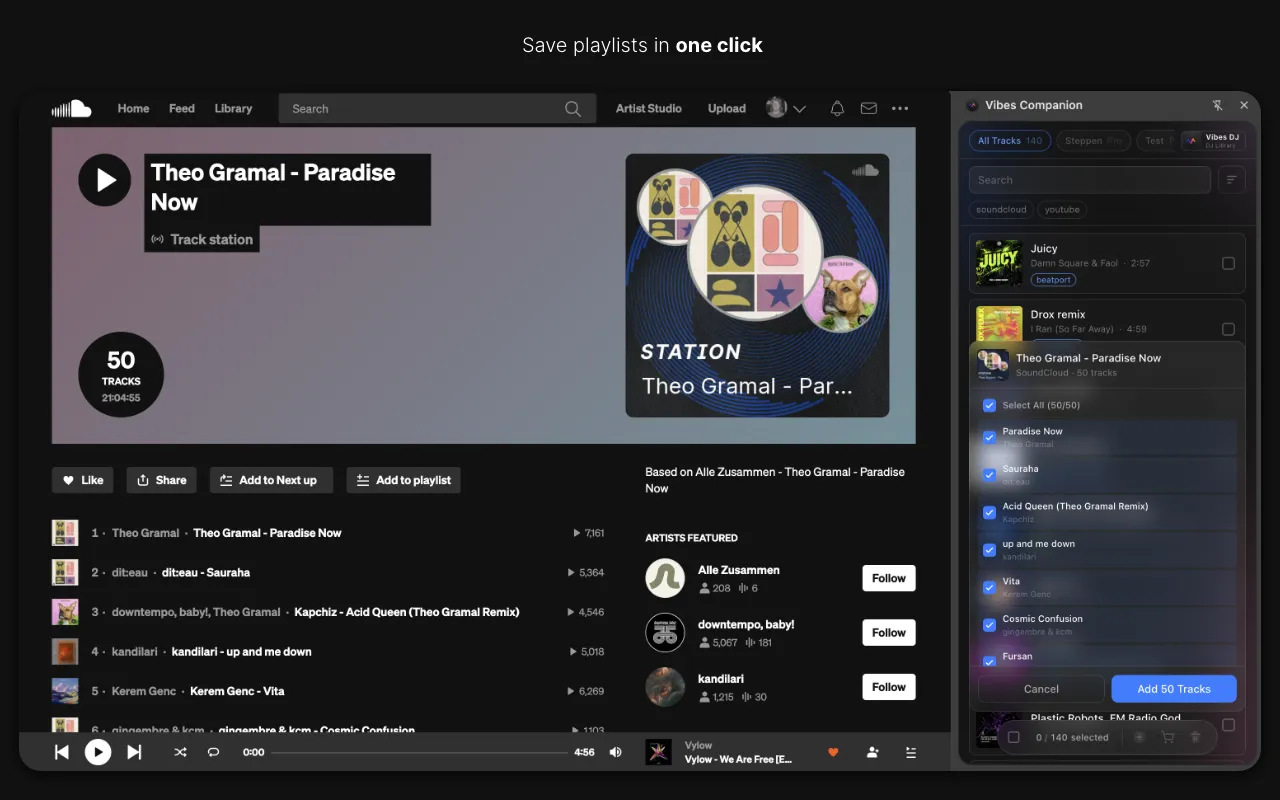
Streaming DJing means pulling tracks live from a service such as TIDAL, Beatport Streaming, or SoundCloud Go+ through software like Rekordbox or Serato, rather than playing files stored on a hard drive or USB. The tracks are buffered locally during playback but are not permanently downloaded.

Why it matters

Streaming gives immediate access to a vast catalog without managing a local library, which is useful for on-demand requests or exploring new music mid-set. The trade-off is that a stable internet connection is required and audio quality is capped at the service's streaming bitrate rather than the source file resolution.

Frequently asked questions

Yes, with caveats. Services like Tidal and Beatsource integrate with Serato, Rekordbox, and Traktor, giving access to large catalogs live. The risks are internet dependency, occasional licensing gaps where tracks disappear, and audio quality limits imposed by the streaming tier. Most touring DJs use streaming as a supplement to a local library, not a full replacement.
It depends on the service and tier. Tidal HiFi streams at lossless CD quality, which is sufficient for club systems. Standard streaming tiers typically top out at 320 kbps MP3, which is audibly inferior at high volumes on large sound systems. Always check which quality tier your streaming integration delivers before playing a paid gig.
For live streaming playback, yes. Some platforms allow offline caching of certain tracks, but licensing restrictions often limit how many tracks you can download and for how long. A dropped connection mid-set without cached tracks will stop playback, so most DJs maintain a local backup library for critical moments.
Ben Modigell

Hey, it's Ben Modigell 👋

I DJ and produce as so I so — downtempo, minimal, dub house, tech house, and techno (releases on Spotify and SoundCloud, links above). Everything I write here comes from my own gigs, studio sessions, and library cleanups: the rules I follow, the failure modes I've actually hit, and the workflow I use when nobody's watching. If a technique didn't earn its place in my own sets, it doesn't make it into a tutorial.

DJingMusic ProductionTech HouseMinimal HouseDub HouseTechnoDowntempoLibrary Organization