

Analyze tracks in VirtualDJ.
VirtualDJ computes BPM, key, and the beatgrid the first time it touches a track, but a big library deserves a deliberate batch pass. Here is how analysis works and how to run it across everything at once.
$49$79USD one-time purchase. First 250 licenses at this price. 14-day free trial.
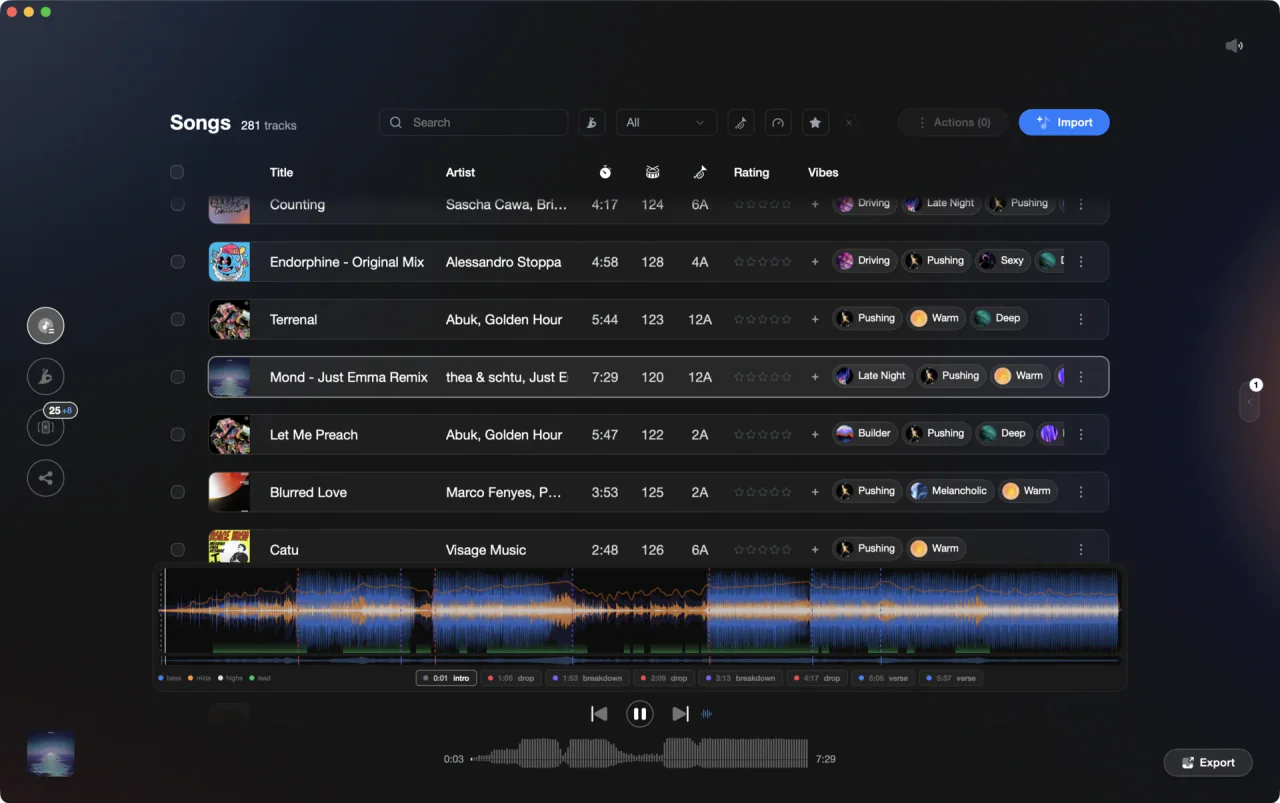
Analysis done ahead of time means no surprises at load.
Analyze tracks in VirtualDJ, step by step.
Analysis is what turns a bare audio file into something mixable: tempo, key, and a beatgrid the sync engine can trust. VirtualDJ analyzes lazily by default, when a track is first loaded, but you can and should force it in batches for library-scale prep.
Understand what happens automatically
When VirtualDJ first loads or scans a track it detects BPM and key and computes the beatgrid, then stores the results in its database so the work is done once. Tracks that have never been analyzed show without BPM and key values in the browser until they are.
Batch analyze a folder
Select the tracks in the browser, or the whole folder, right-click, and choose the analyze option (labeled along the lines of analyze for BPM in recent versions). VirtualDJ queues the files and works through them in the background. On a large library, start it before stepping away; thousands of tracks take a while on any machine.
Spot the stragglers
Sort the browser by the BPM or key column, or build a filter folder matching unanalyzed tracks, so files without values group together. This catches new downloads and imports that slipped past your last pass.
Re-analyze when values look wrong
If a BPM is halved or doubled or a key looks off, right-click the track and re-run analysis. For systematic halving on fast genres, gather the affected tracks in a filter folder such as bpm<90, select them all, open the tag editor, and use the x2 button next to the BPM field to correct the whole batch at once.
The catch
Analysis writes to VirtualDJ's own database, so the results live inside VirtualDJ. Other apps reading the same files run their own analysis and can reach different conclusions, particularly on key.

Track 001
Artist A
Afterhours Mysterious
 Introspective
Track 001
Artist A
AfterhoursMysteriousIntrospective
Track 002
Artist B
 Cozy FloorPeaceful
 Home
HomeTrack 002
Artist B
Cozy FloorPeacefulHome
Track 003
Artist C
Rave Aggressive
 Festival
 Build & Release
Track 003
Artist C
RaveAggressiveFestivalBuild & ReleaseWhere Vibes fits
Deep analysis on the same files
Vibes does not export to VirtualDJ; its analysis results flow into Rekordbox, Serato, Traktor, and Engine DJ only. But Vibes analyzes any folder you point it at, the same files VirtualDJ plays, and goes further than BPM and key: multi-band waveform, energy curve, section detection, and a sound-profile fingerprint per track. For a VirtualDJ user that is a richer prep view of the identical collection, plus a cross-check on every BPM and key value.
See how it worksOrganize in Vibes, export to VirtualDJ.
Your playlists, tags, ratings, and cue points travel back to the gear you play on, so nothing you do in Vibes is locked away.
Track 001
Artist A
AfterhoursMysteriousIntrospectiveTrack 002
Artist B
Cozy FloorPeacefulHomeTrack 003
Artist C
RaveAggressiveFestivalBuild & Release
Frequently asked questions
The honest answers, including the trade-offs.
From a Vibes customer
The import worked perfectly. Have created several sets now and my life is so much easier
One-time purchase
Get Vibes with a single payment. No subscription.
Vibes is the step before you open your DJ software, not a replacement for it.
First 250 licenses at this price, then $79.
14 days • Full access
No strings attached
Secure checkout with Stripe
Already have Companion Pro? Upgrade instead

Methodology
How we keep this honest.

Verified against the app
Every step is checked against the current version of VirtualDJ.
We own our bias
We make Vibes. We show the native way first and honestly, then where Vibes genuinely helps, and we say when it does not.
Live pricing
The Vibes price shown comes straight from our checkout, never a hardcoded marketing number.
Kept current
Last reviewed September 2026.
Keep exploring
DJ apps head to head
Works with your software
Vibes for DJs
Vibes features
How-to guides
Best DJ software
Move between apps
Learn to DJ