

Use one library in Rekordbox and Serato.
Rekordbox and Serato cannot share a database, so the working setup is one music folder both apps read, with your metadata written into the file tags. Serato saves titles, genres, key and its waveform overview into the track itself, while Rekordbox keeps playlists, cues and analysis in its own library, which is why tags travel between the two apps and cue points do not. Here is the setup that holds, and the parts you move by hand.
$49$79USD one-time purchase. First 250 licenses at this price. 14-day free trial.
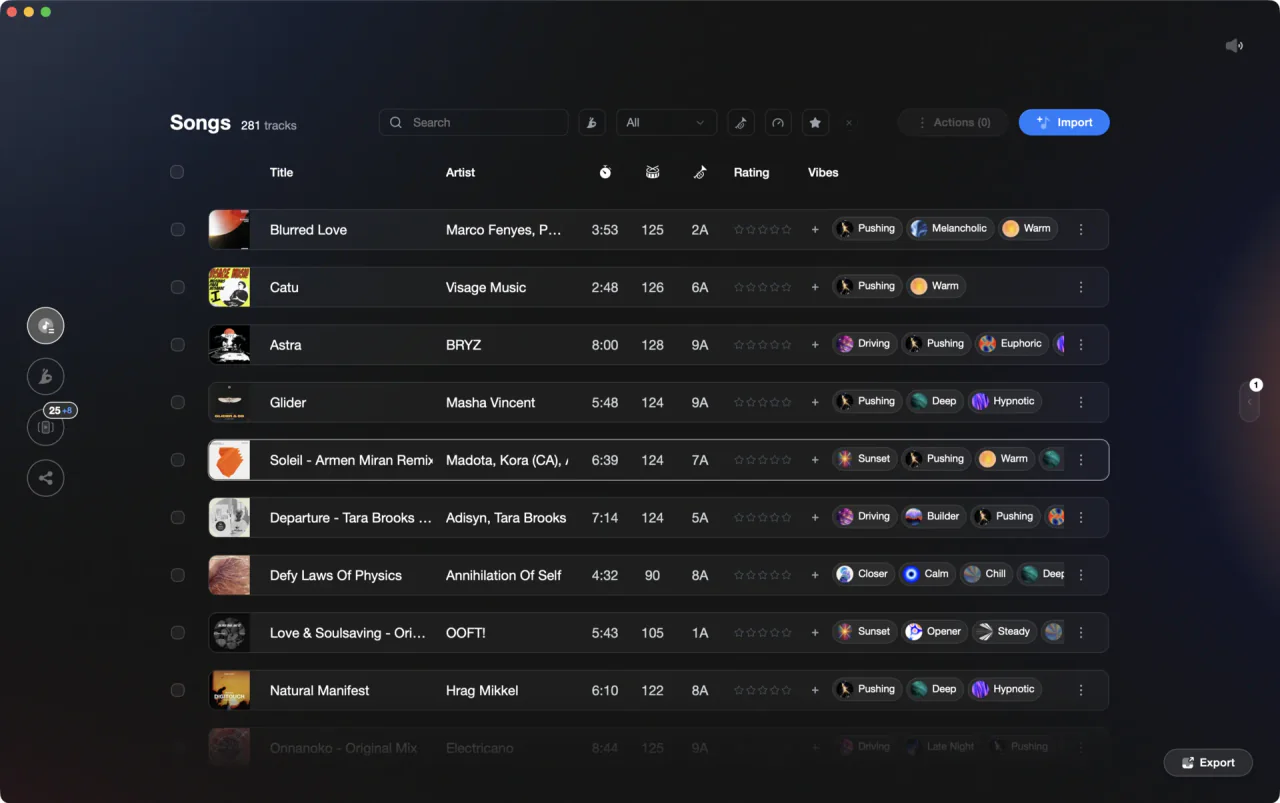
One collection, ready to send into either app.
Running one library in Rekordbox and Serato, step by step.
DJs search for how to use rekordbox and serato same library, and the workable version is one music folder, one set of file tags, and two databases you keep aligned on purpose. Every step below uses only what the two apps ship with.
Point both apps at one music folder
Neither app copies your music. Serato DJ Pro references files where they already live on your drive, and so does Rekordbox. In Serato, click Files, find your music folder, and drag it onto the purple All icon above the crate panel. In Rekordbox, choose File > Import > Import Folder, or drag the same folder into the Collection track list. One file, one path, two apps.
Back up both libraries before you change tags
In Rekordbox, click File > Library > Backup Library, then answer whether to include the music files. It saves the Collection, playlists, and analysis information as one restorable file. Serato keeps its database in a _Serato_ folder inside your Music folder and prompts a backup when you quit, writing to Serato/Library/Backups. Take both backups before the first tag edit, not after.
Edit metadata in one app, reload it in the other
Serato stores track information in its DatabaseV2 and in the file itself, so a title, genre, comment, or grouping you fix in Serato is already in the track. To pick that up in Rekordbox, right-click the track and select Reload Tag. Going the other way, open the Files panel in Serato and click Re-scan File Info, which re-reads file tags for the entire library.
Make both apps write key into the tag
In Rekordbox, open the Preferences window, go to the Analysis category, and under Key Analysis switch on Write the value to the ID3 tag, which stores the detected key in the file. In Serato, open Analysis Settings and tick Set Key, which adds key tag data to the track, then choose your notation with Show Key As on the Library + Display tab of the Setup screen.
Move playlists as files where the direction allows it
Rekordbox exports one: right-click a playlist, choose Export a playlist to a file, then Export a playlist to a file for music apps (*.m3u8). It imports M3U, M3U8, and PLS back through File > Import > Import Playlist. Serato has no playlist file import, so rebuild the structure there by dragging a folder into the crates view, which creates a crate instantly.
Use Engine DJ as a read-only bridge if you have it
Engine DJ Desktop 5.0 can read the other libraries directly. In its Library preferences, set Serato Library, Traktor Library, or Rekordbox Library to On. The Serato library arrives with crates plus cue points, loops, and beat grids; the Rekordbox library arrives with playlists plus hot cues, memory loops, and beat grids. Smart crates are excluded, and each imported library shows as read-only.
The catch
Rekordbox and Serato never share one database. Serato keeps its cues, loops, and waveform overview in the track's tags and its own DatabaseV2, Rekordbox keeps analysis information in its own library, and neither app reads the other's format. Reload Tag in Rekordbox also replaces track information you had edited there, so decide which app owns your metadata before you start.


The faster way
One library that feeds both apps.
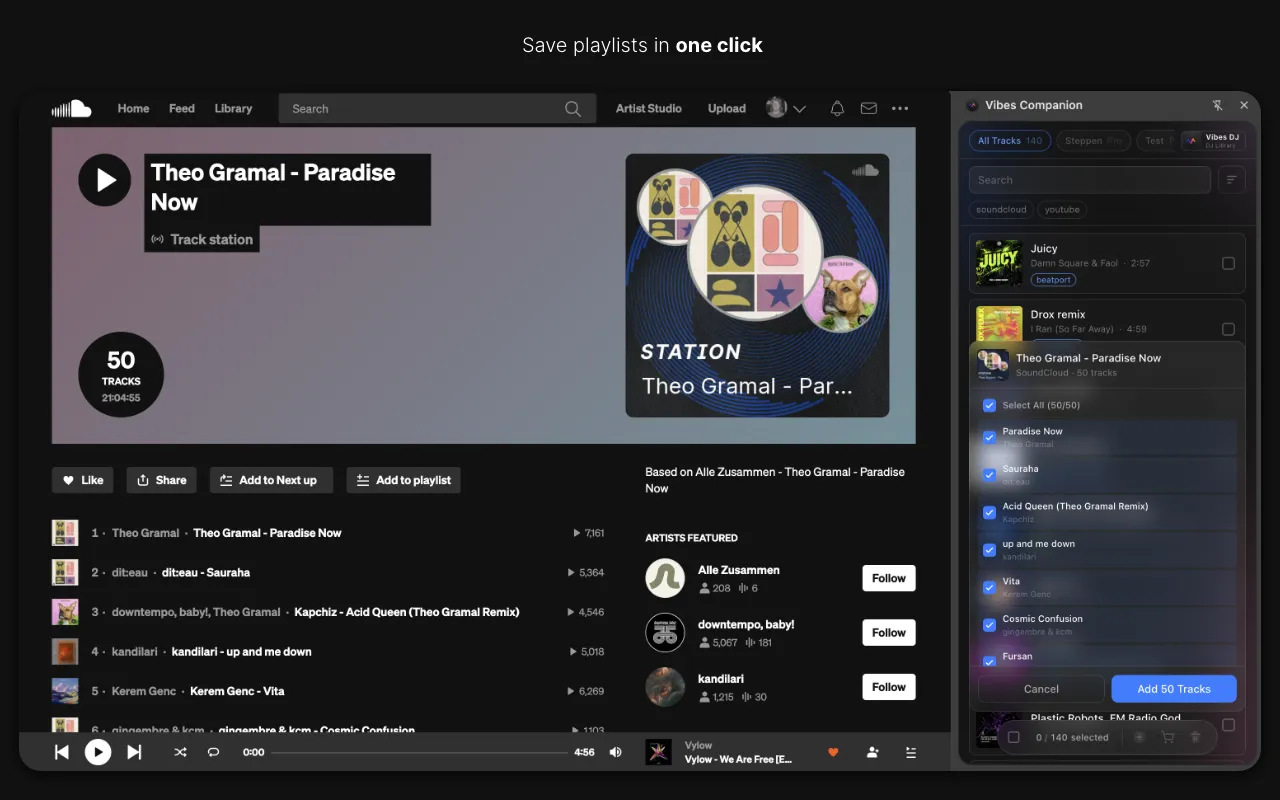
Vibes imports your collection straight from Rekordbox or Serato, and Smart Import detects which app it came from. You organize once, tag by feel, and then export playlists and vibes back into Rekordbox, Serato, Traktor, or Engine DJ as a folder tree, with optional Camelot key or BPM sub-folders. Your files stay exactly where they are, so both apps keep reading the same audio.
See how it worksOrganize in Vibes, export to any DJ app.
Your playlists, tags, ratings, and cue points travel back to the gear you play on, so nothing you do in Vibes is locked away.

Track 001
Artist A
Afterhours Mysterious
 Introspective
Track 002
Artist B
 Cozy FloorPeaceful
 Home
Home
Track 003
Artist C
Rave Aggressive
 Festival
 Build & Release
Frequently asked questions
The honest answers, including the trade-offs.
From a Vibes customer
The import worked perfectly. Have created several sets now and my life is so much easier
One-time purchase
Get Vibes with a single payment. No subscription.
Vibes is the step before you open your DJ software, not a replacement for it.
First 250 licenses at this price, then $79.
14 days • Full access
No strings attached
Secure checkout with Stripe
Already have Companion Pro? Upgrade instead

Methodology
How we keep this honest.

Verified against the app
Every step is checked against the current version of any DJ app.
We own our bias
We make Vibes. We show the native way first and honestly, then where Vibes genuinely helps, and we say when it does not.
Live pricing
The Vibes price shown comes straight from our checkout, never a hardcoded marketing number.
Kept current
Last reviewed September 2026.
Keep exploring
Compare Vibes
DJ apps head to head
Works with your software
Vibes for DJs
Vibes features
How-to guides
Best DJ software
Move between apps
DJ tools
Learn to DJ