

Set up a new laptop for Engine DJ.
Copy the Engine Library folder out of your Music folder on the old machine to the same path on the new one, then copy your audio files to the identical path they had before. It only works if the username on both computers is exactly the same and the files land where the database expects them, otherwise Engine DJ shows the tracks in red as missing.
$49$79USD one-time purchase. First 250 licenses at this price. 14-day free trial.
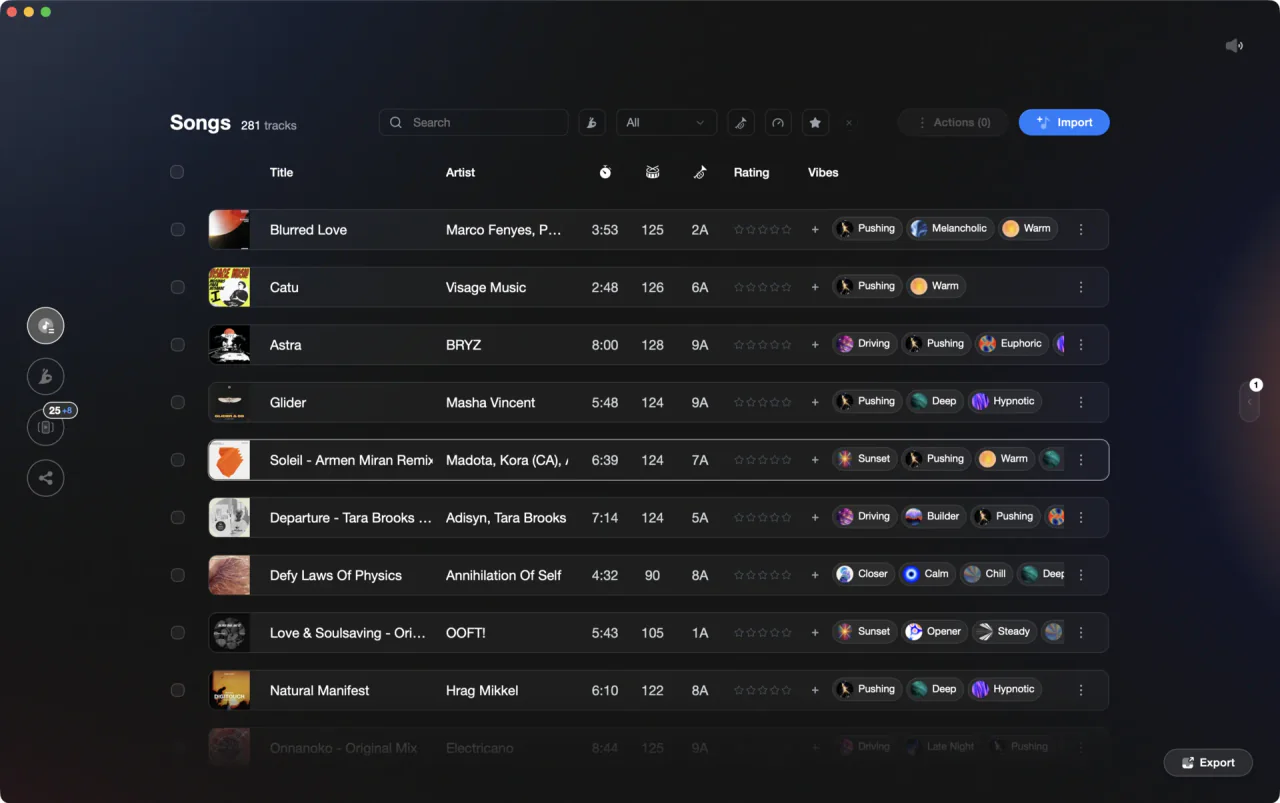
When the folder copy does not take, rebuild the collection in Vibes and export it back into Engine DJ.
Move your library to a new laptop in Engine DJ, step by step.
Engine DJ keeps a database folder on your computer and your audio somewhere else, and it expects both at the same paths every time. The move is two copies and one re-export.
Back up the Engine Library before you touch anything
In Engine DJ, open Preferences, go to the Library tab, and find the Library Backup section under System. Click Backup and leave the app open until it finishes. Engine prompts a backup every seven days when you quit unless you already made one. Note that this covers your computer's database only: databases living on external drives are not included.
Get a drive big enough and format it right
You need an external drive with room for the whole collection. Engine DJ reads exFAT and FAT32, and Denon recommends exFAT for drives of 1 TB and up. Formatting erases everything on the drive, so move anything you care about off it first. Engine also supports APFS, HFS and HFS+ on macOS and NTFS on Windows, but exFAT is the safe pick if the drive will ever meet a player.
Copy the Engine Library folder across
On Windows the folder is at C:\Users\[Your Username]\Music\Engine Library. On macOS it is Macintosh HD > Music > Engine Library. Copy that whole folder to the drive, then copy it to the same path on the new computer. The usernames on both machines have to be exactly the same, or the paths inside the database stop resolving.
Copy your music files to the identical path
The Engine Library folder holds metadata, not audio. Copy the actual music files over separately and put them at the same path they occupied before. If they sat in C:\Users\user\Music on the old laptop, they belong in C:\Users\user\Music on the new one. Same rule on a Mac: same volume name, same folder names, same capitalization.
Open Engine DJ and clear any red tracks
Install Engine DJ Desktop on the new machine and open your collection. A track shown in red means its file path is lost or corrupt. Right-click it and use the relocate options, which include a manual and an automated route. On macOS relocation is case-sensitive, and a file with several possible matches stays missing until you point at the right one yourself.
Run Sync Manager and re-export your drive
With the collection healthy on the new laptop, open Sync Manager and re-export your existing playlists to the drive you use with your Engine hardware. Eject the drive properly afterward. Force-ejecting during an import or a sync is one of the listed causes of a corrupt Engine database, and a corrupt drive database is a rebuild you do not want at a gig.
The catch
This whole method rests on the two machines matching. Denon states that moving between Windows and macOS in either direction will not be as seamless as a like-for-like move, and suggests a migration program such as Migration Assistant or simply rebuilding the Engine Library on the new computer. Plan for a rebuild rather than assuming the copy will take.


The faster way
Rebuild the collection from the files, not from memory.
Vibes reads your Engine DJ collection with Smart Import, which detects the app for you, or plain folders if the database did not survive the trip. It then analyzes every file locally for BPM, key and an energy curve, so nothing depends on the old laptop still working. When the new machine is ready, export your playlists and vibes back out as a folder tree that Engine DJ imports by drag and drop, subfolders included.
See how it worksOrganize in Vibes, export to Engine DJ.
Your playlists, tags, ratings, and cue points travel back to the gear you play on, so nothing you do in Vibes is locked away.

Track 001
Artist A
Afterhours Mysterious
 Introspective
Track 002
Artist B
 Cozy FloorPeaceful
 Home
Home
Track 003
Artist C
Rave Aggressive
 Festival
 Build & Release
Frequently asked questions
The honest answers, including the trade-offs.
From a Vibes customer
The import worked perfectly. Have created several sets now and my life is so much easier
One-time purchase
Get Vibes with a single payment. No subscription.
Vibes is the step before you open your DJ software, not a replacement for it.
First 250 licenses at this price, then $79.
14 days • Full access
No strings attached
Secure checkout with Stripe
Already have Companion Pro? Upgrade instead

Methodology
How we keep this honest.

Verified against the app
Every step is checked against the current version of Engine DJ.
We own our bias
We make Vibes. We show the native way first and honestly, then where Vibes genuinely helps, and we say when it does not.
Live pricing
The Vibes price shown comes straight from our checkout, never a hardcoded marketing number.
Kept current
Last reviewed September 2026.
Keep exploring
Compare Vibes
DJ apps head to head
Works with your software
Vibes for DJs
Vibes features
How-to guides
Best DJ software
Move between apps
DJ tools
Learn to DJ