Culture & Sets

Peak Time

Reviewed by

The highest-energy part of the night, when the floor is fullest.

Peak time is the busiest, highest-energy window of an event, usually the middle to late portion, when the biggest tracks and the headliner land.

Why it matters

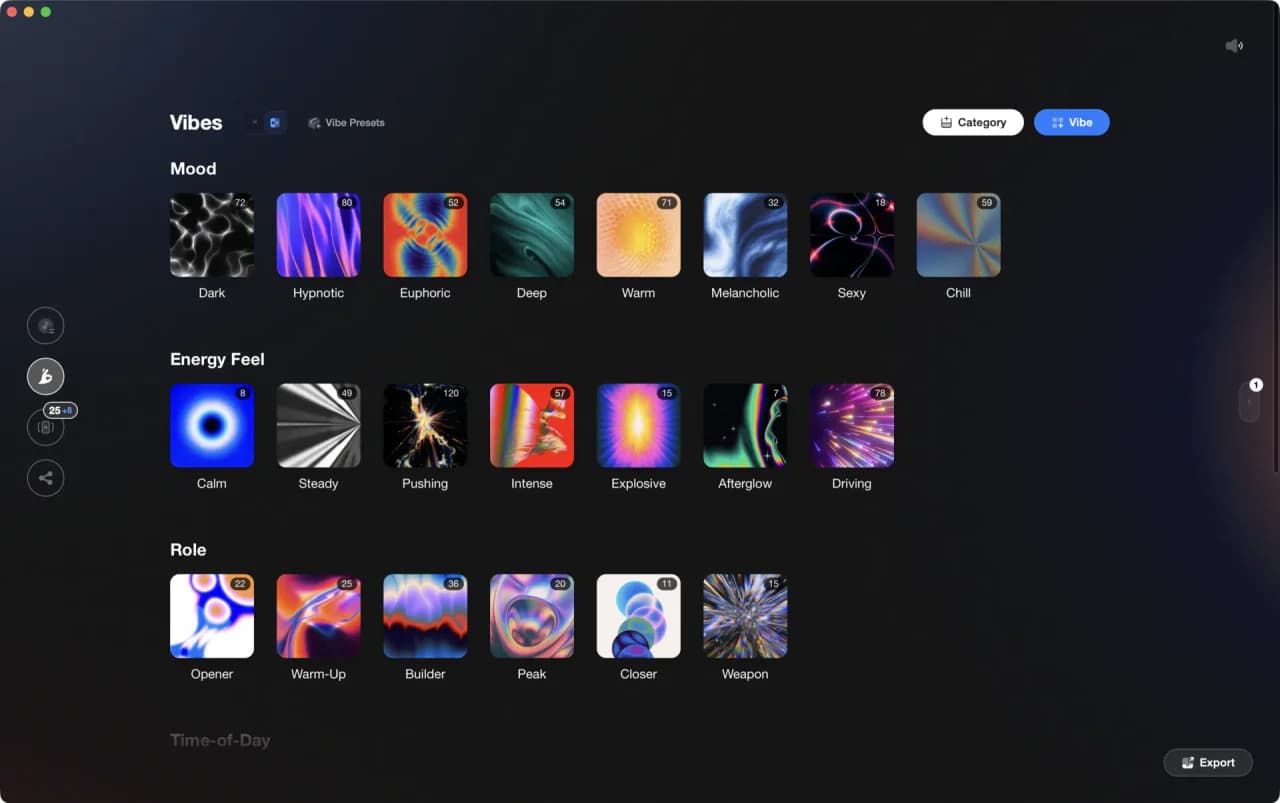
Peak-time tracks are your strongest, most direct records. Tagging which tracks are peak-time weapons keeps them ready for the moment that matters most.

Frequently asked questions

Peak time typically falls between midnight and 3 AM in most European and North American club contexts, though it shifts depending on the venue, city, and local licensing hours. It is defined more by the state of the room than the clock: peak time starts when the floor is at capacity and the crowd is fully energized.
Peak-time tracks are usually high-energy, well-produced, and instantly recognizable to the crowd. Think driving kicks, big drops, and anthems specific to the genre of the night. Subtlety that works in a warm-up can get lost when the room is loud and packed, so impact and clarity matter more at peak time.
Watch the floor density and crowd response. When the room is full, people are dancing consistently, and your harder tracks are landing, you are at peak time. Physical cues like raised hands, crowd singing along, and no one leaving the floor are reliable signals that you can push the energy to its maximum.
Ben Modigell

Hey, it's Ben Modigell 👋

I DJ and produce as so I so — downtempo, minimal, dub house, tech house, and techno (releases on Spotify and SoundCloud, links above). Everything I write here comes from my own gigs, studio sessions, and library cleanups: the rules I follow, the failure modes I've actually hit, and the workflow I use when nobody's watching. If a technique didn't earn its place in my own sets, it doesn't make it into a tutorial.

DJingMusic ProductionTech HouseMinimal HouseDub HouseTechnoDowntempoLibrary Organization