
Upstart
30s preview
- BPM
- 140
- Half-time
- 70
- Open Key
- 8d
- Energy
- 79/100
- Pop
- 5/100
- Length
- 2:36
- Released
- 2017
- Genre
- Drum N Bass
- Loudness
- -4.2 dB
- Dynamics
- 11.9 dB
- ISRC
- GBBHF1310422
Key, BPM and audio features: model-based audio analysis · how we measure · catalogue updated July 2026
Other versions
- Upstart [Instrumental]original3B · 140
Upstart is a driving up-tempo drum n bass track in D♭ major (3B) at 140 BPM. It reads as punchy, neutral in mood. Rhythmically it is built for the dancefloor. The mix is almost entirely instrumental. Its spectrum is weighted to the sub and kick, with a heavy low end. The master is loud and heavily compressed. The master keeps unusual dynamic range for club music (crest 12 dB). A 2017 production that still circulates in sets. Groovier than 96% of Goldie's catalogue. For programming, treat it as a peak-time weapon.
- Brightness:
- brighter than 75% of Goldie's catalogue
Sonic profile
Frequency spectrum
amplitude · bass → treble
- 33%
- Low
- 30-130 Hz
- 29%
- Low-mid
- 130-570 Hz
- 21%
- Upper-mid
- 570 Hz-2.5 kHz
- 17%
- High
- 2.5-11 kHz
FAQ
What key is Upstart in?
Upstart by Goldie is in D♭ major, or 3B on the Camelot wheel.
What BPM is Upstart?
Upstart runs at 140 BPM, a driving up-tempo track.
What mixes well with Upstart?
From 3B it blends harmonically with 4B, 3A, 2B. Moving to 4B lifts the energy a step.
Is Upstart good for peak time?
With energy 79 out of 100 at 140 BPM, it works best as a peak-time weapon.
Mixes harmonically
3B → 2B · 4B · 3AFrom 3B, 4B (A♭ major) lifts the energy a step; 3A (B♭ minor) settles into the relative minor; 2B (F♯ major) cools the energy down a step.




How to mix it
In 3B at 140 BPM: 4B (A♭ major) — move to 4B to push the floor harder; 3A (B♭ minor) — switch to 3A for a mood change without losing the groove; 2B (F♯ major) — drop to 2B to bring the room down gently.
Pitch range at ±6%: 132-148 BPM — anything in that window beatmatches without sounding stretched.
Key on the fader: without key lock (Master Tempo on CDJs), above roughly +5% it plays a semitone higher, so treat it as 10B rather than 3B; below -5% it reads as 8B. With key lock on, it stays 3B across the whole range.
Programming: a peak-time weapon — save it for the main stretch (energy 79/100).
Similar tempo
Within ±3 BPM of 140 — beatmatch without a big tempo pull.
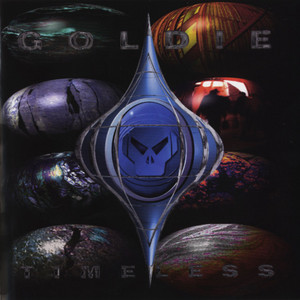
![Upstart [Instrumental] by Goldie cover art](https://i.scdn.co/image/ab67616d00001e029bf2eba1fea01bd8dfd9c8c3)




More drum n bass




More from Goldie
Full profile


Other recommendations
Beyond strict key and genre matches: tracks that still sit in beatmatch range of 140 BPM with a compatible energy and groove — candidates for a key jump or a genre crossover.




Every insight on this page, for your own library.
Vibes runs this same analysis on the music you own: keys, energy and vibe for every track, organized into sets you can actually play.