Track Transitions: Catalog of Types
Track transitions are the named methods DJs use to move between songs, this guide catalogs the five core types and when each one fits the music.
Track Transitions: Catalog of Types Tutorials
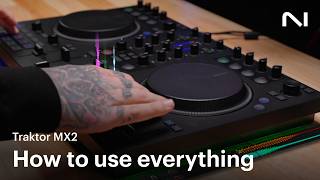

Track transitions are the skill of moving from one record to the next without breaking the listener’s sense of timing, energy, or direction. For DJs, track transitions are where technique becomes musical judgment. Good track transitions keep dancers locked in, make sets feel intentional, and turn separate songs into one continuous story.
If your mixes feel abrupt, muddy, or random, track transitions are usually the missing link. Learning how to transition between songs teaches you when to enter, when to leave, and how much of each track should overlap. That unlocks smoother sets, better phrasing, and more confidence in live performance.
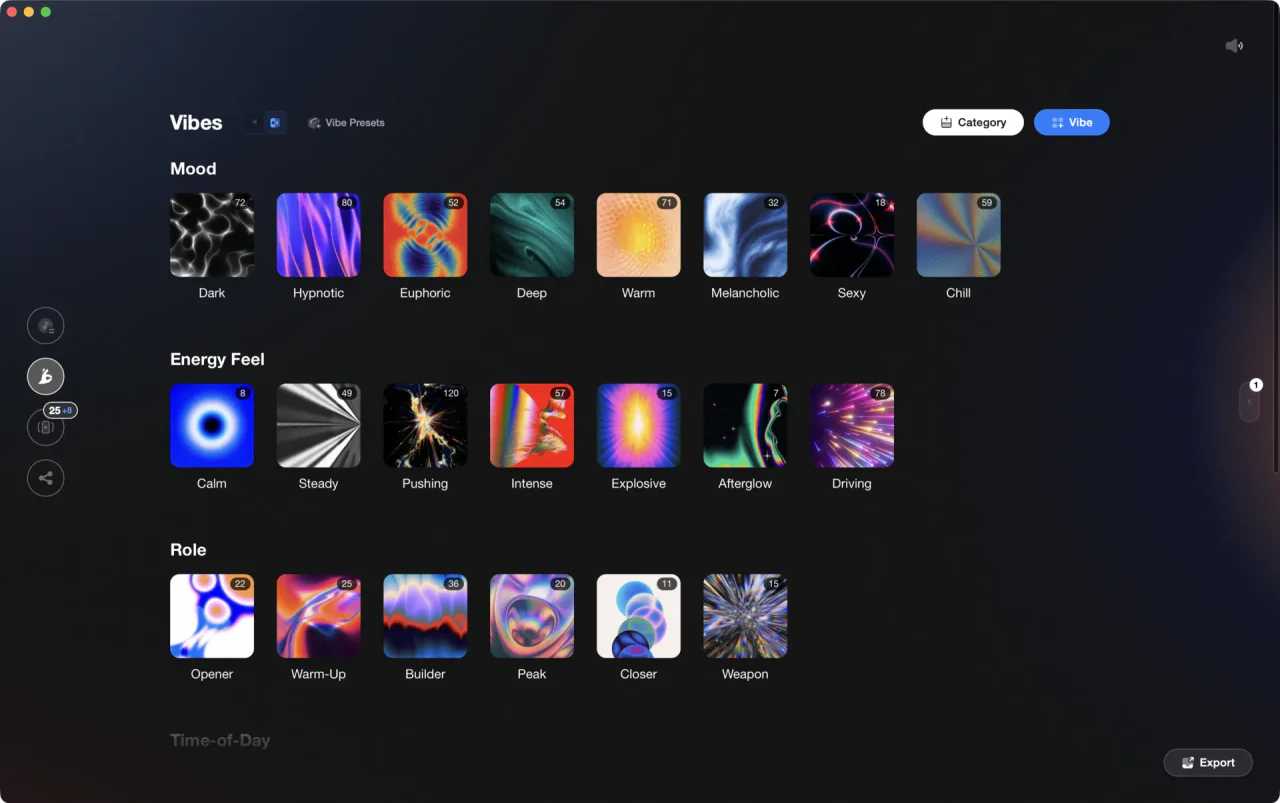
The visual way to organize your DJ library. Tag by vibe, export to any DJ app.
What Is Track Transitions?
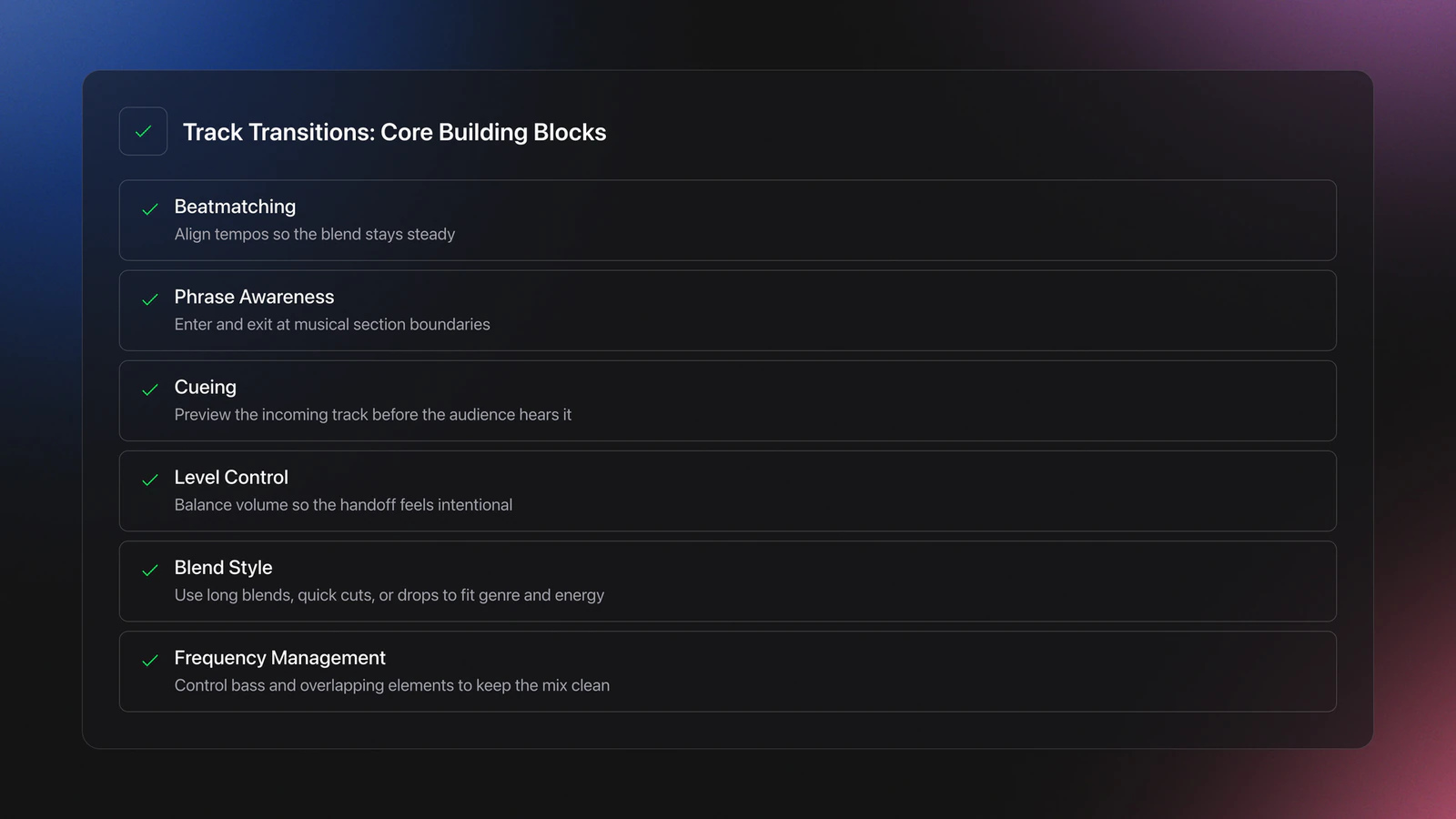
Track transitions are the techniques DJs use to move from one song to another while preserving flow. Standard practice combines beatmatching, phrase awareness, cueing, and level control so the change feels musical rather than accidental.
The core idea is simple. One track is leaving, another is arriving, and your job is to make that exchange feel natural. Sources like the Native Instruments DJ transitions guide and Native Instruments phrase mixing tutorial both frame transitions around tempo, phrasing, and choosing the right blend style for the material.
Some transitions are long and subtle. Others are fast and dramatic. House and techno often reward gradual blends, while hip-hop, drum and bass, and open format sets often use quicker cuts, drops, or sharp phrase-based switches.
This means track transitions are not one trick. They are a family of methods built on the same foundations: rhythm, structure, and clean frequency management.
Why Track Transitions Matter
Track transitions matter because they shape how a crowd experiences continuity. A strong transition keeps momentum, protects the groove, and makes track selection feel smarter.
- They preserve rhythmic flow between songs.
- They control energy instead of leaving changes to chance.
- They prevent clashes in bass, vocals, and phrasing.
- They help your set sound deliberate and professional.
- They let track selection shine without awkward handoffs.
In other words, the audience may not name the transition type, but they absolutely feel the result. Smooth transitions feel inevitable. Weak ones feel like the set reset itself.
Track Transition Fundamentals
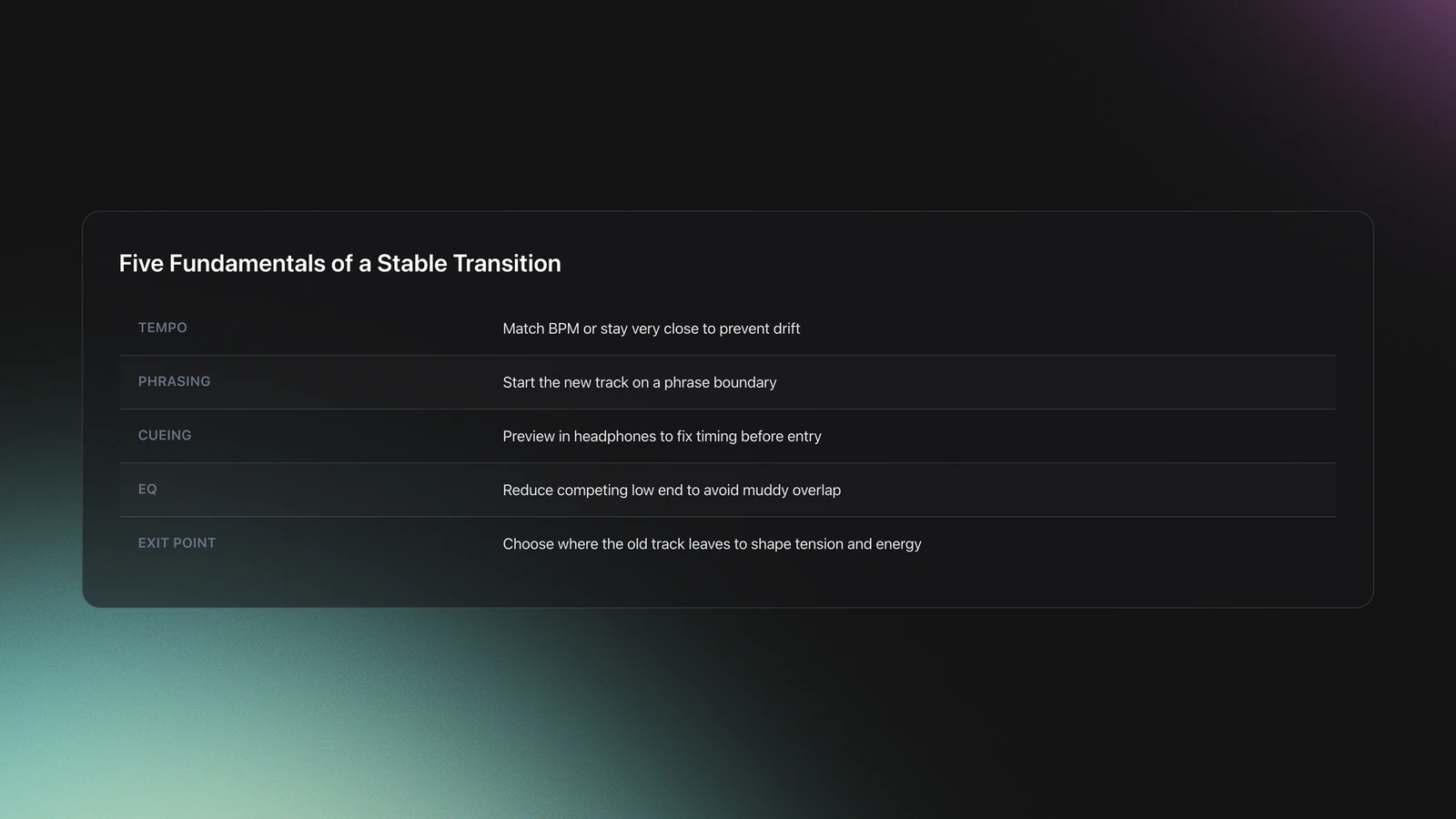
Every reliable track transition starts with four basics: tempo match, phrase match, cueing, and frequency control. If one of those fails, the transition usually feels unstable.
First, align tempo. Most beginner-friendly transition drills work best with tracks that are close in BPM. Native Instruments recommends starting with songs of similar tempo, and notes that many beatmatched mixes work best when tracks are within a small BPM range.
Next, align phrases. The DJ TechTools phrasing guide stresses starting the new track at the beginning of a phrase in the outgoing track. This is why learn phrase mixing structure is such a strong prerequisite.
Then cue accurately in headphones. You need to hear the incoming track before the room hears it. Pioneer DJ’s mixing technique tutorials also frame transitions around cue points, crossfader timing, and controlled entry.
Finally, manage overlap. Two kick drums or two basslines playing at full power usually create mud. That is where use EQ mixing to avoid bass clashes becomes part of transition technique rather than a separate skill.
| Element | What You Do | Why It Matters |
|---|---|---|
| Tempo | Match BPM or get very close | Prevents drift during overlap |
| Phrasing | Start on a phrase boundary | Makes the change feel musical |
| Cueing | Preview in headphones | Lets you correct timing early |
| EQ | Reduce competing low end | Keeps the blend clear |
| Exit point | Choose where the old track leaves | Controls energy and tension |
How to Do Track Transitions
To do track transitions well, prepare the incoming track, align timing, choose a transition style, and make the handoff at a phrase boundary. The exact mixer move can change, but that sequence stays the same.
Start with two tracks that belong together. Similar groove, compatible energy, and manageable phrasing make early practice much easier. If the pair already fights in mood or structure, no transition trick will fully save it.
Set a cue point on the incoming track at a clean downbeat. Then identify the outgoing track’s mix-out point. Standard practice is to enter at the start of a phrase and exit at the end of a phrase, often over 16 or 32 bars.
Beatmatch the incoming track. You can do this by ear or use sync if the grids are correct, but you still need to listen. Sync removes one task. It does not remove judgment.
Bring the new track in gently. For a long blend, lower its bass first. For a cut, keep it silent until the moment of change. For a fade, control channel volume so the old track leaves as the new track becomes dominant.
Listen for conflict. If vocals overlap awkwardly or the low end blooms, shorten the overlap and simplify the move. Clean transitions almost always beat busy ones.
Then complete the swap. Once the incoming track has taken over rhythm or focus, remove the outgoing track decisively. Half-finished transitions often sound more amateur than fast ones.
Main Types of Track Transitions
The most useful track transitions for most DJs are the fade, the cut, the phrase blend, the bass swap, and the filter-assisted blend. Each solves a different musical problem.
The fade is the safest starting point. One track lowers while the other rises. Native Instruments notes this works even when the BPMs are not identical, which makes it useful for genre shifts or softer resets.
The cut is fast and decisive. You launch the incoming track on a downbeat and switch immediately. This works well when the next phrase hits hard and you want contrast more than overlap.
The phrase blend is the backbone of smooth mixing. You line up matching sections, such as outro to intro or chorus end to verse start, so the arrangement itself supports the transition.
The bass swap is a long-blend essential. One track carries the low end while the other enters with reduced bass. Then you exchange them. This prevents the muddy overlap that many beginners hear when both kick and bass parts remain full.
Filter-assisted transitions work when both tracks are busy. By thinning one side of the spectrum during the overlap, you make room without a sudden volume drop. Use this sparingly. Filters should solve a conflict, not hide weak timing.
As you improve, explore drop mixing for faster switches and improve blends with harmonic mixing. Those techniques expand your options, but they still depend on the same transition foundations.
Practice Drills for Track Transitions
Practice track transitions in short, repeatable sessions. Through daily 15-minute practice sessions over several years, I found that focused drills build cleaner transitions faster than marathon practice that changes variables every few minutes.
Start with two-track drills, not full sets. Pick five pairs of tracks with clear intros and outros. Repeat each pair until you can enter and exit at the same point three times in a row without drift or bass clutter.
Drill one is the 16-bar fade. Launch the incoming track 16 bars before the outgoing phrase ends. Bring it up gradually and complete the change exactly on the next phrase boundary.
Drill two is the bass swap. Keep the incoming low EQ down until both tracks are stable. Then exchange low end over eight bars. Record yourself and listen for the moment the room energy shifts.
Drill three is the one-beat cut. Cue the incoming track on the first beat of a phrase and switch instantly. This teaches decisiveness and exposes weak cue timing very quickly.
Drill four is phrase mapping. Count bars aloud, mark 16- and 32-bar points, and identify where drops, breakdowns, and vocal sections begin. This is where it clicks. Once phrase recognition improves, your transitions stop feeling random.
For organization, many DJs benefit from keeping a dedicated transition practice crate. In Vibes, you could group local tracks by energy, phrase clarity, and mix compatibility so each drill session starts with reliable pairs instead of random browsing.
Build progression in 2–4 week cycles. Week one focuses on fades and phrase timing. Week two adds bass swaps. Week three introduces faster cuts. Week four tests the same skills across less predictable track pairs.
If you are still shaky on tempo alignment, pause here and build solid beat matching control before adding more creative transitions.
Common Mistakes in Track Transitions
Most transition problems come from bad timing, not bad gear. The fix is usually to simplify the move and tighten phrase awareness.
| Mistake | Why It Happens | Fix |
|---|---|---|
| Tracks drift apart | Tempo was not matched closely enough | Practice with similar BPM tracks and monitor earlier in headphones |
| Mix sounds muddy | Both basslines or kick drums stay full | Cut incoming low EQ, then swap bass deliberately |
| Transition feels random | Entry started mid-phrase | Launch on beat one of a new 16- or 32-bar phrase |
| Vocals clash | Two lyrical sections overlap | Use instrumental sections, a faster cut, or a shorter overlap |
| Transition drags | Outgoing track stays too long | Choose a clear exit point and remove it decisively |
Why do most beginners struggle with track transitions? They try to solve structure problems with effects. Effects can decorate a good transition, but they rarely rescue poor phrase timing.
Another common issue is choosing difficult source material too early. Start with DJ-friendly intros and outros. Then move into trickier pop edits, vocal-heavy material, and fast genre shifts.
Equipment and Setup
You do not need an elaborate setup to learn track transitions. You do need reliable cue monitoring, clear controls, and tracks you know well.
Essential gear is simple: two playable decks, a mixer or controller, and headphones. A booth monitor helps because you can compare what the crowd hears with what you preview in cue.
Software features like cue points, beat grids, and phrase markers speed up practice. According to the Native Instruments phrase mixing tutorial, cue points and corrected beat grids make repeated transition drills much easier to test and refine.
Set your headphones only as loud as needed. The CDC NIOSH noise exposure guidance states that 85 dBA over eight hours is the recommended occupational exposure limit, and the OSHA occupational noise overview explains that excessive noise can cause permanent hearing loss.
How to Choose Better Transition Points
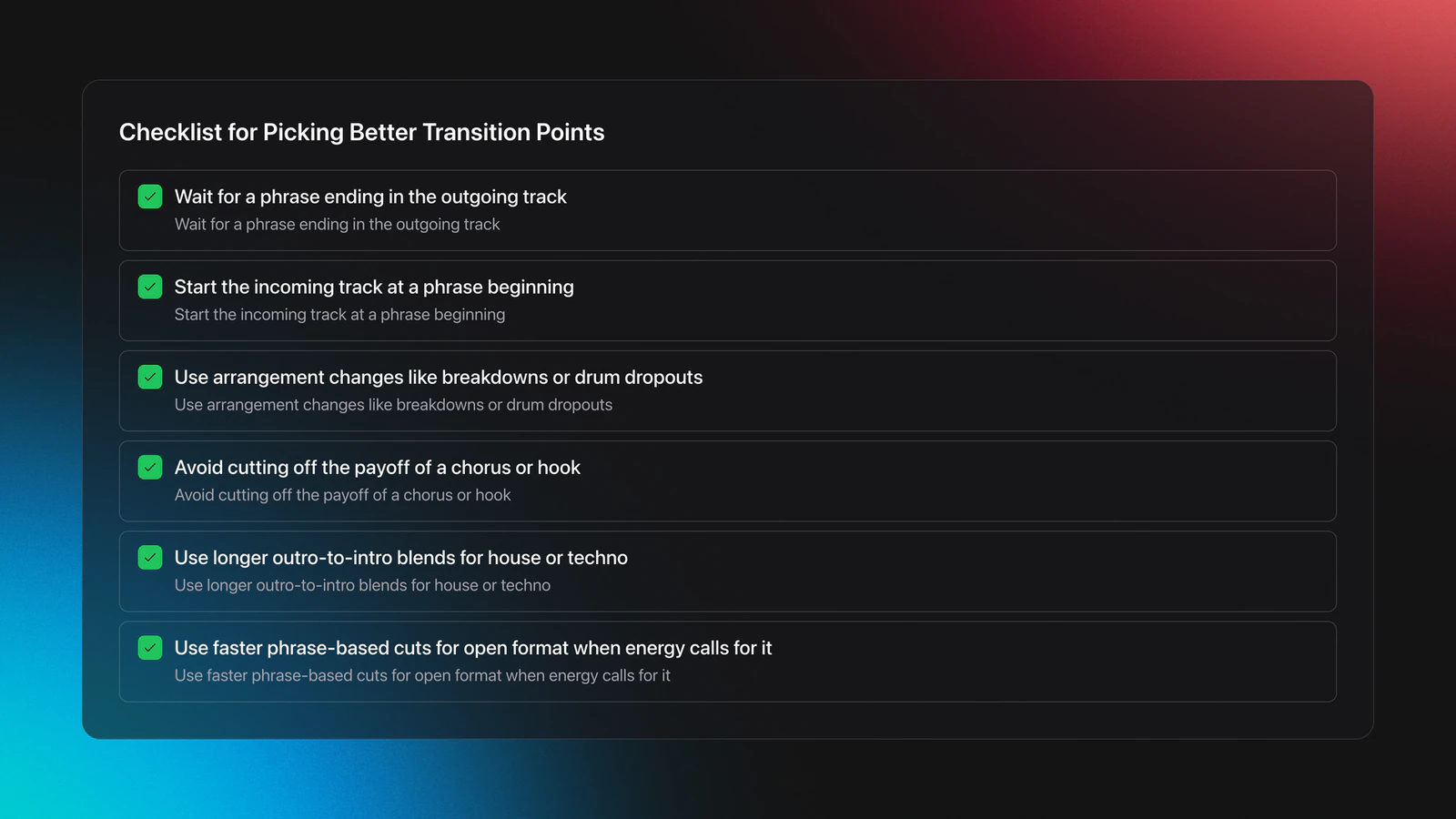
The best transition point is usually where the outgoing track has completed an idea and the incoming track can begin one cleanly. That is why phrase endings and phrase beginnings matter more than arbitrary timestamps.
A common house or techno move is outro into intro over 16 or 32 bars. A common open-format move is chorus end into verse start with a faster cut. DJ TechTools describes this principle as respecting the chorus, meaning you avoid interrupting the payoff before the next track takes over.
In practice, listen for section changes. Drums drop out. A vocal hook ends. A breakdown starts. Those moments create space. Good transitions often sound easy because the track arrangement is already helping you.
Progression Path
The fastest way to improve track transitions is to progress from stable to unstable conditions. Master the easy version first, then remove support.
Stage one is slow, clean blending between similar tracks. Stage two adds bass swaps and shorter phrase windows. Stage three introduces tracks with vocals, busier mids, and less obvious intros. Stage four tests genre changes and quick switches.
Success is measurable. You should be able to hold a 32-bar overlap without audible drift, swap bass cleanly within eight bars, and complete a one-beat cut exactly on a phrase boundary. Those are real checkpoints, not vague confidence markers.
From there, the progression becomes clear. Refine use EQ mixing to avoid bass clashes, then add improve blends with harmonic mixing, then experiment with faster contrast-based changes.
Track Transitions in Real Sets
In real DJ sets, track transitions are about decision-making as much as mechanics. The room may need continuity, pressure, surprise, or relief. The transition type should serve that need.
Long blends work when dancers are locked in and you want the set to breathe without obvious interruption. Fast cuts work when the next record has a stronger statement and the room is ready for impact.
Busy tracks usually need cleaner exits. Sparse tracks can handle longer overlaps. Vocal records demand more restraint than groove tools. This is why transition skill improves alongside track selection, not apart from it.
Wrap-Up
Track transitions are the craft of choosing the right moment, the right amount of overlap, and the right handoff for the music in front of you. Once you control phrase timing, bass management, and exit points, your sets stop sounding like separate songs lined up one after another.
Key takeaways:
- Phrase timing matters more than fancy effects.
- Clean bass control prevents most muddy transitions.
- Short, repeated drills improve faster than long unfocused sessions.
Start with two reliable tracks, practice one fade and one bass swap today, and repeat until both feel boringly consistent. That is usually the point where they begin to sound professional.
The visual way to organize your DJ library
Tag tracks by vibe. See everything at once. Export to any DJ software.
A visual system for organizing your DJ library.
More Tutorials


Frequently Asked Questions

Hey, it's Ben Modigell 👋
I DJ and produce as so I so — downtempo, minimal, dub house, tech house, and techno (releases on Spotify and SoundCloud, links above). Everything I write here comes from my own gigs, studio sessions, and library cleanups: the rules I follow, the failure modes I've actually hit, and the workflow I use when nobody's watching. If a technique didn't earn its place in my own sets, it doesn't make it into a tutorial.