DJ Invoice Template
Fill in your rate, line items, and payment terms, and this generates a clean invoice you can download as a PDF or copy as plain text. Everything runs in your browser: nothing is uploaded.
- Saved locally
- Nothing uploaded
- Print-ready
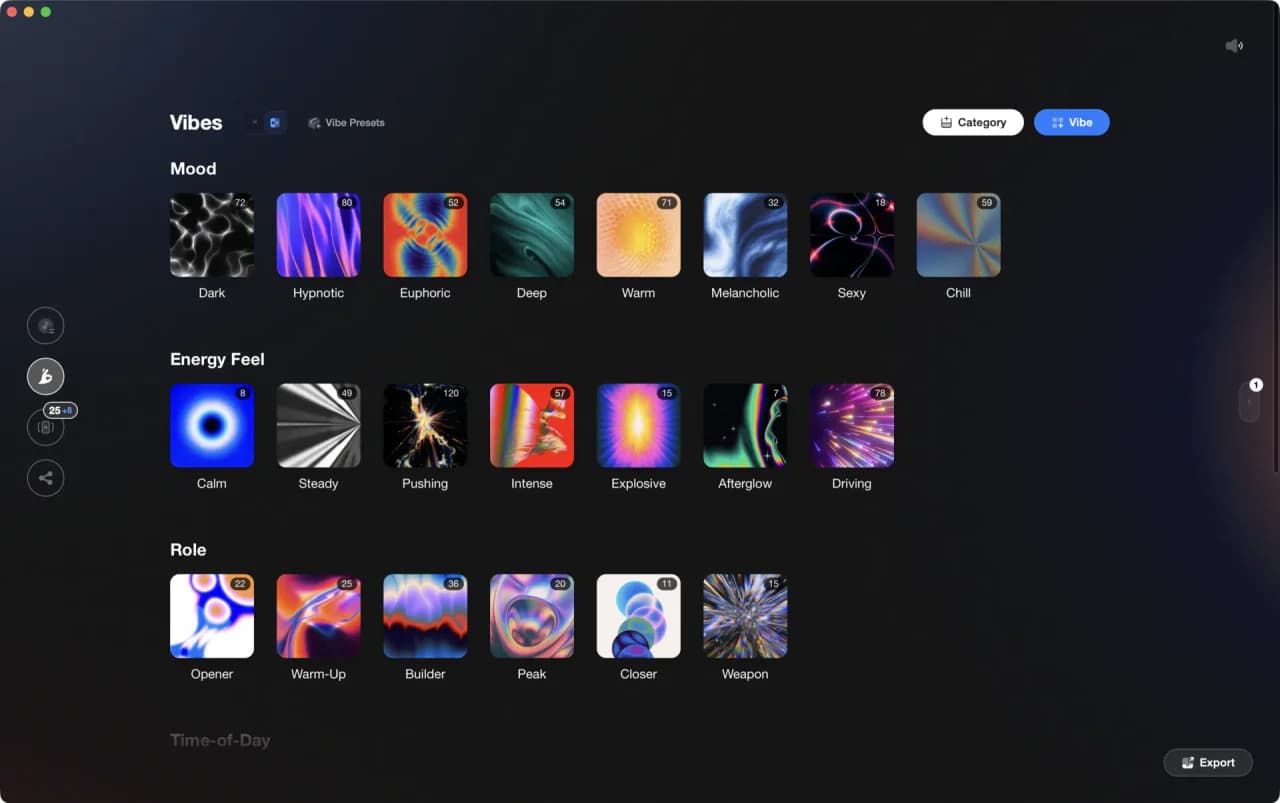
Next stepBetween invoices, Vibes organizes the library you actually play from: tagged by crowd, era, and function, with any request found in seconds. Vibes for wedding DJs
The essentials
What a DJ Invoice Must Include
A DJ invoice only works if a client can look at it once and know exactly what they owe and when. At minimum, include:
- Your name or business name, address, and contact email
- A unique invoice number, so both sides can reference it later
- The invoice date and a clear due date
- The client's name (or the company/couple booking you)
- The event name and date the work relates to
- Line items: what you're charging for (performance hours, equipment, travel), quantity, rate, and amount
- Tax, if applicable in your area
- Payment details: how you actually want to be paid (bank transfer, Zelle, PayPal, etc.)
- Any notes: late fees, thank-you line, or special terms for this booking
Timing
When to Invoice: Deposit vs. Balance
Most working DJs split payment into two invoices instead of one. A deposit invoice for 50% of the fee goes out when the booking is confirmed: it's what actually holds the date, and it's non-refundable if the client cancels close to the event (see the DJ contract template for cancellation terms). The balance invoice for the remaining 50% goes out a week or two before the event, due on or before the event date. Charging 100% upfront is reasonable for smaller bar or club sets where the risk of a no-show client is low; for weddings and larger private events, the 50/50 split protects you if plans fall through.
Getting paid
Payment Terms That Actually Get You Paid
The invoice itself only works if the terms on it are specific. A due date that just says "upon completion" invites delay: use an actual date. State a late fee (a flat amount or a percentage per week) directly on the invoice, not just in a separate contract, so it's the first thing the client sees when the due date passes. List one clear payment method rather than five options: fewer choices means fewer excuses. And send the invoice early. A deposit invoice sent the same day you confirm the booking gets paid faster than one sent a week later, once the client's attention has moved on.
Next steps
Round Out Your Gig Paperwork
Pair this invoice with a DJ contract template that sets the cancellation and overtime terms an invoice alone can't enforce, and send a technical rider alongside the booking confirmation so the venue knows what equipment to provide. If you're still building your artist identity, the DJ name generator and DJ bio generator help you look as professional as this invoice reads.
Invoicing is the paperwork side of the job; keeping your actual set library organized by vibe, energy, and key is what the Vibes app handles, so you spend your prep time picking music instead of hunting for it.

Hey, it's Ben Modigell 👋
I've been DJing and producing music as "so I so," focusing on downtempo, minimal, dub house, tech house, and techno. My background in digital marketing, web development, and UX design over the past 6 years helps me create DJ tutorials that are clear, practical, and easy to follow.
Methodology
Last updated
Author and Methodology
Maintained by Ben Modigell, founder of Vibes. Ben builds DJ library, preparation, BPM, and harmonic-mixing tools for working DJs.
- Source
- Vibes DJ-tool taxonomy and page logic maintained by Vibes.
- Evidence
- Page output checked against the current tool behavior and internal DJ reference data.
- How this page is made
- Tool pages are built from reusable page logic, internal DJ reference data, and visible on-page calculations. Programmatic reference pages are generated from structured data rather than hand-written one by one.
BPM, key, and genre labels can vary by edit, remaster, detection engine, and DJ software. Use these pages as a practical mixing reference, then verify important tracks in your own library.
Report a correctionThe visual way to organize your DJ library
Tag tracks by vibe. See everything at once. Export to rekordbox, Serato, Traktor or Engine DJ.
14-day free trial. Full access, no strings attached.
or see how it works