
Ableton Live
·AbletonAbleton Live is the go-to DAW for hybrid DJ sets and live electronic performance. Session View enables non-linear clip launching perfect for DJs transitioning from decks. Use it alongside CDJs, with controllers like Push and Launchpad, or as your complete performance rig.

Production Meets Performance
DAWs aren't just for the studio anymore. Many hybrid DJs use them as the backbone of live sets, enabling real-time arrangement, effects processing, and seamless integration with DJ controllers.
Ableton Live is the go-to DAW for hybrid DJ sets and live electronic performance. Session View enables non-linear clip launching, think of it like digital crates you can trigger on the fly. Whether you are transitioning from traditional DJing, running Ableton alongside CDJs, or building a controller-based performance rig with Push or Launchpad, Live is designed for the stage. Live 12 adds MIDI Generators/Transformations, improved browsing, microtuning, and an upgraded accessibility layer. See the core feature set on the official features page.
Why DJs Choose Ableton Live
Session View is the killer feature for DJs. Unlike a traditional timeline, it lets you trigger clips and scenes non-linearly, similar to how you would pull tracks from crates. Organize stems, loops, and full tracks by key, energy level, or set section, then launch them with pads or a controller. This is why Ableton dominates hybrid DJ setups.
Hybrid setups are where Live shines. Run Ableton on a laptop alongside CDJs or Traktor, syncing via Ableton Link. Send stems and loops from Live to your mixer while using decks for main tracks. Or go fully laptop-based with a Push 3, APC40, or Launchpad as your performance surface.
Warping makes live mashups possible. Live analyzes tempo and lets you stretch or compress audio in real time. Drop an acapella over a different instrumental, match tempos on the fly, and create edits that would be impossible with traditional DJ gear.
Hybrid DJ Setup Approaches
Ableton + CDJs. Use CDJs for your main tracks while triggering stems, loops, and FX from Live. Route Live audio to a spare channel on your mixer. Sync everything via Ableton Link or manually match tempos. This approach preserves your vinyl/CDJ workflow while adding production power.
Ableton + Traktor. Run both apps simultaneously with Link sync. Use Traktor for beatmatching and mixing; use Live for launching scenes, stems, or live remixing layers. Popular with DJs who want Traktor's deck interface plus Live's creative tools.
Controller-only performance. Replace decks entirely with Push 3, APC40, or Launchpad. Session View becomes your deck, each column is a track, each cell is a cue point or loop. Map transport, effects, and scene launches to pads. This is the purest hybrid performance setup.
DJ Template Setup
Organize by energy and key. Create columns for different track types (drums, bass, vocals, FX) and rows for energy levels (intro, build, peak, breakdown). Tag clips with Camelot keys so harmonic mixing is visual.
Scene-based set structure. Each scene can represent a song section or transition. Trigger scenes to move through your set while individual clips give flexibility within sections.
Pre-warp and color-code. Warp all clips to your master tempo before the gig. Use color-coding: green for safe intros, red for peak-energy drops, yellow for transitions. In low-light club settings, colors reduce mistakes.
Controller Integration
Push 3. Ableton's flagship controller with standalone mode. Launch clips, play instruments, mix, and perform without looking at a screen. The grid layout maps directly to Session View.
Launchpad. Novation's grid controllers are affordable entry points. Launch clips with velocity-sensitive pads and use the mixer mode for faders. The Launchpad Pro adds aftertouch for expressive playing.
APC40 MkII. Akai's DJ-focused controller with faders, knobs, and a clip matrix. Designed specifically for Session View performance with dedicated transport and mixer controls.
MIDI mapping. Any MIDI controller works. Map clip launch, scene triggers, device parameters, and transport to your preferred hardware. Live's mapping mode is quick and visual.
Product Overview
Beyond DJ performance, Ableton Live targets creators who move between the studio and stage. In your studio, you can track, comp, edit, and arrange at up to 32-bit/192 kHz. On stage, you can launch clips, scenes, and stems with millisecond-tight timing, while mapping controls to pads and encoders.
Live 12's big shift is workflow acceleration. MIDI Generators and Transformations spark melodies, chords, and rhythms, while the browser's tagging and Sound Similarity search help you find sounds faster. These are core to Live's value: faster idea-to-arrangement without breaking flow. Explore them in Ableton's Live 12 overview.
If you are weighing editions, Live Standard covers unlimited tracks and essential devices. Live Suite adds Max for Live and devices like Meld and Roar, plus features such as built-in stem separation introduced around Live 12.3. Not all Suite features exist in Standard; check Ableton's edition notes before buying.
Key Features
Session View. Trigger clips and scenes non-linearly for arrangement, performance, or DJ-style sets. This is Live's signature advantage for improvisation and live playback.
MIDI Generators and Transformations. Seed ideas, draw shapes, harmonize, humanize, and reshape patterns quickly, then lock them to Keys & Scales. These tools are central to Live 12's creative workflow, as described in the official features.
Sound Similarity search and tagging. Find sonically related samples and presets and tag your own content. This reduces browsing time when sound design or sample selection stalls momentum.
MPE, microtuning, and scale awareness. Perform and program expressive parts, work beyond 12-TET when needed, and keep instruments in key across clips and devices.
Deep controller and Link ecosystem. Live integrates tightly with Push and third-party controllers. Ableton Link keeps apps and devices in tempo over a network. Plug-in support includes 64-bit VST2/VST3 and AU on macOS. See Ableton's notes on supported plug-in formats.
Technical Specifications
| Specification | Details |
|---|---|
| OS compatibility | Windows 10 22H2/11 22H2+; macOS 11.7.10 Big Sur or higher. |
| CPU | Windows requires AVX2 (Intel i5 5th gen or AMD Ryzen). Apple Silicon and Intel supported on macOS. |
| Audio engine | Up to 32-bit/192 kHz recording and playback. |
| Tracks | Unlimited audio and MIDI tracks (Standard/Suite). |
| I/O | Up to 256 inputs and 256 outputs with compatible hardware. |
| Send/Return | 12 send/return tracks. |
| Plug-ins | VST2/VST3 64-bit; Audio Unit on macOS. |
| Authorizations | 2 simultaneous activations; online authorization. |
| Library | 38+ GB included content in Live Standard. |
Core specs verified via Ableton documentation and major retailers.
System requirements and AVX2 details are listed in Ableton's knowledge base. Review the minimum requirements and Windows AVX2 note before upgrading a studio PC.
Who Is This For
DJs going hybrid. If you want to add stems, loops, or live remixing to your DJ sets, Live is the standard. Works alongside CDJs, Traktor, or as a standalone performance system.
Producers who perform. If you sketch in loops and arrange later, Live's Session View is natural. Electronic producers, beatmakers, and hybrid instrumentalists benefit most.
All levels learning curve. Live remains approachable for beginners, yet scales for professionals running complex shows. Accessibility and keyboard navigation in Live 12 help power users work faster.
In Practice
Build DJ sets around scenes. Group stems and loops into scenes by song section or energy level. Trigger scenes to move through your set while launching individual clips for variety.
Use warping for live mashups. Drop an acapella into a track, let Live analyze the tempo, then stretch it to match your current beat. This is impossible with traditional DJ gear.
Map what matters. Assign transport, scene launch, and device macros to pads and encoders. With Link, keep external apps and players synced without MIDI clock headaches.
In low-light club settings, clarity matters more than features. The fixed Session grid and high-contrast UI reduce mistakes when launching scenes under pressure.
Pros and Cons
Pros
- Session View is unmatched for hybrid DJ sets and live performance.
- Ableton Link syncs with CDJs, Traktor, and other apps.
- Deep controller ecosystem: Push, Launchpad, APC40, and MIDI mapping.
- Warping enables live mashups and tempo matching.
- Live 12 MIDI tools, tags, and similarity search reduce friction.
Cons
- -No native ARA integration for Melodyne-style workflows.
- -Suite adds key devices like Max for Live, Meld, and Roar.
- -Windows AVX2 requirement excludes older CPUs.
- -Steeper learning curve than traditional DJ software.
Price and Value
As of January 27, 2025, Live 12 Standard is typically MSRP in the US but is often discounted; it is currently at Sweetwater. In Europe, Thomann lists Live 12 Standard around 209 euros during promotions, with regular pricing closer to 279 euros; check the Thomann page for current offers.
Live Suite's MSRP remains /599 euros/539 pounds, and Ableton now offers a rent-to-own plan for Suite with 24 monthly payments and full ownership once paid, per MusicRadar's report. If you need Max for Live, Meld/Roar, and Stem Separation, Suite is the better value. If not, Standard covers most workflows at a lower cost.
Alternatives
| Product | Price | Key Difference |
|---|---|---|
| Bitwig Studio | Modular Grid environment and deep modulators; Linux support. | |
| Steinberg Cubase Pro 13 | .99 | ARA support, traditional linear workflow, strong comping/mixing. |
| FL Studio Producer | Pattern-based workflow with lifetime updates. | |
| Traktor Pro | Traditional DJ software; use alongside Ableton for hybrid sets. |
Pricing verified via Bitwig, B&H/Cubase, and third-party price trackers.
Bottom Line
If you want to evolve from traditional DJing into hybrid performance, Ableton Live is the standard. Session View gives you non-linear clip launching that feels natural to DJs, while Link integration means it plays nice with CDJs, Traktor, and other gear. Add a Push, Launchpad, or APC40 and you have a complete performance rig.
For pure production, Live 12's MIDI tools and browser improvements keep you moving. Standard delivers the essentials; Suite is the full studio with Max for Live and stem separation.
Choose Ableton Live if hybrid DJ sets, live performance, and controller integration matter most. Consider Traktor Pro for traditional DJing or FL Studio Producer for pattern-centric production.
Where to Buy
Authorized Retailers: - Ableton Live 12 Standard at Sweetwater - Ableton Live 12 Standard at Thomann - UK: Bop DJ – Live 12 Standard
Manufacturer Direct: - Ableton Live product page Used Market: - Check reputable marketplaces and confirm license transfer policies with the seller before purchase.
From Studio to Stage
Use Vibes to bridge your production workflow with live performance. Tag tracks, build sets, and stay organized across both worlds.
14-day free trial. Full access, no strings attached.
or see how it works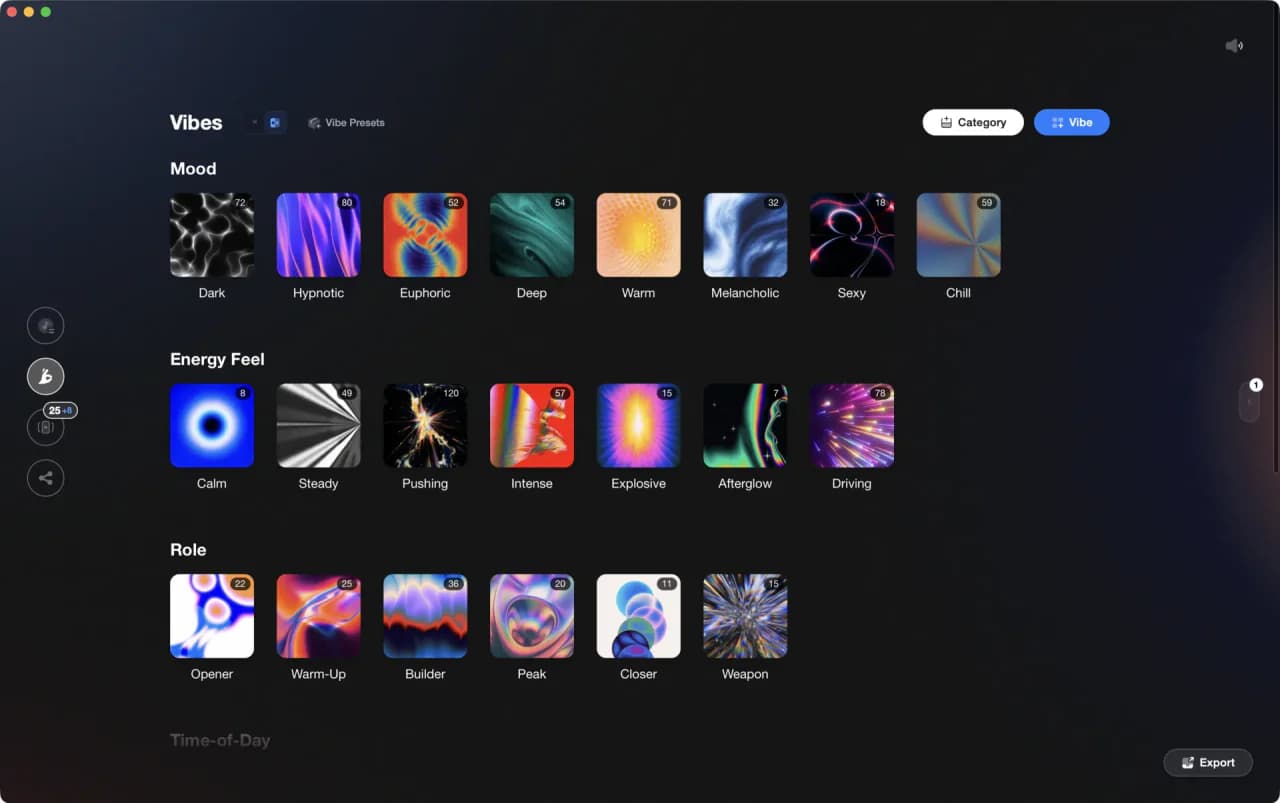
Tutorials Using Ableton Live

DJ Techniques Using This Gear
See how DJs and live performers incorporate Ableton Live into their workflow.
Frequently Asked Questions

Hey, it's Ben Modigell 👋
I DJ and produce as so I so: downtempo, minimal, dub house, tech house, and techno (releases on Spotify and SoundCloud, links above). Everything I write here comes from my own gigs, studio sessions, and library cleanups: the rules I follow, the failure modes I have actually hit, and the workflow I use when nobody is watching. If a technique did not earn its place in my own sets, it does not make it into a tutorial.