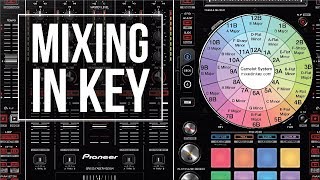
Camelot Wheel Method (Harmonic Mixing Explained)
A harmonic mixing method that uses Camelot key codes to choose musically compatible track transitions.
Camelot Wheel Method (Harmonic Mixing Explained) Tutorials



The [Camelot Wheel](/dj-tools/camelot-wheel) Technique helps DJs choose tracks that sound musically compatible during transitions. If your blends often feel clean rhythmically but tense harmonically, this technique fixes that. Camelot Wheel Technique gives you a simple code system for harmonic mixing, so you can move between tracks with less clash and more emotional control.
For most DJs, this is the easiest entry point into mixing in key. You do not need formal music theory. You need analyzed tracks, stable cueing, and the ability to master beat matching fundamentals before you worry about harmony.
Used well, the Camelot Wheel Technique helps you build smoother house and techno blends, cleaner vocal overlays, and more intentional mood shifts. Used badly, it becomes a rigid rulebook. The real goal is not to obey a chart. The goal is to make transitions sound better.
The visual way to organize your DJ library. Tag by vibe, export to any DJ app.
What Is Camelot Wheel Technique?
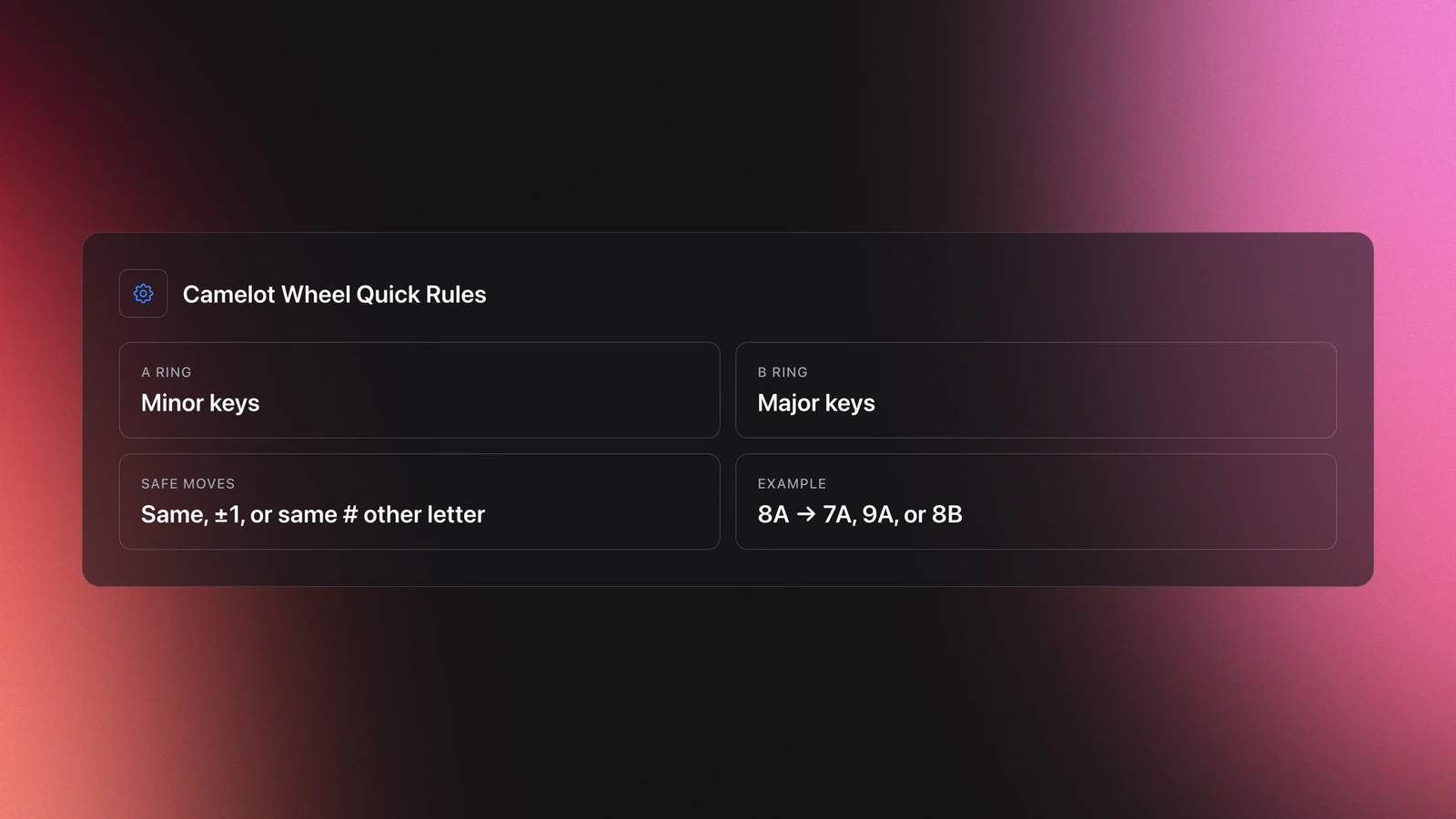
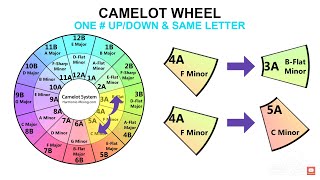
Camelot Wheel Technique is a DJ method for harmonic mixing that labels musical keys with simple codes like 8A or 8B. Standard practice is to mix into the same code, one number up, one number down, or the same number with the other letter, because those relationships are usually harmonically compatible according to the Mixed In Key harmonic mixing primer, the Mixed In Key technique breakdown, and the Native Instruments harmonic mixing article.
The wheel has two rings. A codes are minor keys. B codes are major keys. Sources aimed at DJs explain that adjacent numbers on the same ring and the same number across rings are the safest harmonic moves, which is why 8A commonly works with 7A, 9A, and 8B in practice.
In other words, the Camelot system turns music theory into a routing tool. Instead of remembering key signatures, you read a short label and make a fast decision in the booth.
This is also why the technique matters most when tracks have strong tonal content. Vocals, pads, basslines, and lead synths expose harmonic clashes quickly. Purely percussive tools give you more freedom, as noted in the Native Instruments harmonic mixing article.
Why Learn Camelot Wheel Technique
Camelot Wheel Technique improves transition quality because it adds harmonic control to timing control. The result is fewer dissonant overlays and a more coherent sense of mood across a set.
- Reduces clashes between vocals, chords, and basslines
- Makes track selection faster during long blends
- Helps you plan energy changes without random tonal jumps
- Works well with melodic genres where key matters most
- Builds the foundation for build deeper harmonic mixing skills
It also teaches listening discipline. Once you start hearing compatible and incompatible blends, your choices become more intentional. That skill transfers beyond the wheel itself.
Gear and Setup
You only need a few things to use the Camelot Wheel Technique well: analyzed track keys, a way to pre-listen, and enough control to line up tempo and phrasing. The wheel does not replace core DJ mechanics.
Most modern DJ software can analyze key, and some platforms use alternate notation such as Open Key. Native Instruments notes that adjacent positions in that system follow the same basic principle of harmonic compatibility, even though the labels differ from Camelot notation in its Native Instruments DJ fundamentals guide.
Key lock is optional but useful. It lets you change tempo without changing pitch, which keeps harmonic relationships more stable during beatmatching. If key lock sounds poor on extreme tempo changes, trust your ears over the screen.
How to Use Camelot Wheel Technique
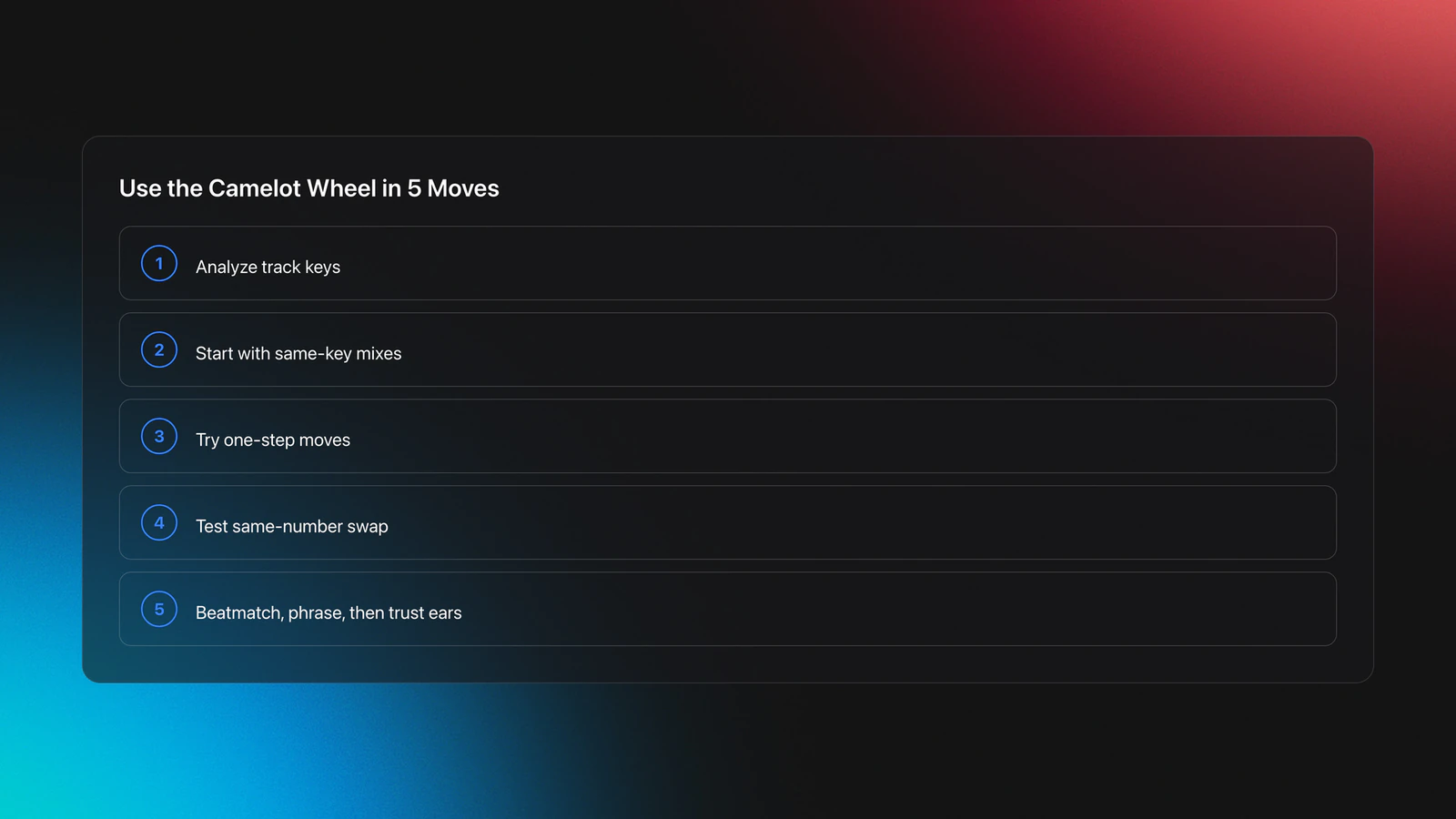
To use Camelot Wheel Technique, analyze your tracks for key, choose an incoming track with a compatible Camelot code, then execute the mix only after beatmatching and phrase alignment are under control. The wheel guides harmonic choice, but your ears still decide whether the blend works.
| Step | Action | Key Point |
|---|---|---|
| 1 | Analyze your tracks for key | You need visible Camelot or equivalent key data |
| 2 | Start with same-key mixes | Same code is the safest first drill |
| 3 | Try one-step moves | Use +1 or -1 on the same letter |
| 4 | Test same-number letter switch | Minor to major or major to minor changes mood |
| 5 | Beatmatch and cue carefully | Harmony fails if timing is sloppy |
| 6 | Mix in phrase | Use learn phrase mixing for cleaner entries to avoid structural clashes |
Begin with the easiest move: same key to same key. If one track is 8A, bring in another 8A track. This removes one variable and lets you focus on whether the tonal blend feels stable.
Next, test adjacent-number moves. Mixed In Key and Native Instruments both describe one-step movement around the circle as the basic route for harmonic mixing. In practice, that means 8A to 7A or 9A is usually safe.
Then test the same-number letter swap. Sources describe this as moving between relative major and minor, such as 8A to 8B. This often changes the emotional color without creating a harsh clash.
Now add structure. Do not judge the technique by mashing choruses together. Use intro-over-outro or groove-over-groove blends first. Harmonic compatibility works best when phrasing is already clean.
Finally, listen for what the screen cannot tell you. Key detection is helpful, but not perfect. DJ educators consistently present harmonic labels as a guide rather than an absolute rule, especially when tracks have ambiguous tonality or sparse melodic content.
What Compatible Moves Sound Like
The safest Camelot Wheel Technique move is the same key. It sounds settled, stable, and usually invisible to the listener. This is ideal when you want a long blend that keeps the mood intact.
A one-step move around the wheel tends to feel like controlled motion. According to the Mixed In Key technique breakdown, moving up or down one number usually creates a subtle color shift while staying harmonically safe.
A same-number letter swap often changes the emotional tone more clearly. Minor to major can feel brighter. Major to minor can feel darker. That gives you a simple tool to shape energy flow across a set without changing BPM dramatically.
Advanced DJs also use bigger jumps and intentional key shifts. DJ TechTools describes formulas such as major-minor switches and more adventurous moves for stronger tension and release in its DJ TechTools advanced key mixing guide. Those are useful later, but they should not be your starting point.
Practice Drills
Practice the Camelot Wheel Technique in short, repeatable sessions. Through daily 15-minute practice sessions over several years, I found that one-variable drills beat marathon sessions every time. Keep each cycle focused: same-key blends first, adjacent-key blends second, then mood-changing letter swaps.
Start with a crate of 12 to 20 tracks in a narrow BPM range. If your library is large, organized practice crates help. A tool like Vibes can make this easier by grouping local tracks into key-compatible, energy-based, and mood-based folders so your drills stay consistent instead of random.
For week one, use only intro and outro sections. That keeps harmonic listening clear. For week two, test denser sections with vocals, pads, or lead hooks.
Measure progress with simple benchmarks. Can you hold a 32-bar blend without drift? Can you predict whether 8A to 8B will brighten or darken the room? Can you identify a false positive before the audience would notice?
Common Mistakes
Most beginners do not fail because the Camelot Wheel Technique is hard. They fail because they ask it to solve problems it was never meant to solve. Harmony helps selection. It does not fix timing, phrasing, or poor taste.
| Mistake | Why It Happens | Solution |
|---|---|---|
| Treating the wheel as law | Screen data feels precise | Use it as a filter, then confirm by ear |
| Ignoring phrasing | Focus stays on key labels | Count bars and mix at structural points |
| Testing on drum-only tools | No clear tonal content to judge | Practice first with melodic material |
| Trusting key analysis blindly | Software labels look authoritative | Preview in headphones before committing |
| Using large tempo shifts | Beatmatching takes priority | Keep tempo changes modest or check key lock quality |
Another common mistake is over-restricting track choice. Some DJs on education and community sites point out that strict harmonic rules can make sets predictable. That is a fair criticism. Safe mixes are not always the best mixes.
This is where it clicks. Use the wheel to narrow options, not to remove instinct. If a track is structurally right, emotionally right, and crowd-right, you may still play it even if the code is not ideal.
Troubleshooting by Ear
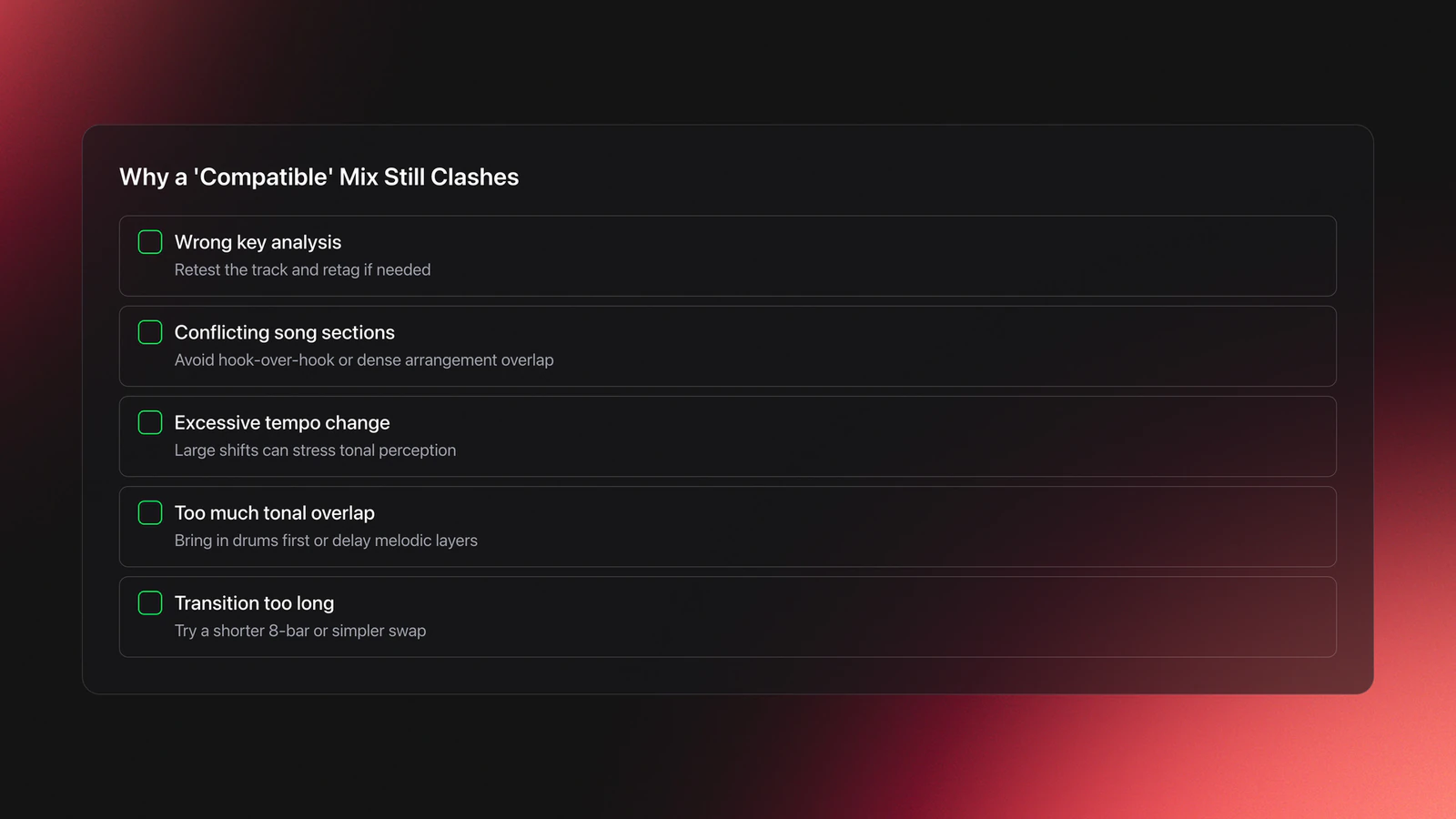
If a supposedly compatible pair sounds bad, the problem is usually one of four things: wrong analysis, conflicting song sections, excessive tempo change, or too much overlapping tonal content. The heading question is simple. Why does a legal move still clash? Because key compatibility is only one layer of the mix.
First, isolate the overlap. Try the same pair with only drums from the incoming track. If the clash disappears, the issue is tonal stacking. Reduce overlap length or bring in melodic elements later.
Second, verify structure. A vocal hook over another vocal hook can sound messy even if the keys match. Harmonic compatibility does not guarantee arrangement compatibility.
Third, test the software label. Digital DJ Tips and other educators note that key analysis is useful but not infallible. If a track feels mislabeled, tag it manually or add a note to avoid using it as a reference pair.
Fourth, simplify the blend. Shorter transitions often solve more problems than deeper theory. Especially in club settings, a confident 8-bar swap can sound better than a strained 64-bar harmonic experiment.
When to Go Beyond the Wheel
The Camelot Wheel Technique is a starting framework, not the full art. Once basic choices feel natural, you can test mood-lift transitions, deliberate tension moves, and software-based key shifts. That is where you explore key shifting and intentional modulation.
More advanced educators describe larger jumps, energy-boosting moves, and major-minor transformations as creative options rather than beginner rules. The important point is sequence. Learn safe movement first. Break the map later.
You should also know when the wheel matters less. Minimal tools, drum tracks, acapella drops, and hard cuts may not need detailed harmonic planning. Melodic overlays, vocal transitions, and long progressive blends usually do.
Key Takeaways
Camelot Wheel Technique gives you a fast, practical route into harmonic mixing. It helps you choose cleaner transitions, hear mood changes more clearly, and build sets that feel musically connected instead of accidentally compatible.
Keep these points in mind:
- Start with same-key mixes, then move to +1, -1, and same-number A/B swaps
- Use the wheel as a guide, but trust your ears over any label
- Combine harmonic choice with tight beatmatching and phrase-aware timing
Your next step is simple. Build a small practice crate, run the drills, and aim for five clean harmonic transitions in a row. Once that feels easy, expand into build deeper harmonic mixing skills or connect the technique to shape energy flow across a set.
The visual way to organize your DJ library
Tag tracks by vibe. See everything at once. Export to any DJ software.
A visual system for organizing your DJ library.

Frequently Asked Questions

Hey, it's Ben Modigell 👋
I DJ and produce as so I so — downtempo, minimal, dub house, tech house, and techno (releases on Spotify and SoundCloud, links above). Everything I write here comes from my own gigs, studio sessions, and library cleanups: the rules I follow, the failure modes I've actually hit, and the workflow I use when nobody's watching. If a technique didn't earn its place in my own sets, it doesn't make it into a tutorial.