
Hercules DJControl Inpulse 500
·HerculesA 2-channel USB DJ controller with built-in audio interface, performance pads, and guided mixing features for home practice and small public sets.
Hands-On Control
DJ controllers give you tactile control over your software. From basic mixing to advanced performance features, the right controller shapes your workflow and creative possibilities.
The Hercules DJControl Inpulse 500 is a 2-channel controller for DJs who want more than a starter deck without jumping straight to expensive club gear. It pairs a built-in 24-bit [audio interface](/glossary/audio-interface) with a practical layout, proper speaker outputs, and software support for DJUCED and Serato DJ Lite.
Product Overview
The Hercules DJControl Inpulse 500 makes the most sense for newer and developing DJs who need one controller for practice, livestreams, and small public sets. It stands out because it adds useful stage-ready details, including multiple master outputs, a mic input, and retractable feet, without leaving the mid-range price bracket.
The original gear request said "Impulse 500," but the real product name is Hercules DJControl Inpulse 500. That naming matters here because there are unrelated products with similar wording, including Peavey speakers and Novation keyboards.
Hercules introduced the controller in 2020, and major retailers still list it as a current model as of April 21, 2026. Thomann shows it as available since July 2020, while the official Hercules page still presents it as an active product rather than a discontinued one.
If you are comparing it with compact beginner controllers, the Inpulse 500 feels like a step up in layout and connectivity. If you are comparing it with club-standard Pioneer gear, it is clearly more affordable and less ambitious, but still practical enough to build transferable habits.
That is the key point. This controller is not trying to replace a full pro booth. It is trying to give you enough room to learn, record, and play real sets without running into immediate limits.
If you are also weighing other entry-to-mid options, it helps to compare it with a Hercules DJControl Inpulse 300 MK2, a Numark Mixtrack Platinum FX, or a broader DJ controller buying guide.
Inpulse 500 Features
The Inpulse 500 earns attention because it combines learning tools with features that still matter once you start playing outside your room. The most important upgrades are not flashy. They are the things that reduce friction when you actually connect speakers, route headphones, plug in a mic, and manage cables.
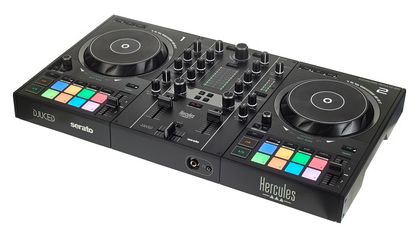
Hercules gives you two 5.5-inch jog wheels with touch detection, 16 RGB pads, dedicated filter and effects controls, and beatmatch guides. Those guides are clearly aimed at learners, but they do not get in the way once you develop your ear.
The controller also includes a hardware mixer path for external audio sources. That matters more than many buyers expect. You can feed in a phone or media player through the auxiliary input and keep a backup source ready if your laptop or software session goes sideways.
The balanced microphone input is another practical inclusion. For mobile use, small bars, announcements, or livestream hosting, that single detail makes the unit much more usable than stripped-down beginner controllers.
The retractable feet are easy to dismiss on paper. In practice, they help with cable routing, reduce the chance of drink spills reaching the chassis, and raise the controller to a more comfortable height. That is a smart piece of design, not a gimmick.
Software support is broad enough for the intended audience. Hercules includes DJUCED and Serato DJ Lite, with upgrade paths into Serato DJ Pro. The official product page also highlights streaming support inside supported software ecosystems, which helps if you are building sets from subscription services rather than only local files.
- 2-channel layout with club-style control spacing
- 16 RGB pads for hot cues, loops, slicer, and sampler functions
- Dedicated Filter/FX section for faster transitions
- Aux input and mic input for more flexible public-use setups
- Beatmatch Guide and IMA features for learning support
Technical Specifications
The headline specs are solid and easy to understand. The Hercules DJControl Inpulse 500 is a USB-powered 2-channel controller with a built-in 24-bit, 44.1 kHz audio interface, 5.5-inch jog wheels, and enough I/O to handle speakers, cueing, a microphone, and an external source.
| Specification | Details |
|---|---|
| Dimensions | 21.3 x 11.7 x 2.8 in / 54.2 x 29.6 x 7 cm |
| Weight | 7 lb / 3.2 kg |
| Audio Resolution | 44.1 kHz / 24-bit |
| Jog Wheels | 2 x 5.5 in with touch detection |
| Master Outputs | 2 x 1/4 in + 2 x RCA |
| Headphone Outputs | 1 x 1/4 in + 1 x 1/8 in |
| Inputs | 1 x balanced 1/4 in mic, 2 x RCA aux, 1 x 1/8 in aux |
| Power | USB bus powered |
| Software | DJUCED, Serato DJ Lite, Serato DJ Pro compatible |
There are a few things worth reading between the lines. USB power keeps setup simple, especially for home use and quick gigs, but it also means you are relying on your laptop and cable quality more than you would with a larger standalone unit.
The output section is stronger than you get on many cheap controllers. You have both RCA and quarter-inch master outputs, plus two headphone sizes. That reduces adapter hassles and makes the controller easier to integrate into mixed home and venue setups.
Who Is This For
The Hercules DJControl Inpulse 500 is best for aspiring DJs who are moving beyond basic practice and need gear that can survive real use. It suits home learning, small parties, bar sets, school events, and casual mobile work better than controllers that only make sense on a desk.
It is a strong fit if you want a controller that teaches solid habits. The layout is close enough to more club-oriented gear that the jump later feels manageable. MusicRadar also points out that the positioning of key controls makes transfer to pro-style setups fairly straightforward.
It is less ideal if you already know you want four-deck control, motorized platters, or deep integration with a single club-standard ecosystem. In that case, you may outgrow it fast and should look at higher tiers such as a Hercules Inpulse T7 or larger multi-channel options.
For complete beginners, the answer is a little nuanced. It is beginner-friendly, but not bargain-basement cheap. That makes it a better buy for someone who is serious enough to avoid upgrading again in six months.
In Practice
In real use, the Inpulse 500's biggest strength is workflow clarity. The layout is easy to scan, the jog wheels are large enough to feel deliberate, and the mixer section avoids the cramped feel that hurts many lower-cost controllers.
Under real club conditions, workflow speed and low-light clarity tend to matter more than headline features. The Inpulse 500 gets that balance mostly right. The lit guidance system, simple spacing, and raised feet are genuinely useful when a booth is messy or dark.
The audio path is good enough for the category. Do not buy it expecting premium converter performance or the headroom of far more expensive units. Do buy it if you want a controller that can handle speakers, headphones, a mic, and an aux source without awkward workarounds.
The learning aids are there if you want them. The good news is that they do not dominate the experience. You can use beat guides and software assistants early on, then rely on them less as your timing and track selection improve.
This is where the Inpulse 500 makes sense. It supports growth instead of forcing an early replacement.
Pros and Cons
The strengths and weaknesses are fairly clear. The Hercules DJControl Inpulse 500 offers unusually useful connectivity and workflow for the money, but it remains a 2-channel controller aimed at affordable performance rather than full booth replacement.
Pros
- Large jog wheels, practical outputs, balanced mic input, aux input, solid learning tools, retractable feet, and a layout that scales well from bedroom use to small gigs.
Cons
- -Only two channels, no standalone mixer mode, and overall sound and build quality still sit below more expensive professional DJ hardware.
The biggest pro is balance. Hercules did not overload the unit with niche ideas. It focused on features that help you practice, connect faster, and play confidently in smaller real-world settings.
The biggest con is ceiling. If your goals already point toward club residencies, advanced performance routines, or four-deck sets, this may feel like a transitional controller rather than a long-term one.
Price and Value
The Hercules DJControl Inpulse 500 still looks competitive on price because it offers more real I/O and more mature workflow than many entry-level rivals. Current pricing verified on April 21, 2026 shows about $239 at Thomann, while Hercules lists $349.99 on its official page, suggesting retailer discounting or regional variance.
That spread matters. At roughly $239 in the US market, the value case is strong. At closer to the official list price, it faces harder pressure from alternatives with stronger software ecosystems or more modern hardware branding.
Used pricing is less predictable. Recent Guitar Center used listings have appeared around $235 to $250, which means the used market is not always dramatically cheaper than new discounted stock. In other words, check current retail deals before buying secondhand.
For the right buyer, this is a smart buy. For someone who needs more channels or deeper pro-software integration from day one, it is better to spend more once than upgrade twice.
Alternatives
The closest alternatives depend on whether you care more about price, software, or room to grow. The Inpulse 500 sits in the middle ground between basic learner decks and more expensive performance controllers.
| Product | Price | Key Difference |
|---|---|---|
| Hercules DJControl Inpulse 300 MK2 | $169 | Cheaper and more beginner-focused, but less gig-ready |
| Numark Mixtrack Platinum FX | $259 | Similar price, stronger visual jog feedback and Serato focus |
| Roland DJ-202 | $259 | Different performance approach with Roland-style extras |
If you want the same brand at lower cost, the Hercules DJControl Inpulse 300 MK2 is the obvious step down. If you want a different take on the same price tier, compare it with the Numark Mixtrack Platinum FX.
Bottom Line
The Hercules DJControl Inpulse 500 is a thoughtful mid-range DJ controller that solves real setup problems instead of chasing headline specs. It gives you enough connectivity for actual gigs, enough guidance for learning, and enough layout familiarity to prepare for larger systems later.
Buy it if you want one controller that can handle practice and public use with minimal fuss. Skip it if you already know you need four decks, standalone mixing, or a more explicitly professional platform.
For many developing DJs, that balance is exactly the point.
Organize for Live Performance
Tag tracks by set position, energy level, and key. When you're performing live, every second counts, find what you need instantly.
14-day free trial. Full access, no strings attached.
or see how it works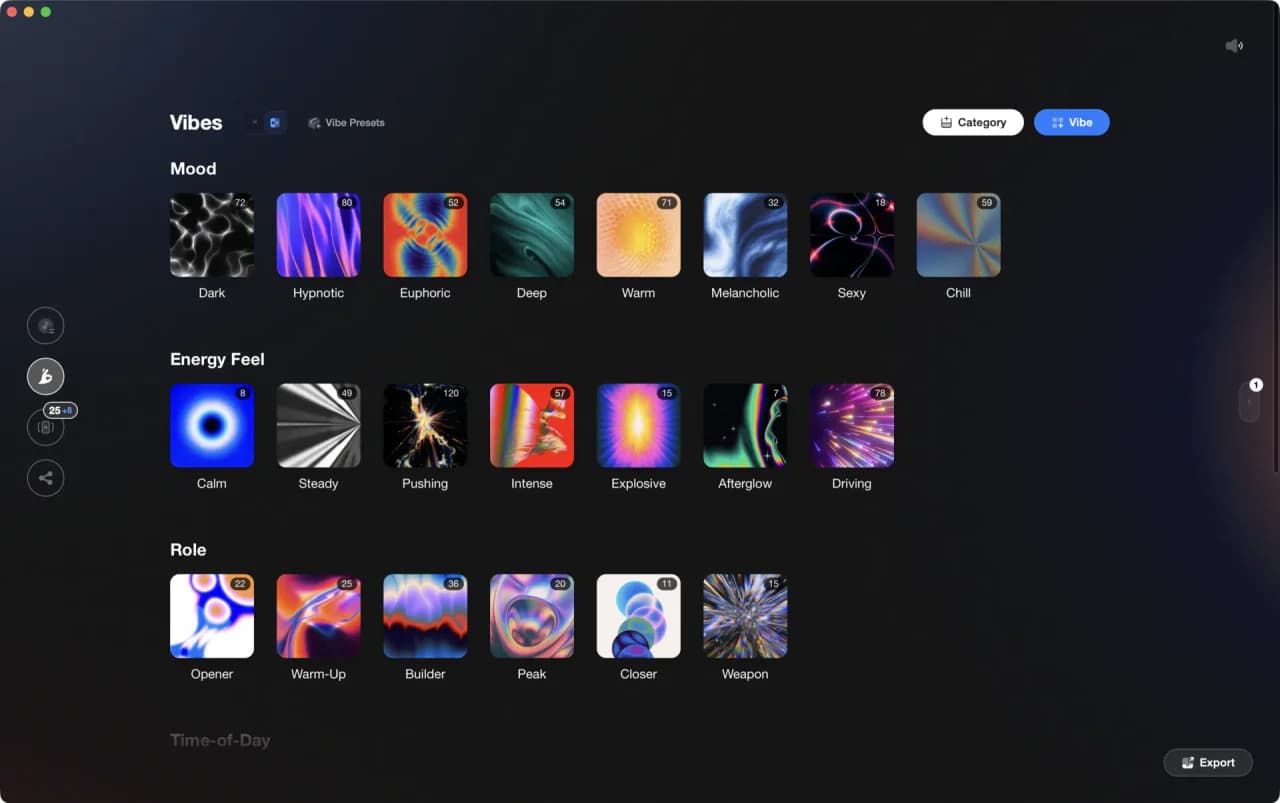
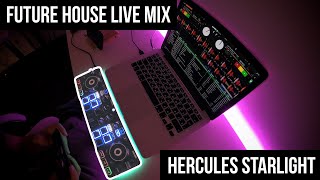
Tutorials Using Hercules DJControl Inpulse 500
DJ Techniques Using This Gear
See how DJs and live performers incorporate Hercules DJControl Inpulse 500 into their workflow.
Frequently Asked Questions

Hey, it's Ben Modigell 👋
I DJ and produce as so I so: downtempo, minimal, dub house, tech house, and techno (releases on Spotify and SoundCloud, links above). Everything I write here comes from my own gigs, studio sessions, and library cleanups: the rules I follow, the failure modes I have actually hit, and the workflow I use when nobody is watching. If a technique did not earn its place in my own sets, it does not make it into a tutorial.