Arrangement Optimization
Arrangement Optimization is the practice of ordering tracks and transitions to improve energy flow, phrasing, and crowd response across a DJ set.
Arrangement Optimization is the DJ skill of putting the right tracks in the right order so the set feels intentional, musical, and responsive to the room. In practice, Arrangement Optimization improves energy flow, makes transitions easier to place, and helps you avoid the flat middle section that ruins many otherwise solid sets.
If you can already mix two tracks together, Arrangement Optimization is what turns that technical ability into a full performance. It helps you control pacing, manage tension and release, and decide when to hold a groove versus when to push the floor harder.
This matters because strong track order often has more impact than flashy transitions. Several DJ educators stress that energy management, song structure, and planned play order are central to building a mix that holds attention over time, especially in club, mixtape, and warm-up contexts.
What Is Arrangement Optimization?
Arrangement Optimization is the process of refining track sequence, transition points, and energy curve so a DJ set moves with purpose. It combines [track selection](/learn/techniques/track-selection), phrase timing, and crowd awareness to create a stronger narrative from opening tune to closing record.
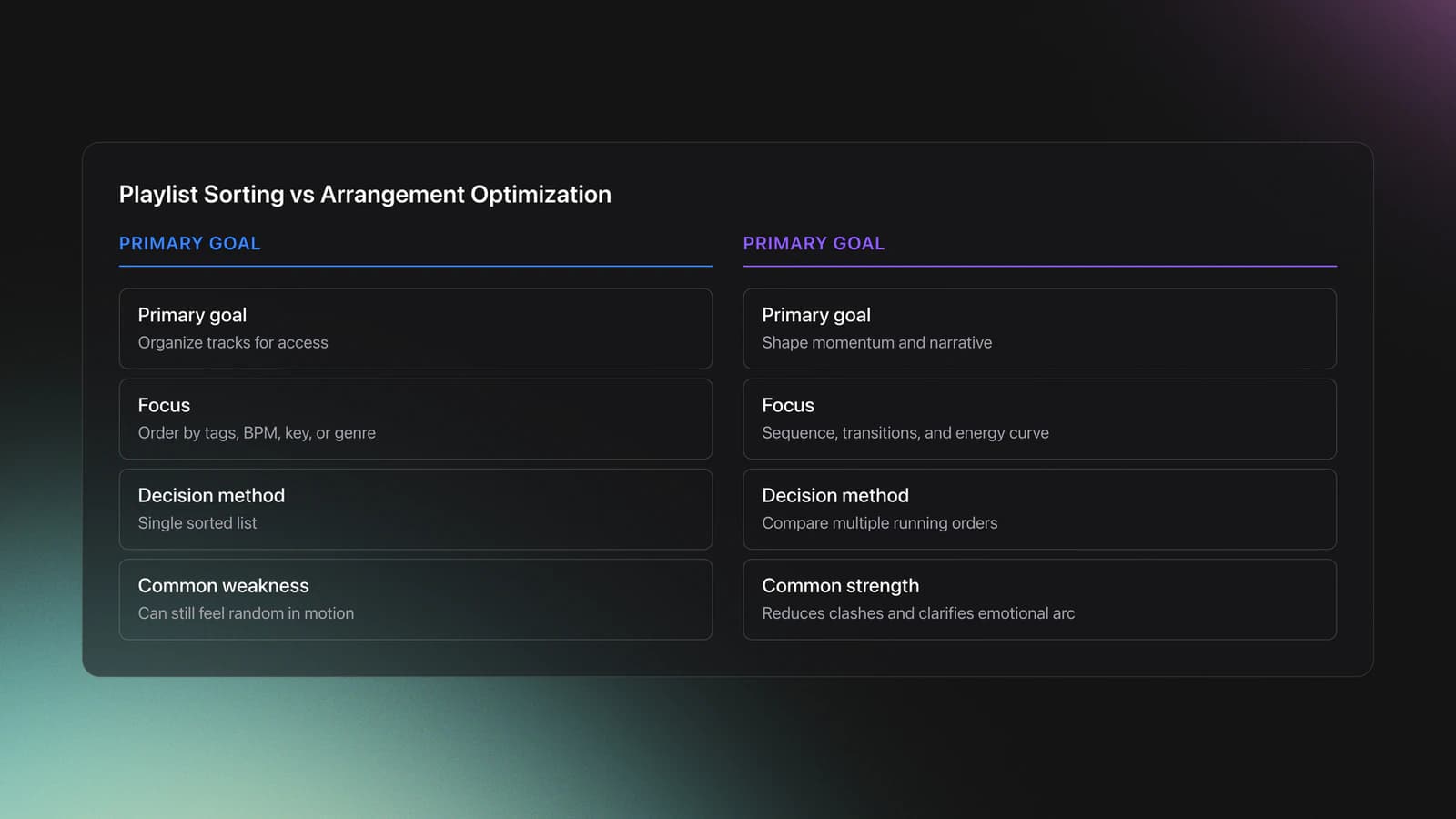
It is not just playlist sorting. A sorted playlist can still feel random. Optimization starts when you compare multiple possible running orders and choose the one with the best momentum, least awkward clash, and clearest emotional arc.
Educational guides from DJ TechTools, Digital DJ Tips, and Crossfader all point toward the same core idea. Strong sets are shaped by energy progression, track order, and transition placement, not by BPM matching alone.
Why Arrangement Optimization Matters
Arrangement Optimization matters because it lets you do more with the same music. When the sequence is right, each track feels stronger, the mix breathes better, and the crowd reads the set as a journey instead of a stack of unrelated songs.
This also lowers decision stress. If you already know which tracks can open space, raise pressure, reset the room, or peak at the right moment, you spend less time panicking in the booth and more time listening.
- Builds a clearer energy arc across 20, 40, or 90 minutes
- Makes phrase-based transitions easier to predict
- Reduces abrupt changes in intensity, groove, or mood
- Helps adapt faster when the crowd wants more or less pressure
- Improves recorded mixes by removing dead spots and overlong sections
Equipment and Prep
You do not need exotic gear to learn Arrangement Optimization. You need a reliable library, clear playlists, and enough familiarity with your tracks to recognize intros, breakdowns, drops, and exits.
Essential prep usually includes BPM and key analysis, basic cue points, and notes about track role. Sources aimed at DJs often recommend sorting tracks by BPM first, then by key, energy, vocals, or function when building candidate playlists.
If you keep a large local library, this is one place where Vibes can help without forcing the workflow. Grouping tracks by mood, energy, and function gives you a cleaner practice pool for testing openings, bridges, and peak-time sequences.
Core Steps for Arrangement Optimization
The basic method is simple. Define the set goal, sort a candidate pool, map the energy curve, test transition points, then cut weak links until the sequence feels inevitable.
Start by choosing the context. A warm-up set, a one-hour club slot, and a recorded promo mix need different pacing. Digital DJ Tips and DJ TechTools both emphasize that where you are playing and how long you have should shape track order.
Next, narrow the crate. Pull 20 to 40 tracks that fit the same lane of tempo, mood, and audience expectation. This is where lock in solid beat matching first pays off, because once the technical range is stable, you can focus on flow instead of rescue work.
Then sketch an energy path. Common shapes include a gradual ramp, a wave with repeated peaks and resets, or a mountain that rises toward one major climax. DJ TechTools specifically recommends diagramming the direction of a mix before finalizing order.
After that, mark transition windows. Listen for 8, 16, or 32-bar sections where intros, breakdowns, and outros line up naturally. If you cannot read phrase alignment with confidence, arrangement decisions will stay vague.
Now audition three to five possible sequences, not just one. Good arrangement work is comparative. You are not asking whether sequence A works. You are asking whether sequence B or C creates better lift, cleaner tension, or less repetition.
| Step | Action | What to Check |
|---|---|---|
| 1 | Define set context | Venue, slot length, crowd state, target intensity |
| 2 | Build candidate pool | Tempo range, mood fit, track quality, variety |
| 3 | Map energy shape | Ramp, wave, or peak-driven curve |
| 4 | Mark transition windows | Phrase fit, breakdown timing, vocal overlap risk |
| 5 | Test alternate orders | Momentum, contrast, fatigue, replay value |
| 6 | Trim weak links | Any track that stalls flow or repeats the same idea |
Track Order and Energy Flow
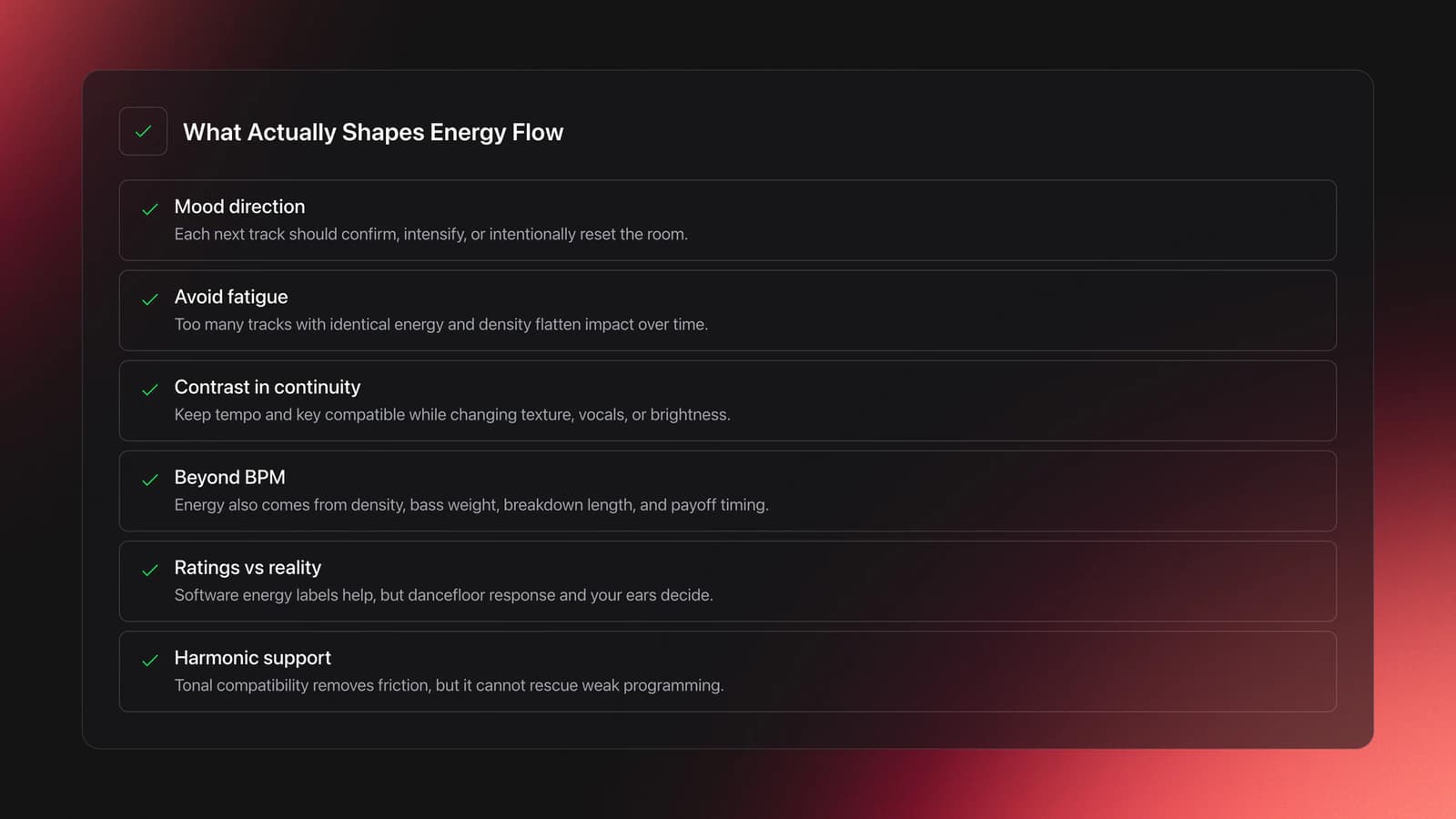
Track order should answer one question at every moment: what should the room feel next? Arrangement Optimization works best when each record either confirms the current mood, intensifies it, or resets it with intent.
Too many DJs stack tracks with the same energy and same density. That creates fatigue. Mixed In Key popularizes numeric energy labeling, while DJ TechTools notes that the actual dancefloor response can differ from software ratings. Use ratings as a guide, then trust your ears.
Look for contrast inside continuity. A new track can share tempo and key but change drum texture, vocal presence, or harmonic brightness. That keeps listeners engaged without breaking coherence.
In other words, energy is not only about loudness or BPM. It also comes from arrangement density, bass weight, vocal familiarity, breakdown length, and how soon the next payoff arrives.
This is where use harmonic mixing to smooth tonal shifts becomes useful. Tonal compatibility will not fix weak programming, but it can remove friction when two tracks are otherwise right for the moment.
Practice Drills for Arrangement Optimization
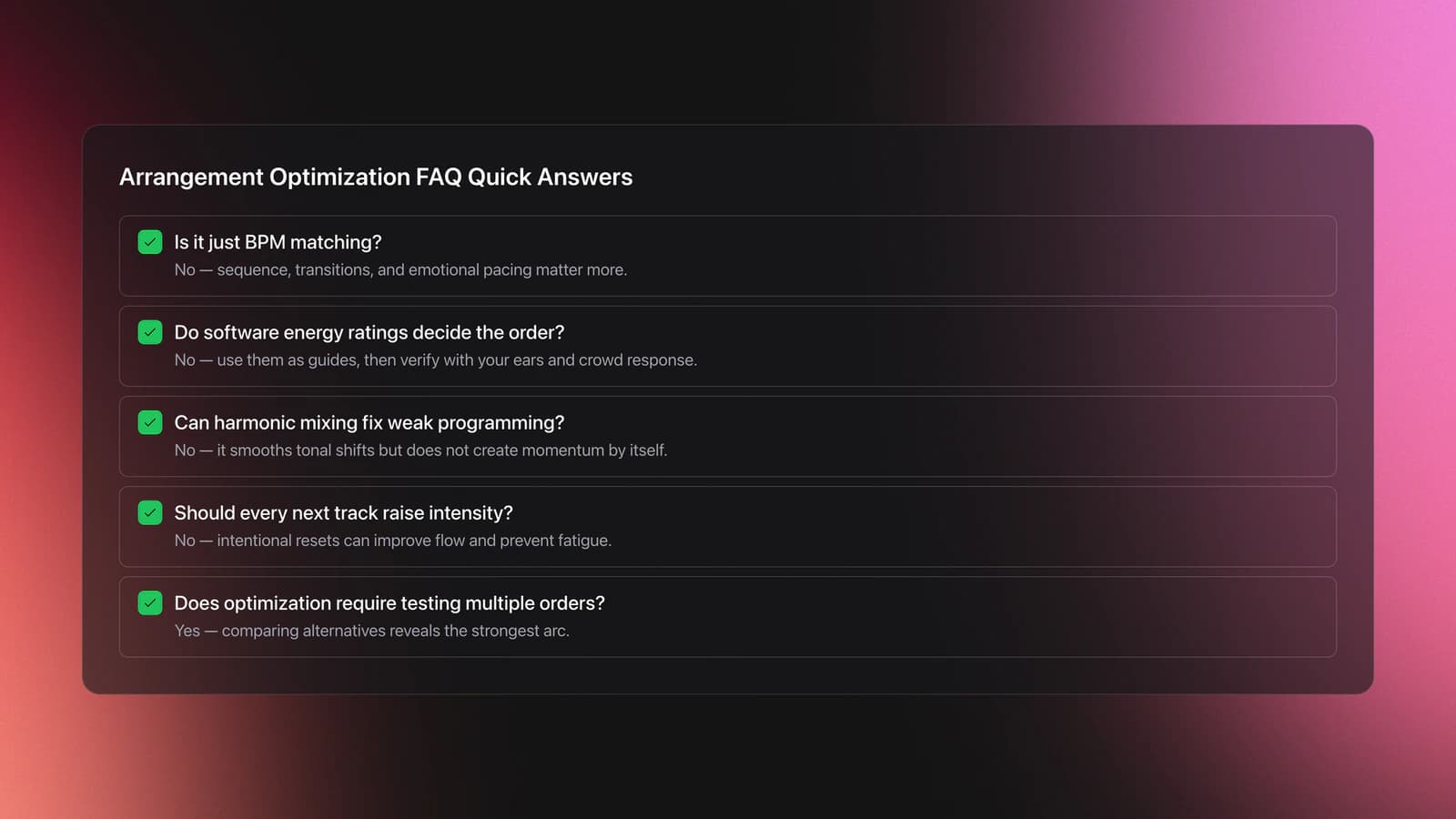
The fastest way to improve is to practice short programming loops, not full marathon sets. In practice, testing five-track sequences and recording them accelerated set-flow judgment much faster than endlessly free-mixing at random.
Drill one is the five-track ladder. Pick five tracks in one tempo lane. Arrange them from lowest pressure to highest pressure, then record the sequence and ask whether track three truly earns track four.
Drill two is the swap test. Keep tracks one, two, four, and five fixed, then audition three different options for track three. This teaches you to hear how one middle record can either unlock a peak or flatten the whole run.
Drill three is the reset drill. Build a seven-track sequence with one intentional dip after the peak. The goal is to lower intensity without losing trust from the floor.
Drill four is the transition-length drill. Mix the same sequence with short transitions, then medium ones, then long blends. You will hear how arrangement and transition style affect each other.
If you maintain a local reference library, Vibes can be useful here as a neutral practice tool. Create small folders for opening tracks, bridges, peak tracks, and resets so you can repeat the same Arrangement Optimization drill across a 2–4 week cycle and track what actually works.
Common Mistakes
Most Arrangement Optimization problems are not technical mixing errors. They are selection and timing errors. The tracks may blend perfectly, but the order still feels wrong.
| Mistake | Why It Happens | Fix |
|---|---|---|
| Starting too big | The DJ wants instant impact | Open one level lower and leave room to rise |
| No contrast | Tracks are matched by BPM but not by feel | Alternate texture, vocal presence, or groove density |
| Peaking too early | Best tracks are played in the first third | Save at least one clear escalation layer for later |
| Overlong transitions | The blend sounds good in headphones | Shorten mixes when both tracks fight for attention |
| Ignoring structure | Track order is chosen by taste alone | Use intros, breakdowns, and exits as arrangement anchors |
Troubleshooting Flat Sets
If a set feels flat, first check for repeated function. Three build tracks in a row can feel static even if they are all good records. Arrangement Optimization improves when each track has a job.
If the crowd response keeps dropping after transitions, your exits may be arriving after the emotional payoff. Digital DJ Tips stresses that knowing where to transition matters because the right place in the song often matters more than the elegance of the blend.
If the set feels jumpy, the problem is often contrast without continuity. Keep one anchor stable between tracks, such as groove, key family, vocal intensity, or percussion character.
If everything sounds smooth but nothing feels memorable, your arc may be too linear. Add one purposeful valley, one surprise tool, or one style variation that still fits the room.
Examples and Progression
A simple warm-up arrangement might begin with deep, lower-density tracks, then move toward tighter drums and stronger hooks over 30 minutes. A peak-time arrangement often uses shorter transitions, quicker rewards, and less patience with long intros.
For recorded mixes, Arrangement Optimization can be more exact. You can pre-test several running orders, tighten dead air, and explore power block mixing for faster peaks if the concept fits your style.
As you improve, start optimizing around multiple variables at once. Energy is first. Then add phrasing, tone, familiarity, and transition style. The result is a set that feels both planned and alive.
Crossfader, DJ TechTools, and Digital DJ Tips all frame this skill as part of broader DJ programming. The shared lesson is clear: strong DJs do not just pick good tracks. They decide what each track should do next.
How to Measure Progress
You are improving when your arrangement choices become repeatable. That means you can explain why a track belongs in slot three instead of slot six, and your recorded tests keep proving the point.
Most practitioners can reach basic competence within 2–4 weeks of consistent short sessions. The milestone is not perfection. It is being able to build a 20 to 30 minute set with a clear arc, no accidental stalls, and transitions placed on purpose.
Final Takeaways
Arrangement Optimization is the difference between playing tracks and shaping a set. It helps you control energy, clarify structure, and make every transition serve the larger story.
Focus on three priorities first:
- Give each track a clear role in the sequence
- Test alternate running orders instead of trusting the first idea
- Record short sets and review where momentum rises or drops
Start with a five-track sequence this week. Once that feels controlled, expand to 20 minutes, then 40. From there, the next logical step is to refine transitions, deepen crate organization, and connect programming with real crowd feedback.
The visual way to organize your DJ library
Tag tracks by vibe. See everything at once. Export to rekordbox, Serato, Traktor or Engine DJ.
14-day free trial. Full access, no strings attached.
or see how it works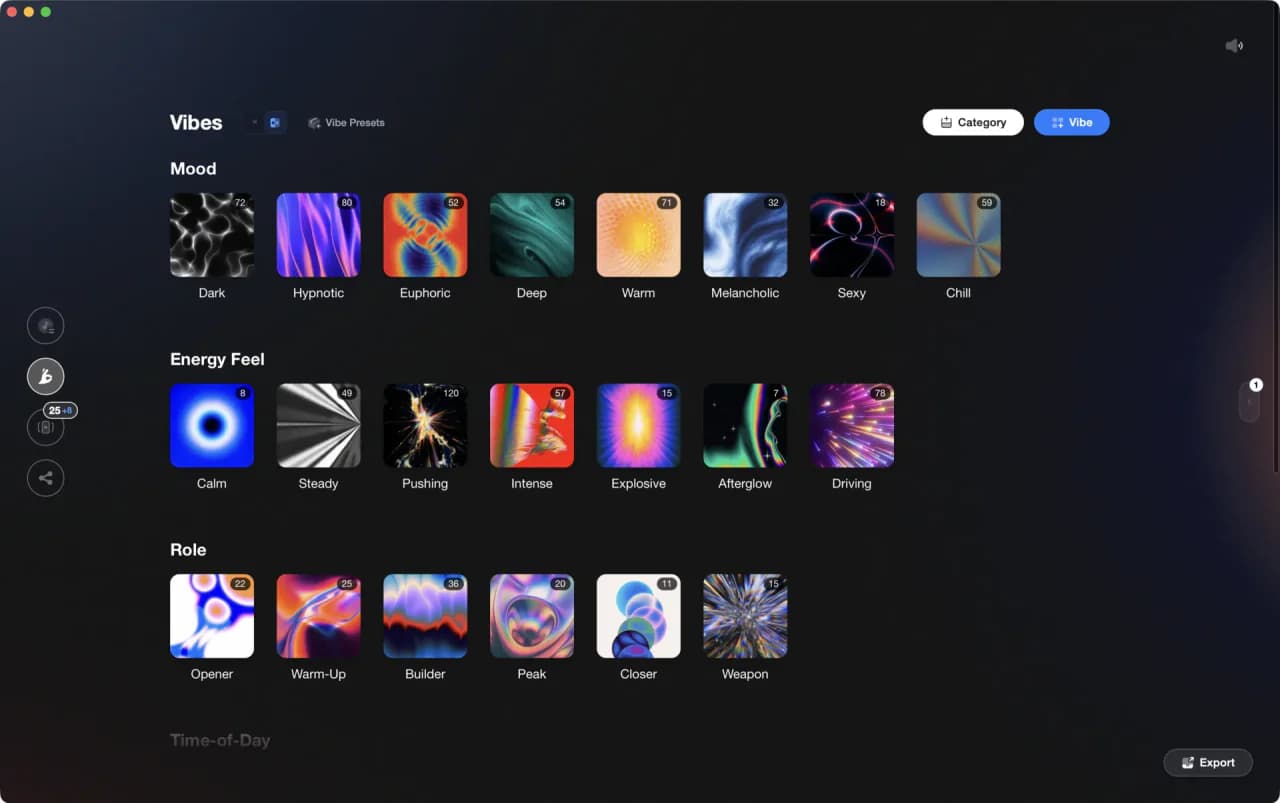
Equipment You'll Need
Pioneer DJ DDJ-1000
optionalA 4-channel rekordbox DJ controller with full-size jog wheels, onboard displays, and club-style mixer controls.
Mixed In Key 11
optionalStandalone harmonic-mixing and library-prep software that detects keys, energy levels, cue points, and tags for DJ sets.
Platinum Notes 10
optionalPlatinum Notes 10 evens loudness, repairs clipped peaks, and prepares DJ files for more consistent playback in Serato, rekordbox, and Traktor.
rekordbox
optionalCloud-connected DJ software for music management, performance, export prep, and club-standard hardware integration.
Pioneer DJ DDJ-400
optionalA compact 2-channel USB DJ controller built for rekordbox with a club-style layout aimed at new and progressing DJs.
Frequently Asked Questions

Hey, it's Ben Modigell 👋
I DJ and produce as so I so: downtempo, minimal, dub house, tech house, and techno (releases on Spotify and SoundCloud, links above). Everything I write here comes from my own gigs, studio sessions, and library cleanups: the rules I follow, the failure modes I have actually hit, and the workflow I use when nobody is watching. If a technique did not earn its place in my own sets, it does not make it into a tutorial.