
Cue Point Management
Cue point management is the practice of placing, naming, color-coding, and maintaining hot cues and memory cues so tracks are faster to navigate and easier to mix live.
Cue Point Management Tutorials
DJ Set Preparation That Actually Flows
A cue point is a saved position in a track that your DJ software or player can jump to instantly. Cue point management is the habit of placing, naming, and maintaining those markers so you can reach the right part of a track without hesitation. For DJs, it turns a messy library into a performance-ready one. Good cue point management speeds up transitions, sharpens phrase timing, and reduces panic when you need to react fast in a live set.
If you already know how to count bars and build phrase matching habits, this technique gives you a practical layer of control. Instead of hunting for intros, breakdowns, and exits in real time, you mark them once and reuse that work every time you play.
That matters more than many beginners expect. Native Instruments describes cue points as markers for key moments such as the start of a track, the drop, or the outro, while Pioneer DJ and AlphaTheta separate memory cues from hot cues in ways that affect playback and device workflow. A useful cue system is not just about setting markers. It is about setting the right markers, in a repeatable pattern, on gear you may actually encounter in clubs.
What Is Cue Point Management?
Cue point management is the process of choosing, naming, color-coding, and reviewing cue markers so tracks are easier to navigate during preparation and performance. In practice, it means marking consistent structural moments like starts, mix-in points, drops, and exits, then keeping those markers usable across your DJ workflow.
Platforms differ in how many cues they allow and in what they call them, but the purpose is the same: quick access to important musical moments.
The two main categories are hot cues and memory cues. Hot cues are designed for immediate recall, often from pads or buttons. Memory cues are more like stored reference markers that help you navigate or display key points in order.
That distinction matters. Pioneer DJ's memory cue documentation emphasizes stored, named, color-coded cue references on supported players, while Crossfader and DJ.Studio both frame hot cues as performance tools for jumping to sections such as intros, builds, and drops.
In other words, cue point management is less about collecting markers and more about reducing decision time. When your cue layout is consistent, your brain spends less energy searching and more energy mixing.
Why Cue Point Management Matters
Cue point management improves speed, confidence, and consistency. It gives you visual and tactile shortcuts to the moments that matter most in a track.
- Faster navigation to intros, breakdowns, drops, and outros
- Cleaner phrase timing during live transitions
- Less dependence on memory under pressure
- Better preparation for unfamiliar club gear
- More consistent practice across your whole library
- Quicker track selection when paired with organized crates and playlists
This also supports creative flexibility. Once key points are mapped, you can skip dead air, recover from bad timing, or jump to a stronger section without losing control of the set.
Cue Point Types and Roles
The best cue systems assign each marker a job. Most DJs need only a few repeatable roles, not a dense wall of buttons.
| Cue Type | Best Use | Typical Placement |
|---|---|---|
| Main start cue | Clean load-in point | First beat you would actually mix from |
| Mix-in cue | Reference for starting the next track | 8, 16, or 32 bars before a phrase target |
| Drop cue | Fast access to main energy section | First beat of the drop or chorus |
| Breakdown cue | Planning tension and release | Start of breakdown or vocal reset |
| Mix-out cue | Exit planning | Last clean phrase before clutter or energy collapse |
A simple system beats a clever one. If every track uses wildly different colors and positions, the cues stop helping.
Many instructors recommend choosing key moments by arrangement first. Native Instruments suggests marking the beginning of sections like verse, chorus, or outro, and Crossfader similarly recommends using hot cues to identify practical performance points rather than filling every slot.
How to Build a Cue Point Management System
Build your cue point management system around repeatable musical events. Start with the moments you regularly need in a mix, then apply the same logic across your library.
First, pick one default start point. This may be beat one of the intro, or the first beat that is actually useful in a club mix. Many tracks have long ambience or pickup sounds that are not practical load-in points.
Second, mark a phrase-aware mix-in point. For dance music, that often means 16 or 32 bars before a major event. This gives you time to master beat matching fundamentals and align phrasing before the section change arrives.
Third, mark the drop or peak entry. This is your emergency shortcut and your performance trigger. If timing goes wrong, one well-placed drop cue can save a transition.
Fourth, mark the safest mix-out point. This is often the last stable phrase before a vocal clash, melody overload, or drum removal.
Fifth, use names and colors consistently. Pioneer DJ documents named and color-coded memory cues on supported players, which makes comments and visual labels useful when you move between preparation and performance.
Finally, test the cues by mixing, not just by looking. A marker that seems correct on the waveform may still feel awkward in context if the energy or harmonic content shifts too abruptly.
Quantize can help when setting hot cues on analyzed tracks. AlphaTheta's CDJ-3000 documentation notes that quantize snaps cue-related actions to the nearest beat value on rekordbox-analyzed tracks, which can reduce sloppy placement if your grid is accurate.
Practice Routine for Cue Point Management
The fastest way to improve cue point management is to practice on a small batch of tracks, then repeat the same system until placement becomes automatic. Short sessions work better than marathon tagging.
In practice, cue review in small batches develops better judgment than trying to mark fifty tracks in one sitting. The shorter routine keeps your ears fresh and forces you to decide what each cue is actually for.
Start with ten tracks from one genre. Listen for the first usable beat, the first strong phrase change, the main drop, and the safest exit.
Set no more than four or five markers per track at first. This constraint teaches prioritization. It also mirrors the limits or workflow habits many DJs still use on older players and mixed setups.
Then run transition drills. Load two tracks, start from your marked mix-in point, and see whether the phrase landing feels right without looking at the whole arrangement.
If you want a structured prep environment, organize drill tracks in Vibes by function, energy, and intro length so each practice round compares like with like. That makes it easier to hear whether your cue decisions are solving a real transition problem or just reflecting random track differences.
At the end of each week, revise only the cues that failed in actual mixing. That gives you a measurable feedback loop instead of endless cosmetic editing.
Common Mistakes in Cue Point Management
Most cue point problems come from inconsistency, not lack of effort. The markers exist, but they do not support fast decisions under pressure.
| Mistake | Why It Happens | Fix |
|---|---|---|
| Too many cues | Every interesting sound gets marked | Keep only cues with a clear mixing job |
| Inconsistent colors | No fixed system across tracks | Assign one meaning per color and keep it stable |
| Bad beatgrid reliance | Cue snapped to wrong grid position | Check grid first, then set quantized cues |
| Drop-only workflow | Focus stays on hype moments | Mark exits and phrase starts, not just big sections |
| Never reviewing cues | Prep happens without live testing | Update markers after practice and gigs |
Why do most beginners struggle here? They treat cue points like notes, not decisions. A cue only matters if it changes what you can do in the mix.
Workflow and Real-World Usage
Cue point management works best when it connects preparation to performance. The goal is not a perfect waveform. The goal is faster musical judgment in the booth.
For club-focused DJs, memory cues can act like signposts while hot cues handle immediate jumps. AlphaTheta's support material notes that rekordbox-prepared devices can use memory cues, cue comments, and memory hot cue data, which is one reason many DJs still build around rekordbox-style preparation even when they play on varied hardware.
This is also where organized libraries help. If your tracks are grouped by energy, mood, and function in Vibes, you can rehearse cue logic on comparable material, then export that structure into your DJ software for actual set prep. That is especially useful when you also use harmonic mixing to choose better pairings, because the best transition candidate is often the one whose cues and phrase shape are already obvious.
In practice, a strong cue system lets you adapt. You can enter early, hold longer, skip weak intros, or recover from crowd-driven changes without losing your structure.
Equipment and Software Considerations
Cue point management depends partly on your platform. The core technique stays the same, but hardware support changes how many markers you can trigger and how visible they are.
Older club gear may expose fewer hot cue buttons than your laptop software. DJ TechTools highlighted this gap in a rekordbox workflow article, noting that some CDJ workflows require hot cues to be called in before use, which changes how practical dense cue layouts are during a set.
That is why memory cues remain useful. They are often better for navigation, comments, and ordered reference points, while hot cues stay reserved for actions you may need instantly.
If your software offers automatic cue generation, treat it as a draft. Lexicon and newer rekordbox features can generate cues automatically, but automated markers still need human review for phrasing, energy flow, and genre-specific usefulness.
Measurable Progress Checkpoints
You know your cue point management is improving when placement becomes faster and revisions become rarer. The technique should create fewer surprises during transitions, not more.
Use checkpoints that reflect actual DJ tasks. They are easier to track than vague goals like better prep.
Good early targets are simple. Mark ten tracks in one session with the same four cue roles. Then test them in five live transitions without needing to scrub the waveform.
A strong intermediate target is consistency. You should be able to identify and place your main start, mix-in, drop, and mix-out cues on unfamiliar dance tracks within two or three listen-throughs.
A real performance target is reliability. Over a two-week cycle, fewer than one in five transitions should fail because a cue was missing, misleading, or unusable.
Wrap-Up
Cue point management gives you faster access to the musical moments that matter. It turns track prep into performance leverage, especially when your system is simple, consistent, and tested in real transitions.
Key takeaways:
- Assign each cue a specific job, not just a location
- Use a repeatable color and naming system across your library
- Review cues through mixing drills, not waveform inspection alone
Start with ten tracks, four cue roles, and one genre. Once that feels automatic, expand the system and connect it with related skills like build phrase matching habits and master beat matching fundamentals. The result is a library that supports instinct instead of slowing it down.
The visual way to organize your DJ library
Tag tracks by vibe. See everything at once. Export to rekordbox, Serato, Traktor or Engine DJ.
14-day free trial. Full access, no strings attached.
or see how it works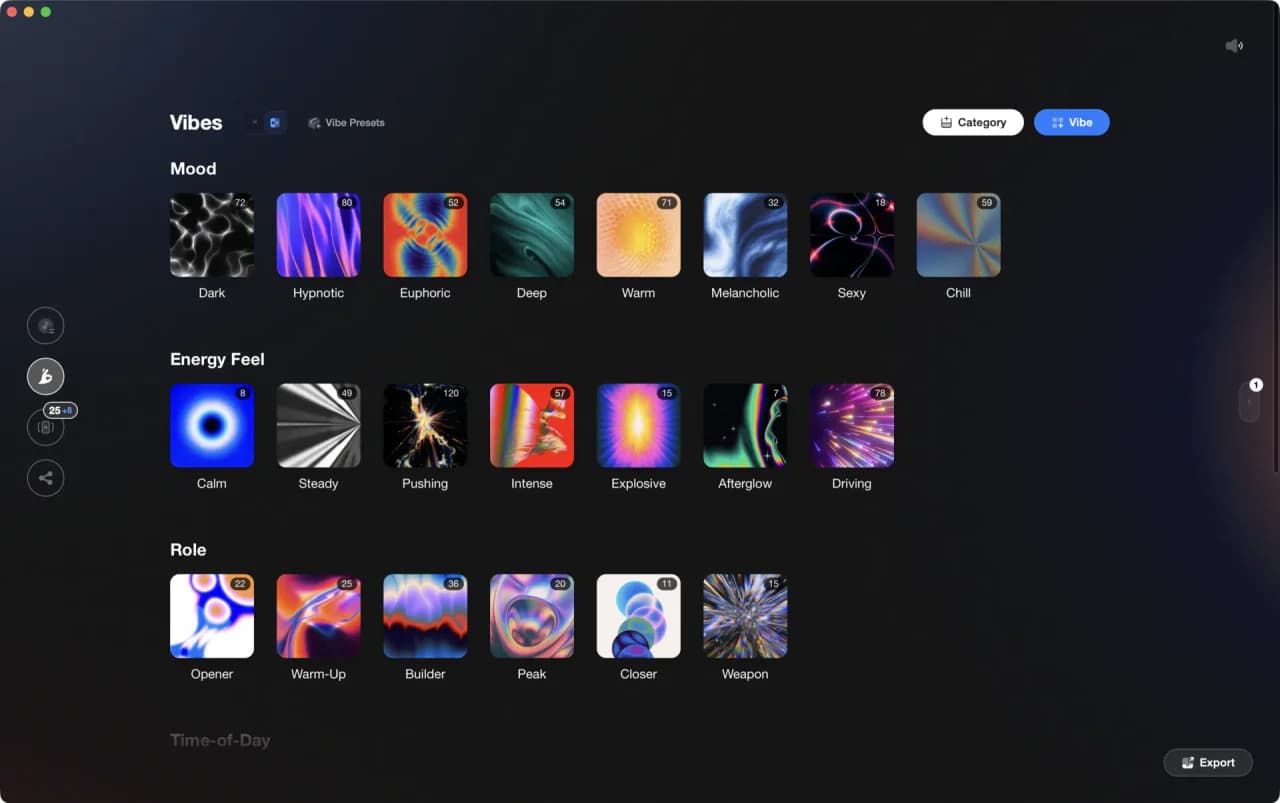
Frequently Asked Questions

Hey, it's Ben Modigell 👋
I DJ and produce as so I so: downtempo, minimal, dub house, tech house, and techno (releases on Spotify and SoundCloud, links above). Everything I write here comes from my own gigs, studio sessions, and library cleanups: the rules I follow, the failure modes I have actually hit, and the workflow I use when nobody is watching. If a technique did not earn its place in my own sets, it does not make it into a tutorial.