
Roland TR-808
·RolandThe Roland TR-808 is an analog drum machine whose punchy kick, snappy hats, and step-sequencing workflow helped define hip-hop, electro, pop, and modern electronic music.

Live Percussion
Drum machines add live percussion and rhythm programming to hybrid DJ sets. Many performers use them alongside DJ software for unique, improvised performances.
The Roland TR-808 is for producers, collectors, and performers who want the original analog drum machine behind one of the most copied sounds in music. If you are deciding whether a real Roland TR-808 still makes sense, the short answer is this: it remains special because the sound, sequencer feel, and cultural weight still hold up, but ownership now comes with vintage prices and vintage maintenance.
TR-808 Overview
The Roland TR-808 is an analog rhythm composer introduced in 1980 and discontinued in 1983. Roland’s current support archive lists it as a 1981-1983 product, while Roland’s own TR-08 and TR-808 software pages place the original launch in 1980, so 1980 is the safest release year to use for historical context.
That date matters because the 808 was early, odd, and misunderstood at launch. It was built as a programmable drum machine, but its sounds were not realistic enough for the market of the time. That weakness became its strength.
The Roland TR-808 shaped electro, hip-hop, pop, house, techno, and countless subgenres that came later. You can hear its impact not just in old records, but in modern sample packs, plug-ins, grooveboxes, and even in how producers talk about low end.
If your real goal is the 808 sound rather than the collector object, you should also consider the Roland TR-08, Roland TR-8S, or a broader drum machine buying guide. Those options solve many of the original’s practical limits.
Why the TR-808 Still Matters
The TR-808 still matters because it offers a combination that samples rarely capture fully: analog tone, instrument interaction, and an unusually fast step-sequencing workflow. In other words, the machine is valuable not only for its sounds, but for how it leads you into patterns.
The kick is the headline sound, but it is not the whole story. The hi-hats, rim shot, clap, cowbell, and toms all have strong identity. Together, they create the crisp, synthetic, slightly elastic feel that made the 808 a foundation for groove-based music.
Roland’s own historical copy explains that the original used analog synthesis because memory for sampled drums was too expensive at the time. That technical compromise produced a voice architecture that went on to outlive far more realistic machines.
This is where the TR-808 separates itself from many clones. It is not only about the raw waveform. It is about the way accents, tuning choices, decay, and timing choices push a pattern into motion.
TR-808 Features
The core feature set is simple by modern standards, but it is focused. You get analog drum voices, TR step programming, pattern and track memory, and hands-on front-panel control that encourages quick edits and repeatable muscle memory.
- Analog drum synthesis with the signature TR-808 kick, snare, toms, clap, cowbell, cymbal, and hats
- Classic 16-step programming layout for immediate rhythm creation
- Pattern and song-style track memory for arranged performance
- Per-voice controls that let you shape level and behavior without menu diving
- Trigger and sync capabilities suited to vintage hardware workflows
Compared with current drum machines, the TR-808 is narrow in scope. There is no USB, no modern MIDI implementation, no effects section, and no deep recall system. But that narrow scope is also the appeal. You stay on the panel. You work by ear. You commit faster.
Technical Specs
Official current specs for the original Roland TR-808 are partial rather than exhaustive. Roland’s support page confirms the product period and memory structure, but many buyers today will need to verify physical details and service condition from a seller before purchase.
| Specification | Details |
|---|---|
| Product type | Analog drum machine / rhythm composer |
| Release | Introduced in 1980 |
| Production period | 1981-1983 listed on Roland support archive |
| Memory | 12 basic rhythms, 4 intro/fill patterns, 12 tracks, 768 measures |
| Sequencing | Step programming with pattern and track arrangement |
| Connectivity | Vintage analog sync and trigger workflow; verify exact I/O on specific unit |
| Dimensions | Specifications not fully published on current official support pages as of 20260421 |
| Weight | Specifications not fully published on current official support pages as of 20260421 |
If you need a current, official Roland page with cleaner modern specs, the Roland TR-08 official product page is useful because it shows how Roland itself now frames the original 808 workflow for modern users. The TR-08 also gives you a practical benchmark for portability and contemporary connectivity.
Who Is This For
The Roland TR-808 is best for professionals, serious collectors, and producers who specifically want the original machine. It makes sense when the object itself matters, the workflow matters, and you are comfortable with repair risk and premium used-market pricing.
It also suits artists building a studio around classic hardware sequencing. If you enjoy committing to patterns, sampling your own hits, and working around limitations, the TR-808 still rewards that approach.
It is less ideal for beginners, touring acts that need easy replacement, or producers who want one drum machine to cover every style. A modern unit such as the Behringer RD-8 MKII or Roland TR-8S will usually be easier to integrate.
In Practice
In practice, the TR-808 feels fast because the interface is focused. You are not browsing kits or digging through pages. You are placing hits, adjusting decay, balancing instruments, and hearing the groove change right away.
In real club use, a readable, reliable, low-light-friendly workflow usually matters more than a long feature list. The appeal of the Roland TR-808 is that even in low-light performance settings, the panel logic stays direct and memorable.
That said, the original is still a vintage machine. Noise floor, calibration drift, worn buttons, and service history all affect the experience. Buying a TR-808 without confirming maintenance is not the same as buying a recent production instrument.
For many studios, the smarter move is to use the original as a sound source and sample it. Others will prefer the Roland TR-808 Software Rhythm Composer for recall and DAW integration, then reserve hardware money for monitors, mixers, or synths.
Pros and Cons
The Roland TR-808 is easy to admire, but harder to justify on pure utility. Its strengths are timeless. Its weaknesses are exactly what you would expect from an original early-1980s drum machine.
Pros
- Distinctive analog voice architecture.
- Fast, musical step sequencing.
- Enormous recording history.
- Strong collector demand.
- Inspires performance and sampling in a way many modern boxes do not.
Cons
- -Very high used-market cost.
- -Aging electronics and service needs.
- -Limited modern connectivity.
- -Hard to justify if you mainly need the sound rather than the original unit.
Price and Value
The Roland TR-808 now sits in collector territory. Current web listings show original units around $5,100 to $6,200, with some asking far more depending on condition, originality, and service history. That makes the TR-808 a premium vintage purchase, not a normal working drum machine buy.
Regional new pricing is easier to verify for the Roland TR-08, which remains the most practical official hardware point of comparison. Recent retailer and review pages show the TR-08 at about $349 in the US, €388 in Europe, and £349 in the UK.
This means value depends on what you are buying. If you want the actual historic instrument, the TR-808 has no substitute. If you want the sound and workflow, the TR-08 gives you far better value per dollar.
Used buyers should ask about servicing, power supply condition, missing knobs, output noise, accent behavior, and whether pattern memory holds correctly. On a machine this old, condition is part of the price.
Alternatives
Most buyers should compare the TR-808 against modern recreations before spending vintage money. The right alternative depends on whether you care most about authenticity, flexibility, or price.
| Product | Price | Key Difference |
|---|---|---|
| Roland TR-08 | $349 / €388 / £349 | Official compact 808 recreation with USB audio, MIDI, battery power, and modern convenience. |
| Roland TR-8S | Price varies by retailer | Far deeper performance machine with samples, effects, kits, and wider stage use. |
| Behringer RD-8 MKII | Price varies by retailer | Analog 808-style workflow with broad connectivity and lower barrier to entry. |
If you are still building your setup, pairing a modern drum machine with a strong audio interface guide or a focused hardware sequencer comparison may improve your results more than chasing a vintage centerpiece too early.
Bottom Line
The Roland TR-808 is still one of the few machines that deserves its reputation. It is not famous by nostalgia alone. The sound is real, the workflow is fast, and the musical footprint is enormous.
But the buying decision is clearer now than it used to be. Buy the original if you want the original. Buy a modern recreation if you want the result.
For most working producers, the TR-08, TR-8S, or software path will be the smarter choice. For collectors and committed hardware users, though, the Roland TR-808 remains a benchmark.
Building a Hybrid Setup?
Vibes helps you organize tracks by energy, key, and vibe, perfect for hybrid performers who need quick access during live remixing.
14-day free trial. Full access, no strings attached.
or see how it works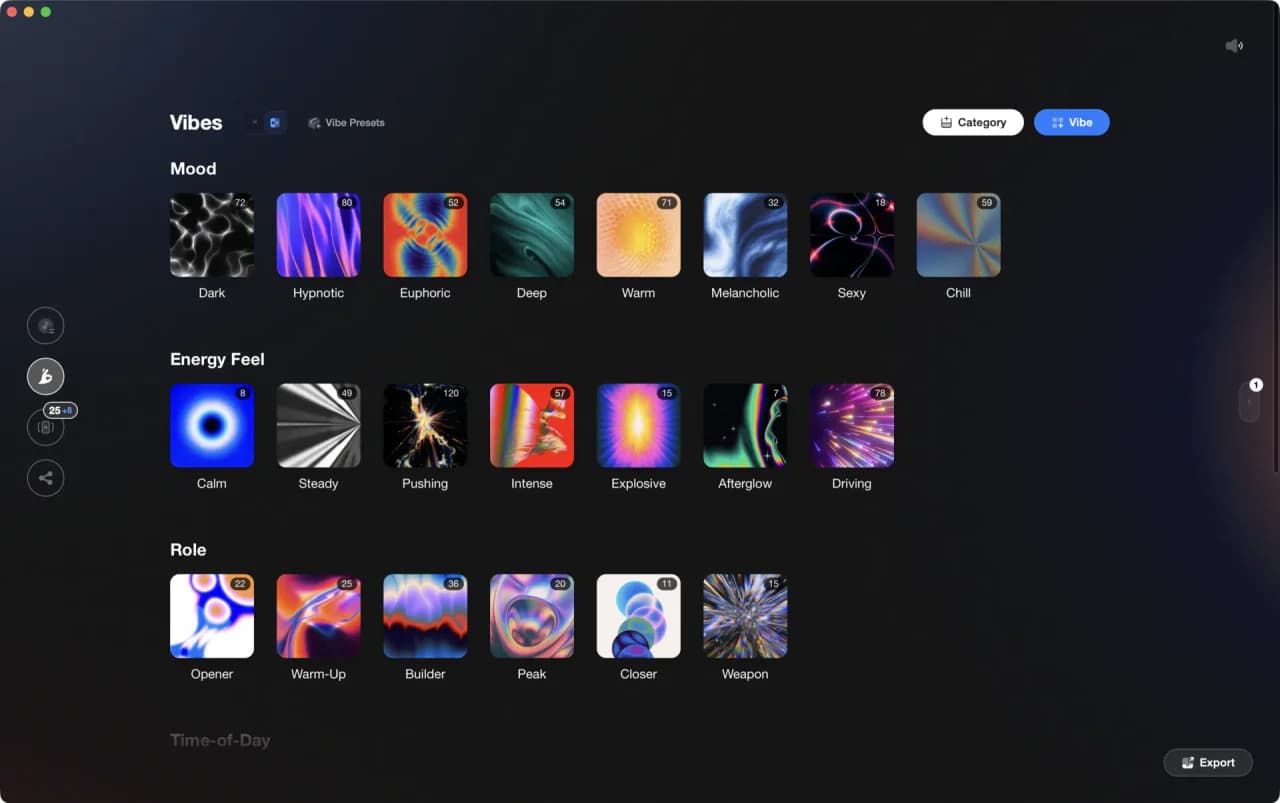
Tutorials Using Roland TR-808

DJ Techniques Using This Gear
See how DJs and live performers incorporate Roland TR-808 into their workflow.
Frequently Asked Questions

Hey, it's Ben Modigell 👋
I DJ and produce as so I so: downtempo, minimal, dub house, tech house, and techno (releases on Spotify and SoundCloud, links above). Everything I write here comes from my own gigs, studio sessions, and library cleanups: the rules I follow, the failure modes I have actually hit, and the workflow I use when nobody is watching. If a technique did not earn its place in my own sets, it does not make it into a tutorial.