
Yamaha REV5
·YamahaThe Yamaha REV5 is a 2U rackmount digital **reverberator** built for studios and live rigs. If you want hardware ambience with surgical control, the Yamaha REV5 still delivers. Its balanced I/O, per‑program parametric EQ, and MIDI backup make it a reliable problem solver as well as a creative reverb. This page covers Yamaha REV5 features, specifications, pricing context, and the best alternatives.
Analog Character
Hardware reverb units add depth and space that software can't always replicate. DJs and live performers use them for mixing, transitions, and creative sound design.
The Yamaha REV5 is a 2U rackmount digital reverberator built for studios and live rigs. If you want hardware ambience with surgical control, the Yamaha REV5 still delivers. Its balanced I/O, per‑program parametric EQ, and MIDI backup make it a reliable problem solver as well as a creative reverb. This page covers Yamaha REV5 features, specifications, pricing context, and the best alternatives.
Product Overview
Released in 1987, the Yamaha REV5 refined the company’s early digital reverb designs with cleaner 44.1 kHz processing and detailed early‑reflection control. It became a staple in studios and PA racks because it paired transparent rooms and halls with tools that speed up mix decisions.
You get 30 core programs plus nine combination variations, then 60 user slots with battery backup for your own patches. Each program includes a three‑band parametric EQ, and there is a master EQ as well. Balanced XLR and 1/4 inch I/O run at either −20 dBm or +4 dBm, so it drops into almost any insert or aux send.
MIDI implementation is comprehensive for the era. You can recall programs via program change, perform bulk dumps for backups, and reload when needed. That keeps the REV5 viable in modern hybrid setups where you want hardware character with session recall. According to Yamaha’s official historical overview, the REV5 was widely adopted in studios and venues worldwide. Manufacturer overview.
Yamaha REV5 Features
- Per‑program three‑band parametric EQ plus master EQ for precise tone shaping.
- Early reflections, rooms, halls, plates, gates, delays, and combination programs.
- Balanced XLR and 1/4 inch I/O with switchable −20 dBm or +4 dBm operating level.
- MIDI program change, bulk dump, and reload for session or show recall.
- 44.1 kHz bandwidth with 20 Hz–20 kHz response for clear, mix‑ready results.
Technical Specifications
Core specs are drawn from Yamaha documentation and consolidated spec resources. See the official manual library and VintageDigital’s spec sheet for details. Manual library. VintageDigital spec sheet.
| Specification | Details |
|---|---|
| Format | 2U rackmount digital reverberator |
| Converters / Rate | 16‑bit A/D and D/A at 44.1 kHz |
| Frequency Response | 20 Hz – 20 kHz |
| Programs | 30 presets + 9 combination programs |
| User Memory | 60 user patches (battery‑backed) |
| I/O | 2 x XLR in, 2 x 1/4" in, 2 x XLR out, 2 x 1/4" out |
| Operating Level | Switchable −20 dBm or +4 dBm |
| Control | MIDI In, MIDI Out/Thru (switchable), footswitch |
| Dimensions | 90 x 480 x 343 mm |
| Weight | 5.5 kg (≈12.1 lb) |
| Power | Region‑specific mains models: 100V JP, 120V 60 Hz US, 230V 50 Hz EU |
Yamaha REV5 technical specifications
Who Is This For
Perfect for engineers and live techs who want a clean, configurable hardware reverb with reliable recall. The per‑program EQ and early reflections make it fast to seat sources in a mix without extra outboard.
Not ideal if you need lush, modern high‑end textures like a PCM96 or Bricasti. The 16‑bit converters sound leaner by comparison. If you expect instant hands‑on editing, the menu flow can feel slow next to newer units.
In Practice
Set the REV5 on an aux send, start with a short room for drums or guitar, then use the per‑program EQ to tuck brightness and low buildup. The early reflection density and level controls are the quickest path to believable space.
On vocals, small halls and plates sit well once you trim midrange with the program EQ. For 80s drum punch, the gate and reverse programs work if you balance first‑reflection level and decay, then blend parallel.
MIDI bulk dump lets you snapshot your show or session patches. Balanced XLR in and out with switchable level means it integrates with consoles, patchbays, or project‑studio interfaces. Confirm your unit’s mains voltage before power up, since many Japanese units are 100V. Example listings often note the voltage explicitly. eBay sample listing.
Pros and Cons
Pros
- Strong early reflections and gated programs.
- Useful per‑program EQ.
- Balanced I/O with switchable level.
- MIDI backup and recall.
- Rugged 2U build.
Cons
- -Discontinued, so service may be needed.
- -Aging LCD or LED segments are common.
- -16‑bit sound is cleaner than REV7 but not as lush as modern premium reverbs.
Price and Value
As of December 2, 2025, typical US used prices sit around 250 to 350 dollars depending on condition and voltage, with recent examples near 300 dollars at big used retailers. UK listings cluster higher, roughly 300 to 500 pounds for serviced units. See representative listings on Guitar Center Used and eBay for live pricing snapshots. Guitar Center Used. eBay sample.
Value is strong if you want reliable hardware with fast mix‑shaping tools. If you need the classic Lexicon bloom, budget more for a PCM70. If you just need low‑cost ambience, consider a REV500 or an Alesis Quadraverb.
Alternatives
| Product | Price | Key Difference |
|---|---|---|
| Yamaha REV7 | $200–$350 used | Grittier early‑digital sound, fewer refinements, similar 2U form factor |
| Yamaha REV500 | $100–$300 used | 1U, later 20‑bit converters, simpler interface, great value |
| Lexicon PCM70 | $1,000+ used | Iconic Lexicon plates and halls, richer tails, much higher cost |
Comparable hardware reverbs by price and character
Bottom Line
If you want a hardware reverb that solves placement quickly, the Yamaha REV5 is still a smart buy. It is clean, controllable, and easy to integrate. Allocate time for basic service and verify voltage, then enjoy early reflections, gates, and rooms that sit in a mix without fuss.
Where to Buy
Authorized new stock no longer exists, so focus on reputable used sellers. See current availability at Guitar Center Used and eBay, and consult Yamaha’s archive for official background. Guitar Center Used. eBay listings. Yamaha archive page.
Building a Hybrid Setup?
Vibes helps you organize tracks by energy, key, and vibe, perfect for hybrid performers who need quick access during live remixing.
14-day free trial. Full access, no strings attached.
or see how it works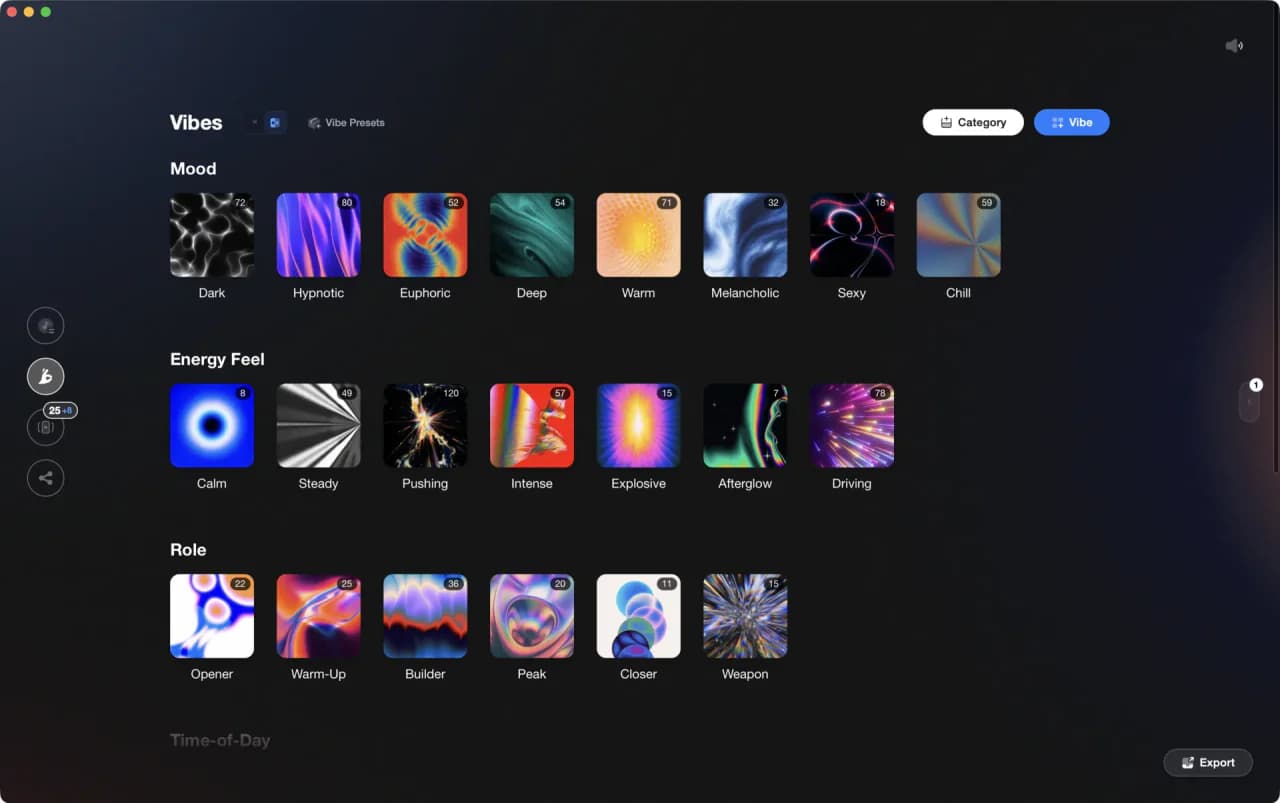
Tutorials Using Yamaha REV5
DJ Techniques Using This Gear
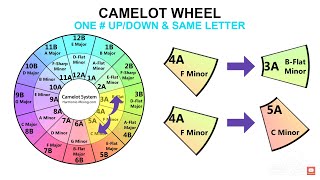
See how DJs and live performers incorporate Yamaha REV5 into their workflow.



Frequently Asked Questions

Hey, it's Ben Modigell 👋
I DJ and produce as so I so: downtempo, minimal, dub house, tech house, and techno (releases on Spotify and SoundCloud, links above). Everything I write here comes from my own gigs, studio sessions, and library cleanups: the rules I follow, the failure modes I have actually hit, and the workflow I use when nobody is watching. If a technique did not earn its place in my own sets, it does not make it into a tutorial.