
Piano for Producers
Essential piano skills for DJs and electronic producers: chord progressions for sampling, keys for harmonic mixing, playing melodies into DAWs, and finding root notes for mashups.
Piano for Producers Tutorials
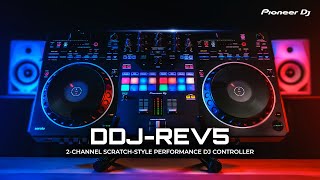
Professional DJ Controller: Battle vs Club Layout, Jogs, and I/O
Piano for Producers bridges traditional keyboard skills with modern electronic music production. Whether you sample chords, create original melodies, or need to understand keys for harmonic mixing, these fundamentals will level up your productions.
If you make beats, remix tracks, or DJ with key-matched sets, Piano for Producers gives you the theory and technique to work faster and sound more musical.
This guide covers chord progressions for sampling, key detection for harmonic mixing, playing melodies into your DAW, and finding root notes for mashups and edits.
Why Producers Need Piano Skills
- Faster sampling. Identify chords in tracks you want to sample and transpose them correctly.
- Better harmonic mixing. Understand keys so your DJ transitions sound musical, not clashing.
- Original melodies. Play ideas directly into your DAW instead of drawing notes one by one.
- Smarter mashups. Find root notes and compatible keys to blend acapellas with instrumentals.
Core Skills for Electronic Producers
1) Hand Position and DAW Setup. Sit comfortably with a MIDI controller or keyboard. Wrists neutral, fingers curved. Route your keyboard through your DAW so you can record ideas immediately.
2) Finding Root Notes. The root note is the home base of any chord or scale. When you hear a track you want to remix, find the root by playing single notes until one sounds like it belongs. This is your key center.
3) Major and Minor Scales. Most electronic music uses major (happy, uplifting) or minor (dark, emotional) scales. Learn C major and A minor first, they use only white keys. Then transpose to other keys your samples are in.
4) Chord Progressions for Sampling. The IVviIV progression (C-G-Am-F in C major) appears in countless pop and EDM tracks. Learn to recognize and play common progressions so you can recreate them or sample them accurately. See also chord progressions.
5) Understanding Keys for Harmonic Mixing. When DJing, tracks in the same or compatible keys blend smoothly. Use the Camelot wheel or circle of fifths to understand which keys work together. Piano skills let you verify keys by ear when software gets it wrong.
6) Playing Melodies into Your DAW. Instead of clicking notes in a piano roll, play them live. Even imperfect takes can be quantized. This workflow captures musical feel that point-and-click lacks.
7) Triads and Seventh Chords. Triads (3 notes) are the building blocks. Add a fourth note for seventh chords, these give you that neo-soul, lo-fi, or jazzy house sound. Drill inversions to find voicings that sit well in your mix.
8) Ear Training for Producers. Train your ear to recognize intervals and chord qualities. When you hear a sample you like, you can quickly figure out what notes are playing without relying solely on detection software.
| Step | Skill | Producer Application |
|---|---|---|
| 1 | Find the root note | Play single notes until one sounds like home base |
| 2 | Identify major or minor | Major = bright, Minor = dark, listen to the third |
| 3 | Learn common progressions | IVviIV, iVIIIIVII cover most EDM and pop |
| 4 | Check key compatibility | Use Camelot wheel; adjacent numbers mix well |
| 5 | Play into DAW | Record live, quantize after, captures groove |
| 6 | Learn inversions | Same chord, different voicing, fits better in mix |
| 7 | Train your ear | Recognize intervals without software |
Practice Drills for Beatmakers
Short sessions work best. Aim for 15-20 minutes daily, focused on skills that directly apply to your productions.
Connect timing work with your DAW grid. Practice playing to a click at different BPMs common in your genre, 128 for house, 140 for trance, 70-90 for hip-hop. See timing and phrasing.
Equipment for Producer Pianists
A 49-key or 61-key MIDI controller with semi-weighted keys balances playability and desk space. Full 88-key weighted keyboards are ideal for serious piano practice but not required for production basics.
Use your DAW piano or a quality piano VST for practice. Route through headphones to play without disturbing neighbors, essential for late-night studio sessions.
Key detection plugins like Mixed In Key or your DAW built-in analyzer help verify what you hear. But ear skills beat software when tracks have complex harmonies or key changes.
Common Mistakes
| Mistake | Why It Happens | Solution |
|---|---|---|
| Ignoring music theory | Relying only on presets and loops | Learn basic scales and chords to customize and create |
| Over-trusting key detection | Software misreads complex tracks | Verify by ear, play the root note and scale |
| Skipping inversions | Chords sound muddy or too high | Move chord voicings to sit better in your mix |
| Not recording live takes | Clicking notes feels robotic | Play melodies live, quantize after |
| Practicing without context | Drills feel disconnected from music | Always apply skills to actual productions |
Progression Path
Week 1: C major and A minor scales, finding root notes, IVviIV progression.
Week 2: G major and E minor, seventh chords, recording melodies into DAW.
Weeks 3-4: Inversions, recognizing progressions in sampled tracks, harmonic mixing practice.
Connect piano practice with production sessions. After drilling chords, immediately use them in a beat. This cements the connection between technique and creative output.
The visual way to organize your DJ library
Tag tracks by vibe. See everything at once. Export to rekordbox, Serato, Traktor or Engine DJ.
14-day free trial. Full access, no strings attached.
or see how it works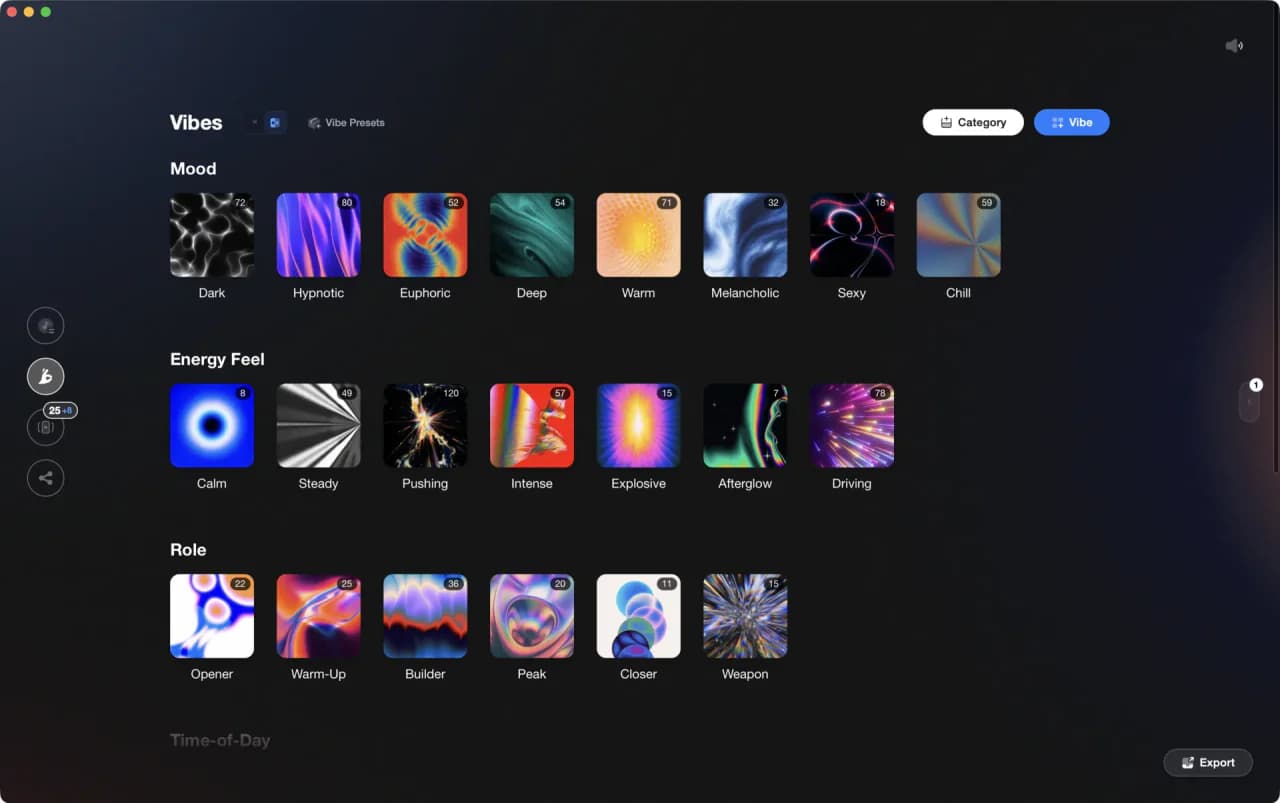
Equipment You'll Need
Serato DJ Pro
optionalProfessional DJ software for mixing, performance, library management, recording, and hardware-integrated club workflows.
DJControl Inpulse 200 MK2
optionalCompact 2‑deck USB DJ controller with built‑in audio, Beatmatch Guide LEDs, and Serato DJ Lite/DJUCED integration.
Mixed In Key 11
optionalStandalone harmonic-mixing and library-prep software that detects keys, energy levels, cue points, and tags for DJ sets.
Yamaha REV5
optionalThe Yamaha REV5 is a 2U rackmount digital **reverberator** built for studios and live rigs. If you want hardware ambience with surgical control, the Yamaha REV5 still delivers. Its balanced I/O, per‑program parametric EQ, and MIDI backup make it a reliable problem solver as well as a creative reverb. This page covers Yamaha REV5 features, specifications, pricing context, and the best alternatives.
Frequently Asked Questions

Hey, it's Ben Modigell 👋
I DJ and produce as so I so: downtempo, minimal, dub house, tech house, and techno (releases on Spotify and SoundCloud, links above). Everything I write here comes from my own gigs, studio sessions, and library cleanups: the rules I follow, the failure modes I have actually hit, and the workflow I use when nobody is watching. If a technique did not earn its place in my own sets, it does not make it into a tutorial.