
Roland TR-8S
·RolandA performance-focused drum machine that combines Roland ACB drum models, FM sounds, sample playback, and hands-on sequencing in one hardware unit.

Live Percussion
Drum machines add live percussion and rhythm programming to hybrid DJ sets. Many performers use them alongside DJ software for unique, improvised performances.
The Roland TR-8S is for producers and live performers who want classic TR punch without giving up modern flexibility. It combines modeled Roland drum machines, FM percussion, sample import, and a fast step sequencer in one box. If you want a hardware drum machine that still feels immediate on stage, the Roland TR-8S remains one of the strongest options.
TR-8S Overview
The Roland TR-8S is a performance drum machine built for hands-on beatmaking, live arrangement, and hybrid studio work. It stands out because it does more than recreate 808 and 909 sounds. It also handles samples, FM tones, USB multitrack audio, and external gear control.
Roland launched the TR-8S in 2018 as the more capable follow-up to the TR-8. Later firmware added major features, including an FM engine in the v2.0 update, which helped keep the unit current instead of locking it to its original feature set.
That matters in practice. A lot of drum machines sound good on paper, then slow you down once the set starts. The TR-8S is one of the few that keeps the old x0x immediacy while giving you deeper editing when you need it.
It also fits a wide range of setups. You can use it as a standalone rhythm box, a front-end sequencer for external hardware, or a multichannel USB drum source inside a DAW. If you are comparing options like the Roland TR-6S or a more open-ended Elektron drum machine guide, the TR-8S sits in the middle ground between speed and depth.
Roland TR-8S Features
The main strength of the Roland TR-8S is its layered sound engine. You get Roland ACB models of key TR and CR machines, preset samples, user sample import from SD card, and FM tones added through firmware. That gives it far more range than a pure clone box.
Roland says the unit includes detailed models of the TR-808, TR-606, TR-909, TR-707, TR-727, and CR-78. Unlike simple sample packs, these are meant to behave like complete instruments, with parameter control that goes beyond what the originals allowed.
The sequencer is still the real selling point. You get 16-step programming, live input, motion recording, fills, scatter-style performance options, and dedicated faders for level control. Sweetwater and Sound On Sound both highlight this live-friendly workflow as one of the reasons the machine stays popular.
Connectivity is another advantage. The TR-8S includes stereo main outputs, six assignable outs that can double as triggers, stereo external inputs, MIDI in and out, and USB audio/MIDI. That makes it easier to route individual drums to mixers, pedals, modular rigs, or your DAW.
The practical stuff matters most here: bright step buttons, quick mute access, and a layout you can trust in low light. In underground venues, that is often more important than a longer feature list.
- ACB models of Roland classics plus FM and samples
- 128 user kits and 128 patterns
- 11 instrument parts plus trigger track
- Multichannel USB audio and MIDI
- Six assignable outputs for flexible routing
Technical Specs
The Roland TR-8S is compact enough for portable live rigs, but it has the I/O depth of a more studio-focused box. Official specs confirm a 409 x 263 x 58 mm chassis, 2.1 kg weight, AC power, USB audio/MIDI, and extensive analog outputs.
| Specification | Details |
|---|---|
| Dimensions | 409 x 263 x 58 mm |
| Weight | 2.1 kg |
| Main outputs | 2 x 1/4" TRS MIX OUT |
| Assignable outputs | 6 x 1/4" ASSIGNABLE OUT/TRIGGER OUT |
| Headphones | 1 x 1/4" stereo out |
| External input | 2 x 1/4" EXT IN |
| MIDI | DIN MIDI In, DIN MIDI Out |
| USB | USB Type-B for audio and MIDI |
| Storage | SD/SDHC card slot |
| Sample import | WAV and AIFF |
| Sample time | Approx. 600 sec at 44.1 kHz mono |
| Power | AC adaptor, 2,000 mA |
One detail worth noting is the split between speed and complexity. The front panel stays direct, but deeper editing still depends on the display and menu system. In other words, it is faster than many workstation-style boxes, but not as stripped back as a pure analog drum machine.
Who Is This For
The TR-8S makes the most sense for intermediate and advanced users who want immediate sequencing with room to grow. It works especially well for techno, electro, house, industrial, and live electronic sets where fast pattern changes and mutes matter.
It is also a strong pick for producers who love classic Roland drums but do not want to be locked into one era. You can build hybrid kits, layer samples over ACB drums, and route separate outputs into pedals, mixers, or interfaces.
Beginners can use it, but the value equation depends on how committed they are to hardware. If you mainly want preset beats and simple practice tools, a cheaper machine or groovebox will be easier to justify.
If your setup is small and you care more about portability than full-size controls, the Roland TR-6S is the obvious alternative. If you want sampling depth and heavier sound design tools, something like an Elektron Analog Rytm MkII comparison may make more sense.
In Practice
In practice, the TR-8S is fast. That is the short version. It is easy to build a groove, add variation, mute parts, and reshape a pattern before the loop gets stale.
That speed comes from the layout. The faders are always visible. Mutes are immediate. Step buttons stay readable. You are not guessing where core functions live. For live work, that reduces hesitation and keeps your hands moving.
The sound palette is wider than many buyers expect. The classic kicks, snares, hats, and claps are the headline, but the FM engine and sample import matter just as much now. They let the box move beyond retro tribute duty and into more contemporary, hybrid percussion design.
There are trade-offs. Sample handling is not as smooth as on some Elektron boxes or MPC-style workflows. Menu diving is also real once you go beyond basic sequencing and into kit management, routing, and deeper sound edits.
Still, experienced practitioners typically prefer this balance because the machine stays playable. It gives you enough depth to build a personal setup, but it rarely forgets that it is supposed to be an instrument first.
Pros and Cons
The Roland TR-8S is easy to recommend if your priority is fast rhythm programming with strong live control. Its weak points are not about sound quality. They are mostly about workflow depth, price, and sample organization.
Pros
- Excellent live workflow with clear faders and step buttons.
- Wide sound range from ACB drums, FM, and samples.
- Strong routing with assignable outs, trigger options, and USB multitrack audio.
- Portable enough for rehearsal and club work.
- Firmware support has added useful features over time.
Cons
- -More menu-driven than simpler TR-style machines.
- -Sample and project management take patience.
- -Not the cheapest route into hardware drums.
- -Some users will want more direct deep-edit access without screen navigation.
Price and Value
As of April 22, 2026, current pricing checks put the Roland TR-8S at about $899.99 in the U.S. at Sweetwater, about £640 in the U.K. at Andertons, and about €699 at Thomann. That places it firmly in the professional hardware drum machine tier.
Used pricing is harder to pin down to one fixed figure, but Reverb still lists the TR-8S as an active model with price-guide tracking. In practical terms, that means the used market is healthy, which helps offset the upfront cost if you buy carefully.
Is it worth it? If you will actually use the outputs, hands-on sequencing, and live controls, yes. The value is less convincing if you just need a source of 808 and 909 sounds, because cheaper options can cover that part alone.
This is where the choice becomes clear. The TR-8S is not the cheapest box, but it is one of the more complete ones. For many performers, buying one good drum machine is smarter than stacking a smaller groovebox, a sample player, and a separate USB interface.
Alternatives
The best alternatives depend on what you value most. If you want lower cost and a smaller footprint, choose a compact Roland. If you want deeper performance sampling or analog circuitry, look at Elektron or Arturia instead.
| Product | Price | Key Difference |
|---|---|---|
| Roland TR-6S | $399.99 | More portable and cheaper, but fewer controls and outputs |
| Elektron Analog Rytm MkII | $1,999 | Analog drums and heavier performance sampling, but much pricier |
| Arturia DrumBrute Impact | $299 | Simple analog punch and lower cost, but no sample import or USB multitrack audio |
If you are still comparing hardware formats, it also helps to read a broader drum machine buying guide before committing. The TR-8S wins when you want classic sequencing feel plus modern routing and sound options in one unit.
Bottom Line
The Roland TR-8S still earns its place because it solves a real problem. It gives you the speed and confidence of a classic performance drum machine, but it does not trap you in nostalgia. You get TR character, modern routing, sample import, and enough depth to grow into.
For live electronic music, that mix is hard to beat. It is portable, readable, and flexible in the ways that matter. In a dark booth or a fast studio session, those traits count more than marketing claims.
Buy it if you want one hardware drum machine that can cover classic Roland ground and still adapt to a modern setup. Skip it if you want the cheapest entry point or the deepest sample workstation. For everyone in between, the TR-8S remains one of the best-balanced drum machines on the market.
Building a Hybrid Setup?
Vibes helps you organize tracks by energy, key, and vibe, perfect for hybrid performers who need quick access during live remixing.
14-day free trial. Full access, no strings attached.
or see how it works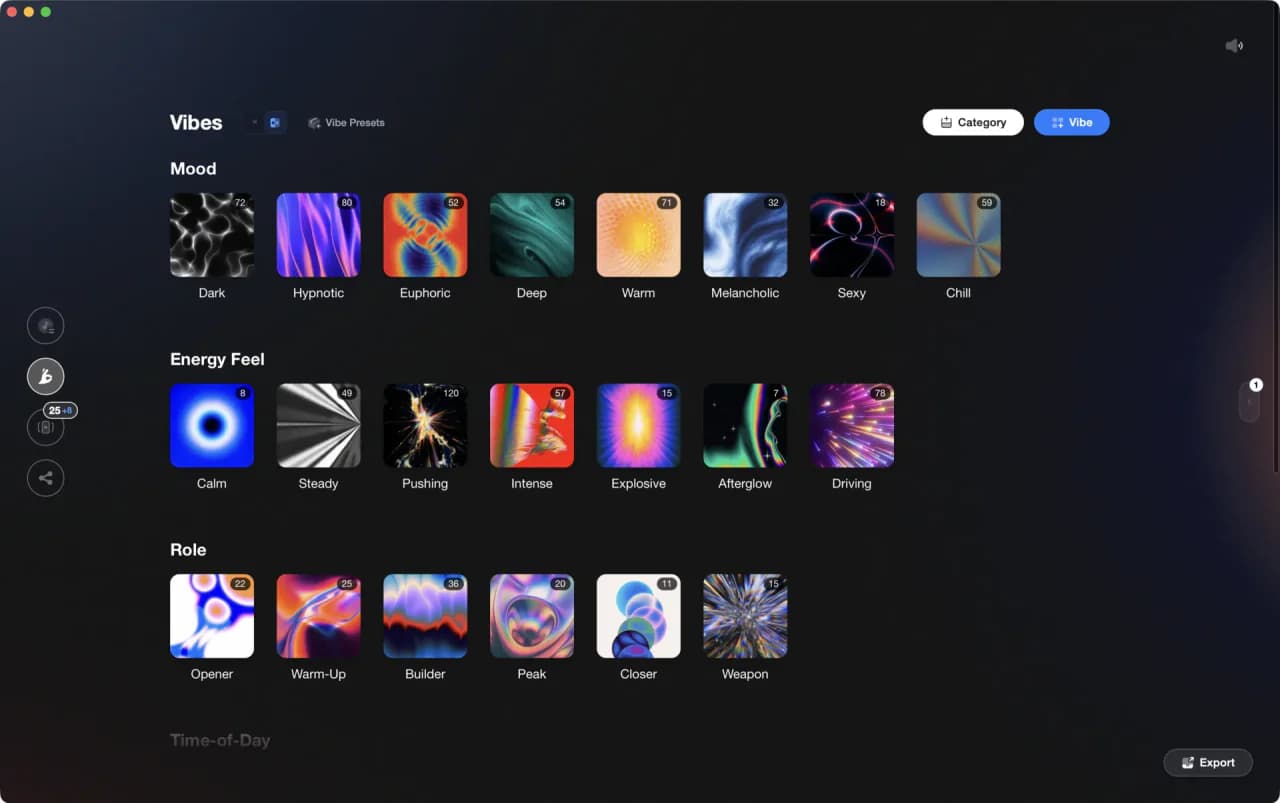
DJ Techniques Using This Gear
See how DJs and live performers incorporate Roland TR-8S into their workflow.
Frequently Asked Questions

Hey, it's Ben Modigell 👋
I DJ and produce as so I so: downtempo, minimal, dub house, tech house, and techno (releases on Spotify and SoundCloud, links above). Everything I write here comes from my own gigs, studio sessions, and library cleanups: the rules I follow, the failure modes I have actually hit, and the workflow I use when nobody is watching. If a technique did not earn its place in my own sets, it does not make it into a tutorial.