
MIDI Controller
A MIDI Controller is an input device that sends performance data to software instruments, hardware synths, drum machines, and DAWs. If you need hands-on control for playing notes, triggering clips, or automating parameters, a MIDI Controller is the tool that ties your setup together. It does not generate audio on its own.
Customizable Control
MIDI controllers let you map any parameter to physical controls. Hybrid DJs use them to control effects, loops, samples, and software instruments during live performances.
A MIDI Controller is an input device that sends performance data to software instruments, hardware synths, drum machines, and DAWs. If you need hands-on control for playing notes, triggering clips, or automating parameters, a MIDI Controller is the tool that ties your setup together. It does not generate audio on its own.
Because “MIDI Controller” describes a broad category rather than a single product, specific specs and prices vary. Entry models start near $99, while premium controllers with deep integration and polyphonic aftertouch can cost several hundred dollars or more. For definitions and protocol details, see the MIDI Association’s primers on MIDI 2.0 and Profiles/Property Exchange, and the general MIDI controller overview.
Product Overview
Think of a MIDI Controller as your instrument for software and MIDI hardware. It sends note, velocity, and control messages that your synths and DAW translate into sound and movement.
You will find four common forms: compact 25‑key boards, full-size 49–88‑key controllers, pad controllers, and hybrid control surfaces. Newer models are adding MIDI 2.0 readiness, USB‑C connectivity, and smart scales or chords for faster idea capture. The market spans bus‑powered travel units to studio workhorses with metal chassis and premium keybeds.
In real club use, a readable, reliable, low-light-friendly workflow usually matters more than a long feature list. Solid pads, clear labeling, and predictable mappings saved sets when conditions were rough.
Key Features
Keys and playing feel. Mini keys keep rigs small. Semi-weighted and hammer‑action keys improve dynamics and accuracy for performance and piano work.
Pads and aftertouch. RGB pads handle finger drumming and clip launching. Channel or polyphonic aftertouch adds expression by pressing into a key or pad.
Controls and workflow. Assignable knobs, faders, and transport buttons give hands‑on mix and plugin control. Scale, chord, and arp modes speed writing and reduce wrong notes.
Connectivity. USB-C is common. Many units include 5‑pin DIN MIDI to drive hardware without a computer. Some add CV or pedal inputs for deeper rigs.
DAW integration. Device‑specific scripts can auto‑map controls to Ableton Live, Logic Pro, FL Studio, Cubase, Bitwig, and more. Native Kontrol Standard and Profile‑based mapping reduce setup time. See the MIDI Association’s notes on Profiles and Property Exchange.
Current highlights. Affordable minis like the Akai MPK Mini IV add wheels, improved pads, and 5‑pin MIDI. Mid‑tier 61‑key boards such as Novation Launchkey 61 MK4 deliver full transport and fader control. Premium options like Native Instruments Kontrol S61 Mk3 bring polyphonic aftertouch and deep NKS mapping.
Technical Considerations
| Specification | What to look for |
|---|---|
| Keybed | Mini vs semi-weighted vs hammer action; aftertouch support |
| Pads | Velocity sensitivity, aftertouch, size, and lighting |
| Controls | Number of encoders/faders, transport, and displays |
| Connectivity | USB-C, 5‑pin DIN, sustain/expression, CV, external power |
| Integration | DAW scripts, NKS, MIDI 2.0 Profiles, software bundles |
| Build | Chassis materials, knob caps, pad feel, port durability |
| Dimensions/Weight | Fits your desk or travel bag; stands and cases available |
Use this checklist when comparing MIDI Controllers.
Who Is This For
Producers building tracks in a DAW need immediate control over instruments and automation. A MIDI Controller gives tactile input that a mouse cannot.
Live performers benefit from robust pads, transport, and clear labeling. If you DJ or run clips, prioritize layout and low‑light readability.
Keyboard‑centric players should lean toward 49–88‑key boards with better keybeds. If portability is vital, start with a compact 25‑key option, then add a second controller later.
In Practice
A typical studio rig maps encoders to synth filters and envelopes while faders ride levels. Pads trigger drums and mute or solo parts without touching the mouse.
On stage, bus‑powered controllers reduce cabling and setup time. 5‑pin DIN MIDI lets you drive hardware directly if a laptop fails mid‑set.
With newer devices, MIDI 2.0 features such as higher resolution and Profiles improve expressiveness and auto‑configuration. See the MIDI Association’s MIDI 2.0 explainer for how Profiles and Property Exchange streamline mappings.
If you work in Ableton Live, consider units with prebuilt scripts and capture/quantize controls, like Launchkey 61 MK4. For deep plugin browsing and light‑guided scales, look at Kontrol S61 Mk3. For travel, MPK Mini IV covers essentials in a backpack.
Pros and Cons
Pros
- Tactile control over instruments and mix.
- Wide variety and pricing.
- Strong DAW integration.
- Portable, often bus‑powered.
Cons
- -No built‑in sound on most models.
- -Choosing among many similar options can be confusing.
- -Some features depend on DAW scripts and vendor ecosystems.
Price and Value
Expect clear tiers. Entry‑level mini controllers start around $99, such as the Akai MPK Mini IV at Sweetwater. Mid‑tier 49–61‑key boards run $250–$400, like the Novation Launchkey 61 MK4 at $329.99. Premium smart keyboards with polyphonic aftertouch and advanced integration reach $800–$1,300, including the Kontrol S61 Mk3 listed at $849. Cross‑check current ranges on retailer category pages from Sweetwater and Thomann.
Used prices vary by generation and condition. If you buy used, test all keys and pads, verify USB and MIDI ports, and check encoder drift. Budget for a sustain pedal, stand, and protective case.
Alternatives to Consider
| Product | Price (USD) | Key Difference |
|---|---|---|
| Akai MPK Mini IV | $99 | Compact 25 keys with wheels, pads, USB‑C, 5‑pin MIDI |
| Novation Launchkey 61 MK4 | $329.99 | Full 61 keys, faders, DAW transport, scale/chord modes |
| Native Instruments Kontrol S61 Mk3 | $849 | Premium smart keyboard with poly aftertouch and NKS |
Representative alternatives across budget, mid‑tier, and premium classes.
Bottom Line
A MIDI Controller lets you play and shape music with your hands, not just a mouse. Pick size and feel first, then evaluate pads, controls, and connectivity.
If you want a travel‑ready option, start with a compact mini like the Akai MPK Mini IV. For balanced studio use, the Novation Launchkey 61 MK4 hits a sweet spot. For deep browsing and plugin control, the Kontrol S61 Mk3 is strong despite the higher price.
Where to Buy
Explore current pricing and bundles on retailer category pages like Sweetwater’s MIDI Controllers and Thomann Controllers. For specific models, see the linked product pages above.
Building a Hybrid Setup?
Vibes helps you organize tracks by energy, key, and vibe, perfect for hybrid performers who need quick access during live remixing.
14-day free trial. Full access, no strings attached.
or see how it works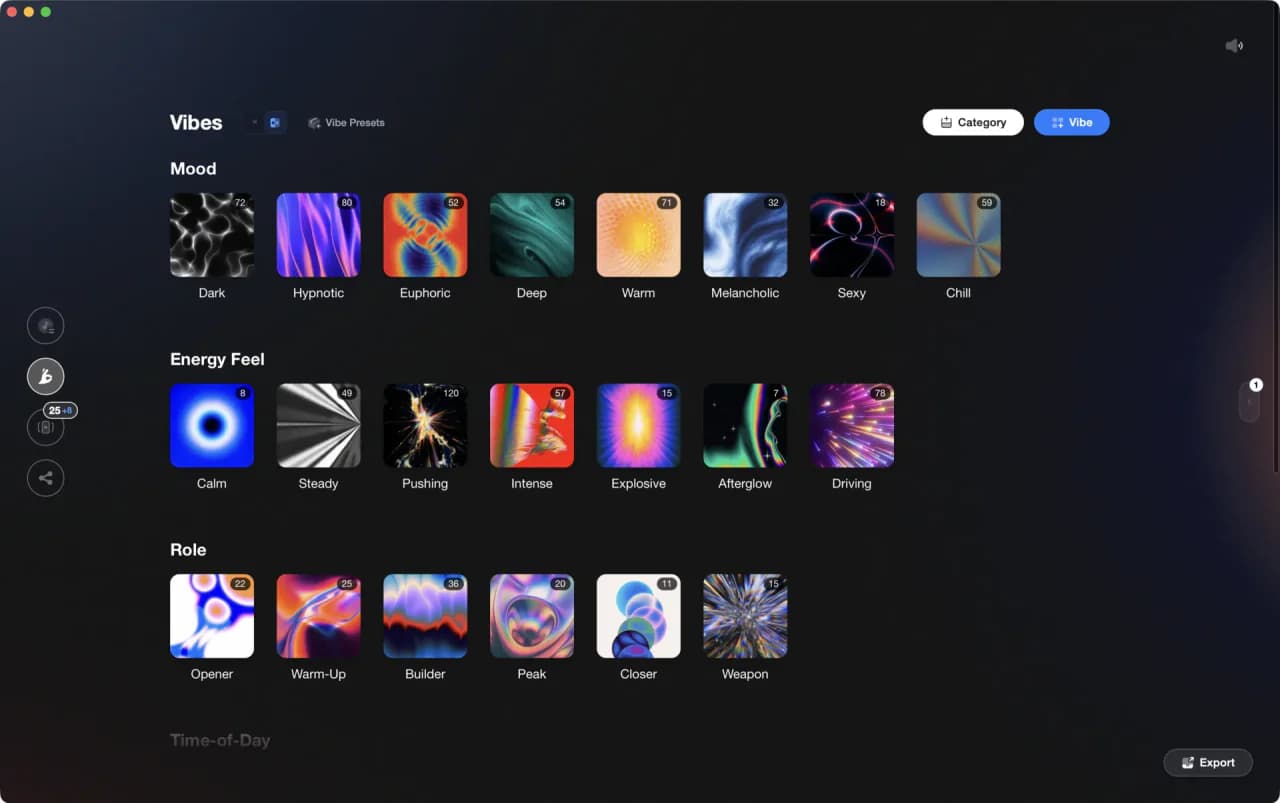
DJ Techniques Using This Gear
See how DJs and live performers incorporate MIDI Controller into their workflow.

Frequently Asked Questions

Hey, it's Ben Modigell 👋
I DJ and produce as so I so: downtempo, minimal, dub house, tech house, and techno (releases on Spotify and SoundCloud, links above). Everything I write here comes from my own gigs, studio sessions, and library cleanups: the rules I follow, the failure modes I have actually hit, and the workflow I use when nobody is watching. If a technique did not earn its place in my own sets, it does not make it into a tutorial.